












Is Electric the answer?

Safety Car


Joined: Jan 2021
Posts: 3,658
Likes: 1,939

An ICE car probably increases it’s performance as the tank empties as the car gets lighter (less weight from fuel).
For an EV, it will vary with manufacturer and be subject to a lot of variables/software. For example, in a Tesla Model S Plaid, there’s a series of steps the driver must take to prepare the car for max acceleration. In a Lucid Air, you just mat the pedal and go, at any time.
For an EV, it will vary with manufacturer and be subject to a lot of variables/software. For example, in a Tesla Model S Plaid, there’s a series of steps the driver must take to prepare the car for max acceleration. In a Lucid Air, you just mat the pedal and go, at any time.
Tesla has been known to make it appear they have a technical breakthrough when it’s really software updates that remove conservatism. Most EVs have a guarded range inaccessible to the user to protect the battery from actually going to 0% SOC (it might show 0% on the gauge but really has like 5-10% left). Tesla simply allows you to drain to the battery to 0% knowing marketing the actual range makes it more competitive on paper. There was even a time on certain trim levels you could buy more range over the air which allowed you to unlock more of the battery you already paid for and we’re lugging around.
Safety Car
Joined: Jan 2021
Posts: 3,658
Likes: 1,939

Instructor

Joined: Feb 2018
Posts: 139
Likes: 108
Tesla most likely has those steps because running in max acceleration mode all the time shortens the battery life. Lucid probably doesn’t care as they figured you’ll get rid of it after 3 years anyway. They both use the same battery technology.
Tesla has been known to make it appear they have a technical breakthrough when it’s really software updates that remove conservatism. Most EVs have a guarded range inaccessible to the user to protect the battery from actually going to 0% SOC (it might show 0% on the gauge but really has like 5-10% left). Tesla simply allows you to drain to the battery to 0% knowing marketing the actual range makes it more competitive on paper. There was even a time on certain trim levels you could buy more range over the air which allowed you to unlock more of the battery you already paid for and we’re lugging around.
Tesla has been known to make it appear they have a technical breakthrough when it’s really software updates that remove conservatism. Most EVs have a guarded range inaccessible to the user to protect the battery from actually going to 0% SOC (it might show 0% on the gauge but really has like 5-10% left). Tesla simply allows you to drain to the battery to 0% knowing marketing the actual range makes it more competitive on paper. There was even a time on certain trim levels you could buy more range over the air which allowed you to unlock more of the battery you already paid for and we’re lugging around.
Safety Car
Joined: Jan 2021
Posts: 3,658
Likes: 1,939
They use similar CELL technology but that’s where the similarities end. Pack construction, thermal management and motor design are vastly different between Tesla and Lucid. Yes, most EVs have a buffer designed into the pack (I think some LFP packs might not) but manufacturers only ever report the usable capacity anyway and the EPA rated range is based only on that usable capacity.
Racer


Joined: Jul 2008
Posts: 295
Likes: 242
From: New Rockford ND
 It will be like Chevy Chase and Christmas Vacation!
Corvette Stories
The Best of Corvette for Corvette Enthusiasts

Every 2027 Corvette Engine Explained
Joe Kucinski
Designer Imagines A Corvette That Looks More Like a Corvette Than the Corvette
Verdad Gallardo
10 Ugly Corvettes That We Still Kinda Love
Joe Kucinski
Top 10 Most Expensive Corvettes Ever Sold on Bring A Trailer
Brett Foote
10 Things Every Corvette Owner Needs (2026 Edition)
Michael S. Palmer
8 Most "Only Corvette Owners Understand" Quirks and Problems
Pouria Savadkouei
10 Reasons the C6 Z06 is Still A Performance Benchmark After 20 Years
Joe Kucinski
How Much Horsepower Every Corvette Engine "LOST" in 1972
Joe Kucinski
Top 10 DOs and DON'Ts for Protecting Your Convertible Top!
Michael S. Palmer
Intermediate
Joined: Aug 2022
Posts: 44
Likes: 21
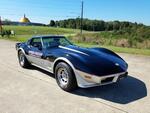
That’s a very old pic. Interestingly you could plug in and charge there with zero risk too, even standing in water.
Hydrogen isn’t the answer. It takes electricity (lots of it) to produce hydrogen via electrolysis. After the losses to produce hydrogen from electricity then convert it back into electricity via a fuel cell, you’d be better off just staying with electricity.
Hydrogen isn’t the answer. It takes electricity (lots of it) to produce hydrogen via electrolysis. After the losses to produce hydrogen from electricity then convert it back into electricity via a fuel cell, you’d be better off just staying with electricity.
Imho, it’s to be compared with batteries production/usage at the end.
It makes sense for sports cars with 33kWh per kg, way lighter than a battery.
it makes even more sense for planes and trucks (payload) which I believe will spearhead the H2 movement.
Instructor
Joined: Feb 2018
Posts: 139
Likes: 108
H2 is a mean to store energy more than anything.
Imho, it’s to be compared with batteries production/usage at the end.
It makes sense for sports cars with 33kWh per kg, way lighter than a battery.
it makes even more sense for planes and trucks (payload) which I believe will spearhead the H2 movement.
Imho, it’s to be compared with batteries production/usage at the end.
It makes sense for sports cars with 33kWh per kg, way lighter than a battery.
it makes even more sense for planes and trucks (payload) which I believe will spearhead the H2 movement.
Intermediate
Joined: Aug 2022
Posts: 44
Likes: 21
Yes and you have to compare the losses with each conversion too. I think H2 will have a role during transition as the energy density of batteries continues to improve. Admittedly, I was surprised that we’ve already hit the density to allow electric planes (commuter airline sized). With the amount of money being thrown at EV innovation, we may very well see energy density increase quickly. The question is which format and chemistry will “win” and become the standard.
In the end, H2 is good competition for the battery chemistry industry. We may see interesting things soon (cheap Sodium batteries, or badass graphene ones).
To me, ”hybrid” battery tech (different packs with different attributes) is the wtg (see Bimmer recent announcements)


Safety Car
Joined: Jan 2021
Posts: 3,658
Likes: 1,939
Yes and you have to compare the losses with each conversion too. I think H2 will have a role during transition as the energy density of batteries continues to improve. Admittedly, I was surprised that we’ve already hit the density to allow electric planes (commuter airline sized). With the amount of money being thrown at EV innovation, we may very well see energy density increase quickly. The question is which format and chemistry will “win” and become the standard.
Energy density has not improved for lithium batteries and batteries are pretty much the worst form of energy storage in moving vehicles. For a plane they ensure slow charging times, heavy weight that never gets lighter as you fly (requiring heavy landing gear and structure designed for full takeoff weight landings) and poor battery life (frequent deep charging cycles and fast charging). Electric battery powered planes are a dead end which is why there is a push for biofuels in aviation.
As mentioned before there’s a bit of a misconception in the image of improving energy density. Most manufacturer’s claim energy density gains that aren’t real such as reduction of “guarded” battery range, adding more cells, or making lighter battery pack packaging, improving motor efficiencies, aerodynamics, adding heat pumps in lieu of heat strips for improved winter range, etc, but in the end, the limitation is always the chemistry of the lithium battery itself which is stuck in the 1970’s.
Example, a brand new EV Hummer battery using GM touted newest Ultium platform weighs about 3000 lbs. A gas Hummer’s 32 gallon gas tank full of gas weighs less than 200 lbs. Lithium battery storage is no where close to be even remotely competitive in energy density.
Safety Car
Joined: Jan 2021
Posts: 3,658
Likes: 1,939
I agree with your statement.
In the end, H2 is good competition for the battery chemistry industry. We may see interesting things soon (cheap Sodium batteries, or badass graphene ones).
To me, ”hybrid” battery tech (different packs with different attributes) is the wtg (see Bimmer recent announcements)
In the end, H2 is good competition for the battery chemistry industry. We may see interesting things soon (cheap Sodium batteries, or badass graphene ones).
To me, ”hybrid” battery tech (different packs with different attributes) is the wtg (see Bimmer recent announcements)
Keep in mind the idea behind EVs is to reduce carbon emissions, but technology to make renewable fuel from anything from potatoes to lawn clippings with incredible energy density is possible on paper with zero emissions, but it’s the profit that’s the problem. If something doesn’t make money it doesn’t matter how great it is or how few emissions it makes.
Instructor
Joined: Feb 2018
Posts: 139
Likes: 108
We do not have any practical commuter airline sized planes available. Those are concepts.
Energy density has not improved for lithium batteries and batteries are pretty much the worst form of energy storage in moving vehicles. For a plane they ensure slow charging times, heavy weight that never gets lighter as you fly (requiring heavy landing gear and structure designed for full takeoff weight landings) and poor battery life (frequent deep charging cycles and fast charging). Electric battery powered planes are a dead end which is why there is a push for biofuels in aviation.
As mentioned before there’s a bit of a misconception in the image of improving energy density. Most manufacturer’s claim energy density gains that aren’t real such as reduction of “guarded” battery range, adding more cells, or making lighter battery pack packaging, improving motor efficiencies, aerodynamics, adding heat pumps in lieu of heat strips for improved winter range, etc, but in the end, the limitation is always the chemistry of the lithium battery itself which is stuck in the 1970’s.
Example, a brand new EV Hummer battery using GM touted newest Ultium platform weighs about 3000 lbs. A gas Hummer’s 32 gallon gas tank full of gas weighs less than 200 lbs. Lithium battery storage is no where close to be even remotely competitive in energy density.
Energy density has not improved for lithium batteries and batteries are pretty much the worst form of energy storage in moving vehicles. For a plane they ensure slow charging times, heavy weight that never gets lighter as you fly (requiring heavy landing gear and structure designed for full takeoff weight landings) and poor battery life (frequent deep charging cycles and fast charging). Electric battery powered planes are a dead end which is why there is a push for biofuels in aviation.
As mentioned before there’s a bit of a misconception in the image of improving energy density. Most manufacturer’s claim energy density gains that aren’t real such as reduction of “guarded” battery range, adding more cells, or making lighter battery pack packaging, improving motor efficiencies, aerodynamics, adding heat pumps in lieu of heat strips for improved winter range, etc, but in the end, the limitation is always the chemistry of the lithium battery itself which is stuck in the 1970’s.
Example, a brand new EV Hummer battery using GM touted newest Ultium platform weighs about 3000 lbs. A gas Hummer’s 32 gallon gas tank full of gas weighs less than 200 lbs. Lithium battery storage is no where close to be even remotely competitive in energy density.
https://www.businessinsider.com/air-...e-es-30-2022-9
Safety Car
Joined: Jan 2021
Posts: 3,658
Likes: 1,939
Incorrect. This is just one of several electric planes hitting the market.
https://www.businessinsider.com/air-...e-es-30-2022-9
https://www.businessinsider.com/air-...e-es-30-2022-9
This is green fluff for magazines. It’s basically the EV Chevy Spark of airplanes but from a no name manufacturer,
Last edited by Majestic94; Oct 5, 2022 at 07:55 PM.
Instructor
Joined: Feb 2018
Posts: 139
Likes: 108
It’s one of several electric planes that will be an orphan when money dries up as it’s unprofitable and unsustainable. It can only fly half the distance your Tesla can drive, Air Canada’s equity stake in the entire company is only $5million (a single 737 cost about $90 million).
This is green fluff for magazines. It’s basically the EV Chevy Spark of airplanes but from a no name manufacturer,
This is green fluff for magazines. It’s basically the EV Chevy Spark of airplanes but from a no name manufacturer,
We get it… you hate electric technology, but no matter how many anti-electric posts you make, you cannot stop innovation. Nobody is investing in new ICE technology… everyone is investing in electric technology. Chrysler (Stellantis) is just introducing what is probably the last new ICE power train globally (the new inline 6). To answer the OP’s original question, even if electric isn’t the answer today, it likely will be in a single digit number of years. There is simply too much investment and innovation in generation, transmission and transportation technology for there to be any other outcome.
All of the 2035 EV mandates in states like California and New York are really nothing more than political theater as the transportation market will hit its tipping point long before then. Take the delta in EV adoption over the last three years and plot it as a straight line (which is conservative as new technologies are typically adopted exponentially once we get past the early adopter phase) and ask yourself what the market will look like.

Safety Car
Joined: Jan 2021
Posts: 3,658
Likes: 1,939
This is something that was unimaginable just a few years ago and innovation is continuing rapidly just as it did with electric cars. Ten years ago, Tesla was in its infancy; now it’s selling a million plus vehicles per year.
We get it… you hate electric technology, but no matter how many anti-electric posts you make, you cannot stop innovation. Nobody is investing in new ICE technology… everyone is investing in electric technology. Chrysler (Stellantis) is just introducing what is probably the last new ICE power train globally (the new inline 6). To answer the OP’s original question, even if electric isn’t the answer today, it likely will be in a single digit number of years. There is simply too much investment and innovation in generation, transmission and transportation technology for there to be any other outcome.
All of the 2035 EV mandates in states like California and New York are really nothing more than political theater as the transportation market will hit its tipping point long before then. Take the delta in EV adoption over the last three years and plot it as a straight line (which is conservative as new technologies are typically adopted exponentially once we get past the early adopter phase) and ask yourself what the market will look like.
We get it… you hate electric technology, but no matter how many anti-electric posts you make, you cannot stop innovation. Nobody is investing in new ICE technology… everyone is investing in electric technology. Chrysler (Stellantis) is just introducing what is probably the last new ICE power train globally (the new inline 6). To answer the OP’s original question, even if electric isn’t the answer today, it likely will be in a single digit number of years. There is simply too much investment and innovation in generation, transmission and transportation technology for there to be any other outcome.
All of the 2035 EV mandates in states like California and New York are really nothing more than political theater as the transportation market will hit its tipping point long before then. Take the delta in EV adoption over the last three years and plot it as a straight line (which is conservative as new technologies are typically adopted exponentially once we get past the early adopter phase) and ask yourself what the market will look like.
The delta plot on new EV adoption is as meaningless as a new religion being the “fastest growing”. It’s easy to double adoption rates when you start from 0.
Innovation in electric vehicles has gone nowhere. A commuter plane with half the range of an electric car? Wow. I hope there’s no head wind and it’s not cold outside. This is 1970’s technology only with an arbitrary zero emissions goal attached, otherwise it wouldn’t exist at all. Meanwhile aviation biofuels have seen far more interest and investment…
https://www.renewableenergymagazine....nable-20220804
Europe is looking at a 300% increase in electricity prices in less than a year. Imagine adding that to the EV airplane’s already unsustainable cost, The next decade is not going to be easy for electric startups.
Last edited by Majestic94; Oct 5, 2022 at 09:06 PM.
Instructor
Joined: Feb 2018
Posts: 139
Likes: 108
Lol only GM just released a brand new bespoke ICE naturally aspirated flat plane crank, Ford just released a new gas Mustang and Jeep just released a 392 Wrangler to compete with Ford’s new Bronco Raptor.
The delta plot on new EV adoption is as meaningless as a new religion being the “fastest growing”. It’s easy to double adoption rates when you start from 0.
Innovation in electric vehicles has gone nowhere. A commuter plane with half the range of an electric car? Wow. I hope there’s no head wind and it’s not cold outside. This is 1970’s technology only with an arbitrary zero emissions goal attached, otherwise it wouldn’t exist at all. Meanwhile aviation biofuels have seen far more internet and investment in this technology you thought was dead.
https://www.renewableenergymagazine....nable-20220804
Emissions pledges made in a period of great economic times with record bull markets, infinite venture capital, cheap loans; and stable economies cannot be assumed to continue when inflation is out of control, energy supplies are geopolitically constrained, record high interest rates, and low investment margins, Anyone who doesn’t diversify will not survive the next decade.
The delta plot on new EV adoption is as meaningless as a new religion being the “fastest growing”. It’s easy to double adoption rates when you start from 0.
Innovation in electric vehicles has gone nowhere. A commuter plane with half the range of an electric car? Wow. I hope there’s no head wind and it’s not cold outside. This is 1970’s technology only with an arbitrary zero emissions goal attached, otherwise it wouldn’t exist at all. Meanwhile aviation biofuels have seen far more internet and investment in this technology you thought was dead.
https://www.renewableenergymagazine....nable-20220804
Emissions pledges made in a period of great economic times with record bull markets, infinite venture capital, cheap loans; and stable economies cannot be assumed to continue when inflation is out of control, energy supplies are geopolitically constrained, record high interest rates, and low investment margins, Anyone who doesn’t diversify will not survive the next decade.
The Mustang and Wrangler examples are not new ICE technology… how long have those motors been around? The Stellantis I-6 (mainstream product) and the Z06 5.5 (niche product) are the only new ICE engines. No others are coming. Those will (likely) be on the market until the development costs have been recouped. Stellantis has a chance of doing that with the I-6 because it’s a volume product going in Wagoneers, Grand Cherokees and Ram pickups (eventually) but GM’s 5.5 will probably result in write offs unless they can put it in a high volume platform.
Instructor
Joined: Feb 2018
Posts: 139
Likes: 108
…and we have to consider demographics too. Millennials and subsequent generations want EVs. ICE is considered a symbol of us 60+ boomers that younger generations shun. Manufacturers are targeting the market of consumers who have 10+ vehicle purchases ahead, not those of us who are on our last few.