





Microfiber vs Cotton

Thread Starter
Advanced

Joined: Jan 2009
Posts: 97
Likes: 0
From: Frisco Texas
 Microfiber vs Cotton
I need a new towel or two for the "drying off" part of the car care. I love the microfiber towels for waxing, but do they work good for drying the car off? Should I just stick to a good cotton towel?
By the way, I have one of those Mr. Clean car washers. I got it for the filter and it works. No water spots. No need for a bucket anymore either.
By the way, I have one of those Mr. Clean car washers. I got it for the filter and it works. No water spots. No need for a bucket anymore either.

Instructor
Joined: Mar 2003
Posts: 132
Likes: 0
From: Rochester NY
MF is way better. Pick up some decent ones at one of the online retailers, or, at a wharehouse club if you find ones that are plush enough. Just make sure they are good quality..........but so much better for drying!

Race Director


Joined: Nov 2004
Posts: 11,070
Likes: 1,293
From: Central Ma
I start off by using a low pressure rinse with no nozzle and let this sheeting action take off an amazing amount of water. A quick once over with a leaf blower, MF waffle weave for most of what's left, followed by a light Z6 with a MF towel for a spot free shine. 

Racer
Joined: May 2009
Posts: 266
Likes: 0
From: Shakopee MN
I use the sheeting rinse method that Steve suggested above and then I can dry the whole car with one of these Cobra waffle weave MF towels. I will use Meguiars "Last Touch" as a drying agent too.
http://www.autogeek.net/cobra-waffle-weave.html
http://www.autogeek.net/cobra-waffle-weave.html

Former Vendor
Joined: Apr 2005
Posts: 14,104
Likes: 244
From: South Florida
Thanks all for the referral .... indeed our Guzzlers fit the task of drying quite well. I personally use a leaf blower and then spritz with a detailing spray and lightly wipe finish. Its light , enough lubrication to avoid scratching, and removes any light water spotting.
We do offer two types of Guzzlers, the original green in three sizes (my fav) and a foam core version in gold for those needing more holding power.
http://www.autogeek.net/mictow.html
Most cotton drying towels are not 100% cotton in reality, alot use polyester binding and designs patterns which could scratch paint. Generally MF is soft if not softer than silk and most would consider the best option in towels currently. Just remember you need to handle them differently in washing with no fabric softner (should never use with any towels as stops absorbency) and outside of all other laundry.
We do offer two types of Guzzlers, the original green in three sizes (my fav) and a foam core version in gold for those needing more holding power.
http://www.autogeek.net/mictow.html
Most cotton drying towels are not 100% cotton in reality, alot use polyester binding and designs patterns which could scratch paint. Generally MF is soft if not softer than silk and most would consider the best option in towels currently. Just remember you need to handle them differently in washing with no fabric softner (should never use with any towels as stops absorbency) and outside of all other laundry.
Last edited by Killrwheels@Autogeek; Jul 1, 2009 at 11:15 PM.

Former Vendor
Joined: Mar 2009
Posts: 795
Likes: 0
From: Albany NY
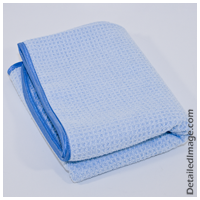
For drying your vehicle safely and efficiently I highly recommend the Waffle Weave Drying Towel. It utilizes a super absorbent fiber and waffle weave pattern help quickly absorb all the water. The towel is totally paint safe including the silk edges for extra precaution. You can also wash the towel much like other microfiber products and it's very durable.

Melting Slicks

Joined: Jan 2004
Posts: 2,909
Likes: 4
From: Ponte Vedra Beach / London State: Dazed and confused
100% Cotton Micro Fibre Towels
Most cotton drying towels are not 100% cotton in reality, most use a polyester binding and thread that could scratch paint.
AlpineFiber3 from DFTowels are 100% Cotton Micro fibre, are more absorbent and plusher than most store brought cotton towels.
A micro fibre’s scratch resistance has a lot to do with the way the fibres are processed and spun, there are too many factors to be able to say conclusively that natural fibres will not cause scratches and artificial fibres will. In my opinion, however, natural fibres are far less likely to scratch, flannel or cotton flannel is a very tight weave and it could scratch as it mats down easily, always try to stay with a terrycloth weave.
Theses cotton towels are exceptionally soft, super absorbent terrycloth. The fabric is woven from a blend of micro fibre cotton and Pima Cotton; no artificial fibres of any kind are used in the weaving or sewing of this product. But pay attention to the edge bindings as they can be a potential cause of surface scratches Quality towels edge bindings are sewn with cotton thread, not polyester. (For more information on cotton) -http://www.supima.com/faq/index.htm
The smaller the diameter of the yarn, the softer the fabric will feel, however this does not mean that its non-abrasive and will not cause scratches (this softness can also be chemically induced) The most important criteria for any fabric used on a vehicle surface is its quality and scratch resistance. Natural cellulose can be spun with long staple cotton and then woven into 100% natural looped terrycloth or velour, were the loops are trimmed to produce a fine nap (ideal for glass cleaning).
Once this type of fabric is washed two or three times, to remove any short fibres it will not leave a lint trail. The principal structural componant in cotton and most other plants is actually organic cellulose consisting of many small molecules linked together (monomers) in a chain or lattice like structure; both linen and cotton are natural plant fibres. Quality towels edge bindings are sewn with cotton thread, not polyester.
Drying - There are two different micro fibre towelling weaves that make good drying towels: terry cloth and Piqué or waffle weave. [Piqué isn't more absorbent than terry but the ridges act as hundreds of little squeegees which push the water up into the cups giving the fabric time to absorb.] Leo Cerruti
Waffle Weave Towel (Piqué) - is a synthetic micro fibre woven with a dimpled pattern, which provides thousands of small pockets to trap dirt or grit. The absorbency of these towels is quite remarkable; they are able to hold seven or eight times their weight in water. when they are wet they’re very soft and super absorbent, and glide easily over the surface, the ‘pockets’ in the weave ‘hold’ any dirt or surface debris unlike some other super absorbing products that trap dirt between the towel and paint surface with the potential to cause serious scratches (never use it when it’s dry as it can potentially scratch) That goes for whatever you use for drying, including cotton towels. Ensure that the towel is really wet and then wring it out thoroughly before using.
The reason I advice against the use of natural or synthetic chamois leather or flat surface synthetic sponges is that grit or dirt can become trapped between its flat surface and the paint causing scratches.
Water Sheeting for Drying
On the final rinse of the washing process remove the nozzle from the hose and ‘sheet’ the water, this greatly helps in the drying process, lay the waffle weave towel on the surface and gently pull it across the surface. Using a waffle weave micro fibre towel soak up as much water as you can, wringing out often to keep the absorption efficiency up and wringing out also those harmful minerals in the process. When the only thing left on the surface are tiny micro beads of water (really noticeable on a black car), which I easily wipe off with a pass or two of the highly absorbent waffle towel and leave the surface bone dry.
This drying technique is excellent for black cars (especially for ‘soft’ single stage paint that show every surface mark) but look so good when they are properly detailed. This process never includes scrubbing, rubbing or applying any pressure whatsoever. The only time that pressure needs to be applied to a paint surface is when you are polishing or wet-sanding
Most cotton drying towels are not 100% cotton in reality, most use a polyester binding and thread that could scratch paint.
AlpineFiber3 from DFTowels are 100% Cotton Micro fibre, are more absorbent and plusher than most store brought cotton towels.
A micro fibre’s scratch resistance has a lot to do with the way the fibres are processed and spun, there are too many factors to be able to say conclusively that natural fibres will not cause scratches and artificial fibres will. In my opinion, however, natural fibres are far less likely to scratch, flannel or cotton flannel is a very tight weave and it could scratch as it mats down easily, always try to stay with a terrycloth weave.
Theses cotton towels are exceptionally soft, super absorbent terrycloth. The fabric is woven from a blend of micro fibre cotton and Pima Cotton; no artificial fibres of any kind are used in the weaving or sewing of this product. But pay attention to the edge bindings as they can be a potential cause of surface scratches Quality towels edge bindings are sewn with cotton thread, not polyester. (For more information on cotton) -http://www.supima.com/faq/index.htm
The smaller the diameter of the yarn, the softer the fabric will feel, however this does not mean that its non-abrasive and will not cause scratches (this softness can also be chemically induced) The most important criteria for any fabric used on a vehicle surface is its quality and scratch resistance. Natural cellulose can be spun with long staple cotton and then woven into 100% natural looped terrycloth or velour, were the loops are trimmed to produce a fine nap (ideal for glass cleaning).
Once this type of fabric is washed two or three times, to remove any short fibres it will not leave a lint trail. The principal structural componant in cotton and most other plants is actually organic cellulose consisting of many small molecules linked together (monomers) in a chain or lattice like structure; both linen and cotton are natural plant fibres. Quality towels edge bindings are sewn with cotton thread, not polyester.
Drying - There are two different micro fibre towelling weaves that make good drying towels: terry cloth and Piqué or waffle weave. [Piqué isn't more absorbent than terry but the ridges act as hundreds of little squeegees which push the water up into the cups giving the fabric time to absorb.] Leo Cerruti
Waffle Weave Towel (Piqué) - is a synthetic micro fibre woven with a dimpled pattern, which provides thousands of small pockets to trap dirt or grit. The absorbency of these towels is quite remarkable; they are able to hold seven or eight times their weight in water. when they are wet they’re very soft and super absorbent, and glide easily over the surface, the ‘pockets’ in the weave ‘hold’ any dirt or surface debris unlike some other super absorbing products that trap dirt between the towel and paint surface with the potential to cause serious scratches (never use it when it’s dry as it can potentially scratch) That goes for whatever you use for drying, including cotton towels. Ensure that the towel is really wet and then wring it out thoroughly before using.
The reason I advice against the use of natural or synthetic chamois leather or flat surface synthetic sponges is that grit or dirt can become trapped between its flat surface and the paint causing scratches.
Water Sheeting for Drying
On the final rinse of the washing process remove the nozzle from the hose and ‘sheet’ the water, this greatly helps in the drying process, lay the waffle weave towel on the surface and gently pull it across the surface. Using a waffle weave micro fibre towel soak up as much water as you can, wringing out often to keep the absorption efficiency up and wringing out also those harmful minerals in the process. When the only thing left on the surface are tiny micro beads of water (really noticeable on a black car), which I easily wipe off with a pass or two of the highly absorbent waffle towel and leave the surface bone dry.
This drying technique is excellent for black cars (especially for ‘soft’ single stage paint that show every surface mark) but look so good when they are properly detailed. This process never includes scrubbing, rubbing or applying any pressure whatsoever. The only time that pressure needs to be applied to a paint surface is when you are polishing or wet-sanding
An extract from one of a series of in-depth, unbiased detailing articles © TOGWT ™ Ltd Copyright 2002-2008, all rights reserved.
Last edited by TOGWT; Jul 2, 2009 at 04:16 AM.
Corvette Stories
The Best of Corvette for Corvette Enthusiasts

Every 2027 Corvette Engine Explained
Joe Kucinski
Designer Imagines A Corvette That Looks More Like a Corvette Than the Corvette
Verdad Gallardo
10 Ugly Corvettes That We Still Kinda Love
Joe Kucinski
Top 10 Most Expensive Corvettes Ever Sold on Bring A Trailer
Brett Foote
10 Things Every Corvette Owner Needs (2026 Edition)
Michael S. Palmer
8 Most "Only Corvette Owners Understand" Quirks and Problems
Pouria Savadkouei
10 Reasons the C6 Z06 is Still A Performance Benchmark After 20 Years
Joe Kucinski
How Much Horsepower Every Corvette Engine "LOST" in 1972
Joe Kucinski
Top 10 DOs and DON'Ts for Protecting Your Convertible Top!
Michael S. Palmer
Burning Brakes


Joined: Jun 2008
Posts: 1,096
Likes: 1
From: Chesapeake Va
Microfibers are half the diameter of a fine silk fiber, one-third the diameter of cotton, one-quarter the diameter of fine wool, and one hundred times finer than human hair.
"Denier" is the term used to define the diameter or fineness of a continuous or filament fiber such as silk or man-made fibers. Denier is the weight in grams of a 9000-meter length of fiber or yarn. The higher the number, the thicker the fiber.
In order to be called a "microfiber," the fiber must be less than one denier. Fine silk, for example, is approximately 1.25 denier.
"Denier" is the term used to define the diameter or fineness of a continuous or filament fiber such as silk or man-made fibers. Denier is the weight in grams of a 9000-meter length of fiber or yarn. The higher the number, the thicker the fiber.
In order to be called a "microfiber," the fiber must be less than one denier. Fine silk, for example, is approximately 1.25 denier.
Former Vendor
Joined: Apr 2005
Posts: 14,104
Likes: 244
From: South Florida
Microfibers are half the diameter of a fine silk fiber, one-third the diameter of cotton, one-quarter the diameter of fine wool, and one hundred times finer than human hair.
"Denier" is the term used to define the diameter or fineness of a continuous or filament fiber such as silk or man-made fibers. Denier is the weight in grams of a 9000-meter length of fiber or yarn. The higher the number, the thicker the fiber.
In order to be called a "microfiber," the fiber must be less than one denier. Fine silk, for example, is approximately 1.25 denier.
"Denier" is the term used to define the diameter or fineness of a continuous or filament fiber such as silk or man-made fibers. Denier is the weight in grams of a 9000-meter length of fiber or yarn. The higher the number, the thicker the fiber.
In order to be called a "microfiber," the fiber must be less than one denier. Fine silk, for example, is approximately 1.25 denier.
Burning Brakes
Joined: Jun 2008
Posts: 1,096
Likes: 1
From: Chesapeake Va
Ohio State University. I'll post the link when I return home this afternoon. There is another site that has electron microscope scans of fibers. Cotton is huge compared to MF. Wiki (not authoritative) says what I have always understood to be is MF are synthetic fibers, not natural fibers.
Google search denier. It's a standard measurement for yarn.
Google search denier. It's a standard measurement for yarn.
Last edited by GotChrist?; Jul 2, 2009 at 09:48 PM.
Melting Slicks
Joined: Jan 2004
Posts: 2,909
Likes: 4
From: Ponte Vedra Beach / London State: Dazed and confused
This if from DFTowel's wbsite-
[What exactly is microfiber yarn and why are our AlpineFiber™ and AlpineMicro™ so good?
There seems to be quite a lot of confusion in the automotive market as to exactly what microfiber is. There are several unscrupulous suppliers who would have you believe that because a cloth is microfiber it is safe for your vehicle's finish. NOTHING could be further from the truth. There are towels that use microfiber yarns that will scratch and there are towels that do not use microfiber that are safe. The fact that a towel is made using microfiber yarns is not in itself a guarantee of safety.
Microfiber is not a fabric, it is a very small diameter yarn, spun into thread, that is used to weave or knit fabric. Most common microfibers are polyester and may indeed scratch the surface of your car if you aren't careful. You should, as a rule, avoid any cloth material that is not thoroughly inspected by the manufacturer and seller. You're asking for trouble with low priced mega-store towels or heavily discounted ones from online sellers. Always test any towel you buy before use, it's better to be safe than sorry.
By definition, microfibers are ultra-fine yarns made from various sources. They can be polyester, nylon, or a natural material such as cotton or other cellulose materials. Microfiber is typically two times finer than silk and hundreds of times finer than human hair. In fact, our AlpineFiber™ and AlpineMicro™ yarns are so fine that a strand stretching 25,000 miles around the earth will weigh only three ounces!
The smaller the diameter, the softer the fabric will "feel." This does not mean, however, that it is not abrasive or will not scratch. In fact, most microfiber cloths that come from the orient are polyester microfiber and will most likely scratch the surface of your vehicle. Just because it says microfiber and it feels soft does not guarantee a scratch free shine! If you use polyester microfiber be sure they come from a respected source who has very stringent quality control.
Microfibers are never used in their natural state, they are spun together to make a larger diameter yarn which is then used to weave or knit various fabrics such as twills, satins, and terrycloth. Many times you will see microfibers spun in combination with other yarns in order to achieve a desired result. For example, nylon microfiber spun with spandex to give it stretch is a common fabric used in lingerie and swimwear fabrics. Our AlpineFiber™ is an all natural cotton microfiber spun with Pima cotton that is then woven in a terrycloth fabric.
Compare our terrycloth with those of other manufacturers. The first thing you will notice is how much softer it is. Also take note of the larger terry loops that we use. These larger loops allow for more fabric to come into contact with the surface than other terrycloths.
AlpineFiber™ and AlpineMicro™ are our trademarks for our microfiber yarns. A secret process combines 100% natural materials in the case of our AlpineFiber™ or very highly processed polyester and Nylon yarns in the case of our AlpineMicro™ into very absorbent and soft yarns that will not scratch whatever surface they come into contact with.
Finally, we do not use any chemicals to fool you into thinking our cloth is softer than our competitor's. We are softer naturally and will stay that way.]
Last edited by TOGWT; Jul 2, 2009 at 05:57 PM.
Burning Brakes
Joined: Jun 2008
Posts: 1,096
Likes: 1
From: Chesapeake Va
Thread Starter
Advanced
Joined: Jan 2009
Posts: 97
Likes: 0
From: Frisco Texas
Well, now I know. I also thought that microfiber meant poly and that did not sound like a good towel to use to dry the car off. The microfiber towels I have for waxing are very small and I got from Griot's, so I will continue to use those. They should be a trusted souce. Now, I will pick one of you forum dealers and buy a good drying towel. My old towels are shedding all over the car. Thanks.
Former Vendor
Joined: Apr 2005
Posts: 14,104
Likes: 244
From: South Florida
Well, now I know. I also thought that microfiber meant poly and that did not sound like a good towel to use to dry the car off. The microfiber towels I have for waxing are very small and I got from Griot's, so I will continue to use those. They should be a trusted souce. Now, I will pick one of you forum dealers and buy a good drying towel. My old towels are shedding all over the car. Thanks.
We are an authorized Griots reseller ... and currently offer some of their towels which stack up rather well with our Cobra line. Best part, forum discount applies to most these items making it one stop shoping.
Melting Slicks
Joined: Jan 2004
Posts: 2,909
Likes: 4
From: Ponte Vedra Beach / London State: Dazed and confused
Removing Wax / Sealants
Water, being hydrophilic adheres to micro fibre; in comparison to cotton, a Microfiber will soak up 98% moisture, while cotton can only soak up at most 70%.
The polyester and polyamide content of Microfiber is typically a blend of 80% polyester (a scrubbing fibre) and 20% polyamide (an absorbing fibre).The nature of this yarn is that it is an absorbent; the reason polyester appears to absorb liquids is the many thousands of micro fibres that collectively encapsulate liquids
a) A Microfiber towel - made from polyester/polyamide will remove product due to its inherent properties (that’s why they are so good at cleaning without the use of chemicals). The polyester and polyamide are combined during weaving to create microscopic loops, which form a network of tiny hooks, scrubbing away dirt and grime while trapping it within the weave. These very fine fibres have little 'hook like claws' that reach into the tiniest of crevices, pulling out dirt, dust, grease, grime, and even bacteria. They hold these foreign materials in their web of weaves until they are washed in warm water where the fibres relax and release these materials.
Conversely the same attributes that make Microfiber so good at cleaning have an adverse affect when applying wax. A polymer sealant forms a molecular bond with the paint surface, so when you remove it, you are removing excess product. An organic wax however, doesn’t form a bond with the paint surface but merely adheres to it, forming a chain-link type coating. A micro fibre cotton towel will leave enough of the wax behind to enable it to form a surface coating.
b) A Cotton micro fibre towel - made from 100% cotton with a terrycloth weave, spun with long staple cotton and then woven into 100% natural looped terrycloth or velour, the larger fibre loop size that makes up the towels nap are trimmed to produce a fine nap, ideal for buffing and leaving behind a coating on the paint surface.DF Towels
Water, being hydrophilic adheres to micro fibre; in comparison to cotton, a Microfiber will soak up 98% moisture, while cotton can only soak up at most 70%.
The polyester and polyamide content of Microfiber is typically a blend of 80% polyester (a scrubbing fibre) and 20% polyamide (an absorbing fibre).The nature of this yarn is that it is an absorbent; the reason polyester appears to absorb liquids is the many thousands of micro fibres that collectively encapsulate liquids
a) A Microfiber towel - made from polyester/polyamide will remove product due to its inherent properties (that’s why they are so good at cleaning without the use of chemicals). The polyester and polyamide are combined during weaving to create microscopic loops, which form a network of tiny hooks, scrubbing away dirt and grime while trapping it within the weave. These very fine fibres have little 'hook like claws' that reach into the tiniest of crevices, pulling out dirt, dust, grease, grime, and even bacteria. They hold these foreign materials in their web of weaves until they are washed in warm water where the fibres relax and release these materials.
Conversely the same attributes that make Microfiber so good at cleaning have an adverse affect when applying wax. A polymer sealant forms a molecular bond with the paint surface, so when you remove it, you are removing excess product. An organic wax however, doesn’t form a bond with the paint surface but merely adheres to it, forming a chain-link type coating. A micro fibre cotton towel will leave enough of the wax behind to enable it to form a surface coating.
b) A Cotton micro fibre towel - made from 100% cotton with a terrycloth weave, spun with long staple cotton and then woven into 100% natural looped terrycloth or velour, the larger fibre loop size that makes up the towels nap are trimmed to produce a fine nap, ideal for buffing and leaving behind a coating on the paint surface.DF Towels
An extract from one of a series of in-depth, unbiased detailing articles © TOGWT ™ Ltd Copyright 2002-2008, all rights reserved
.
Last edited by TOGWT; Jul 5, 2009 at 01:15 PM.
