


Meguiars Ultimate Comound

Thread Starter
Safety Car


Joined: Feb 2000
Posts: 3,771
Likes: 0
From: MANDEVILLE, LA La
 Meguiars Ultimate Comound
Have a Black 96' and the hood has slight water spots. You can't really feel them but can see them at certain angles. Gonna use Meguiars UC
with a Porter Cable 7424XP.Anyone use this and your comments...Please.
It gets Rave Reviews.
Thanx
with a Porter Cable 7424XP.Anyone use this and your comments...Please.
It gets Rave Reviews.
Thanx

Former Vendor
Joined: Apr 2005
Posts: 14,104
Likes: 244
From: South Florida

Heel & Toe

Joined: Feb 2007
Posts: 20
Likes: 0

Where does the Meguiars #9 Swirl Remover 2.0 fit in the list of products ?
Former Vendor
Joined: Apr 2005
Posts: 14,104
Likes: 244
From: South Florida

Former Vendor
Joined: Jul 2002
Posts: 687
Likes: 3
From: Stuart Florida
Tracers Tracers - RIDS - Pigtails - Cobweb Swirls - Rotary Buffer Swirls - Holograms - Water Spots - Bird Drooping Etchings - Micro-Marring
Originally Posted by Mike Phillips
Water Spots - Type I, Type II, Type III
Water Spots are more complex than most people assume because there are different types of water spots. Some water spots are merely mineral deposits on the surface left behind after water with minerals has evaporated off the surface. These deposits can often be washed off the paint using a quality car wash soap. Sometimes these deposits can also leave an imprint in the paint in the perimeter of the spot and in these cases the imprint must be removed using a compound or paint cleaner as it's a defect in the paint, not simply a deposit on the paint. Some sources of water, be it rain with air-borne pollution mixed-in, or sprinkler water from a city water supply or well water, can have corrosive enough elements in it that it will actually eat into or etch the paint leaving a depression or crater in the paint where the water dwelled or dried. This is a Type II water spot and it can only be removed by leveling the surrounding paint by hand or machine with some type of abrasive compound or paint cleaner. Type III Water Spots are primarily a stain in the paint which looks like fading where water pooled and then dwelled for some measure of time. This primarily happens to single stage paints which tend to be more porous and thus will absorb water into itself. If Type III Water Spots are limited to only the upper surface of the paint then they can be removed by abrading the paint by hand or machine with a compound or polish.
Before attempting to remove water spots it is important to first diagnose which type of water spot is affecting your car's paint.
Water Spots are more complex than most people assume because there are different types of water spots. Some water spots are merely mineral deposits on the surface left behind after water with minerals has evaporated off the surface. These deposits can often be washed off the paint using a quality car wash soap. Sometimes these deposits can also leave an imprint in the paint in the perimeter of the spot and in these cases the imprint must be removed using a compound or paint cleaner as it's a defect in the paint, not simply a deposit on the paint. Some sources of water, be it rain with air-borne pollution mixed-in, or sprinkler water from a city water supply or well water, can have corrosive enough elements in it that it will actually eat into or etch the paint leaving a depression or crater in the paint where the water dwelled or dried. This is a Type II water spot and it can only be removed by leveling the surrounding paint by hand or machine with some type of abrasive compound or paint cleaner. Type III Water Spots are primarily a stain in the paint which looks like fading where water pooled and then dwelled for some measure of time. This primarily happens to single stage paints which tend to be more porous and thus will absorb water into itself. If Type III Water Spots are limited to only the upper surface of the paint then they can be removed by abrading the paint by hand or machine with a compound or polish.
Before attempting to remove water spots it is important to first diagnose which type of water spot is affecting your car's paint.
Type I Water Spots
Type I Water Spots are primarily a mineral or dirt deposit laying on the surface of paint. Type I Water Spots can be the results of minerals suspended in city water or well water that are left behind after the water evaporates off the finish. This can happen by washing a car but not drying the water off the paint or if a sprinkler goes off next to the car covering the car with water drop that are not dried off the paint. Type I Water Spots can also be dirt or pollution particles left behind after water from rain or inclement weather evaporates of the finish. Type I Water Spots can also be Type II Water Spots in that the water can leave both a deposit on the surface and an etching in the finish.
Type II Water Spots
Type II Water Spots are actual etchings or craters in the paint because something corrosive in a water source has landed on the paint and was not removed before a portion of the paint was eaten or dissolved by the corrosive substance.
Type III Water Spots
Type III Water Spots are spots that look faded or dull and are found primarily found on single stage paints after a water source lands on and then pools on the paint and is usually left to dwell on the surface for some measure of time before it evaporates or is wiped-off the surface.
Type I Water Spots are primarily a mineral or dirt deposit laying on the surface of paint. Type I Water Spots can be the results of minerals suspended in city water or well water that are left behind after the water evaporates off the finish. This can happen by washing a car but not drying the water off the paint or if a sprinkler goes off next to the car covering the car with water drop that are not dried off the paint. Type I Water Spots can also be dirt or pollution particles left behind after water from rain or inclement weather evaporates of the finish. Type I Water Spots can also be Type II Water Spots in that the water can leave both a deposit on the surface and an etching in the finish.
Type II Water Spots
Type II Water Spots are actual etchings or craters in the paint because something corrosive in a water source has landed on the paint and was not removed before a portion of the paint was eaten or dissolved by the corrosive substance.
Type III Water Spots
Type III Water Spots are spots that look faded or dull and are found primarily found on single stage paints after a water source lands on and then pools on the paint and is usually left to dwell on the surface for some measure of time before it evaporates or is wiped-off the surface.
If you're using the PC then watch my two videos here,
Show Car Garage Video: How-To do a "Section Pass" when Machine Polishing with a DA Polisher
Show Car Garage Video: How To Remove Swirls, Scratches and Water Spots using a PC 7424XP, Meguiar's G110v2 or Griot's Garage Random Orbital Polisher
More videos and articles in my Signature Line
The key to removing any defects with a DA style polisher is to only tackle a small section at a time. Usually a 2' x 2' section is too large, about 20" squarish is about as big as you want to go...

The SMAT Pack - Everything you ever wanted to know about Meguiar's SMAT products...

M09 Swirl Remover 2.0 is a diminishing abrasive product. It is very light in it's cutting ability with emphasis on the word very.
Former Vendor
Joined: Jul 2002
Posts: 687
Likes: 3
From: Stuart Florida
I wrote this article back in 2005 and the information in it is still accurate today, plus it has some really good close-up photos I took of Type I and Type II water spots.
How To Remove Water Spots off Automotive Paints
The Type II water spots were actually in a CF member's Corvette, his name is Alex Fong, not sure what his forum name is.
How To Remove Water Spots off Automotive Paints
The Type II water spots were actually in a CF member's Corvette, his name is Alex Fong, not sure what his forum name is.
Last edited by MikePhillips; May 22, 2010 at 05:51 PM.
Thread Starter
Safety Car
Joined: Feb 2000
Posts: 3,771
Likes: 0
From: MANDEVILLE, LA La
I wrote this article back in 2005 and the information in it is still accurate today, plus it has some really good close-up photos I took of Type I and Type II water spots.
How To Remove Water Spots off Automotive Paints[/URL]
The Type II water spots were actually in a CF member's Corvette, his name is Alex Fong, not sure what his forum name is.
How To Remove Water Spots off Automotive Paints[/URL]
The Type II water spots were actually in a CF member's Corvette, his name is Alex Fong, not sure what his forum name is.
Thanx
Corvette Stories
The Best of Corvette for Corvette Enthusiasts

10 Reasons the C6 Z06 is Still A Performance Benchmark After 20 Years
Joe Kucinski
How Much Horsepower Every Corvette Engine "LOST" in 1972
Joe Kucinski
Top 10 DOs and DON'Ts for Protecting Your Convertible Top!
Michael S. Palmer
Top 10 Most Explosive Corvettes Ever Made: Power-to-Weight Ratio Ranked!
Joe Kucinski
150 hp to 1,250 hp: Every Corvette Generation Compared by the Specs That Matter
Joe Kucinski
8 Coolest Corvette Pace Cars (and Replicas) of All Time
Verdad Gallardo
Top 10 Corvette Engines RANKED by Peak Torque (70+ Years of Muscle!)
Joe Kucinski
Corvette ZR1X Will Be Pacing the Indy 500, And Could Probably Race, Too!
Verdad Gallardo
Top 10 Corvettes Coming to Mecum Indy 2026!
Brett Foote
Former Vendor
Joined: Apr 2005
Posts: 14,104
Likes: 244
From: South Florida
I contacted Mike to repair link , but believe I found it on the second post for water spots and looks like you may have also. This is for others that might want it too:
http://meguiarsonline.com/forums/showthread.php?t=4891
http://meguiarsonline.com/forums/showthread.php?t=4891
Former Vendor
Joined: Jul 2002
Posts: 687
Likes: 3
From: Stuart Florida




Racer
Joined: Aug 2005
Posts: 337
Likes: 0
From: Fountain Hills AZ
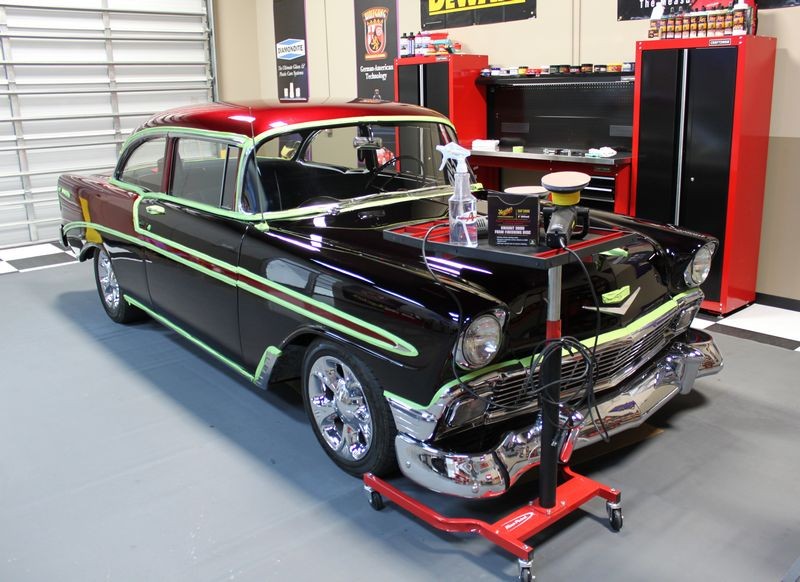
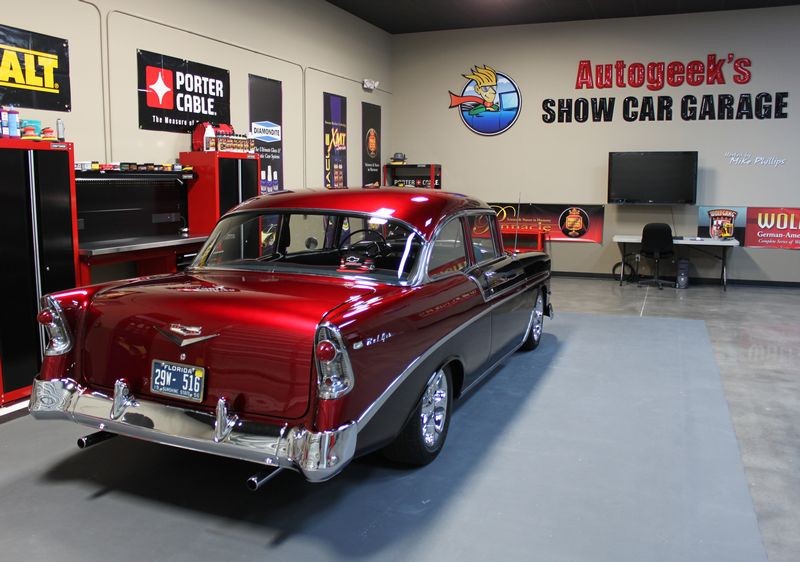
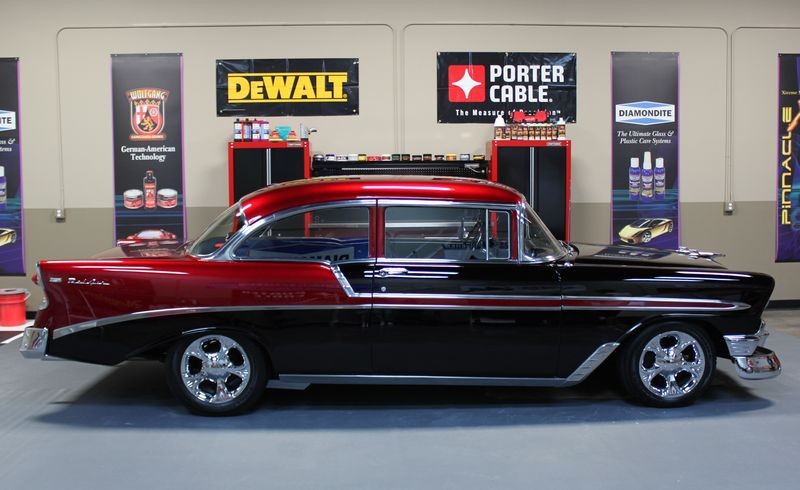
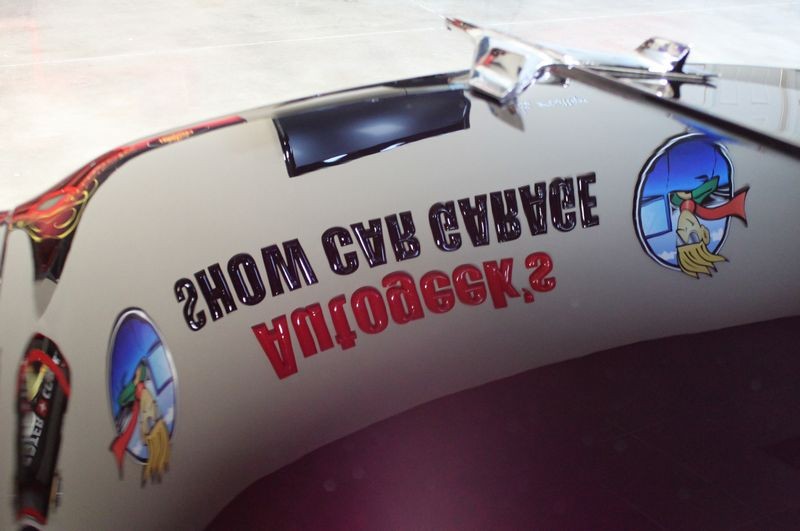
Mike, we all know you are one of the best but to do that level of work in 8 hours is insane! My hats off to you as it would take me and my POS back 60 hours to even come close to what you accomplished. That would assume that I even knew how to damp sand in the first place. Not trying to highjack the thread just had to compliment your work. Simply outstanding.
Not trying to highjack the thread just had to compliment your work. Simply outstanding.
Former Vendor
Joined: Jul 2002
Posts: 687
Likes: 3
From: Stuart Florida
One thing I'm not known for is working fast... 
In fact in my entire online posting history you'll never find a single post by me that states I'm fast nor that I'm slow... I move the polisher over the paint at the speed it takes to do the job right or in some cases I move the sander over the paint at the speed it takes to do the job right.
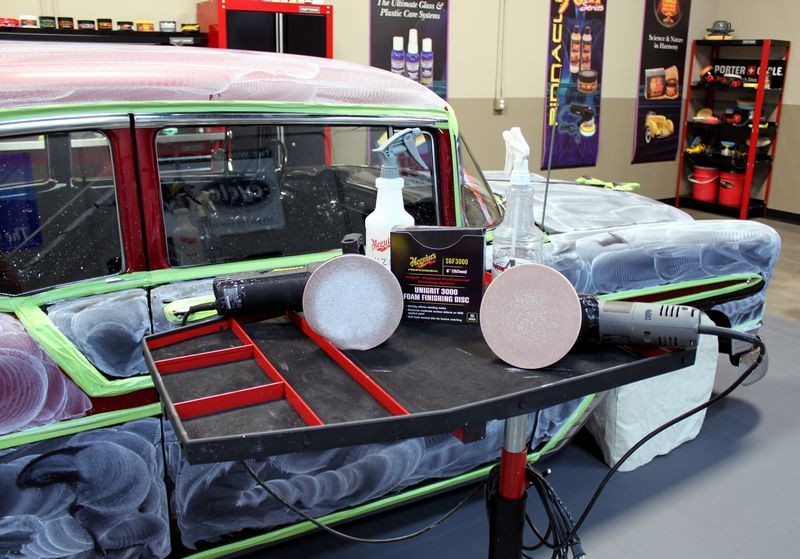
Damp-sanding is fast as the discs cut fast, plus there were two of us sanding. Where we saved the most time was the compounding as this is about a 20 year old House of Kolor paint system and the clear on this car buffed like lacquer, that is the sanding marks buffed out quick and easy.
We didn't remove any of the script or trim because we only had Saturday to do the work, so it had to be done in one day and I didn't want to get into removing speed nuts and crusty, rusting nuts off chrome pot metal. I don't mind doing this if I'm not rushed but after looking at the script and other trim components it looked like there would be some potential problems to start trying to remove the fasteners and nuts.
For what I would call one of my few "quickies" in life, it did come out pretty nice.
I'm supposed to have a 1970 Chevy Truck show up today for another damp-sand and buff but this is a new clear coat so it will be interesting to see how well it buffs...

In fact in my entire online posting history you'll never find a single post by me that states I'm fast nor that I'm slow... I move the polisher over the paint at the speed it takes to do the job right or in some cases I move the sander over the paint at the speed it takes to do the job right.
Damp-sanding is fast as the discs cut fast, plus there were two of us sanding. Where we saved the most time was the compounding as this is about a 20 year old House of Kolor paint system and the clear on this car buffed like lacquer, that is the sanding marks buffed out quick and easy.
We didn't remove any of the script or trim because we only had Saturday to do the work, so it had to be done in one day and I didn't want to get into removing speed nuts and crusty, rusting nuts off chrome pot metal. I don't mind doing this if I'm not rushed but after looking at the script and other trim components it looked like there would be some potential problems to start trying to remove the fasteners and nuts.
For what I would call one of my few "quickies" in life, it did come out pretty nice.
I'm supposed to have a 1970 Chevy Truck show up today for another damp-sand and buff but this is a new clear coat so it will be interesting to see how well it buffs...
