


[roll-out]math Q, please

Thread Starter
Team Owner


Joined: Dec 2000
Posts: 90,675
Likes: 304
From: SE NY
Cruise-In II Veteran
 [roll-out]math Q, please
Since my 1st event .004sec red due to a very slight creap-in after the staging bulb was lit, I've been wondering about the math of the staging area:
-how far are the "beams" off the pavement?
-what is the distance between the prestage and the stage beams?
Does anyone here know these dimensions or are they better addressed to track officials at Raceway Park?
-how far are the "beams" off the pavement?
-what is the distance between the prestage and the stage beams?
Does anyone here know these dimensions or are they better addressed to track officials at Raceway Park?

Race Director


Joined: Jan 2003
Posts: 15,175
Likes: 86
From: State of Confusion
Since my 1st event .004sec red due to a very slight creap-in after the staging bulb was lit, I've been wondering about the math of the staging area:
-how far are the "beams" off the pavement?
-what is the distance between the prestage and the stage beams?
Does anyone here know these dimensions or are they better addressed to track officials at Raceway Park?
-how far are the "beams" off the pavement?
-what is the distance between the prestage and the stage beams?
Does anyone here know these dimensions or are they better addressed to track officials at Raceway Park?
I believe it is set by using a 26"-diameter 'disc' (usually a round piece of wood with a handle, like a wheel-barrow w/o the bucket ), and with the Pre-Stage/Stage beams a pre-set height (3" ????? ) off the ground, it is 'X' from Pre-Stage to Stage, 'Y' from Stage to deep-stage, and 'Z' from deep-stage to foul-start/Red-light.

Le Mans Master


Joined: Feb 1999
Posts: 6,172
Likes: 11
From: somers, ny
Jim i believe the stage lights are between 2-3 inches of the ground. Min car clearance is 3 inches so the beams must be bleow that. And i also believe the beams are 7 inches apart. My memory sucks, so i could be off a little.
Does anyone know the distance between the MPH markers? Someone asked me this weekend and i couldn't remember. Thought it was 60 feet, but wouldn't swear to it.
Does anyone know the distance between the MPH markers? Someone asked me this weekend and i couldn't remember. Thought it was 60 feet, but wouldn't swear to it.
Race Director
Joined: Jan 2003
Posts: 15,175
Likes: 86
From: State of Confusion
Jim i believe the stage lights are between 2-3 inches of the ground. Min car clearance is 3 inches so the beams must be bleow that. And i also believe the beams are 7 inches apart. My memory sucks, so i could be off a little.
Does anyone know the distance between the MPH markers? Someone asked me this weekend and i couldn't remember. Thought it was 60 feet, but wouldn't swear to it.
Does anyone know the distance between the MPH markers? Someone asked me this weekend and i couldn't remember. Thought it was 60 feet, but wouldn't swear to it.
the MPH-clocks are 66' apart at both the 1/8-mile & 1/4-mile mark, with the 'start-MPH' beam 66' in-front of each incremental timer (594' and 1254', respectively ), and until the early-90s, the 1/4-mile/MPH clocks also extended 66' BEYOND the finish-line (probably beginning the term 'drove-it-out-the-backdoor' ), for a total of 132', and NHRA, trying to keep '300' off the score-boards, shortened this distance.
Race Director


Joined: Aug 2000
Posts: 10,649
Likes: 31
From: Central Florida
Here you go. 1999 version of the math. If anyone has something more current, please post a link.
----------------------------------
On The Starting Line
with NHRA Chief Starter Rick Stewart
http://www.nhra.com/dragster/1999/is...ting_line.html
It's the end of June and seven races since my last column. There has been a lot of racing, every type of weather (except snow), and a whole bunch of happenings and activity in and around the starting line.
Many of the safety issues I've discussed have improved, but some need further attention. One of the basics concerns the pre-stage and staging beams. There is no mystery about these beams that activate the pre-stage and staging lights, but I hear and read so much that is incorrect about width, height, and how to check rollout.
Two infrared beams are 11 1/2 inches wide with a 4 1/2-inch overlay.The beam height is 1 9/16 inches. These measurements are checked daily and maintained to the fraction of an inch. A 22-inch wheel and tire are used, and the measurements are made twice, in each lane, where the front wheels are positioned to the left and right in the middle of the groove.
After activating the pre-stage beam, a driver must move forward 7 inches to activate the staging light. To turn the pre-stage light off, a driver must move forward another 4 1/2 inches, leaving 7 inches to move out of the staging beam.
Drivers who stage carefully, consistently, and use the pre-stage light to locate their front wheels to utilize the consistent rollout will have 11 inches every run for consistent reaction times and elapsed times.
Deep staging is not allowed in the Super categories, but it does occur in all other categories some of the time. A few racers deep stage on purpose, and others just go in too fast or not carefully. The disadvantages of deep staging are a 40- to 80-percent reduction in rollout, which causes many red-lights; elapsed-time readings that will vary depending on how deep you're in; and the responsibility of staging first, because when both staging lights are activated, the starter believes that the drivers are ready.
Keep in mind that some tracks are using an auto-start system, though not at national events, and the computer is programmed to respond to the staging light coming on. Why do some people deep stage? You've got me.
A shallow stage is another way to get a big red-light. A driver will go in very slowly and stop at the slightest hint of activation of the staging light. If the staging beam has a front tire in 1/16-, 1/8-, or 1/4-inch, remember that is all the movement required to pull the front wheel back out of the beam. Torque from bringing up engine rpm can pull the front wheels back a small amount, especially on full-bodied, sprung cars.
Big rear slicks have more bite than treaded, small front tires, so you know what moves. My suggestion is to stage solid on each run, about 3/8- to 1/2-inch, so the shallow-stage red will not get you. I hope this explanation will keep a racer from ever saying again, "How could I have backed out of the light? The car didn't move!"
The staging light "rocker" is similar to the shallow stage except that the rocker is caused by the driver bumping in (using a quick and hard brake) and not going in smoothly. The rear slicks' sidewalls will wrinkle enough to allow the front tires to go in the staging beam and activate the staging light. As the car settles down, the racing slick will straighten out and may pull the front wheel back enough to cause the staging light to go off, and if the Tree is activated, a red-light results. Stage smoothly and carefully on each run, and be consistent.
While on the subject of staging, I'll define courtesy stage. The last paragraph of page 202 of the 1999 NHRA Rulebook states, "When staging for any of the Super categories, both contestants must activate their pre-stage lights before either may advance into the stage beams." If a driver lights both the pre-stage and stage lights before his or her opponent has the pre-stage light on, the starter will hold up the car not pre-staged, then back the driver out with both lights on and warn him, "Only the pre-stage light is to be on until the opponent lights his or her pre-stage."
If a driver lights both pre-stage and stage a second time before the driver in the other lane lights his or her pre-stage (not observing the courtesy stage rule), the driver will be disqualified if it occurs in eliminations.
While on definitions, try a "wheelie red." If a race car's first move is not forward but "popping," or raising, the front wheels up more than 1 and 9/16 inches, the car is out of the beam. The driver has lost about 9 and 7/16 inches of expected rollout, usually resulting in a red-light. The first move should be forward, not up.
A safety issue that needs to be brought up again concerns crewmembers who leave the starting-line area without looking both ways to make sure that cars are not leaving the burnout box or backing up from burnouts. Treat the racetrack like a busy freeway, and do not cross until it is clear.
Drivers who look over at their competition will sometimes move the steering wheel in the direction they are looking (toward the centerline) and get out of the groove. The problem is not the track condition but of getting out of the groove and not paying attention to keeping the race car in a straight line. Keep your priorities straight!
After having discussed definitions in this column, I offer these: To react is to respond. To anticipate is to expect. Drag races are won by driver reaction time and car performance, not driver anticipation and car performance. If a driver expects or anticipates a green light at exactly the same time run after run, he most likely will end up with a red-light and a loss. React to the amber lights coming on to win. 'Nuff said.
Thank you for the great communication, and keep it coming. I hope to see you at an NHRA national event real soon. Go straight, run quick, and stop safely.
------------------
Ranger
----------------------------------
On The Starting Line
with NHRA Chief Starter Rick Stewart
http://www.nhra.com/dragster/1999/is...ting_line.html
It's the end of June and seven races since my last column. There has been a lot of racing, every type of weather (except snow), and a whole bunch of happenings and activity in and around the starting line.
Many of the safety issues I've discussed have improved, but some need further attention. One of the basics concerns the pre-stage and staging beams. There is no mystery about these beams that activate the pre-stage and staging lights, but I hear and read so much that is incorrect about width, height, and how to check rollout.
Two infrared beams are 11 1/2 inches wide with a 4 1/2-inch overlay.The beam height is 1 9/16 inches. These measurements are checked daily and maintained to the fraction of an inch. A 22-inch wheel and tire are used, and the measurements are made twice, in each lane, where the front wheels are positioned to the left and right in the middle of the groove.
After activating the pre-stage beam, a driver must move forward 7 inches to activate the staging light. To turn the pre-stage light off, a driver must move forward another 4 1/2 inches, leaving 7 inches to move out of the staging beam.
Drivers who stage carefully, consistently, and use the pre-stage light to locate their front wheels to utilize the consistent rollout will have 11 inches every run for consistent reaction times and elapsed times.
Deep staging is not allowed in the Super categories, but it does occur in all other categories some of the time. A few racers deep stage on purpose, and others just go in too fast or not carefully. The disadvantages of deep staging are a 40- to 80-percent reduction in rollout, which causes many red-lights; elapsed-time readings that will vary depending on how deep you're in; and the responsibility of staging first, because when both staging lights are activated, the starter believes that the drivers are ready.
Keep in mind that some tracks are using an auto-start system, though not at national events, and the computer is programmed to respond to the staging light coming on. Why do some people deep stage? You've got me.
A shallow stage is another way to get a big red-light. A driver will go in very slowly and stop at the slightest hint of activation of the staging light. If the staging beam has a front tire in 1/16-, 1/8-, or 1/4-inch, remember that is all the movement required to pull the front wheel back out of the beam. Torque from bringing up engine rpm can pull the front wheels back a small amount, especially on full-bodied, sprung cars.
Big rear slicks have more bite than treaded, small front tires, so you know what moves. My suggestion is to stage solid on each run, about 3/8- to 1/2-inch, so the shallow-stage red will not get you. I hope this explanation will keep a racer from ever saying again, "How could I have backed out of the light? The car didn't move!"
The staging light "rocker" is similar to the shallow stage except that the rocker is caused by the driver bumping in (using a quick and hard brake) and not going in smoothly. The rear slicks' sidewalls will wrinkle enough to allow the front tires to go in the staging beam and activate the staging light. As the car settles down, the racing slick will straighten out and may pull the front wheel back enough to cause the staging light to go off, and if the Tree is activated, a red-light results. Stage smoothly and carefully on each run, and be consistent.
While on the subject of staging, I'll define courtesy stage. The last paragraph of page 202 of the 1999 NHRA Rulebook states, "When staging for any of the Super categories, both contestants must activate their pre-stage lights before either may advance into the stage beams." If a driver lights both the pre-stage and stage lights before his or her opponent has the pre-stage light on, the starter will hold up the car not pre-staged, then back the driver out with both lights on and warn him, "Only the pre-stage light is to be on until the opponent lights his or her pre-stage."
If a driver lights both pre-stage and stage a second time before the driver in the other lane lights his or her pre-stage (not observing the courtesy stage rule), the driver will be disqualified if it occurs in eliminations.
While on definitions, try a "wheelie red." If a race car's first move is not forward but "popping," or raising, the front wheels up more than 1 and 9/16 inches, the car is out of the beam. The driver has lost about 9 and 7/16 inches of expected rollout, usually resulting in a red-light. The first move should be forward, not up.
A safety issue that needs to be brought up again concerns crewmembers who leave the starting-line area without looking both ways to make sure that cars are not leaving the burnout box or backing up from burnouts. Treat the racetrack like a busy freeway, and do not cross until it is clear.
Drivers who look over at their competition will sometimes move the steering wheel in the direction they are looking (toward the centerline) and get out of the groove. The problem is not the track condition but of getting out of the groove and not paying attention to keeping the race car in a straight line. Keep your priorities straight!
After having discussed definitions in this column, I offer these: To react is to respond. To anticipate is to expect. Drag races are won by driver reaction time and car performance, not driver anticipation and car performance. If a driver expects or anticipates a green light at exactly the same time run after run, he most likely will end up with a red-light and a loss. React to the amber lights coming on to win. 'Nuff said.
Thank you for the great communication, and keep it coming. I hope to see you at an NHRA national event real soon. Go straight, run quick, and stop safely.
------------------
Ranger
Race Director
Joined: Jan 2003
Posts: 15,175
Likes: 86
From: State of Confusion

..... been a LONG-time for me, and I'da sworn they used a 26" tire/wheel:
thanks for the information!


Drifting


Joined: Jan 2006
Posts: 1,457
Likes: 22
1. If you shallow stage your are anticipating the light and not going off the 3rd yellow. This can be proved by going off a pro .500 tree or vidio taping your launch. You can't tell by the naked eye.
2. It virtually eliminates front tire rollout. 20 lbs of front tire air pressure won't change the rollout to effect the RT when deep staged.
3. Elinimation the rollout variable stabilazies 60' which is 1.5-2x on the top end. Makes it easier to dial.
4. If your are deep staged you are truely reacting to the 3rd amber making your RT's more consistant.
5. The only times I red going deep is when I regress back and "hit" my old shallow spot on the tree or have the car on full kill and can go either side of 00x. I went red more times when I shallow staged.
6. You can put the car in the same spot going deep. You don't have to make a bulb flash to be in the same spot.
7. Deep shortens the track. Going deep I race a 1/4 mile. Shallow you race 1/4 mile plus 7" that's behind the starting line. Less track to manange means less of a variable.

2. It virtually eliminates front tire rollout. 20 lbs of front tire air pressure won't change the rollout to effect the RT when deep staged.
3. Elinimation the rollout variable stabilazies 60' which is 1.5-2x on the top end. Makes it easier to dial.
4. If your are deep staged you are truely reacting to the 3rd amber making your RT's more consistant.
5. The only times I red going deep is when I regress back and "hit" my old shallow spot on the tree or have the car on full kill and can go either side of 00x. I went red more times when I shallow staged.
6. You can put the car in the same spot going deep. You don't have to make a bulb flash to be in the same spot.
7. Deep shortens the track. Going deep I race a 1/4 mile. Shallow you race 1/4 mile plus 7" that's behind the starting line. Less track to manange means less of a variable.
Race Director
Joined: Aug 2000
Posts: 10,649
Likes: 31
From: Central Florida
^^^Thanks for the deep-stage perspective.
From logged numbers, it takes my C6Z .33 to .39 to move the first 12 inches. If I shallow stage, most of that is free and excluded from my ET. If I deep stage, I lose that freebie.
So if I want best ET, I shallow-stage.
Ranger
From logged numbers, it takes my C6Z .33 to .39 to move the first 12 inches. If I shallow stage, most of that is free and excluded from my ET. If I deep stage, I lose that freebie.
So if I want best ET, I shallow-stage.
Ranger
Corvette Stories
The Best of Corvette for Corvette Enthusiasts

10 Reasons the C6 Z06 is Still A Performance Benchmark After 20 Years
Joe Kucinski
How Much Horsepower Every Corvette Engine "LOST" in 1972
Joe Kucinski
Top 10 DOs and DON'Ts for Protecting Your Convertible Top!
Michael S. Palmer
Top 10 Most Explosive Corvettes Ever Made: Power-to-Weight Ratio Ranked!
Joe Kucinski
150 hp to 1,250 hp: Every Corvette Generation Compared by the Specs That Matter
Joe Kucinski
8 Coolest Corvette Pace Cars (and Replicas) of All Time
Verdad Gallardo
Top 10 Corvette Engines RANKED by Peak Torque (70+ Years of Muscle!)
Joe Kucinski
Corvette ZR1X Will Be Pacing the Indy 500, And Could Probably Race, Too!
Verdad Gallardo
Top 10 Corvettes Coming to Mecum Indy 2026!
Brett Foote
Race Director
Joined: Jan 2003
Posts: 15,175
Likes: 86
From: State of Confusion
A few years ago, I saw a study (how-accurate it was is open for debate..... ) where a racer claimed his car was traveling almost 5 MPH when his tires left the beams while staged with both-bulbs lit, yet was only moving slightly-over 1 MPH if deep-staging, and this 4-MPH 'rolling-start advantage' is why his car ran a full-tenth quicker when staged with both-bulbs lit.
Thread Starter
Team Owner
Joined: Dec 2000
Posts: 90,675
Likes: 304
From: SE NY
Cruise-In II Veteran
Wow, great info guys; thanks much.
Since I'm moving 60' in ~2sec the first 11.5" takes around 0.253sec, assuming constant acceleration (of course not true). Under this assumption an unintended "bump" or 1" to 2" could shorten roll out (and hence RT) by .020-.040sec, dmanit...
But, with a roll out of ~.25sec and my reaction time of ~.20-.25sec, I really do not see how I could deep stage and not go red every time, assuming that I exactly react to the 3rd yellow.
I can see that if you run big slicks and loose suspension, where the wheel warps inside the tire and the suspension "torques up", that the roll out could be delayed enough to require a deep stage but not with street tires at close to street inflation and a street suspension??
Since I'm moving 60' in ~2sec the first 11.5" takes around 0.253sec, assuming constant acceleration (of course not true). Under this assumption an unintended "bump" or 1" to 2" could shorten roll out (and hence RT) by .020-.040sec, dmanit...
1. If you shallow stage your are anticipating the light and not going off the 3rd yellow.
I can see that if you run big slicks and loose suspension, where the wheel warps inside the tire and the suspension "torques up", that the roll out could be delayed enough to require a deep stage but not with street tires at close to street inflation and a street suspension??
Drifting
Joined: Jan 2006
Posts: 1,457
Likes: 22
That is true. My ET and 60' slows .1 deep but I'm bracket racing not heads up. In bracket racing that shallow staged "free movement" is excluded from your time slip you still have to manange it. If your looking for the best ET shallow stage as far back as possible. If your looking for more consistancy deep stage.
Race Director
Joined: Jan 2003
Posts: 15,175
Likes: 86
From: State of Confusion
most humans react in .17-.18 seconds, and this is why people who sell practice trees suggest using .325-rollout for beginners (.175 = .325 =.500 )
I can see that if you run big slicks and loose suspension, where the wheel warps inside the tire and the suspension "torques up", that the roll out could be delayed enough to require a deep stage but not with street tires at close to street inflation and a street suspension??
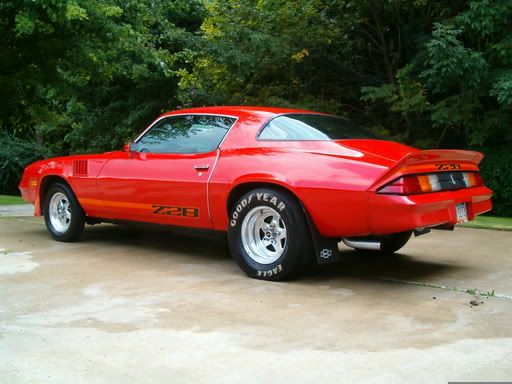
* 3700 pounds race-ready, with frame-connectors & slapper-bars (high-tech, huh? )
* 3.5" skinnie front-wheels, with 26" x 7.5" MT 'front-runner'-style tires, inflated to 45 PSI
* 355" SBC, 110.3:1 CR, 292H cam, 750 double-pump carb via ram-air hood-scoop, open-headers, approx 400-415 crankshaft HP
* THM400 with 2.75:1 First Gear, 8"/4500-stall converter
* 4.10 rear-gears, spool, 28" x 10" EAGLES on 8"-wide wheels, inflated @ 10-12 PSI
* Car runs 12.90s/12.80s @ 105 MPH deep-staged, 1.83-1.85 short-times (maybe it'd go 12.70s with 1.7 short-times if I staged with both-bulbs lit? ), 8.20s @ 85 MPH in the 1/8-mile.
With all the power it has, all the converter & gear-ratio (both transmission & ring/pinion ), and all the chassis-prep (frame-connectors, slapper-bars, ballast for traction ), I launch at 3500-4000 RPM (depending on which track I'm at ), and leaving on the first HINT of the 3rd Amber bulb, I get consistent .01-.03 RTs:
if I hesitate at-all after seeing the bottom-bulb glow, I am .05 or-worse, and most-likely, First Round Runner-Up.

Thread Starter
Team Owner
Joined: Dec 2000
Posts: 90,675
Likes: 304
From: SE NY
Cruise-In II Veteran
..... how do you 'know' that your personal/physical Reaction Time is ~ .20-.25 seconds:...
Over a number of pulls my typical RT is ranging from -0.135sec to -0.145sec. Combined with the 0.100 sec vechicle delay that gives my personal reaction as ~0.24 sec.
The I set up the tree as a 0.500sec pro tree with 0.100sec vehicle delay and 0.240sec roll out. Over several passes my RT comes up as ~0.050sec. Again this amounts to a personal reaction time of about 0.24sec.
Perhaps I'm slower than the "average bear"...
Race Director
Joined: Jan 2003
Posts: 15,175
Likes: 86
From: State of Confusion
I just set up my practice tree as a 0.500sec pro-tree with 0.000sec roll out and 0.100sec vehicle delay.
Over a number of pulls my typical RT is ranging from -0.135sec to -0.145sec. Combined with the 0.100 sec vechicle delay that gives my personal reaction as ~0.24 sec.
The I set up the tree as a 0.500sec pro tree with 0.100sec vehicle delay and 0.240sec roll out. Over several passes my RT comes up as ~0.050sec. Again this amounts to a personal reaction time of about 0.24sec.
Over a number of pulls my typical RT is ranging from -0.135sec to -0.145sec. Combined with the 0.100 sec vechicle delay that gives my personal reaction as ~0.24 sec.
The I set up the tree as a 0.500sec pro tree with 0.100sec vehicle delay and 0.240sec roll out. Over several passes my RT comes up as ~0.050sec. Again this amounts to a personal reaction time of about 0.24sec.

The term 'roll-out' is used in a variety of ways by racers, but I think we should only use it when discussing the proceedure if setting-up the starting-line beams, when you 'ROLL' a wheel 'OUT' of them to set the distance between the Pre-Stage and Stage beams:
when discussing the time it takes a particular car to clear the beams, with a driver who can consistently react the same evry run, a better phrase would be 'Vehiclular Reaction Time', and that would include any heistation in the throttle-response, torque converter to wind-up and begin turning the drive-shaft, slack in the drivetrain, wrinkle & uncoil the rear tires/slicks, any weight-transfer/monkey-motion that occurs as the car begins to move, and finally when the rear-edge of the front tires clear the Stage beam.
Race Director


Joined: Nov 2005
Posts: 14,553
Likes: 1,548
From: Supporting the Corvette Community at Abel Chevrolet in Rio Vista, CA 707-374-6317 Ext.123
St. Jude Donor '08
This thread has been great reading material. Good points from most of you and thanks for the definitions from Ranger. RICH
RICH
Le Mans Master
Joined: Feb 1999
Posts: 6,172
Likes: 11
From: somers, ny
If you want to know what your vehicles roll out time is: take a bunch of hits on a practice tree (with a foot pedal) setup for a pro tree with zero rollout. That will give you your personal r/t. Like Jim, i'm a little slow at around .200-.220 (quicker with the button tho). After you've established you personal r/t, go to the rack for T&T and ask to have a 500 pro tree. Hit that a bunch of times, then subtract your personal r/t from that.
I think you'll be surprised at how late you are on the pro tree.
I think you'll be surprised at how late you are on the pro tree.