


High RPM 327 Plan what do you think?

Thread Starter
Melting Slicks

Joined: Dec 2000
Posts: 2,130
Likes: 1
From: mesa,az
 High RPM 327 Plan what do you think?
Ok so here is the plan. I have a 1962 870 small journel block with splayed caps , OEM steel 3.25 crank , and Iron RHS 72 cc / 220 port heads . The heads are out getting ported etc. Going to buy a set of shaft rockers for it. Will use ti keepers i guess.I'm looking to get a set of jesel dogbone lifters , but will see. I will be going with a solid roller valvetrain. The crank will be sent out for knife edging and whatever else I can do. I will use a set of lightweight rods and pistons. For a intake I am using an RPM performer with the plenum divider milled out. Sheet metel valve covers if I can, looking to make this a sleeper for sure. Any ideas on this. where i might be missing something or haver thought it through incorrectly?
Thanks
Greg
Thanks
Greg

Racer


Joined: Aug 2004
Posts: 371
Likes: 0
From: California Missouri
Questions to think about
1. Edelbrock told me that the Performer RPM intake will not fit under the stock small block hood. Not sure if it will fit or not,, didn't try it but thats what they told me on the phone. I know you mentioned also that the divider was going to be milled. Why not go with a single plane manifold instead,, these RPM manifolds are only good to 6500 and this small block could easily go to 8500,, and probably will need to,,,,, to get the power you want out of it.
2. 220 CC intakes and then ported,, on a 327 seems really really big. What do you plan on doing with the car. This sounds like a full on Race set up for drag or circle track cars. What cam would you be using? Just curious.
3. What kind of transmission? 4.11 gears or 4.56's
I will say it sounds totally radical, awesome,, But before you drop all that dough, besure that the entire drivetrain is setup for the high rpm situation you will be looking at,, I would say this combo is going to be down on torque substantially until its spinning above 3700 rpm maybe higher. Reason I say this is that the runners are huge for the displacement and will kill any low end torque. My Dad had a stock headed 327 that turned 7,000 rpm with a solid stock cam all the time. He raced many bigger motored cars and just smoked them.
I'm sure your combo would run strong but you will have to spin that baby up, then hold on ,, good luck,, I appologize if I have offended you by my post.
2. 220 CC intakes and then ported,, on a 327 seems really really big. What do you plan on doing with the car. This sounds like a full on Race set up for drag or circle track cars. What cam would you be using? Just curious.
3. What kind of transmission? 4.11 gears or 4.56's
I will say it sounds totally radical, awesome,, But before you drop all that dough, besure that the entire drivetrain is setup for the high rpm situation you will be looking at,, I would say this combo is going to be down on torque substantially until its spinning above 3700 rpm maybe higher. Reason I say this is that the runners are huge for the displacement and will kill any low end torque. My Dad had a stock headed 327 that turned 7,000 rpm with a solid stock cam all the time. He raced many bigger motored cars and just smoked them.
I'm sure your combo would run strong but you will have to spin that baby up, then hold on ,, good luck,, I appologize if I have offended you by my post.
Thread Starter
Melting Slicks
Joined: Dec 2000
Posts: 2,130
Likes: 1
From: mesa,az
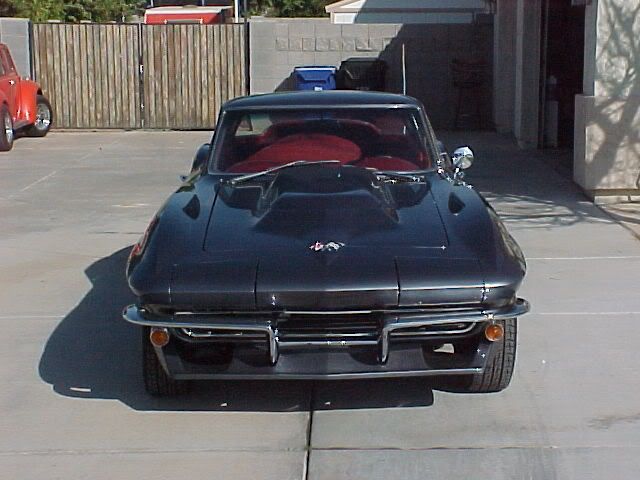
No offense at all. Anyhow, it's for my 65. I have a 390 in the rear with a keisler TKO 500 for a tranny going thru skinny stock tires. I am building the whole engine to look as stock as possible. . It's a total toy for buzzing around in.The hood is an aftermarket number with a 70s L-88 lump. Right now I am running an RPM airgap with a one inch spacer and a 4 inch filter under it. So plenty of room there.
Last edited by panchop; May 18, 2006 at 02:00 AM.
Le Mans Master


Joined: Apr 2005
Posts: 6,360
Likes: 429
From: Seattle Area WA
Personally I think they are plenty strong Greg. As you know, the item that killed early 283, 327 motors was the crummy rods, not the blocks.
I'm also running the Milodon Splayed caps. I'll be using the Crower rods in my SJ build. I just received two cranks back from Henry Velasco and I asked him about RPMs on these SJ 4340 nitrided cranks, his response was they can spin up as high as any L J chevy crank and there is no problem with a 3.25" stroke spinning 8K. And as everyone already knows about 383s, he said the only thing limiting my RPMs for the SJ 383 crank is the flow in/out of the engine.
Here is a recent quote from Duke on the NCRS board:
SB cranks up to 1966 all had 2.3" main journals and 2.0" (nominal size) rod journals.
Beginning in 1967 the 350 cranks/blocks (and ONLY 350 cranks/blocks) were designed with 2.45"/2.1" journals, and these journal sizes were extended to SBs of ALL displacements in 1968.
The 400 has 2.65" mains, and IIRC the same 2.1" rod journals as the other contemporaneus SBs.
The reason for the larger journals has nothing to do with the bearing sizes being inadequate. It was done to maintain crankshaft journal overlap with the longer strokes, which is a big factor in crankshaft torsional stiffness.
Back in the early seventies, some F5000 engine builders realized that small journals made more power in those 8000 rev engines, and with only a 3" stroke, crankshaft stiffness was adequate with the small journals, but they offered less friction because at a given speed the surface velocity is less than with large journals, which resulted in a small, but measureable power improvement.
I'm also running the Milodon Splayed caps. I'll be using the Crower rods in my SJ build. I just received two cranks back from Henry Velasco and I asked him about RPMs on these SJ 4340 nitrided cranks, his response was they can spin up as high as any L J chevy crank and there is no problem with a 3.25" stroke spinning 8K. And as everyone already knows about 383s, he said the only thing limiting my RPMs for the SJ 383 crank is the flow in/out of the engine.
Here is a recent quote from Duke on the NCRS board:
SB cranks up to 1966 all had 2.3" main journals and 2.0" (nominal size) rod journals.
Beginning in 1967 the 350 cranks/blocks (and ONLY 350 cranks/blocks) were designed with 2.45"/2.1" journals, and these journal sizes were extended to SBs of ALL displacements in 1968.
The 400 has 2.65" mains, and IIRC the same 2.1" rod journals as the other contemporaneus SBs.
The reason for the larger journals has nothing to do with the bearing sizes being inadequate. It was done to maintain crankshaft journal overlap with the longer strokes, which is a big factor in crankshaft torsional stiffness.
Back in the early seventies, some F5000 engine builders realized that small journals made more power in those 8000 rev engines, and with only a 3" stroke, crankshaft stiffness was adequate with the small journals, but they offered less friction because at a given speed the surface velocity is less than with large journals, which resulted in a small, but measureable power improvement.

Team Owner


Joined: Apr 1999
Posts: 21,953
Likes: 1,445
From: Reno Nevada
2024 C3 of the Year Finalist- Modified
Scott, Your right, it might have been poor rods back in the 60's that broke first and then took out the small crank and oil pan. I was right there when these motors were new and hot rodded mouse motors quite often caused oil downs. I even built a .060 over bore 3.25 street rod and I used a large journal for strength even though it was a forged crank.
Your (two cranks back from Henry Velasco) cranks are probably not playing in the same field as a stock forging.
I'm using the small journal idea on my Motown 427 small block. Because i think that the 400 type cranks are too large and bearing speed goes up.
The expense of installing spayed caps on an inferior product would bother me. Why not get a newer 4 bolt and install a much cheaper ARP main stud kit and still run 8000 rpm all day long.
This is a local real F5000 that competes in historic races - it's full of modern goodies to make it last longer!

Your (two cranks back from Henry Velasco) cranks are probably not playing in the same field as a stock forging.
I'm using the small journal idea on my Motown 427 small block. Because i think that the 400 type cranks are too large and bearing speed goes up.
The expense of installing spayed caps on an inferior product would bother me. Why not get a newer 4 bolt and install a much cheaper ARP main stud kit and still run 8000 rpm all day long.
This is a local real F5000 that competes in historic races - it's full of modern goodies to make it last longer!
Le Mans Master
Joined: Apr 2005
Posts: 6,360
Likes: 429
From: Seattle Area WA
More toys
Nice pic! Aren't those some sweet rides, (F5000) back then and today. The whole idea of mine and I believe Panchop's motor is to keep the original look including the rear crank case ventilation hole found in the 327 blocks. For my "sand box" (hey who coined that) stroker, is a numbers matched motor except for the intake which will more than likely be a RPM Performer or maybe a Vintage TM-1 Tarantula since they both have provisions for the oil fill tube. Now if only you could get AFR heads that didn't have all those holes drilled in them and had AFR written all over them...darn that original look!
) stroker, is a numbers matched motor except for the intake which will more than likely be a RPM Performer or maybe a Vintage TM-1 Tarantula since they both have provisions for the oil fill tube. Now if only you could get AFR heads that didn't have all those holes drilled in them and had AFR written all over them...darn that original look!
Corvette Stories
The Best of Corvette for Corvette Enthusiasts

Every 2027 Corvette Engine Explained
Joe Kucinski
Designer Imagines A Corvette That Looks More Like a Corvette Than the Corvette
Verdad Gallardo
10 Ugly Corvettes That We Still Kinda Love
Joe Kucinski
Top 10 Most Expensive Corvettes Ever Sold on Bring A Trailer
Brett Foote
10 Things Every Corvette Owner Needs (2026 Edition)
Michael S. Palmer
8 Most "Only Corvette Owners Understand" Quirks and Problems
Pouria Savadkouei
10 Reasons the C6 Z06 is Still A Performance Benchmark After 20 Years
Joe Kucinski
How Much Horsepower Every Corvette Engine "LOST" in 1972
Joe Kucinski
Top 10 DOs and DON'Ts for Protecting Your Convertible Top!
Michael S. Palmer
Thread Starter
Melting Slicks
Joined: Dec 2000
Posts: 2,130
Likes: 1
From: mesa,az
By the way, the thinking on the chevelle forum is my heads are way to big. So I called the guy doing the work on them and he said no, these are the ones you want for this motor. Any thoughts about that from you guys.

Safety Car


Joined: Mar 2002
Posts: 3,780
Likes: 442
From: Southwest MI
Originally Posted by panchop
Ok so here is the plan..... looking to make this a sleeper for sure. Any ideas on this. where i might be missing something or haver thought it through incorrectly?
Thanks
Greg
Thanks
Greg
Team Owner
Joined: Apr 1999
Posts: 21,953
Likes: 1,445
From: Reno Nevada
2024 C3 of the Year Finalist- Modified
Originally Posted by panchop
By the way, the thinking on the chevelle forum is my heads are way to big. So I called the guy doing the work on them and he said no, these are the ones you want for this motor. Any thoughts about that from you guys.
The old intake breather oil fills are cool for the correct year look.


Racer
Joined: Aug 2004
Posts: 371
Likes: 0
From: California Missouri
Big Heads
If I was going to stick with the 327 displacement I would opt for a set of fully CNC machined 180cc AFR heads and run a solid lifter roller cam with your current intake and let that baby eat. Thinking back my dads car was 162cc runners with a stock intake and a AFB carb and would turn to 7,000 with a solid flat tappet like nothing,, it was 11.25 to one with 4:56 gears and posi ,, running dumps right under the manifolds. He says that many un suspecting 406 fords 409 chevy's and a host of other hot rods claimed it wasn't stock. But it was,, hell for all I know maybe Dad missed his calling and should have been competing with Big Daddy or Don Prudome. Anyway he put the smack down on all but a couple of guys,, and many of the Big Block Boys were crying,,, LOL,,,,, I would say the better design of the heads and intake combined with roller technology and some headers and you have a killer lower end,, 8,000 rpm wont be a problem,, But the right cam is the Question. 3.90 gears with the tremec,, is a killer launch so you should be able to go fairly large on the cam. .
Last edited by johnfharding; May 22, 2006 at 11:57 PM.
Le Mans Master


Joined: May 2003
Posts: 8,877
Likes: 3,556
From: Fernandina Beach FL
2023 Restomod of the Year finalist
2020 C3 of the Year Winner - Modified
"Edelbrock told me that the Performer RPM intake will not fit under the stock small block hood. Not sure if it will fit or not,, didn't try it but thats what they told me on the phone."
Will fit w/ 3" Air Cleaner & Speed Demon Carb-STOCK small block hood-No Problem.
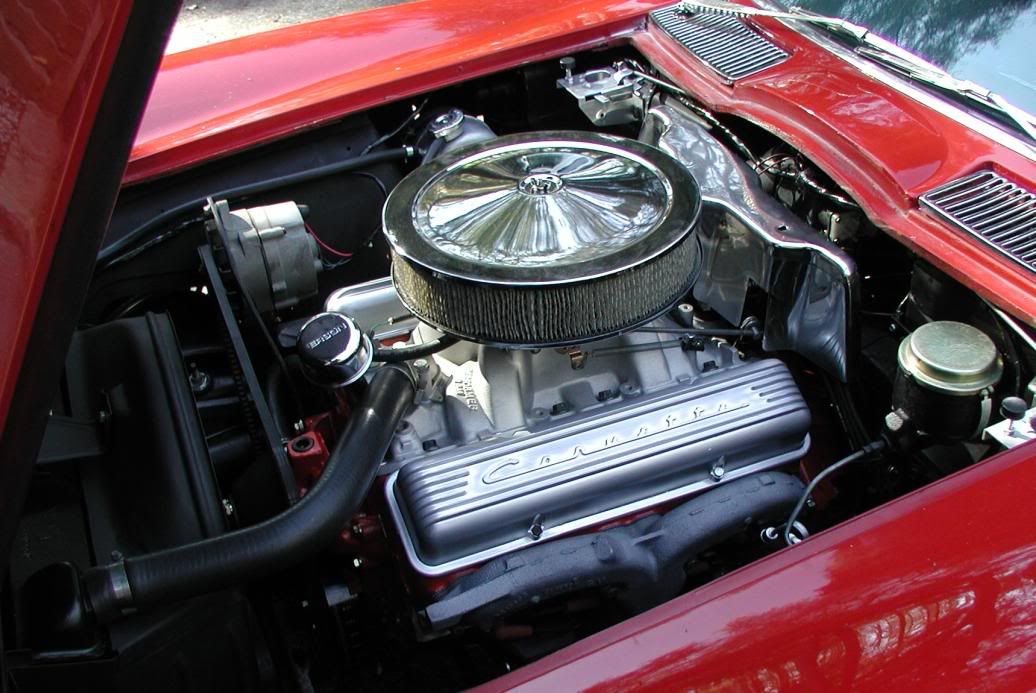
Will fit w/ 3" Air Cleaner & Speed Demon Carb-STOCK small block hood-No Problem.
Thread Starter
Melting Slicks
Joined: Dec 2000
Posts: 2,130
Likes: 1
From: mesa,az
Cool, tell me about the breather on the oil fill tube. I don't understand. I would think the tube needs to be sealed to make the crankcase ventilate properly. I have also decided to scrap the roller setup and go with a flat tappet.

Thread Starter
Melting Slicks
Joined: Dec 2000
Posts: 2,130
Likes: 1
From: mesa,az
little update. I have gone with a set of ported 292 heads with 66cc chambers .i bought probe 1.6 shaft rockers. Scraped the roller cam and went with a solid flat tappet. Bought a Lunati 401A6LUN as recommended by UDHarold.I'm using flat top speed pro forged pistons on SCAT I beam rods with a stock small journel 327 crank. decided not to go with the splayed main caps and just bought a set of ARP studs for the 2 bolt caps. So next question. Where to set deck height and quench. is there an advantage to zero deck height as long as I get a tight quench under .040 all should be fine , no? can I safley go down to under .035 clerance for quench height. i will have compression about 10.7 or so acording to the KB sight, with a DCR of about 8.8 . Thanks for the advice so far and feel free to chime in.
Thanks
Greg
Thanks
Greg
Le Mans Master
Joined: Oct 2002
Posts: 7,098
Likes: 378
From: Las Vegas - Just stop perpetuating myths please.
Rod length?
Originally Posted by panchop
little update. I have gone with a set of ported 292 heads with 66cc chambers .i bought probe 1.6 shaft rockers. Scraped the roller cam and went with a solid flat tappet. Bought a Lunati 401A6LUN as recommended by UDHarold.I'm using flat top speed pro forged pistons on SCAT I beam rods with a stock small journel 327 crank. decided not to go with the splayed main caps and just bought a set of ARP studs for the 2 bolt caps. So next question. Where to set deck height and quench. is there an advantage to zero deck height as long as I get a tight quench under .040 all should be fine , no? can I safley go down to under .035 clerance for quench height. i will have compression about 10.7 or so acording to the KB sight, with a DCR of about 8.8 . Thanks for the advice so far and feel free to chime in.
Thanks
Greg
Thanks
Greg
Major changes there chop. Different heads and cam. Y? I like that cam but why the change from the RHS hds? Find something u didn't like with those? Remember the lash value is subtracted from the vlv lift number to calcutate true vlv lift on a solid cam.
Anyways the longer the rod the better for high rpm breathing - increases the time at TDC and BTC for better cyl filling. I image 6" rods should be easy to find pistons for. 6" rods give u 1.8 rod length to stroke ratio which is great for drag racing (ask any Pontiac fanatic). But if u really want to get fancy there are some 6.25" sb Chevy rods availble (and u would need correct compressed height pistons to match).

Don't test the .035" quench height for a limit unless u have a lot of money and time. It just happens that most composite hd gaskets are .039" or .041" and a zero deck nails a good quench height with little effort.
Good luck and post how that small stroker works out for u.
cardo0
