


chassis dyno results and questions

Thread Starter
Pro


Joined: Oct 2001
Posts: 621
Likes: 1
 chassis dyno results and questions
Went to the chassis dyno today. Plan was to adjust air bleeds because the engine was running rich at higher RPM.
Well, first pull was 266HP, 290 torque. Previous baseline about a month ago was 255HP, 290 torque. Changes since then were: 66 jets on both ends reduced to 64, total advance moved up from 38 to 41 degrees, and a Z28/LT1 intake in place of the stock L79/L76 piece. Also put the smallest accelerator pump cams in with larger squirters to reduce the duration of the pump shot.
For the next pull bigger bleeds were put into the 4150HP carburetor. Now 272HP, but torque dropped. In both pulls black smoke rolled when the throttle was snapped open. In the second pull it took awhile to clean up, and on the graph you could see the torque curve all jumpy and screwed up until 4700RPM or so.
On a pull without too much pump trouble you see torque peak at 4000RPM or so, power peak at about 5700RPM. On the second pull, power was above 250 from 4700 to 6500RPM.
The next pull was done with the air cleaner off. We saw fuel shooting out of the bowl vents! The rear float was high, but the front was OK. After float adjustment tried again. Still shooting fuel. Put fuel line on the vents to extend them up higher and see if airflow over the vents was pulling fuel out. Now it didn't shoot out the vent, but engine was obviously weak at high RPM and fuel was dripping from the boosters on shutdown. Bowls were overfilled when sight plugs removed.
Conclusion: Excessive fuel pressure at high RPM forcing the needle open and flooding at least the front bowl. After fixing the rear float fuel only shot out the front vent.
Now this was pretty interesting. I don't know if we would have figured out this problem without the chassis dyno and without running sans air cleaner.
Fuel pump is a parts store mechanical with no external regulator. We're going to put on a regulator and try again, hopefully tomorrow.
Anybody seen this before? I've heard of fuel starvation at high RPM with a stock pump, but never overpressure. It makes sense in a way though, when you think about how the pump works.
Anyone have some accelerator pump suggestions? We're already on the white cams. Shooters are 31 front, 35 rear. I'm thinking we should go back down on shooter size, and maybe grind down the pump cams if that doesn't fix it(?)
I'm sure there is more power to be had, it is running very rich right now with the flooding.
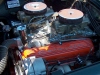
The engine:
327 + 0.040
Holley 4150HP 650 double pumper
Z28/LT1 intake
ported 462 heads (2.02/1.60 valves)
2.5" ram horn exhaust manifolds
Erson cam, 235 @ 0.050, 108 lobe separation, .472 lift w/1.5 rocker
1.6 roller rockers
10.2:1 compression with flat tops (milled heads)
Manual transmission, '67 Corvette.
Well, first pull was 266HP, 290 torque. Previous baseline about a month ago was 255HP, 290 torque. Changes since then were: 66 jets on both ends reduced to 64, total advance moved up from 38 to 41 degrees, and a Z28/LT1 intake in place of the stock L79/L76 piece. Also put the smallest accelerator pump cams in with larger squirters to reduce the duration of the pump shot.
For the next pull bigger bleeds were put into the 4150HP carburetor. Now 272HP, but torque dropped. In both pulls black smoke rolled when the throttle was snapped open. In the second pull it took awhile to clean up, and on the graph you could see the torque curve all jumpy and screwed up until 4700RPM or so.
On a pull without too much pump trouble you see torque peak at 4000RPM or so, power peak at about 5700RPM. On the second pull, power was above 250 from 4700 to 6500RPM.
The next pull was done with the air cleaner off. We saw fuel shooting out of the bowl vents! The rear float was high, but the front was OK. After float adjustment tried again. Still shooting fuel. Put fuel line on the vents to extend them up higher and see if airflow over the vents was pulling fuel out. Now it didn't shoot out the vent, but engine was obviously weak at high RPM and fuel was dripping from the boosters on shutdown. Bowls were overfilled when sight plugs removed.
Conclusion: Excessive fuel pressure at high RPM forcing the needle open and flooding at least the front bowl. After fixing the rear float fuel only shot out the front vent.
Now this was pretty interesting. I don't know if we would have figured out this problem without the chassis dyno and without running sans air cleaner.
Fuel pump is a parts store mechanical with no external regulator. We're going to put on a regulator and try again, hopefully tomorrow.
Anybody seen this before? I've heard of fuel starvation at high RPM with a stock pump, but never overpressure. It makes sense in a way though, when you think about how the pump works.
Anyone have some accelerator pump suggestions? We're already on the white cams. Shooters are 31 front, 35 rear. I'm thinking we should go back down on shooter size, and maybe grind down the pump cams if that doesn't fix it(?)
I'm sure there is more power to be had, it is running very rich right now with the flooding.
The engine:
327 + 0.040
Holley 4150HP 650 double pumper
Z28/LT1 intake
ported 462 heads (2.02/1.60 valves)
2.5" ram horn exhaust manifolds
Erson cam, 235 @ 0.050, 108 lobe separation, .472 lift w/1.5 rocker
1.6 roller rockers
10.2:1 compression with flat tops (milled heads)
Manual transmission, '67 Corvette.

Team Owner


Joined: Dec 2000
Posts: 90,675
Likes: 304
From: SE NY
Cruise-In II Veteran
Re: chassis dyno results and questions (L79vette)
It would be very useful if they could hookup a wideband O2 sensor; it would tell the story.
I have one hooked up during recent dyno pulls to verify my AFPR setting; it was a very useful tuming aid. I didn't ask how they hooked it up but will on the next set of pulls.
I have one hooked up during recent dyno pulls to verify my AFPR setting; it was a very useful tuming aid. I didn't ask how they hooked it up but will on the next set of pulls.
Thread Starter
Pro
Joined: Oct 2001
Posts: 621
Likes: 1
Re: chassis dyno results and questions (65Z01)
Unfortunately the guy's wideband setup was broken today. Agree it would tell you you're too rich, but we wouldn't know why until we saw the carb spitting under load.



Race Director


Joined: Jan 2000
Posts: 13,018
Likes: 2,262
From: Corsicana, Tx
2020 C2 of the Year - Modified Winner
2020 Corvette of the Year (performance mods)
C2 of Year Winner (performance mods) 2019
2017 C2 of Year Finalist
Re: chassis dyno results and questions (L79vette)
First, let me congratulate you on a good strong running 327! You're getting good numbers from a relatively mild parts combo. I like the way you're working to maximize the combo instead of just throwing "trick of the week" parts at it without tuning it. It always works and is a great way to spank cars with a lot more trick parts on them!
I haven't had it happen before, but I'm sure it's possible. At your altitude, things can be affected drastically. I would think with less atmosheric pressure a pump with a "set" 5-6 psi could overcome the float. Kind of a reach, but I could see where it could happen.
Have you tried the other positions on the cams? I often use the #2 holes on the cams to get a good intial hit without going to a larger shooter. I always try that first before going up on shooter.
Jim
I haven't had it happen before, but I'm sure it's possible. At your altitude, things can be affected drastically. I would think with less atmosheric pressure a pump with a "set" 5-6 psi could overcome the float. Kind of a reach, but I could see where it could happen.
Have you tried the other positions on the cams? I often use the #2 holes on the cams to get a good intial hit without going to a larger shooter. I always try that first before going up on shooter.
Jim
Race Director
Joined: Jan 2000
Posts: 13,018
Likes: 2,262
From: Corsicana, Tx
2020 C2 of the Year - Modified Winner
2020 Corvette of the Year (performance mods)
C2 of Year Winner (performance mods) 2019
2017 C2 of Year Finalist
Re: chassis dyno results and questions (427Hotrod)
Oops... I forgot to mention what I think the real issue is. I got all wrapped up in the fuel pressure deal.
Before I did anything else I would try two new needle and seat assy's. Get some genuine Holley ones and see if that fixes it.
JIm
Before I did anything else I would try two new needle and seat assy's. Get some genuine Holley ones and see if that fixes it.
JIm

Drifting

Joined: Jul 2001
Posts: 1,418
Likes: 1
Re: chassis dyno results and questions (427Hotrod)
Quote:
" like the way you're working to maximize the combo instead of just throwing "trick of the week" parts at it without tuning it. It always works and is a great way to spank cars with a lot more trick parts on them!)
I like it also.The term I use is Dragonslaying :)
" like the way you're working to maximize the combo instead of just throwing "trick of the week" parts at it without tuning it. It always works and is a great way to spank cars with a lot more trick parts on them!)
I like it also.The term I use is Dragonslaying :)








