


Dyno'd the 502 today


Thread Starter
Instructor


Joined: Jul 2000
Posts: 208
Likes: 0
From: Chicago IL
 Dyno'd the 502 today
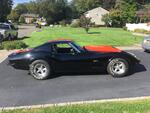
First time I have dyno'd the car since installing ported Brodix BB-2 heads, custom side exhaust headers with 4" pipes under the sidepipe covers, a crane roller cam (.636 lift, 242 duration), and an Edelbrock air gap intake.
It made 538 rwtrq @ 3800 rpm and 467 rwhp @6,000 rpm. This with a 10:1 air/fuel ratio (quite rich) and through the (JCL spiral) mufflers.
If I have 18% driveline losses that's 570 at the crank. I will rejet the carb a couple sizes leaner, it's short of its potential but in the ballpark... does anyone have a guess what proper A/F ratio might add?
I recommend a chassis dyno session to anyone who hasn't done it. You get a pretty useful baseline data set.
THANKS so much to all who helped -- ML67 in particular (who sold me the heads and exhaust), and the rest of you for inspiration and lots of "learning by lurking".
Next winter I really want to add a procharger. I'm only running 9.3:1 compression and with the forged pistons I should be good for 8 PSI intercooled... I wish these factory hoods provided more room for the air path above the heads!
Gerry
It made 538 rwtrq @ 3800 rpm and 467 rwhp @6,000 rpm. This with a 10:1 air/fuel ratio (quite rich) and through the (JCL spiral) mufflers.
If I have 18% driveline losses that's 570 at the crank. I will rejet the carb a couple sizes leaner, it's short of its potential but in the ballpark... does anyone have a guess what proper A/F ratio might add?
I recommend a chassis dyno session to anyone who hasn't done it. You get a pretty useful baseline data set.
THANKS so much to all who helped -- ML67 in particular (who sold me the heads and exhaust), and the rest of you for inspiration and lots of "learning by lurking".
Next winter I really want to add a procharger. I'm only running 9.3:1 compression and with the forged pistons I should be good for 8 PSI intercooled... I wish these factory hoods provided more room for the air path above the heads!
Gerry
Le Mans Master


Joined: Mar 2001
Posts: 6,240
Likes: 1,013
From: Watkinsville, GA and Glen Cove, NY
Re: Dyno'd the 502 today (Hank)
Gerry, great job and thanks for posting. I plan to chassis dyno my 502 soon that made 614 horsepower on the engine dyno. I would think you still have some significant power hiding in there given your A/F ratio. Also, are you running your JCL's capped or uncapped? Uncapping them will give you some power as well and not make it too much louder.
Bill
Bill
Thread Starter
Instructor
Joined: Jul 2000
Posts: 208
Likes: 0
From: Chicago IL
Re: Dyno'd the 502 today (69ttop502)
Bill,
My JCL's are uncapped. I had them capped and it was too quiet so I cut the cap out. I joked with my 5 year old son that the corvette had become "the whispering kitten" since it was really really loud before.
And yes, I hope to find some HP more with tuning. This was literally an untuned run.
Gerry
My JCL's are uncapped. I had them capped and it was too quiet so I cut the cap out. I joked with my 5 year old son that the corvette had become "the whispering kitten" since it was really really loud before.
And yes, I hope to find some HP more with tuning. This was literally an untuned run.
Gerry

Drifting


Joined: Jul 2002
Posts: 1,820
Likes: 283
From: Puyallup WA
Re: Dyno'd the 502 today (Hank)
I would shoot for an A/F ratio of between 13.0:1 and 13.5:1. My motors have made the most power a little higher than that but that is a good safe A/F ratio to be in. If you are using a DynoJet chassis dyno and you are at 10.0:1 (pig rich) A/F ratio, then who knows what the actual A/F ratio is. 10.0:1 is as low as a DynoJet records. I think you could easily see 25 - 50 extra hp with the proper A/F ratio - depending on where it really is right now.
Congrats on the numbers! My car has an actual 15.6% drive train loss. I dyno'd the motor on an engine dyno then put it in my car and dyno'd it on my DynoJet chassis dyno. The car is a 1967 Sting Ray with 5 speed manual trans and 3.73:1 rearend. Yours should be very close to this.
You are lucky to have run across Mark. Sounds like you got some good parts.
Steve
Congrats on the numbers! My car has an actual 15.6% drive train loss. I dyno'd the motor on an engine dyno then put it in my car and dyno'd it on my DynoJet chassis dyno. The car is a 1967 Sting Ray with 5 speed manual trans and 3.73:1 rearend. Yours should be very close to this.
You are lucky to have run across Mark. Sounds like you got some good parts.
Steve








