



drive train question

Thread Starter
5th Gear

Joined: Feb 2002
Posts: 5
Likes: 0
From: ohio
 drive train question
I have a 1980 corvette, 3 speed auto, i was wondering what came in it? what engine? 305 or 350? th 350 or 400? what gear ratio, i know its a high one, it shifts into 3rd around 90. any help is appreciated thanks
Le Mans Master


Joined: Dec 2000
Posts: 7,245
Likes: 4
Re: drive train question (camaro03)
Welcome aboard the forum.
1980:
ENGINE
350 cubic inch V-8, California 305 cubic inches
Compression Ratio 8.2 to 1
Horsepower 190 (L-48), 230 (L-82), (180 in California)
Torque lbs-ft 280 (L-48) 275 (L-82), (255 in California)
4 barrel
WEIGHT
3206
PRODUCTION TOTAL
40,614
BASE PRICE
$13,140
DIMENSIONS
Wheelbase- 98 inches
Overall length- 185.3 inches
Height- 48.1 inches
Width- 69.0 inches
Front Tread- 58.7 inches
Rear Tread- 59.5 inches
Wheel size- 15X8
Tires- 225-70-15 standard and 255-60-15 optional
1980 OPTIONS
4 speed manual tranny standard. Automatic available at no
additional cost.
L-82 horsepower engine ($595)
Gymkhana suspension ($55)
California 305 cubic inch motor ($50 credit)
Heavy duty shocks ($35)
Trailer towing package ($105)
Heavy duty battery ($21)
California emissions ($250)
Rear electric defogger ($109)
Cruise control ($123)
Power door locks ($140)
Convenience group ($94)
Sport mirrors with left remote ($45)
AM/FM stereo radio ($46) with tape player ($168) with 8 track
($155) with CB and antenna ($391)
Dual rear speakers ($31)
Radio delete ($126 credit)
Power antenna ($56)
Glass roof panels ($391) Roof panel carrier ($125)
Aluminum wheels ($407)
255-60-15 tires ($426)
1980:
ENGINE
350 cubic inch V-8, California 305 cubic inches
Compression Ratio 8.2 to 1
Horsepower 190 (L-48), 230 (L-82), (180 in California)
Torque lbs-ft 280 (L-48) 275 (L-82), (255 in California)
4 barrel
WEIGHT
3206
PRODUCTION TOTAL
40,614
BASE PRICE
$13,140
DIMENSIONS
Wheelbase- 98 inches
Overall length- 185.3 inches
Height- 48.1 inches
Width- 69.0 inches
Front Tread- 58.7 inches
Rear Tread- 59.5 inches
Wheel size- 15X8
Tires- 225-70-15 standard and 255-60-15 optional
1980 OPTIONS
4 speed manual tranny standard. Automatic available at no
additional cost.
L-82 horsepower engine ($595)
Gymkhana suspension ($55)
California 305 cubic inch motor ($50 credit)
Heavy duty shocks ($35)
Trailer towing package ($105)
Heavy duty battery ($21)
California emissions ($250)
Rear electric defogger ($109)
Cruise control ($123)
Power door locks ($140)
Convenience group ($94)
Sport mirrors with left remote ($45)
AM/FM stereo radio ($46) with tape player ($168) with 8 track
($155) with CB and antenna ($391)
Dual rear speakers ($31)
Radio delete ($126 credit)
Power antenna ($56)
Glass roof panels ($391) Roof panel carrier ($125)
Aluminum wheels ($407)
255-60-15 tires ($426)

Safety Car

Joined: Jul 2001
Posts: 4,456
Likes: 6
From: Spicewood, Texas, USA TX-Texas
Re: drive train question (camaro03)
Check the engine build stamp on flat area in front of the passenger-side cylinder head. There is also a VIN derivative stamp in that area, but the engine build is the one of interest. If the car has the original engine, there should be a suffix code on the end of the engine build stamp: ZAK or ZBC = Federal emissions 350 w/THM; ZCA = California emissions 305 w/THM.
If your car has the original differential gearset, then it is 3.07:1. That was the only ratio available in 1980.
Welcome to FCR. Come back often and stay long. Should we call you 'Cam' for short? :lol: :lol:
[Modified by Chuck Sangerhausen, 1:55 PM 2/24/2002]
If your car has the original differential gearset, then it is 3.07:1. That was the only ratio available in 1980.
Welcome to FCR. Come back often and stay long. Should we call you 'Cam' for short? :lol: :lol:
[Modified by Chuck Sangerhausen, 1:55 PM 2/24/2002]

Melting Slicks


Joined: Aug 2001
Posts: 2,501
Likes: 0
Re: drive train question (Chuck Sangerhausen)
All of this is presuming the engine is the original one for the car. If it's not the original, you could have almost anything small block, Corvette or otherwise.
Safety Car
Joined: Jul 2001
Posts: 4,456
Likes: 6
From: Spicewood, Texas, USA TX-Texas
Re: drive train question (camaro03)
th 350 or 400?
If the transmission is the original, you have the THM 350; no THM 400s were installed in Corvettes after the 77 L82.
THM400s were installed in all Corvettes until 76. Starting in 76, L48s were equipped with the THM350, L82s received the THM 400. After 77, all C3 Corvettes received the THM 350 until the 82 which was equipped with 700R4.
Thread Starter
5th Gear
Joined: Feb 2002
Posts: 5
Likes: 0
From: ohio
Re: drive train question (camaro03)
Thanks guys, my dad got this vette about a year ago, it was totaled, we had to do alittle fiberglass work and paint it, with a good title, the guy told us he put a new motor in it, he had reciepts. we fixed and got it on the road. thanks for the quick responses, this is one of the best message boards ive been on. oh does anyone know of a place to get a l 88 hood for it, we tried to put the scoop on the stock hood (it was alredy cracked (from being totaled) so we figured we couldnt go wrong) but after 3 attempts it still keeps cracking, thanks
Safety Car
Joined: Jul 2001
Posts: 4,456
Likes: 6
From: Spicewood, Texas, USA TX-Texas
Re: drive train question (camaro03)
Cam, the only way you can install the scoop and make it stay without cracking is to 'glass' the scoop onto the hood. It should work and be permanent without cracking, and it will be outrageously cheaper than an L88 hood (fageddaboutit).
I don't know how you are attempting to stick the scoop on, but if you are already using mat and resin and it's cracking, you either aren't laminating enough layers of mat or you're only doing one side. Both inside and outside surfaces will have to be laminated with 4-5 layers of mat and resin, and I would extend the mat lamination about 3"-4" on either side of the seam.
Order yourself Eckler's "Complete Guide to Corvette Fiberglass Repair" The book will say three layers of mat, but I have found four or more work better. It's available at most Corvette vendors, and gives good instruction in basic fiberglass repair principles.
I don't know how you are attempting to stick the scoop on, but if you are already using mat and resin and it's cracking, you either aren't laminating enough layers of mat or you're only doing one side. Both inside and outside surfaces will have to be laminated with 4-5 layers of mat and resin, and I would extend the mat lamination about 3"-4" on either side of the seam.
Order yourself Eckler's "Complete Guide to Corvette Fiberglass Repair" The book will say three layers of mat, but I have found four or more work better. It's available at most Corvette vendors, and gives good instruction in basic fiberglass repair principles.
Thread Starter
5th Gear
Joined: Feb 2002
Posts: 5
Likes: 0
From: ohio
Re: drive train question (Chuck Sangerhausen)
we alredy tried that twice, 4-5 layers, we fixed all of the res of the cracks and theyre fine (there was about 10 on the front end) we talked to a fiberglass repair profesional and he said the tempature has to be perfect, and the mixture as to be perfect, (So it expands and contrasts the same) thaks for your advise though
Corvette Stories
The Best of Corvette for Corvette Enthusiasts

Every 2027 Corvette Engine Explained
Joe Kucinski
Designer Imagines A Corvette That Looks More Like a Corvette Than the Corvette
Verdad Gallardo
10 Ugly Corvettes That We Still Kinda Love
Joe Kucinski
Top 10 Most Expensive Corvettes Ever Sold on Bring A Trailer
Brett Foote
10 Things Every Corvette Owner Needs (2026 Edition)
Michael S. Palmer
8 Most "Only Corvette Owners Understand" Quirks and Problems
Pouria Savadkouei
10 Reasons the C6 Z06 is Still A Performance Benchmark After 20 Years
Joe Kucinski
How Much Horsepower Every Corvette Engine "LOST" in 1972
Joe Kucinski
Top 10 DOs and DON'Ts for Protecting Your Convertible Top!
Michael S. Palmer
Safety Car
Joined: Jul 2001
Posts: 4,456
Likes: 6
From: Spicewood, Texas, USA TX-Texas
Re: drive train question (camaro03)
we talked to a fiberglass repair profesional and he said the tempature has to be perfect, and the mixture as to be perfect, (So it expands and contrasts the same)
Interesting problem. Something must be overlooked here. Eckler's book has an example repair of a 67 hood that had a cut-out for an air cleaner mounted on a high rise manifold (Oh-mi-gawd). The objective is to repair the hood to original appearance...no cracking, no ifs, no buts, and they are successful.
You may be able to get a repro L88 hood for a few $100, but a real L88 hood...when you get the news on that, it will probably suck your breath out like one of those thermobaric bombs. :D
Thread Starter
5th Gear
Joined: Feb 2002
Posts: 5
Likes: 0
From: ohio
Re: drive train question (Chuck Sangerhausen)
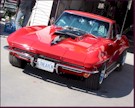
weve been looking for a hod for a while, were not worried about factory correct look, we just did what we like to it, louvers, hood, side pipes, wing, color, etc. i hope this works heres a pic 