





Lacquer repair
Thread Starter
Racer

Joined: Aug 2005
Posts: 456
Likes: 0
From: Forty Fort PA
 Lacquer repair
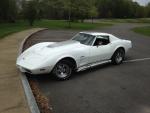
The paint on my 75 is damaged in some areas (crackeled). Anyone know a means of repair short of sanding down the whole area and repainting?
How about a source of lacquer? Anyone still selling?
How about a source of lacquer? Anyone still selling?
Burning Brakes


Joined: Jun 2006
Posts: 1,249
Likes: 13
From: San Angelo TX
Lacquer is very easy to blend if it's a solid color. Since your car is white, blending the area should be pretty easy. It may not be perfect, but you can get an acceptable job.
Is this a job you are going to attempt yourself, or are you going to have a shop do it?
Burning Brakes
Joined: Jun 2006
Posts: 1,249
Likes: 13
From: San Angelo TX
http://hotrodders.com/kb/body-exteri...rpainting.html
One of the topics is "How do I blend paint?"
But the URL for that link should be:
http://www.tcpglobal.com/autocolorlibrary/P101-10.html
In that article they talk about blending solvent. When using enamels the solvent is called a "reducer" and when using lacquer the solvent is just lacquer thinner.
For a "blending solvent" for acrylic lacquer, I would probably reduce the standard spray mixture another 50% or so.
Roger
Pro

Joined: Apr 2006
Posts: 650
Likes: 14
From: Highland Mi
Lang, I have quite a bit of experience painting with both nitrocellulose and acrylic lacquer and although it is easy to spray (pretty forgiving) when everything is fresh it is quite a different story when lacquer has sat a long time. I would assume by crackled you are referring to your old paint has checked. Lacquer dries by evaporation of the solvents and as the thinners and dilutents leave the film build over time, the paint shrinks and looses its elasticity. If you were to paint lacquers and keep it in a controlled environment it can last a very long time. If you expose your car to the elements so that it continues to expand and contract without elasticity it checks or cracks.
Now if your paint is 32 years old and you now spray lacquer over it the thinners mainly will eat into the old layers of paint and even with an expert it is risky business. It can be done with possibly cold shop thinner and spray techniques that do not wet out the panel too heavily but I believe your chances of spraying over these old surfaces without problems is not real high. If it is really checked, your chances without using a barrier coat are next to nothing. It would be better to strip and paint. It appears you have put some effort into the motor and your paint deserves proper attention as well. If you were to post some photos showing that it is limited to a small area or a door for instance it may be repairable.
I have sprayed areas that lifted successfully so anything theoretically can be done but I would not suggest it to anyone who is of the faint of heart.
If it is checking kind of all over I would say no there are not any long term solutions short of a strip and paint. If is a door or small area post a photo and I will give you my 02.-Good luck -Jim
Now if your paint is 32 years old and you now spray lacquer over it the thinners mainly will eat into the old layers of paint and even with an expert it is risky business. It can be done with possibly cold shop thinner and spray techniques that do not wet out the panel too heavily but I believe your chances of spraying over these old surfaces without problems is not real high. If it is really checked, your chances without using a barrier coat are next to nothing. It would be better to strip and paint. It appears you have put some effort into the motor and your paint deserves proper attention as well. If you were to post some photos showing that it is limited to a small area or a door for instance it may be repairable.
I have sprayed areas that lifted successfully so anything theoretically can be done but I would not suggest it to anyone who is of the faint of heart.
If it is checking kind of all over I would say no there are not any long term solutions short of a strip and paint. If is a door or small area post a photo and I will give you my 02.-Good luck -Jim

Drifting


Joined: Jan 2006
Posts: 1,944
Likes: 22
From: Yooperville MI
Blending takes practice and requires good hand and eye coordination and most importantly, an artistic touch with the gun. The best blenders have had experience with custom and show car paint work and fogging multiple colors together seamlessly as shown here.

Blending enamel and lacquer are closely related but different processes. When blending lacquer you first need to be absolutely sure that the paint on the car is lacquer and has not been painted with another type of paint in at least 3-5 years. Lacquer adheres to old paint by melting the surface, however new lacquer will lift enamel based paints that are not fully cured. Different from an enamel spot repair procedure, for lacquer you would wet sand the entire panel with 500 or 600 but being careful not to sand through the topcoat in the blend area because many old lacquer jobs may be very thin or you may sand into a previous paint job underneath leaving bulls eyes. Once scuffed you can apply and blend the lacquer on the panel, see the photo below showing the different layers of paint. You want to gradually fade into the old paint. With each coat, using a second gun containing straight lacquer thinner, spray the entire blend area to melt the overspray edge of the blend. Blending from an outside edge of the body is easier and will be more successful than doing the center of a panel. Always work from and edge inward if possible. Then to finish the job, use the regular wet sand and polish method.

Lacquer is still available in Michigan from PPG. Dupont used to have a product called "Uniform Finish" which was applied to the entire panel followed by the topcoats. The Uniform Finish made the overspray edge disappear.
To do an enamel spot repair, you'll need to polish the panel first with for example Meguires machine glaze. You don't sand the panel prior to the repair when using enamel because enamel sticks on top of the surface of the old paint and you don't want sand scratches in the blend area because you usually don't polish enamel jobs afterwards. Then you would apply light and medium coats to cover the repair first, with the final 2 coats gradually exceeding the repair and blending or fogging into the surrounding paint. Use a very wide spray pattern for the color followed immediately with clear reducer to blend or melt the overspray edge of the repair so that the new paint and old paint appear as one.
You can also use base/clear to blend/repair original lacquer jobs especially if you are unsure of what type of paint you have on the car and you follow the paint manufacturers instructions for topcoats. Base/clear paint works very well over lacquer and uses clear reducer to melt the edge of the color and the clear coats as you apply each one. Polish the entire panel as you would any base/clear job. The car below has had numerous spot repairs using base clear over the original lacquer. The photo above and below show the front of the body being blended to match the new bumper. The rest of the front end is the factory original paint and it's almost impossible to tell if any paint work has been done.


Blending enamel and lacquer are closely related but different processes. When blending lacquer you first need to be absolutely sure that the paint on the car is lacquer and has not been painted with another type of paint in at least 3-5 years. Lacquer adheres to old paint by melting the surface, however new lacquer will lift enamel based paints that are not fully cured. Different from an enamel spot repair procedure, for lacquer you would wet sand the entire panel with 500 or 600 but being careful not to sand through the topcoat in the blend area because many old lacquer jobs may be very thin or you may sand into a previous paint job underneath leaving bulls eyes. Once scuffed you can apply and blend the lacquer on the panel, see the photo below showing the different layers of paint. You want to gradually fade into the old paint. With each coat, using a second gun containing straight lacquer thinner, spray the entire blend area to melt the overspray edge of the blend. Blending from an outside edge of the body is easier and will be more successful than doing the center of a panel. Always work from and edge inward if possible. Then to finish the job, use the regular wet sand and polish method.
Lacquer is still available in Michigan from PPG. Dupont used to have a product called "Uniform Finish" which was applied to the entire panel followed by the topcoats. The Uniform Finish made the overspray edge disappear.
To do an enamel spot repair, you'll need to polish the panel first with for example Meguires machine glaze. You don't sand the panel prior to the repair when using enamel because enamel sticks on top of the surface of the old paint and you don't want sand scratches in the blend area because you usually don't polish enamel jobs afterwards. Then you would apply light and medium coats to cover the repair first, with the final 2 coats gradually exceeding the repair and blending or fogging into the surrounding paint. Use a very wide spray pattern for the color followed immediately with clear reducer to blend or melt the overspray edge of the repair so that the new paint and old paint appear as one.
You can also use base/clear to blend/repair original lacquer jobs especially if you are unsure of what type of paint you have on the car and you follow the paint manufacturers instructions for topcoats. Base/clear paint works very well over lacquer and uses clear reducer to melt the edge of the color and the clear coats as you apply each one. Polish the entire panel as you would any base/clear job. The car below has had numerous spot repairs using base clear over the original lacquer. The photo above and below show the front of the body being blended to match the new bumper. The rest of the front end is the factory original paint and it's almost impossible to tell if any paint work has been done.

Melting Slicks


Joined: Sep 2004
Posts: 2,917
Likes: 13
From: NE Illinois IL
AHoover,
Did you paint that green car in your garage? What did you do to keep the neighbors from compaining about the fumes? I live in a cul-de-sac and would love to paint my car in the garage but my neighbors would probably kill me.
Thanks for any tips.
Did you paint that green car in your garage? What did you do to keep the neighbors from compaining about the fumes? I live in a cul-de-sac and would love to paint my car in the garage but my neighbors would probably kill me.
Thanks for any tips.
Corvette Stories
The Best of Corvette for Corvette Enthusiasts

How Much Horsepower Every Corvette Engine "LOST" in 1972
Joe Kucinski
Top 10 DOs and DON'Ts for Protecting Your Convertible Top!
Michael S. Palmer
Top 10 Most Explosive Corvettes Ever Made: Power-to-Weight Ratio Ranked!
Joe Kucinski
150 hp to 1,250 hp: Every Corvette Generation Compared by the Specs That Matter
Joe Kucinski
8 Coolest Corvette Pace Cars (and Replicas) of All Time
Verdad Gallardo
Top 10 Corvette Engines RANKED by Peak Torque (70+ Years of Muscle!)
Joe Kucinski
Corvette ZR1X Will Be Pacing the Indy 500, And Could Probably Race, Too!
Verdad Gallardo
Top 10 Corvettes Coming to Mecum Indy 2026!
Brett Foote
