



Before I dive in...

Thread Starter
Intermediate

Joined: Apr 2008
Posts: 49
Likes: 0
From: Austin TX
 Before I dive in...
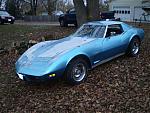
This is a '75 coupe. I'm getting it ready for paint, and have a few questions. For background, I've painted and repaired several metal cars in the past, and have done some fiberglass work on boats too. I had originally planned to gelcoat the whole car, until I found this site...
1. Is a '75 part SMC? I assume the rear is, the glass is very thin around the the antenna hole, for example. Some parts in the front end look like regular fiberglass
2. I'm stripping paint with razor blade, then hand sanding the primer. Actually I'm using a 17" block sander. Is it OK to leave a little bit of the original primer if I'm coating with PPG Epoxy sealer? I figured I'd get a head start on panel straightening...Or should I just get out the D/A and get all the primer off?
3. I've got some stress cracks around antenna hole (and a push up from the metal backer plate) I planned to put a layer of mat underneath for strength. I was going to deepen the cracks with my die grinder, then go over that. Should I use a fiber-based filler like Evercoat Kitty Hair or newer Fibertech, or is just filler like Vette Panel filler OK for these cracks?
4. Behind the back glass on the wings there's a straight crack on each side. I guess this is a body seam. Should I grind and fill with the same process as above for stress cracks?
5. I want to do these obvious repairs before Epoxy, is that a good idea?
6. What about areas like door jams, etc. Does everyone still strip those completely down? Any tricks? The razor blade isn't going to be easy there...
7. Body seams - My original paint is discolored enough to see the main joint down the side, and is a little cracked along the seam on the front fender. Do I need to grind in and put a strip of mat over the seam? Maybe just on the part with visible paint crack on the front?
Thanks in advance...
1. Is a '75 part SMC? I assume the rear is, the glass is very thin around the the antenna hole, for example. Some parts in the front end look like regular fiberglass
2. I'm stripping paint with razor blade, then hand sanding the primer. Actually I'm using a 17" block sander. Is it OK to leave a little bit of the original primer if I'm coating with PPG Epoxy sealer? I figured I'd get a head start on panel straightening...Or should I just get out the D/A and get all the primer off?
3. I've got some stress cracks around antenna hole (and a push up from the metal backer plate) I planned to put a layer of mat underneath for strength. I was going to deepen the cracks with my die grinder, then go over that. Should I use a fiber-based filler like Evercoat Kitty Hair or newer Fibertech, or is just filler like Vette Panel filler OK for these cracks?
4. Behind the back glass on the wings there's a straight crack on each side. I guess this is a body seam. Should I grind and fill with the same process as above for stress cracks?
5. I want to do these obvious repairs before Epoxy, is that a good idea?
6. What about areas like door jams, etc. Does everyone still strip those completely down? Any tricks? The razor blade isn't going to be easy there...
7. Body seams - My original paint is discolored enough to see the main joint down the side, and is a little cracked along the seam on the front fender. Do I need to grind in and put a strip of mat over the seam? Maybe just on the part with visible paint crack on the front?
Thanks in advance...
Thread Starter
Intermediate
Joined: Apr 2008
Posts: 49
Likes: 0
From: Austin TX
Thanks, and pictures
Pictures of the stress cracks, and the body seam. Stress cracks seem like some filler would be enough, but I'll defer to the experts. The body seam is the only place on the car cracked. Elsewhere it's just off-color.



Le Mans Master


Joined: Jan 2000
Posts: 8,918
Likes: 27
From: New Hill NC
The seams on this and all late C3 cars are prime example of using polyester materials on SMC. At that time even the factory had little experience with the stuff, and they used a polyester bonding agent. It was a good quality, but it was still polyester. You see the result. If you dont want to repeat the mistake, you should use an epoxy material to repair the seams and the spiders. They should both be ground out a little below level and repaired.

Drifting


Joined: May 2005
Posts: 1,629
Likes: 4
From: Somers CT
Hi,
I know this is a real old thread but I wondered how your project turned out. I'm thinking of doing the same, mine is the same year as yours so I've been reading all these threads and talking to shops about prepping SMC.
Two of the shops want to spray the whole car with Ecklers Gelcoat even though right below the picture in the catalog it says not for us on 72 and later years. Unbelievable stuff..
I know this is a real old thread but I wondered how your project turned out. I'm thinking of doing the same, mine is the same year as yours so I've been reading all these threads and talking to shops about prepping SMC.
Two of the shops want to spray the whole car with Ecklers Gelcoat even though right below the picture in the catalog it says not for us on 72 and later years. Unbelievable stuff..
Le Mans Master
Joined: Jan 2000
Posts: 8,918
Likes: 27
From: New Hill NC
Hi,
I know this is a real old thread but I wondered how your project turned out. I'm thinking of doing the same, mine is the same year as yours so I've been reading all these threads and talking to shops about prepping SMC.
Two of the shops want to spray the whole car with Ecklers Gelcoat even though right below the picture in the catalog it says not for us on 72 and later years. Unbelievable stuff..
I know this is a real old thread but I wondered how your project turned out. I'm thinking of doing the same, mine is the same year as yours so I've been reading all these threads and talking to shops about prepping SMC.
Two of the shops want to spray the whole car with Ecklers Gelcoat even though right below the picture in the catalog it says not for us on 72 and later years. Unbelievable stuff..
Drifting
Joined: May 2005
Posts: 1,629
Likes: 4
From: Somers CT
 Bill
Bill
Melting Slicks


Joined: Feb 2007
Posts: 2,136
Likes: 62
From: West Kingston RI
I deal with a paint supply house in RI that has been in business since 1948. When I first started working on a 90 Vette I went for some filler and they sold me duraglass by USC. After reading threads on this forum I called USC tech support and asked to talk with someone knowledgable with SMC and was forwarded to a voice mail. Couple days later I called back and talked with a tech who told me it would be fine. A week later I got a call from the original tech I left the message for, he had been on vacation. His words were "if it was my car I wouldn't use it", he recommended ProGlass. Both products were the same price but ProGlass is and epoxy mixture which will work on both SMC or fiberglass. So what I am trying to say is even the guys that make the stuff are not all experts when it comes to our cars.
Corvette Stories
The Best of Corvette for Corvette Enthusiasts

10 Most Common Corvette Problems of the Last 20 Years!
Joe Kucinski
5 MOST and 5 LEAST Popular Corvette Model Years in History!
Joe Kucinski
2027 Corvette Buyer's Guide: Everything You Need to Know!
Joe Kucinski
10 Things C8 Corvette Owners Hate (But Won't Tell You)
Joe Kucinski
10 Best Corvettes Coming to Barrett-Jackson Palm Beach 2026!
Brett Foote
Every Corvette Grand Sport Explained! (C2, C4, C6, C7, & C8)
Joe Kucinski
Grand Sport & Grand Sport X Launch Alongside All-New 535hp LS6 V8!
Michael S. Palmer
5 Reasons Bad Drivers Crash & 5 Ways to Avoid a Costly Mistake!
Joe Kucinski
7 Bolt-On Upgrades From Extreme Online Store to Level Up Your C6 Corvette
Pouria Savadkouei
Drifting
Joined: May 2005
Posts: 1,629
Likes: 4
From: Somers CT
I sometimes wonder if these guys are using the term "gelcoat" in general terms for a spray coating and in actual practice use the proper stuff depending on what the car is made of. Maybe I'm giving them more credit than they deserve.
So it seems to me if the car is pre SMC these shops want to spray the Ecklers gelcoat on and block sand it. If it's an SMC car and they don't apply this material what do they use......or is it really necessary anyway?
You're not that far from me, did you have a shop paint yours or did you do it? Thanks for your info also.
Bill
So it seems to me if the car is pre SMC these shops want to spray the Ecklers gelcoat on and block sand it. If it's an SMC car and they don't apply this material what do they use......or is it really necessary anyway?
You're not that far from me, did you have a shop paint yours or did you do it? Thanks for your info also.
Bill
Melting Slicks
Joined: Feb 2007
Posts: 2,136
Likes: 62
From: West Kingston RI
I gave that car to my son and bought a 75 which I am getting ready to finish stripping and then I will paint it myself. I will be taking it down to the glass, redoing the bonding seams with cloth and resin then SPI epoxy primer followed by bc\cc. Obviously a lot of sanding in between.

Melting Slicks
Joined: Jun 2009
Posts: 2,709
Likes: 3
From: Savannah GA
I suggest a non woven mat, not cloth. Think what happens to the weave when you sand the cloth... the tops of the weave get cut off leaving the product greatly weakened. A non woven mat will not suffer structural breakdown when sanded, giving a stronger repair.
Le Mans Master
Joined: Jan 2000
Posts: 8,918
Likes: 27
From: New Hill NC
It's crazy really, one of these guys specializes in Corvettes, pictures all over the place of the hundreds of cars he's done. Mostly are before the 70's cars though so maybe that's it. But he has a huge shop, lots of cars being done. Even had Chip Foose there for a month doing a special for some TV show. Not that having Foose there makes him an expert on Corvettes or anything but you'd think a guy that has a shop like that and has that much experience would be knowledgable about SMC. I don't get it.
Bill
BillEvercoat has just come out with a new filler that they advertise is usable on SMC. I bought some just to see how well it did. I am sure it will do OK for finishing out a repair, but when I tried to bond two SMC test panels together, it didnt even have enough bite to bring up a fiber. The epoxy material ripped the whole joint apart and shreaded the fiberglass layers. Case closed. I wouldnt use the stuff.
Drifting
Joined: May 2005
Posts: 1,629
Likes: 4
From: Somers CT
You would think that wouldn't you? All I can say is that polyester is not really compatible with SMC. Some polyester products will work for some applications and may adhere enough to do a reasonably good job. You may even get away with using polyester gel-coat on SMC, but other products are better. Many companies, like Evercoat, even say their polyester products are to be used on SMC. But fact is when you test the adhesion, it is no where near as good as epoxy. So what do you use on your car? I wont take the chance.
Evercoat has just come out with a new filler that they advertise is usable on SMC. I bought some just to see how well it did. I am sure it will do OK for finishing out a repair, but when I tried to bond two SMC test panels together, it didnt even have enough bite to bring up a fiber. The epoxy material ripped the whole joint apart and shreaded the fiberglass layers. Case closed. I wouldnt use the stuff.
Evercoat has just come out with a new filler that they advertise is usable on SMC. I bought some just to see how well it did. I am sure it will do OK for finishing out a repair, but when I tried to bond two SMC test panels together, it didnt even have enough bite to bring up a fiber. The epoxy material ripped the whole joint apart and shreaded the fiberglass layers. Case closed. I wouldnt use the stuff.
Thanks
Melting Slicks
Joined: Feb 2007
Posts: 2,136
Likes: 62
From: West Kingston RI
Melting Slicks
Joined: Feb 2007
Posts: 2,136
Likes: 62
From: West Kingston RI
