



P/S Control Valve Grease Fitting

Race Director

Joined: May 2006
Posts: 16,528
Likes: 53
From: Dayton, Ohio


Le Mans Master


Joined: Aug 2010
Posts: 9,272
Likes: 17
Corvette central tech. states a maximum of three pumps from a grease gun , on a used unit, and then follow manufacturers specs. with new or rebuilt. In my search, it depended on weather the maker or rebuilder had pre-greased the unit. I actually found one that didnt. The ones I rebuilt, i didnt add any grease after the initial re-assembly. hope this helps

Le Mans Master


Joined: Jul 2000
Posts: 6,001
Likes: 113
From: Saginaw Michigan
I am not real sure of the timing but here is some brief history on the zerk fitting and the ball stud boot.
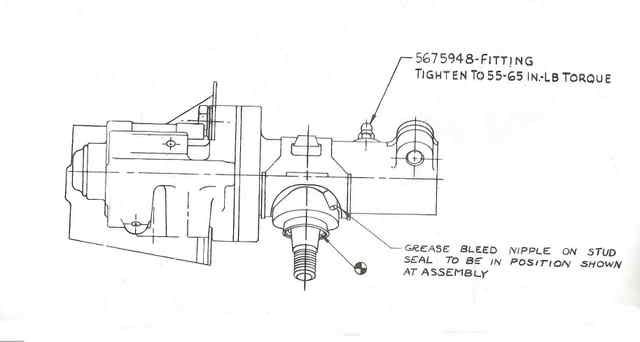
Through most of the C2/C3 production the control valve was manufactured at Saginaw Steering Gear Division with a zerk fitting and a special boot that had a very small slit (called the grease bleed nipple) where it met the stud. When you pumped grease into the zerk, the excess would purge through the slit. This prevented any buildup of pressure inside the control valve.
Late in C3 production (1981-82?) there was a big move toward "greased for life" components on all GM cars. So the zerk was removed and the boot was redesigned to eliminate the purge slit. Obviously, no one was considering 30 year old components requiring more, new, grease.
I believe that all service ball stud boots that are available over the counter do not have a purge slit. Many old control valve housings may still have zerk fittings. So you have a lot of potential today to mix and match housings with zerks and boots without purge slits. If you overfill the control valve with grease, the boot begins to bulge (and could easily rupture) and the pressurized grease could unseat a lip seal inside the control valve causing a power steering fluid leak.
So be very careful to not add too much grease to the ball stud on the control valve.
Jim
Through most of the C2/C3 production the control valve was manufactured at Saginaw Steering Gear Division with a zerk fitting and a special boot that had a very small slit (called the grease bleed nipple) where it met the stud. When you pumped grease into the zerk, the excess would purge through the slit. This prevented any buildup of pressure inside the control valve.
Late in C3 production (1981-82?) there was a big move toward "greased for life" components on all GM cars. So the zerk was removed and the boot was redesigned to eliminate the purge slit. Obviously, no one was considering 30 year old components requiring more, new, grease.
I believe that all service ball stud boots that are available over the counter do not have a purge slit. Many old control valve housings may still have zerk fittings. So you have a lot of potential today to mix and match housings with zerks and boots without purge slits. If you overfill the control valve with grease, the boot begins to bulge (and could easily rupture) and the pressurized grease could unseat a lip seal inside the control valve causing a power steering fluid leak.
So be very careful to not add too much grease to the ball stud on the control valve.
Jim

Melting Slicks


Joined: Mar 2009
Posts: 3,126
Likes: 15
If you put too much grease in this fitting it will force it's way up the center of the spool valve. Grease where PS fluid should be. When I rebuilt my PS control valve I had grease in this area. Did not cause a problem but if I had pumped a couple of more times it may well have. Have a good summer, Paul. mike...
Le Mans Master
Joined: Aug 2010
Posts: 9,272
Likes: 17
mine was never greased, it leaked and didnt work right, I rebuilt everything in the steering system, cylinder , valve, pump, based on info from this site and parts from these venders, it worked great, very resonsive, no issues, I thought about it and converted to a borgeson, much better, hope this helps

Racer

Joined: Apr 2012
Posts: 465
Likes: 18
From: NorthEast
I am not real sure of the timing but here is some brief history on the zerk fitting and the ball stud boot.
Through most of the C2/C3 production the control valve was manufactured at Saginaw Steering Gear Division with a zerk fitting and a special boot that had a very small slit (called the grease bleed nipple) where it met the stud. When you pumped grease into the zerk, the excess would purge through the slit. This prevented any buildup of pressure inside the control valve.
Late in C3 production (1981-82?) there was a big move toward "greased for life" components on all GM cars. So the zerk was removed and the boot was redesigned to eliminate the purge slit. Obviously, no one was considering 30 year old components requiring more, new, grease.
I believe that all service ball stud boots that are available over the counter do not have a purge slit. Many old control valve housings may still have zerk fittings. So you have a lot of potential today to mix and match housings with zerks and boots without purge slits. If you overfill the control valve with grease, the boot begins to bulge (and could easily rupture) and the pressurized grease could unseat a lip seal inside the control valve causing a power steering fluid leak.
So be very careful to not add too much grease to the ball stud on the control valve.
Jim
Through most of the C2/C3 production the control valve was manufactured at Saginaw Steering Gear Division with a zerk fitting and a special boot that had a very small slit (called the grease bleed nipple) where it met the stud. When you pumped grease into the zerk, the excess would purge through the slit. This prevented any buildup of pressure inside the control valve.
Late in C3 production (1981-82?) there was a big move toward "greased for life" components on all GM cars. So the zerk was removed and the boot was redesigned to eliminate the purge slit. Obviously, no one was considering 30 year old components requiring more, new, grease.
I believe that all service ball stud boots that are available over the counter do not have a purge slit. Many old control valve housings may still have zerk fittings. So you have a lot of potential today to mix and match housings with zerks and boots without purge slits. If you overfill the control valve with grease, the boot begins to bulge (and could easily rupture) and the pressurized grease could unseat a lip seal inside the control valve causing a power steering fluid leak.
So be very careful to not add too much grease to the ball stud on the control valve.
Jim
Corvette Stories
The Best of Corvette for Corvette Enthusiasts

Top 10 Most Expensive Corvettes Ever Sold on Bring A Trailer
Brett Foote
10 Things Every Corvette Owner Needs (2026 Edition)
Michael S. Palmer
8 Most "Only Corvette Owners Understand" Quirks and Problems
Pouria Savadkouei
10 Reasons the C6 Z06 is Still A Performance Benchmark After 20 Years
Joe Kucinski
How Much Horsepower Every Corvette Engine "LOST" in 1972
Joe Kucinski
Top 10 DOs and DON'Ts for Protecting Your Convertible Top!
Michael S. Palmer
Top 10 Most Explosive Corvettes Ever Made: Power-to-Weight Ratio Ranked!
Joe Kucinski
150 hp to 1,250 hp: Every Corvette Generation Compared by the Specs That Matter
Joe Kucinski
8 Coolest Corvette Pace Cars (and Replicas) of All Time
Verdad Gallardo

Le Mans Master
Joined: Aug 2010
Posts: 9,272
Likes: 17
probly work
no
no
the parts that get grease from that zerk, dont move much, 2-3 squirts. as some have stated, dont over do it

4th Gear
Joined: Jun 2017
Posts: 4
Likes: 0
thanks!!!!
I've just recently had mine and a friends power valve apart, any grease that you over fill that zerc. with will flow out the boot around the stud that connects to the pitman arm. there's a cap and an o-ring that keep the grease from going into the fluid portion of the valve. However, if the seals in the fluid side are bad, they will leak into the grease side because they are under pressure from the pump and you will either get fluid out that zerc or fluid out of the boot. hope this helps