When you click on links to various merchants on this site and make a purchase, this can result in this site earning a commission. Affiliate programs and affiliations include, but are not limited to, the eBay Partner Network.
I wanted to document some of the LED upgrades I have made to my cars, both a 1980 project, and a fairly nice 1979. It seems that this is one of the most common upgrades made by new C3 owners, and a few simple precautions can help ensure success, and possibly reduce the number of "why don't my turn signals work" questions. I'm focusing on my cars, but many of these solutions should work on all C3s.
First, why LEDs? They are more efficient. They emit more photons while using less power. In a 12V car, this means less current is required by the light circuits, so less current is flowing through the 41 year old wires in my car.
79s and up all have ATC fuses, the two blade fuses common to modern cars. The fuse panel is hidden below the dash, above and to the left of the pedals. A kneeling pad helps, but it is still difficult to get under there. If I have more than one thing to do, or even more than one or two fuses to test, I remove the driver seat, and lay down with my back on the floor, and my feet under the back window. The bubble-window of 78 and up makes this a lot easier.
For reference, here's my fuse block, which includes the seat belt and key alarm module.
Last edited by Bikespace; Nov 2, 2021 at 11:05 PM.
I replaced the rear bulbs with LEDs within weeks of buying both cars. For reference, the outer sockets (brake/turn) take 2-circuit 1157 bulbs. The inner sockets (reverse lights) take 1156. In my 80, gremlins prevented my upgrade from working. No surprise, my car had sat for a while. What was a surprise was the source of the problem. One of the sockets had an internal connector fail, causing an intermittent ground failure in the circuit.
The solution, of course, was to replace all of the rear sockets. I used 3-wire, 2-circuit 1157 sockets in all four positions, and swapped the inner lens assemblies for all-red lens. The stock lenses are keyed, so I drilled a second hole in all locations, making it possible to swap to four red/white lenses if I ever want to.
Right now, the bulbs are wired in the 1968 manner, with both pairs operating together, giving 4 bright brake lights, and two turn signal lights (left turn signal is activated in the photo below).
The stock turn signal flasher works by heating an element that opens the circuit when hot, and closes the circuit when cold. In order to work at the standard flash rate, stock-type incandescent bulbs must be used in the stock numbers and locations. Otherwise, either a dummy load must be added to the circuit with one or more resistors (defeating some of the purpose of using LEDs), or the two flashers (turn signals and hazards) must be replaced with 3-wire systems that operate at the same frequency regardless of load.
I used the United Pacific LED flasher, with the polarity reversing base. This is shown in the fuse block image in Post 1. The ground wire may reach the steering column bolts, and can be grounded there with an extra nut, or the wire can be lengthened and run to a screw in the birdcage behind the kickpanel. YMMV, but the reversing base was required for the turn signals in both my 79 and my 80.
Last edited by Bikespace; Oct 23, 2021 at 09:18 PM.
Perhaps you've noticed, almost all cars on the road have daytime running lights. Where I live, it is unusual to see a car that does not, which renders cars without DRLs partially invisible. I've nearly had my car wrecked by someone who pulled out in front of my "invisible" car, and I took to driving around with my headlights up and on all the time. Unfortunately, the clean lines of a C3 are ruined by the headlights (they are super cool, though, I do not want FIA style, or any other recessed headlights). I tried running just the parking lights, but the stock, dim, corner lights are pretty poor.
Fortunately, in my 80, they are 1157 bulbs, the same as in the tail lights. I picked up a set of 1157 LED white/amber "switchback" bulbs, which are intended to be used as DRL/turn signal bulbs. I expected them NOT to work, and I was not disappointed. Due too the way the 80's lights are wired, they stayed amber all the time, and broke the turn signal function entirely.
But there's a fix! First off, I hadn't inserted them correctly. In my 80's very old sockets, I had to first remove some goop, and then I had to really jam the bulbs in there with a towel, and force them into the correct bayonet orientation. An important tip, but that didn't fix it. The problem is the corner marker lights.
It gets even better in 80, which adds cornering lights, so the diagram is even more convoluted. Fortunately, the cornering lights do not interfere, but the marker lights require current to flow in either direction at different times, and it provides a current path to amber side of the LED at all times. Not a problem for an incandescent 1157. @Richard454's solution is a CustomLED Blinker Genie. I have them on order, and I fully expect them to solve my problem. I also ordered some amber 194 LED bulbs to replace the marker lights, which should give me brighter turn signals. I'll post a video when all of these items arrive. In the meantime, my front DRL/turn signal switchbacks work just fine with the removal of the side marker bulbs.
Here's a brightness comparison. The big problem with the 80 is that the lenses are amber. I should 3D print some clear lenses to replace them, and the effect would be even more striking.
Stock on the left (starboard side of car), switchback 1157 in white mode on the right (port side of car).
Last edited by Bikespace; Oct 25, 2021 at 10:51 PM.
80, 81, and perhaps 82 cars came with part 14028582, rear tow brackets, to protect the bumper during old-style strap towing. I asked about them in this thread. Mine still had them installed, even though I haven't seen a tow truck like that in 20 years. Until I get something 3D printed, they should make a fine mount for some low-profile LED light bars to act as backup lights. This is visually and functionally similar to the C6 solution.
I replaced all of the interior illumination lights in both cars with "warm" (3000K) LED bulbs from superbrightleds.com. If you only change one bulb in your car, make sure it is the overhead light in the T-top bar. This photo doesn't really capture it, but there is a LOT more light than stock, but it keeps the warm tone of the original incandescent bulb, while using a lot less current.
In the dash itself, I replaced all of the indicator bulbs with LEDs, also from superbrightleds.com. In the later cars with the flexible circuit boards (77 perhaps in the center dash, and 78 for all locations), it is very easy to install a bulb backwards and have it not work. Fortunately, once you've done one or ten, you can feel around in back and pop bulbs in and out without replacing the dash. It is also possible to trace out the circuit board, and align the LED's cathode with the common ground. Use a 9V battery and some test leads to confirm. I think the gauges look great with warm LEDs backlighting, which keeps some of the green tone from the paint on the inside of the instrument housings. There may be better options now, when I bought the bulbs they were very limited in how much they would dim. Full bright is still pretty soft, nowhere near what a modern dash looks like, and you still can't tell the lights are on until it is dark outside.
Last edited by Bikespace; Oct 26, 2021 at 10:10 PM.
Quick update teaser: There are no more incandescent bulbs in my car, except the four headlights.
I need to take a video, but the turn signals, hazards, and even the switchback DRLs all work. I needed two LED flasher units (but only one swapable base, on the turn signal flasher), two Custom LED Blinker Genies, a single rectifier diode, and a bunch of solder joints, but only one new circuit was added to support the DRLs, YMMV, but I only added about two feet of wire.
I'll post an updated wiring diagram once I test everything out for a few days.
On a side note....strange question. What metal is your wedding ring made from? Its dull and gray, like mine, which is made from meteorite. Just curious.
Really great thread thank you..even i can understand most of it!
great link for overhead, i agree that was the only one i wanted to replace but only found blue…which i was ok with until removed to try and figure out another electrical problem..that was not it..i also noted it only worked one way.
if i only wanted to have all 4 brake lights come on…can i change just the inner bulbs? And how does it go from red to white for reverse? With clear center lens?
On a side note....strange question. What metal is your wedding ring made from? Its dull and gray, like mine, which is made from meteorite. Just curious.
Thanks! It's a cheap tungsten carbide ring from Amazon. I take it off a lot, so if I lose it, it's easy to replace.
Originally Posted by interpon
Really great thread thank you..even i can understand most of it!
great link for overhead, i agree that was the only one i wanted to replace but only found blue…which i was ok with until removed to try and figure out another electrical problem..that was not it..i also noted it only worked one way.
if i only wanted to have all 4 brake lights come on…can i change just the inner bulbs? And how does it go from red to white for reverse? With clear center lens?
again thanks
I didn't want to speculate on the red/white switchbacks, but they might work for your application. In my amber/white switchbacks, the amber overrides the white. I don't know what happens with red/white.
Maybe I'll try on my 79 at some point, though it already has LEDs in the rear in the stock locations. The problem you may encounter is that the 1157 (2-pole, outer) sockets fit different bayonet holes than the 1156 (1-pole, inner reverse). In my 80, I swapped to all-red outer lens assemblies, so I have all 1157 socket holes and sockets. This may not be a problem for 75-79, since the lenses are much easier to separate from the housing.
I'd buy a set of red/white switchbacks to play with. If you separate the running lights into separate halos, you could get 4 brake lights and amber turn signals. You still might need separate LEDs for backup lights, though.
The cigarette lighter has also been replaced with a green LED that can fast charge two phones at once.
I used this charger. The green glow complements the gauges, when I'm using it, and I have three ways to turn it off when I'm not (close the lid, flip down the cover, or turn it off with the capacitive on/off switch). I enlarged the hole in my center console panel with a stepped drill bit, and used the stock wiring after clipping the connector and ground ring.
I’ve been following this thread with great interest as I’m curious how others have approached the LED conversion. Really good info, thanks.
Love your charger. I went a different direction on mine, since I like my cigarette lighter. I haven’t smoked in decades but the look of it makes me nostalgic 🙂.
This is my USB charger:
Only one USB port is hooked up to the in-line charger. The other is for a flash drive that’s connected to my radio. They can be tough to find in the dark though.
Here's a brightness comparison. The big problem with the 80 is that the lenses are amber. I should 3D print some clear lenses to replace them, and the effect would be even more striking.
Don't know if they would be the same but for what it's worth, the lenses on my '73 are clear.
I’ve been following this thread with great interest as I’m curious how others have approached the LED conversion. Really good info, thanks.
Love your charger. I went a different direction on mine, since I like my cigarette lighter. I haven’t smoked in decades but the look of it makes me nostalgic 🙂.
This is my USB charger:
Only one USB port is hooked up to the in-line charger. The other is for a flash drive that’s connected to my radio. They can be tough to find in the dark though.
That's an excellent solution. Thanks for posting it!
I should get around to 3D printing a new shift-indicator that includes a wireless charging pad. Right now, I just have a fat stack of magnets under the raised section. But your solution would work great for a charging pad instead!
Don't know if they would be the same but for what it's worth, the lenses on my '73 are clear.
DC
Thanks! I think they are clear up to 79, so the white/amber switchback DRL solution should work great on any of them.
Since I've been paying attention to DRLs on the road (thanks,Baader-Meinhof Phenomenon), the most notable exception to white DRLs that I've seen is the C5 Corvette. And my 80.
I finally got the video uploaded! If I can figure out how to get the closed caption description to upload, too, I'll edit the link. The video is less than a minute long, and shows all of the combinations of function. You can see that the switchback LEDs have a 1 second delay when going to the new mode.
Here is the modified wiring diagram I used. I only cut 3 wires on each side, and the cornering light doesn't really need to be cut, just an extension added to join the grounds of the Blinker Genie and marker lights.
To get DRL operation at IGN ON, as shown in the video, I tapped into the harness near the alternator to insert 12V into the brown line that feeds the parking and marker light circuit. First I had to clean the wires, and use my phones camera to figure out which wire is actually the brown wire. Then I cut that wire, and spliced in a rectifier diode. I fed 12V from a fused IGN ON source ahead of the diode, such that only the parking lights (the "white" side of the 1157 white/amber switchbacks) were illuminated. This also provided power to the blinker genie, which meant the front marker lights are always on. They pulse opposite the front parking lights when the turn signals are used (watch the video to see this).
The (dark) brown wire is the third one down. There's a tan one in there too that is NOT brown, and a bunch of black wires.




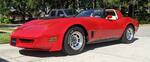







 1980 LED Upgrades and Lessons Learned