When you click on links to various merchants on this site and make a purchase, this can result in this site earning a commission. Affiliate programs and affiliations include, but are not limited to, the eBay Partner Network.
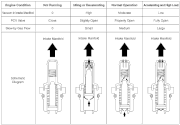
You absolutely need PCV. PCV removes harmful gas from the crankcase.
PCV is needed to prevent oil leaks and protect engine oil seals
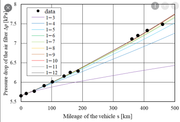
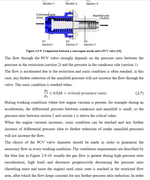
At wide open throttle, PCV pressure drop is supplied at throttle valve or compressor wheel
The air filter provides pressure drop on the throttle valve at wide open throttle.
This is how you connect the PCV system on a V8 engine for wide open throttle PCV actions.
The air filter is selected based on PCV needs.
In turbo applications the Wide open throttle PCV action is supplied to the crankcase from the compressor wheel instead of throttle valve
Notice the turbo 'inlet restriction' is the pressure drop provided by the selected air filter.
Addl reading (Review more details): https://www.corvetteforum.com/forums...post1604950584
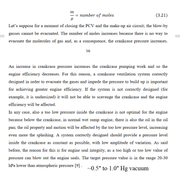
The ideal PCV pressure drop into the crankcase at all times is 0.5" to 1.0" Hg
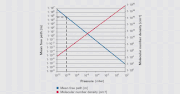
The density of gas in the crankcase has a powerful influence on suspension of oil droplets within the crankcase, more density results with a higher oil density in the gas which increases the amount of oil the PCV system will pull from the crankcase. Lower density causes increased oil return to the pan rate thanks to decrease in friction of encountering gas molecules (mean free path is increased at lower pressure)
All engines need PCV. Race cars tend to use vacuum pumps instead of intake suction
Crankcase pressure must be controlled, eventually everybody learns to monitor and control it somehow
Upon inspecting the 15amp fuse it had blown so it was not working when under boost. This might explain why I had oil pushing past the rear main seal. I swapped in a 20amp fuse and it works like it should and pulls ~5" at idle. Because I monitor the pressure with my AeroForce Gauge it allows me to set a warning light. I now have the warning light come on anytime the PCV presssure exceeds 0psi.
From: Some days your the dog and some days your the hydrant.
Royal Canadian Navy
I don't absolutely need a pcv!!! My engine also doesn't make 800 hp. Those nasty crankcase gases have yet to cause any damage to my engine. I don't have oil blowing all over my engine bay. I don't have any seals being blown out by crankcase pressure. But I do have a pure air/gas mixture into my cylinders. Engines like that! Others can buy into all the hype over a simple pcv system which helps to prevent sludge for those that can't remember the last time they changed their oil. But I do use synthetic oil and change it once a year. I drive about 1000 miles a season. Two breather caps doesn't allow pressure to build in the crankcase. Try blowing up a balloon (crankcase) with two one inch holes (breather caps) in it. Good luck with that. I would have to have severe blowby to damage seals but mine are just fine i.e. little blowby. You guys can keep touting the benefits of a pcv and the damage <cough> it causes without one but I won't be using one anytime soon. P.S. My other two cars do have a pcv and they will stay that way as part of the engine management systems fitted these days.
2025 C2 of the Year ('64-'66) Finalist - Unmodified
2025 C3 of the Year Finalist - Modified
2025 C4 of the Year Finalist - Modified
2024 C4 of the Year Finalist - Modified
2023 C2 of the Year Finalist - Unmodified
2023 C4 of the Year Finalist- Modified
2022 C4 of the Year Finalist - Modified
2022 C3 of the Year Finalist - Modified
2021 C7 of the Year Winner -- Modified
2020 C4 of the Year Finalist - Modified
Originally Posted by resdoggie
I don't absolutely need a pcv!!! My engine also doesn't make 800 hp. Those nasty crankcase gases have yet to cause any damage to my engine. I don't have oil blowing all over my engine bay. I don't have any seals being blown out by crankcase pressure. But I do have a pure air/gas mixture into my cylinders. Engines like that! Others can buy into all the hype over a simple pcv system which helps to prevent sludge for those that can't remember the last time they changed their oil. But I do use synthetic oil and change it once a year. I drive about 1000 miles a season. Two breather caps doesn't allow pressure to build in the crankcase. Try blowing up a balloon (crankcase) with two one inch holes (breather caps) in it. Good luck with that. I would have to have severe blowby to damage seals but mine are just fine i.e. little blowby. You guys can keep touting the benefits of a pcv and the damage <cough> it causes without one but I won't be using one anytime soon. P.S. My other two cars do have a pcv and they will stay that way as part of the engine management systems fitted these days.
Why the butt hurt?
The Op asked why he has a oil problem coming from his valve cover breathers, and the consensus told him he needs to add a PVC system to stop it.
Doesn't mean he has to or engine damage will occur, it will just stop a nuisance oil leak problem.
From: Some days your the dog and some days your the hydrant.
Royal Canadian Navy
No butt hurt lol, but too many in here think that in the absence of a functioning pcv system, engines won't perform properly, lost HP, seals blowing out everywhere, severe engine damage will occur and on and on for a device that just removes "harmful" vapours. Way overstated.
In response to Change the oil once a year and put 1000 miles on it each 'season'
This is a topic particular to Corvette enthusiasts which more often than other types of cars, tend to keep their car in storage rather than drive every single day. It is worthy a point to discuss.
Damage accumulated from lack of PCV assuming perfect air filtration would take approx 20,000 to 40,000 miles to start having noticeable deleterious affects on the engine's oil system, lubrication films disrupted by significant carbon deposits are a main concern, IMO. Excessive wear and tear is a guarantee at some point. Reduction of engine lifespan is a result of accumulated sticky carbon byproducts which engine oil carries throughout all passages. It is the job of PCV to remove those carbon byproducts before they can interact with engine oil and disrupt oil behavior. I speak from practical application of knowledge, research dissertations related to crankcase systems, and from experience of investigating used engine's oil system conditionals after 50k to 200k mileage with and without PCV system or air filters on around a thousand engines as a sample population.
The air filter is part of the PCV system, as both are intended to enable engine cleanliness and high mileage, and neither can do so by itself.
For the person that only drives 1k/year it could take 20 to 40 years to start seeing excess wear and tear I would imagine (20k to 40k miles) but of course the block is trashed and non-reusable at that point, whether you spend 1 year or 20 years accumulating 20k miles the same result.
For people that actually drive their cars 10,000miles/year that is just a few years. You buy the vehicle in 2022 and strip away the PCV, by 2025 its a smoking heap with no recourse after 30k miles. But that is 30 years if you only drive 1k per year I guess.
It can not be cleaned, re-used, rebuilt, there is no machine shop technique which can reach into every orifice and remove the stubborn wide spread hard diamond-like and sticky tar-like substances entrained. I realize it sounds crazy but I've accumulated significant evidence that this is the case, over two decades of engine tuning and setup, I've finally established the ground rules for ideal engine longevity and one of the key factors is acquiring an engine which has never had it's PCV system removed or tampered with, including air filter, and to avoid a machine shop if possible.
It takes a high mileage to see the result, and people only driving 1k miles/year exemplifies why there still uncertainty among ranks of owners I think.
It seems they like to think 1k miles is alot I guess? Whereas I prefer my 800+ horsepower to be reliable for 10 or 20 years with 10k miles per year. Like a normal car.
I hear it all the time, "My engine has lasted 10 years without PCV it runs fine.... but I only drive it 500-1000 miles per year and then change the oil". yeah, in ten years you put 10k miles on the engine and the rest of the world put 120k miles on theirs. Big difference.
PCV won't realize the benefits unless they actually drive their vehicles and acquire high mileage with proper air filtration. But that doesn't mean the engine isn't gradually taking damage the entire time it 'still runs fine'. You get a scuff on a bearing here or there... embed some debris.. the material is very soft, it is designed to capture debris to protect the oil film property. The engine will gradually make up for lack of PCV by trapping and controlling some of the debris but overall... eventually... it will overwhelm the engine to become trashed.
Bottom line with anything really (power, pcv, machine work, abuse) Let an engine sit year after year putting around 10% of the typical mileage on it and make claims of 'perfect engine health' - If you can't see why that is misleading with respect to the question of longevity and long term viability I don't think anyone can help you.
Take one little mole hill.
Introduce it to this forum.
You now have a mountain ! ! !
I mean. To be fair. PCV is the highest level of a performance application.
It is absolutely necessary to control crankcase pressure for performance applications, especially after 1000hp and 'thrashing' (high G forces).
Almost all race cars use vacuum pumps, dry sumps, and monitor crankcase pressure, in effort to control oil system behavior and oil quality. And the OEM depend on PCV for high mileage.
It is only down here at the hobby level with such random population, people who don't routinely setup for high mileage (they like to keep their vehicle in storage instead of driving it) that you get this sort of uncertainty and... skepticism. Few people have built an engine and then gotten 200k miles out of it (not saying you should even try this) and fewer still know how to do that with 1200hp to the tires. But the big picture of power and longevity is actually feasible if you setup properly using the methodology others have provided for us, the data and experience of those who use vacuum pumps and dry sump conditions passed down to us. And the key of air quality to wrap it up nicely.
On cars I've built I get a milky white residue inside the oil cap without a positive PCV valve. It's the water vapor mixing with oil that slowly contaminates the oil.
KingtalOn,
You don't have to preach to me. See post 9.
Just saying, the O.P had a simple question about the breather.
Then blown way out of proportion.
You guys are doing a good job about the pcv valve side but everybody neglected to mention the WOT side which is the other 50% of the pcv system.
Start mentioning both sides of the pcv system and I won't preach and post about pcv systems anymore. The air filter provides pressure drop at WOT, the crankcase vent attached between the air filter and throttle valve (or compressor wheel) takes advantage of the drop in pressure created by the filter. The other side has the pcv valve and intake suction drives it, pcv valve internal orifice closes with increased vacuum. You can put a restrictor in the vent line of the crankcase to achieve any target crankcase pressure at idle/cruise but only the air filter can provide suction for wide open throttle crankcase targets.
The target pressure of crankcase is 0.5" to 2.0" (or 3") Hg at all times, WOT, cruise, idle.
It should not rise above atmospheric except briefly for an instant during a WOT transition and even then it should only barely caress the 0.15psi of pressure range before pulling back down, ideally.
Very easy to express simply, yet surprisingly difficult to convince people they need something that will cost power and takes effort to understand.
Woow nice video! Experienced mechanic talking about pcv.
"Engines without PCV create this ungodly sludge, tar, black jello kind of thing that would happen all through the inside of the engines... and would actually KILL THEM."
"Rings were shot... bearings... "
"Anybody that works on engines from modern era cannot appreciate"
"PCV actually helped everybody across the board"
"The most beneficial thing the government has ever done to internal combustion engine"
IMO you can gain 4x to 10x the lifespan of an modern (02+ generally) engine these days using PCV as technology allows such tight spaces, girdle support, thin lightweight synthetic oils.... Engines are coming apart at 250k miles with bearings that look mint even after being run with 800hp or whatever. A large deciding factor is how clean you can keep the oil over that period. It is possible to increase/improve PCV flow above and beyond factor rates for higher performing engine setups (vacuum pumps do this) keeping the engine even cleaner.
Keeping pressure, water and that black tar #(@*$@# out of the oil system is the lock and PCV is the key
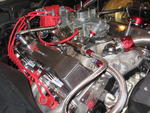
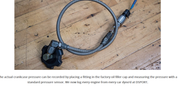
Good read on their website as well. Here is a pic of mine installed.
Thats cool
Curious why you blocked off the vacuum advance. It typically adds 10 to 15* btdc of timing which can add 10mpg to highway cruise situations and 5mpg city. Its crazy how much mpg you can gain with correct timing.
Curious why you blocked off the vacuum advance. It typically adds 10 to 15* btdc of timing which can add 10mpg to highway cruise situations and 5mpg city. Its crazy how much mpg you can gain with correct timing.
I guess if you can afford to spend 130 bucks for a PCV valve, you're not too worried about fuel economy. Must be nice.
Curious why you blocked off the vacuum advance. It typically adds 10 to 15* btdc of timing which can add 10mpg to highway cruise situations and 5mpg city. Its crazy how much mpg you can gain with correct timing.
Skip White built 530hp 421 stroker, timing is locked.
Lol, and no increase in performance on a street engine. But it's shiny!!!
The PCV valve suction will go a long way to protecting your investment.
It does not affect or reduce power, since it only works at part throttle. I'm sure you knew that but I'm confirming it for everyone here.
And just a reminder, the oil temp needs to hit 200-220*F ranges to drive out water. Even with PCV action the oil may still collect water if the engine oil isn't routinely hitting full operating temps on 'short drives' which tend to be the issue (too short of a drives = cold oil constantly)
Same thing with coolant, need to reach 190-210*F or even 215*F for minimum wear and tear.
Sort of like a necessary checklist of healthy performance engines that often go unchecked/unheeded:
1. PCV action
2. Rapidly warming coolant and engine oil to 200*F~ ranges (use thermostats)
3. Superior air filtration
You can't just add 1 or 2... you need all 3 if you want the longevity
I guess Skip White doesn't believe in vacuum advance? Too bad. My opinion of him just dropped a notch.
There is zero reason not to run vac advance on a street engine. On a race car it doesn't really matter, because they are never at part throttle.
But does deleting it make a street engine run better? or more racy? Does less timing make it run better at part throttle? Not on your life.
It does need to be tuned, to the car, and it's gearing, under load, on the road, at part throttle.. Some engine builders just do not want to bother tuning it, and do not trust engine owners not to screw it up. So to "warranty" the engine, they delete it. They will even say things like "don't touch the timing". Too bad.


















 P.S. My other two cars do have a pcv and they will stay that way as part of the engine management systems fitted these days.