When you click on links to various merchants on this site and make a purchase, this can result in this site earning a commission. Affiliate programs and affiliations include, but are not limited to, the eBay Partner Network.
My dipstick keeps popping out slightly but enough to get oil splash in the engine compartment and some in the headers causing smoke. I recently added an oil catch can running from both valve covers. Any thoughts? Wasn’t getting it when I ran two breathers.
bigger breather on the catch can maybe?
Last edited by Bluesting70; Dec 31, 2021 at 11:28 PM.
Really? PCV goes way back. Not certain what carb you have. Do you have it on a spacer? if so you could easily drill and tap into the spacer. Would be less work than drilling manifold.
But if it where mine. I would find a way to go PCV.
Really? PCV goes way back. Not certain what carb you have. Do you have it on a spacer? if so you could easily drill and tap into the spacer. Would be less work than drilling manifold.
But if it where mine. I would find a way to go PCV.
no spacer. Not enough hood clearance. One carb port is on the boaster the other is on the the dizzy. The only port left on the carb is timed and the port is too small for the hose.
You really need a PCV valve on the engine. You won’t properly get rid of crankcase pressure without it. I know I post this and a dozen ppl will chime in and tell me you don’t need one but I have first hand seen 2 engines that couldn’t stop oil leaks when they had no pcv valve. Added one and magically all the oil leaking stopped.
Most carbs have a large one at or near the back of the carb for the booster and a large one in the front for PCV. However, yours apparently doesn't.
Yes I would drill and tap the manifold as close to the base of carb as practical.
PCV works.
I have had a couple people over the years tell me to lose the "Ugly hoses" and put on breather caps. I remember them from when I was young. They always left a mess.
Sounds like your engine is configured with parts that doesn't allow for positive crankcase ventilation (PCV) and your current setup is no different than having a breather pipe (think road draft tube). My guess is the current setup is too restrictive causing crankcase pressure to seek the least path of resistance or in your case the dipstick.
sounds to me like you need a T fitting for the vac advance off the brake booster and run the PCV to the other port. PCV has been around since the early 60's. i remember seeing exhaust blowing straight down from car's road draft vent tubes when they pulled out from traffic lights. if you are pushing dip stick out, you have a lot of blowby. ring job in near future.
the amount of vacuum rthe advance needs will not effect your stopping power. PCV, OTOH is essentially a vacuum leak to atmospheric pressure. and anything Teed to it will have very little vacuum signal. where do the headlights and heater controls get their vacuum on this setup?
sounds to me like you need a T fitting for the vac advance off the brake booster and run the PCV to the other port. PCV has been around since the early 60's. i remember seeing exhaust blowing straight down from car's road draft vent tubes when they pulled out from traffic lights. if you are pushing dip stick out, you have a lot of blowby. ring job in near future.
I always thought the booster needed dedicated vac? Is anyone else running a T from the booster vac hose?
the amount of vacuum rthe advance needs will not effect your stopping power. PCV, OTOH is essentially a vacuum leak to atmospheric pressure. and anything Teed to it will have very little vacuum signal. where do the headlights and heater controls get their vacuum on this setup?
I always thought the booster needed dedicated vac? Is anyone else running a T from the booster vac hose?
I wouldn't do that. The booster needs the vac. If you T into it you'll mostly or completely eliminate the vacuum to it as the PCV is a continuous vacuum leak.
Clearly the catch can is presenting more of a restriction to the outflow of blowby. where does the hose in the pic run to after it leaves the catch can?
That much blowby is a bit of an issue. I agree with the others though a nice PCV system would be better to control some of that blowby. That with a catch can integrated would be best for your situation I believe. Not a catch can with a vent as the one you have now. Just a can to catch the oil that comes with the blowby on it's way to the PCV so that You're not burning oil from the blowby air.
These PCV's are really quality and work very well. I have one myself. It's expensive but is a critical tuning component of a good running engine. It can match up to any performance level of engine vs a poorly matched mass produced PCV. If you have other oil leaks now due to excessive blowby a PCV system can help with that as well. http://mewagner.com/?p=444
Just venting as you did before is an option, I'm guessing that made a mess of oil on the valve covers from the blowby gasses mixed with oil though. good baffleing inside the valve cover is important too. If that is missing then more oil will get out with the blowby.
Clearly the catch can is presenting more of a restriction to the outflow of blowby. where does the hose in the pic run to after it leaves the catch can?
That much blowby is a bit of an issue. I agree with the others though a nice PCV system would be better to control some of that blowby. That with a catch can integrated would be best for your situation I believe. Not a catch can with a vent as the one you have now. Just a can to catch the oil that comes with the blowby on it's way to the PCV so that You're not burning oil from the blowby air.
These PCV's are really quality and work very well. I have one myself. It's expensive but is a critical tuning component of a good running engine. It can match up to any performance level of engine vs a poorly matched mass produced PCV. If you have other oil leaks now due to excessive blowby a PCV system can help with that as well. http://mewagner.com/?p=444
Just venting as you did before is an option, I'm guessing that made a mess of oil on the valve covers from the blowby gasses mixed with oil though. good baffleing inside the valve cover is important too. If that is missing then more oil will get out with the blowby.
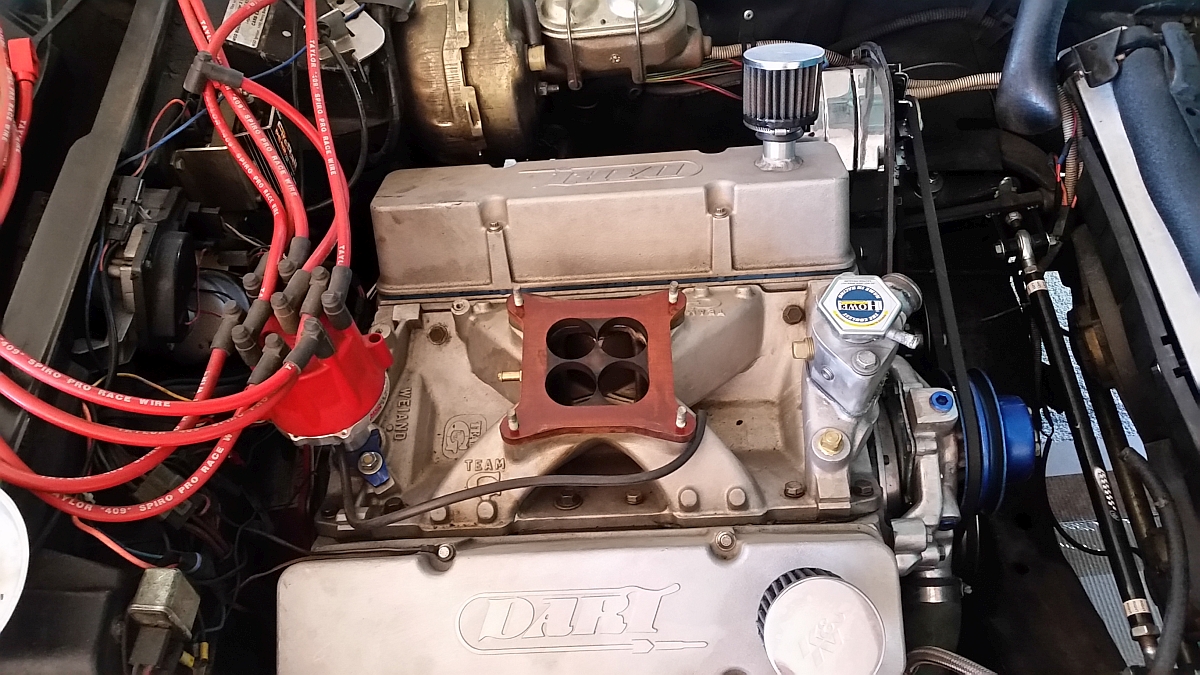
I plugged one breather back in in this picture for temporary relief but you can see the other hose to the catch can.
Has anyone ever T’d the booster hose to plug in the vac canister? The picture here is the space I have on the intake port and the secondary pump. Not much room to work with to use it. I have seen ‘very’ low profile ports that might fit here but I have not heard good reviews. If one of those fit I could use it to plug in the canister.
as I said earlier a spacer won’t help due to hood clearance. I am however in the process of putting the wiper door system back in as the po ripped it all out for a long hood. I have an lt1 bb hood on order. I don’t know if I would get much more hood clearance with that hood but if I did I could look at a spacer.
Has anyone ever T’d the booster hose to plug in the vac canister? The picture here is the space I have on the intake port and the secondary pump. Not much room to work with to use it. I have seen ‘very’ low profile ports that might fit here but I have not heard good reviews. If one of those fit I could use it to plug in the canister.
Edelbrock did that to their manifolds so only Edelbrock carbs would fit on them.
My dipstick keeps popping out slightly but enough to get oil splash in the engine compartment and some in the headers causing smoke. I recently added an oil catch can running from both valve covers. Any thoughts? Wasn’t getting it when I ran two breathers.
bigger breather on the catch can maybe?
Doesn't the catch can need to be vertically mounted? I ran a Jazz tank system for years. Yes, breather tubes diameter, length, and breather area all make a difference. How old is your motor and have you considered doing a leak down test to see why you have so much blow by?
In a performance motor PVC is not an option. PVC is a variable vacuum leak that plays havoc with a good A/F ratio curve. PVC puts oil mist, water, and non combustible gases into the intake. None of them promote efficient cylinder burn. The oil and carbon deposits on the intake valves.
The order of what actually works for more HP is dry sump then, crank case vacuum pumps...... down to twin breather ideas.
I welded these up and they never leak or drip, but my last leak down was less than 3% on all cylinders with about 15,000 miles on the refresh.
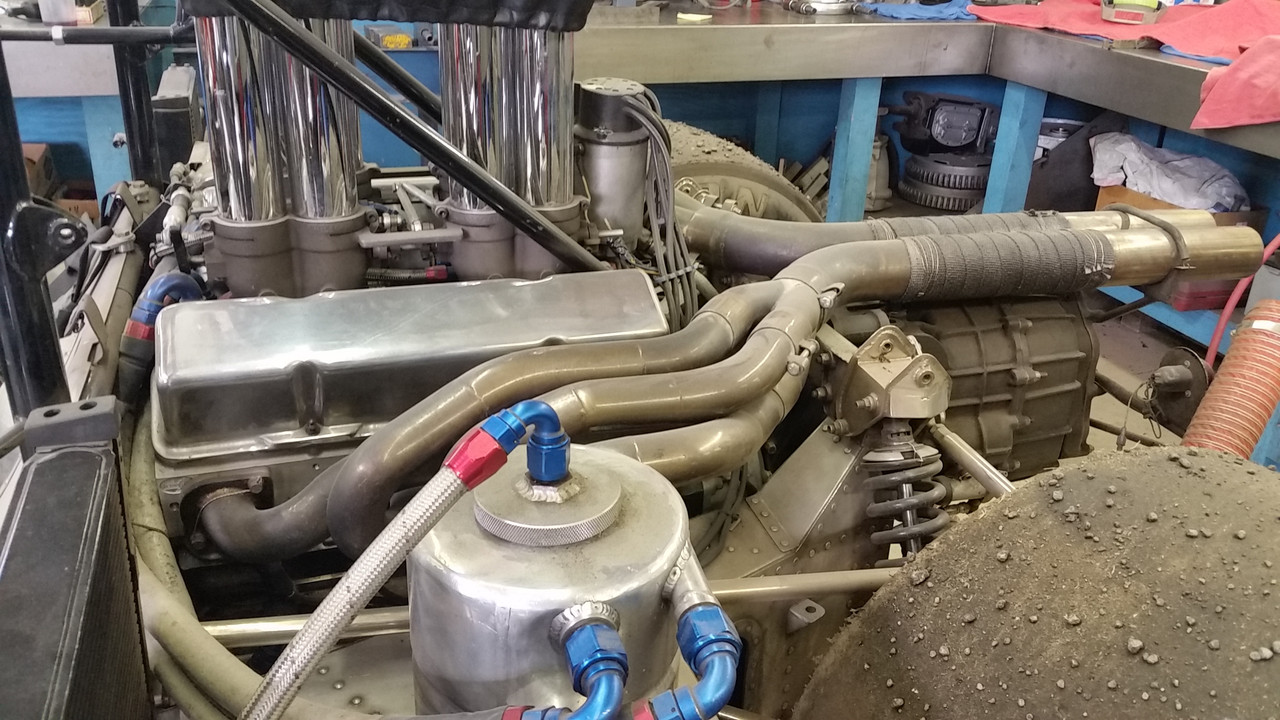
This motor at work actually has an adjustable air bleed through the intake manifold to set the max crank case vacuum at about 20 inches. It really increases HP that you can see on a dyno adjusting it up and down. About 800 hp 421 ci SBC lots of TQ and 9000 rpm every gear.









 Blow by Question