When you click on links to various merchants on this site and make a purchase, this can result in this site earning a commission. Affiliate programs and affiliations include, but are not limited to, the eBay Partner Network.
Doesn't the catch can need to be vertically mounted? I ran a Jazz tank system for years. Yes, breather tubes diameter, length, and breather area all make a difference. How old is your motor and have you considered doing a leak down test to see why you have so much blow by?
In a performance motor PVC is not an option. PVC is a variable vacuum leak that plays havoc with a good A/F ratio curve. PVC puts oil mist, water, and non combustible gases into the intake. None of them promote efficient cylinder burn. The oil and carbon deposits on the intake valves.
The order of what actually works for more HP is dry sump then, crank case vacuum pumps...... down to twin breather ideas.
I welded these up and they never leak or drip, but my last leak down was less than 3% on all cylinders with about 15,000 miles on the refresh.
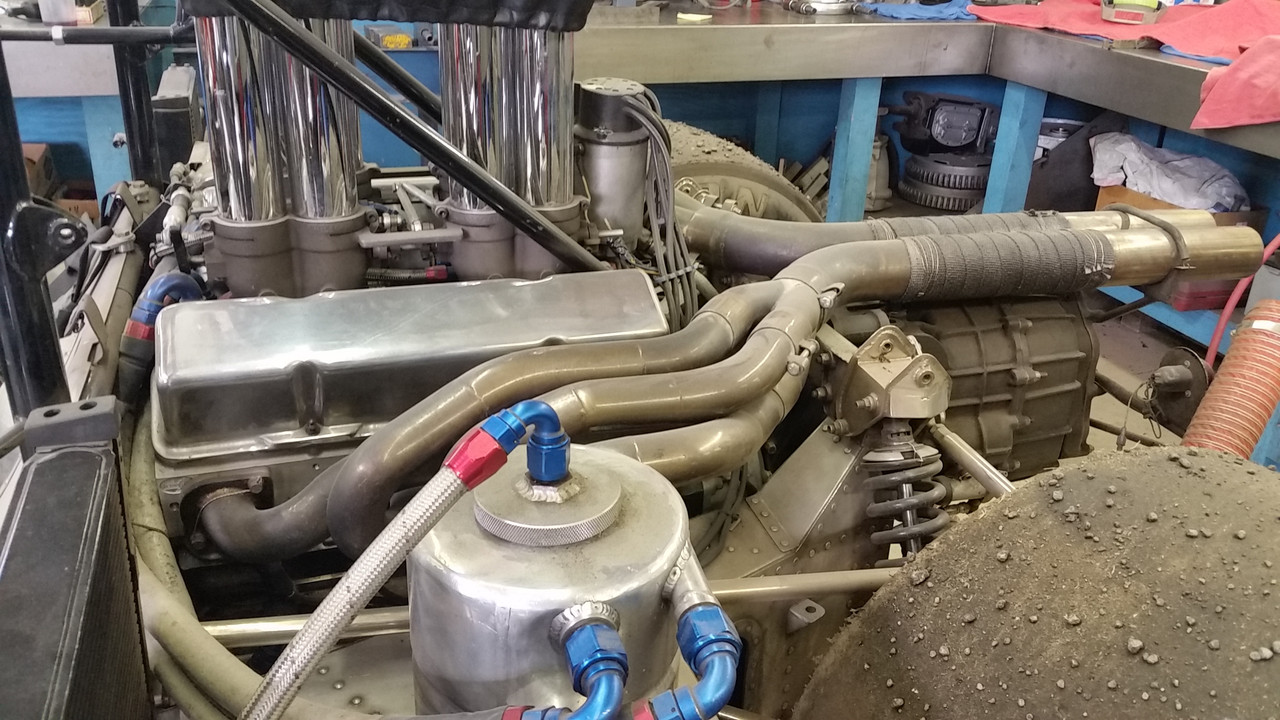
This motor at work actually has an adjustable air bleed through the intake manifold to set the max crank case vacuum at about 20 inches. It really increases HP that you can see on a dyno adjusting it up and down. About 800 hp 421 ci SBC lots of TQ and 9000 rpm every gear.
crate build that put up about 500hp but had a crank vac pump pulling out the blow by. I would love to get that system but they are so damn expensive. It seems like I would at least not cause any damage by doing the pcv. Not sure
Last edited by Bluesting70; Jan 1, 2022 at 03:01 PM.
Why don't you do a simple test? find out the restriction, pull both lines off the side of the can and drive it. If your dip stick tube stays in it's the can. Mount the can correctly and address the output.
Why don't you do a simple test? find out the restriction, pull both lines off the side of the can and drive it. If your dip stick tube stays in it's the can. Mount the can correctly and address the output.
Genius……not being a smart *** but yes, I will do this test. I’ll have to wait until I get back home from Universal Studios (trust me, I’d rather be turning wrenches).
2020 Corvette of the Year Finalist (performance mods)
2019 C3 of Year Winner (performance mods)
2016 C3 of Year Finalist
I've run catch cans for years. Yes it needs to vertical and no you do not need a pcv valve if you do not run it to the carb. All you need it crankcase ventilation. Pulling a vacuum on it would be nice and it will restrict leaks but you do not need it. The PCV vlave limits oil being drawn into the combustion chambers through the carb. Using your system and ending it at your oil catch can will take care of any issues you have. If you have so much blow by that your dip stick is blowing out with 2 hoses that large vented to atmosphere you should rebuild your motor
Genius……not being a smart *** but yes, I will do this test. I’ll have to wait until I get back home from Universal Studios (trust me, I’d rather be turning wrenches).
just did this test and the dipstick popped out but barely. Did not push out any oil this time. Next I will do another test where I will temporarily run the vac advance to timed port on the carb and the manifold vac to hook up the pcv. I’ll drive it like that tomorrow to see if it makes a difference.
Massive blow by?? or simply a poorly vented engine?
A dip stick flying out of the tube, yes Massive blow by. A dip stick popping up a 1/4 inch. maybe, maybe not.
I always wondered in these scenario's or even with a normal level of blowby, why don't they make a valve cover vent with a one way checkball in it? So you can have PCV when vacuum is present (checkvavle/ball closed) and then when it isn't you can have venting out the vent due to crankcase pressure (check valve open) on the PCV side of the engine.
Or do they make such a thing and I haven't found it?
To answer gkull above. The PCV only functions when vacuum is present, of course. Once it drops off at high enough throttle deflection it's no no longer in the game. The intake side of the PCV system can vent back to the carb if it's hooked to the air cleaner or to atmosphere if it's not, but it's small and may not be sufficient to relieve the pressure. This is likely where that blowby pressure is causing the symptoms. Not in the realm of where the PCV can function.
The wagner PCV functions well into the area that most PCV's fail to function. But if you got a bit too much blowby, you still need venting, and probably a lot of it to relieve that crankcase pressure.
A leakdown may uncover one cylinder with a problem or multiples. That would be good and useful info. If it simply shows a pretty good leak past the rings in all cylinders, but not dictating of a rebuild then you at least confirmed no big issue with a certain cylinder(s). Then you deal with the blowby issue.
I'm not saying a leakdown is not of value, but it's likely to confirm what you know. Or it may not.
It's sounds like the blowby became an issue or came to light, due to a change in the configuration of the venting, not due to a change in the condition of the engine.
Had mine pop up a few times when brand new. Not blow by just a cheap pos that never stayed put. Fooled wiht the end some now does what its supposed to
Wondered about those dual breathers from speedway they have a kit with valve covers for 159. We used similar style setups and Saugus Speedway in the 80s. Bet Moroso may have them too.
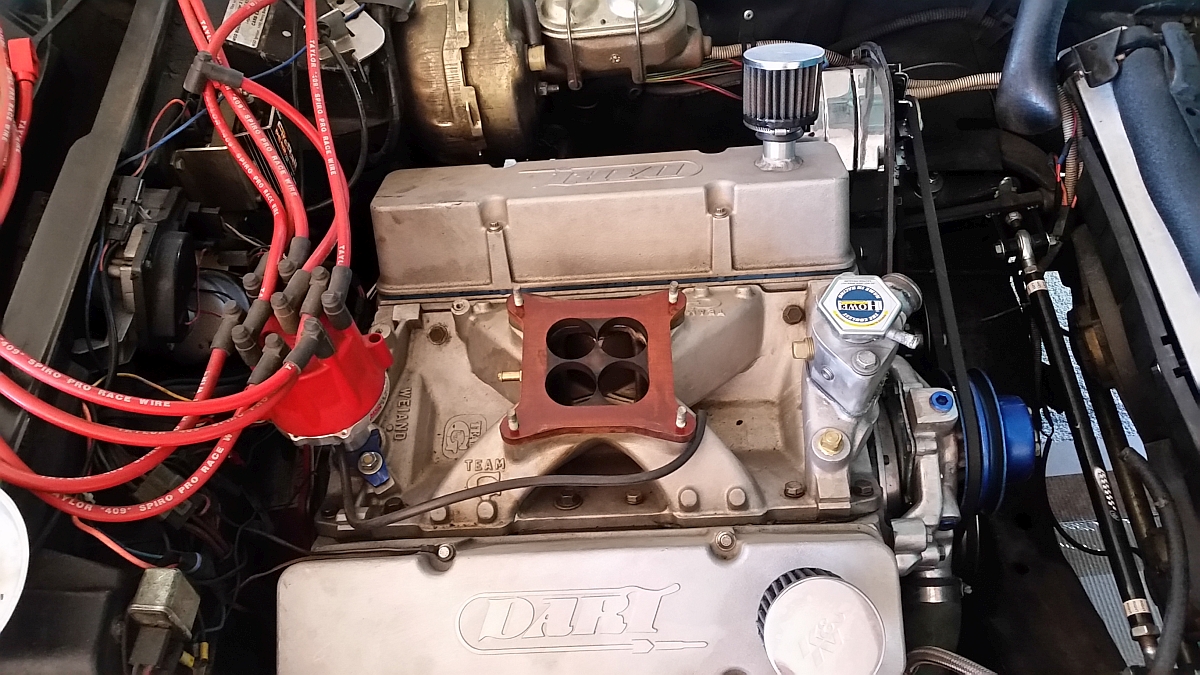
Always wondered about possibly putting a 1" ??? hole behind the carb on the Team G and rig up some type of breather system that was hidden so you could run valve covers with no breathers at all. Would clean up the appearance .
Takes frigging forever to add oil with the baffles in the valve covers. Though about adding an old school oil fill up front just for convenience
Takes frigging forever to add oil with the baffles in the valve covers. Though about adding an old school oil fill up front just for convenience
morroso also sells the twin breather cross over. Very easy to dump oil in my twin setup.
PVC valves are often what about 3/8th of an inch. At wide open throttle you have NO or little vacuum so flow through the PVC is all crank case pressure being a it's highest.
Cruise and off throttle is the highest vacuum and least blow by, having the highest flow through the PVC valve.
3/8th has very little flow area compared to big hoses to a catch can or twin one inch breathers
Had mine pop up a few times when brand new. Not blow by just a cheap pos that never stayed put. Fooled wiht the end some now does what its supposed to
Wondered about those dual breathers from speedway they have a kit with valve covers for 159. We used similar style setups and Saugus Speedway in the 80s. Bet Moroso may have them too.
Always wondered about possibly putting a 1" ??? hole behind the carb on the Team G and rig up some type of breather system that was hidden so you could run valve covers with no breathers at all. Would clean up the appearance .
Takes frigging forever to add oil with the baffles in the valve covers. Though about adding an old school oil fill up front just for convenience
i hated the slow oil fill process too but started using this funnel. It holds over a quart and you can walk away while it sinks down. Lets me work in something else for a minute or two.
Last edited by Bluesting70; Jan 2, 2022 at 11:47 AM.
I don’t have massive blow by. Just being meticulous with my build as this is what I like doing. So based on some feedback from some of you, I ran the dizzy vac line to ported (temporary-I know it needs to be full man). Then plugged the pcv into full man. Took it for a few miles. I actually think it ran smoother. Idle went down a bit but that’s due to plugging into ported for dizzy. Since I liked that result but want to try and filter out some of the blow by from going back to the engine, I ran one valve cover plug with port to one nipple on the can. The other valve cover hole I kept the pcv valve then ran that to the other port on the can. On the top of the can I connected the full man from the carb. Sealed all connections up with teflon. Ran really smooth. No dipstick issue. By the way it came out like a quarter of an inch just doing hoses to catch can. When I did breathers only it barely moved. The catch can only set up caused a little oil splash that got to the headers. Pictures below of the way I set it up. By no means do I call myself a master mechanic or tuner but I’d like any opinions from those that have value added information. I pulled the valve cover plug out while the car was running and I could tell it was a lot tighter fit. When it came off I heard the suction build up escape. Pretty sharp sound. Then the engine changed its idle of course due to open vac hose. Is there such a thing as too much vacuum for blow by? Am I missing something that will lead to issues with this configuration?
Adding timing advance at idle increases idle RPM. Ported vacuum on the side of the carb has NO vacuum until the throttle blades start to open. So it doesn't give you additional idle advance and would decrease the idle rpm. It really has nothing to do with the tiny pvc port.
At WOT you will have no vacuum and no evacuation of the blowby gasses with that setup.
Typically one valve cover has a vent to atmosphere (or routed to the air cleaner) that acts as an intake to the crakcase area during times of engine vacuum to evacuate the gasses via the PCV valve to be burned again in the intake manifold.
Once you got to or near WOT engine vacuum is not present or not enough to evacuate blowby gasses. The blowby is also greater at times of WOT.
So with your set up the blowby will pressurize the crankcase during WOT and present a problem again since there is no vacuum to take it out. If the valve cover opposite the PCV has a vent (fresh air intake during times of vacuum) then it will reverse flow during WOT and release crankcase pressure that cannot otherwise escape.
As mentioned that catch can needs to be vertical so the collected oil has a place to collect in the bottom, rather than right back into the intake, which is why a catch can is used in the first place.
At WOT you will have no vacuum and no evacuation of the blowby gasses with that setup.
Typically one valve cover has a vent to atmosphere (or routed to the air cleaner) that acts as an intake to the crakcase area during times of engine vacuum to evacuate the gasses via the PCV valve to be burned again in the intake manifold.
Once you got to or near WOT engine vacuum is not present or not enough to evacuate blowby gasses. The blowby is also greater at times of WOT.
So with your set up the blowby will pressurize the crankcase during WOT and present a problem again since there is no vacuum to take it out. If the valve cover opposite the PCV has a vent (fresh air intake during times of vacuum) then it will reverse flow during WOT and release crankcase pressure that cannot otherwise escape.
As mentioned that catch can needs to be vertical so the collected oil has a place to collect in the bottom, rather than right back into the intake, which is why a catch can is used in the first place.
Great information, thanks. The can is not horizontal. Orientation picture attached. Should it not drain to the bottom of the can?
Based on your take, should I put the breather back in the other valve cover? It doesn’t make a mess and never has due to the baffling I have. I just like the look better with the hose to the can but certainly prefer practicality over looks.
I just took it for a spirited drive and for the first time since I took it out of the crate, the dipstick didn’t budge!
At WOT you will have no vacuum and no evacuation of the blowby gasses with that setup.
Typically one valve cover has a vent to atmosphere (or routed to the air cleaner) that acts as an intake to the crakcase area during times of engine vacuum to evacuate the gasses via the PCV valve to be burned again in the intake manifold.
Once you got to or near WOT engine vacuum is not present or not enough to evacuate blowby gasses. The blowby is also greater at times of WOT.
So with your set up the blowby will pressurize the crankcase during WOT and present a problem again since there is no vacuum to take it out. If the valve cover opposite the PCV has a vent (fresh air intake during times of vacuum) then it will reverse flow during WOT and release crankcase pressure that cannot otherwise escape.
As mentioned that catch can needs to be vertical so the collected oil has a place to collect in the bottom, rather than right back into the intake, which is why a catch can is used in the first place.
Question for you though. Am I right in thinking the can will filter out some of the blow by from going back to the engine?
Great information, thanks. The can is not horizontal. Orientation picture attached. Should it not drain to the bottom of the can?
Based on your take, should I put the breather back in the other valve cover? It doesn’t make a mess and never has due to the baffling I have. I just like the look better with the hose to the can but certainly prefer practicality over looks.
I just took it for a spirited drive and for the first time since I took it out of the crate, the dipstick didn’t budge!
The can is on a slanted wall where some c3’s have a radiator burp tank. Mine did not come stock with it but had the slanted wall there.
Ok, ya I see it now the can is vertical. Yes the can is to separate the oil from the blowby vapors. oil should fall to the bottom.
Yes, I would put the vent on the other valve cover. The PCV is a calibrated vacuum leak essentially. So when you do this it may take a little adjustment of the idle screws, mixture and throttle to get it back where you want the idle.
Another thing I would do is cap the top hole in the catch can and put vacuum to one of the remaining outlets and PCV to the other. That's the way it was designed to work. It may even be labled "IN" and "OUT" on those two side ports.
In my catch can I added a stainless steel pot scrubber to give the oil something to stick to and fall to the bottom as the blowby air comes through.
Ok, ya I see it now the can is vertical. Yes the can is to separate the oil from the blowby vapors. oil should fall to the bottom.
Yes, I would put the vent on the other valve cover. The PCV is a calibrated vacuum leak essentially. So when you do this it may take a little adjustment of the idle screws, mixture and throttle to get it back where you want the idle.
Another thing I would do is cap the top hole in the catch can and put vacuum to one of the remaining outlets and PCV to the other. That's the way it was designed to work. It may even be labled "IN" and "OUT" on those two side ports.
In my catch can I added a stainless steel pot scrubber to give the oil something to stick to and fall to the bottom as the blowby air comes through.