When you click on links to various merchants on this site and make a purchase, this can result in this site earning a commission. Affiliate programs and affiliations include, but are not limited to, the eBay Partner Network.
Don't know if there is any interest in something like this, but I decided my winter project this year is building a Flow Bench.
Always wanted one.
I'm buy no means a Flow Bench expert at this point, but I've been reading and learning.
Going to start by posting where I am now and if there is any interest, I'll back up and detail some of the build.
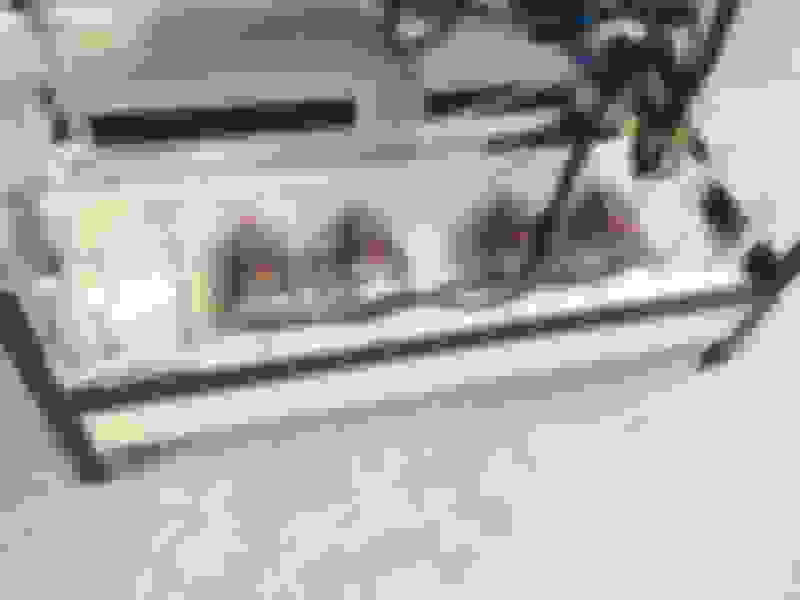
My bench today ... I'm in a dark spot of my shop, so pictures are a little difficult.
This is just starting out as a vacuum or flow thru bench, because that's what I'm most interested in.
I'll add a way to reverse flow, pressure test, say for exhaust ports later.
Started with a cheap Harbor Freight workbench for $110.
With the cost of building supplies now, don't think I could build one myself cheaper?
Starting with four 122 cfm vacuum motors. but left space to add two more.
I'll post more about the different ways to measure the flow rate in a later post, but I'll be measuring the pressure drop across a sharp edge orifice.
Most DIY Flow Bench builders have gone this way. and I have the ability to machine my own orifice plates.
One thing I've been dying to test is the different TPI runners.
I have some stock ones, Arizona Speed runners, and some SLP runners that I fully siamesed.
I flowed one runner and two together.
It surprised me that the siamesed runners flow about the same as the two ASM runners?
Stock TPI one runner 198 cfm
Stock TPI two runners 410 cfm
Arizona TPI one runner 257 cfm
Arizona TPI two runners 539 cfm
Full Siamesed SLP two runners 544 cfm
I intend on flowing the different runners with the manifold and plenum, as soon as I can build a fixture to hold them, and work out some calibration issues I'm trying to understand.
Ah crap. Now I'm trying to remember things lol. So you're using pressure drop across an orafice correct? So you're back calculating CFM from that based on bernoulli or similar governed equation I imagine?
Any rate these are cool. Love the home builds and love how accurate they can be tweaked to be. Just looking at your numbers it would seem the high flow ones are probably about maxing out your vacuums no? I imagine depression is still pretty consistent at that rate however.
Ah crap. Now I'm trying to remember things lol. So you're using pressure drop across an orafice correct? So you're back calculating CFM from that based on bernoulli or similar governed equation I imagine?
Any rate these are cool. Love the home builds and love how accurate they can be tweaked to be. Just looking at your numbers it would seem the high flow ones are probably about maxing out your vacuums no? I imagine depression is still pretty consistent at that rate however.
I'm learning all the dirty little Flow Bench secrets.
Calibrating, who does and who doesn't do a good job at it.
Yes, the equations for the pressure drop across different shape orifices are pretty well figured out.
It's all about calibrating everything, the gauges, the discharge coefficient of your benches meter orifice, etc.
And don't have enough airflow to reach 28 in h20, then you have to do the dirty little math conversion.
My spread sheet is making my own head spin
Seams like the present thinking is to machine a near zero loss orifice of a given diameter and use that to calibrate the discharge coefficient of the benches orifice plate.
That's the way I am trying to go.
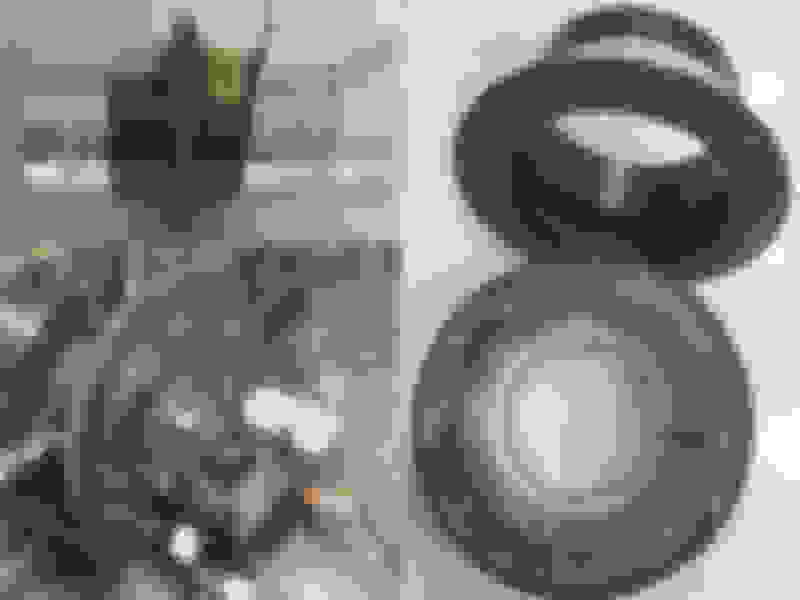
My calibration orifice.
I can easily flow 28 inches on a single TPI runner, but can only pull 20 inches on two stock runners, or 14 inches on the two Arizona and Siamese runners.
Have to "math" the numbers up to 28 inches
Two more vacuum pumps will solve that problem
Last edited by SuperL98; Oct 27, 2021 at 03:03 PM.
I'm learning all the dirty little Flow Bench secrets.
Calibrating, who does and who doesn't do a good job at it.
Yes, the equations for the pressure drop across different shape orifices are pretty well figured out.
It's all about calibrating everything, the gauges, the discharge coefficient of your benches meter orifice, etc.
And don't have enough airflow to reach 28 in h20, then you have to do the dirty little math conversion.
My spread sheet is making my own head spin
Seams like the present thinking is to machine a near zero loss orifice of a given diameter and use that to calibrate the discharge coefficient of the benches orifice plate.
That's the way I am trying to go.
My calibration orifice.
I can easily flow 28 inches on a single TPI runner, but can only pull 20 inches on two stock runners, or 14 inches on the Arizona and Siamese runners.
interested...which program are you using?
Used to flow every runner/base i did. I have an inlet fixture I made of balsa I ought to send you, used it for ported bases.
Most benches are big square boxes with everything stuffed inside.
If you know what your doing that would work, but I don't yet.
I want something flexible and easy to reconfigure if I mess up.
Decided to replace the bottom shelf of the work bench with a plenum box.
I used the shelf material for the top, added $$$$ saver, and just had to buy a 2 x 4 ft handy sheet of MDF for the bottom.
Sealed it inside and out with 2K primer and RTV, and put it on casters.
It's just high enough to lift the bench off the ground.
It's like a big six vacuum motor Shop-Vac, and I can easily reconfigure the pipes that connect to the table test port.
interested...which program are you using?
Used to flow every runner/base i did. I have an inlet fixture I made of balsa I ought to send you, used it for ported bases.
For now I'm just using a spread sheet to help me with the math and apply any calibration or corrections.
There are several programs and sensors based systems to help use and automate these DIY benches, but they are around $1000 and I can't justify that expense right now.
Rather spend the $$$ on more vacuum motors.
If I start using the bench a lot, maybe?
Don't know if there is any interest in something like this, but I decided my winter project this year is building a Flow Bench.
Always wanted one.
I'm buy no means a Flow Bench expert at this point, but I've been reading and learning.
Going to start by posting where I am now and if there is any interest, I'll back up and detail some of the build.
My bench today ... I'm in a dark spot of my shop, so pictures are a little difficult.
This is just starting out as a vacuum or flow thru bench, because that's what I'm most interested in.
I'll add a way to reverse flow, pressure test, say for exhaust ports later.
Started with a cheap Harbor Freight workbench for $110.
With the cost of building supplies now, don't think I could build one myself cheaper?
Starting with four 122 cfm vacuum motors. but left space to add two more.
I'll post more about the different ways to measure the flow rate in a later post, but I'll be measuring the pressure drop across a sharp edge orifice.
Most DIY Flow Bench builders have gone this way. and I have the ability to machine my own orifice plates.
One thing I've been dying to test is the different TPI runners.
I have some stock ones, Arizona Speed runners, and some SLP runners that I fully siamesed.
I flowed one runner and two together.
It surprised me that the siamesed runners flow about the same as the two ASM runners?
Stock TPI one runner 198 cfm
Stock TPI two runners 410 cfm
Arizona TPI one runner 257 cfm
Arizona TPI two runners 539 cfm
Full Siamesed SLP two runners 544 cfm
I intend on flowing the different runners with the manifold and plenum, as soon as I can build a fixture to hold them, and work out some calibration issues I'm trying to understand.
awesome project. the more I learn the less it seems like I know
I'll save yah some trouble, the Major downfall/limit of the TPI intake is the 180deg turn from plenum to lower manifold. Not the length or size, it's the turn! Look at at the super-ram intake, it's the best bandaid on the tpi design. I've seen one pro and another amateur porter give up on the intake after they realized that. Doesn't matter how much you Siamese the runners, the 180deg turn will make any other design better than TPI
The T-Ram has nearly the same degree of turn, but w/ a tighter radius (although, a taller runner). Yet it makes a lot more power than the TPI. Maybe it has similar limitations? Don't nearly all LS intakes also have ~180 turn to their runners? I'm not sure as I haven't scrutinized one.
So ... for right now I have the bench calibrated enough that I think I trust the data.
I'll post about calibration, and the manometers and gauges later.
First thing needed was to find the maximum my bench will flow with the four motors and the 2.76 inch test orifice.
I plotted that as the black line in the graph below.
Looks like I can flow up to about 310 CFM @ 28 Inches H2O, which would be enough to cover most street heads and manifolds without correction.
I retested both the Stock TPI and the AS&M runners at a range of test pressures to get a full curve, not just an ultimate number.
Everyone who has looked at any flow numbers has seen, Corrected To 28 Inches-H2O, at some point.
That just means their bench wasn't powerful enough to pull 28 inches, so they use the a conversion to generate the 28 inch number.
Flow at 28 Inches H2O = square root of (28/Test Pressure Inches H2O) x Test Flow in CFM.
Who accurate is that?
Well I applied the conversion to the lower vacuum numbers of my test runs and plotted them on the graph.
Looks like a pretty good correlation from about 10 or 12 inches and up?
I can't pull enough vacuum to fully test two runners, so I tested two AS&M runners against the full Siamese runners up to about 12 inches.
Very little gain for the Siamese, which again is a little surprising to me.
The T-Ram has nearly the same degree of turn, but w/ a tighter radius (although, a taller runner). Yet it makes a lot more power than the TPI. Maybe it has similar limitations? Don't nearly all LS intakes also have ~180 turn to their runners? I'm not sure as I haven't scrutinized one.
This would be very easy to test.
Just have to flow a straight piece of tubing with the same length as the runners and compare.
Don't think I have anything 1.75 diameter laying around, maybe on the next Amazon order
The T-Ram has nearly the same degree of turn, but w/ a tighter radius (although, a taller runner). Yet it makes a lot more power than the TPI. Maybe it has similar limitations? Don't nearly all LS intakes also have ~180 turn to their runners? I'm not sure as I haven't scrutinized one.
The T-ram is not 180 deg nor is the LS and they are a much more gradual turn with taller runners. T-ram & LS maybe 130 deg maybe less, If you want to be more specific then the TPI is almost an S turn but it's the 180 deg turn from plenum to lower that mostly limits the design. Taller more oval runners that have a more gradual turn would help but it wouldn't fit under a hood and why bother when you could make an intake with less of a turn like all the more successful aftermarket TPI replacements.
















 So ... I'm Building A Flow Bench