



front splitter install?

Thread Starter
Melting Slicks


Joined: Dec 2004
Posts: 3,382
Likes: 250
 front splitter install?
Dave Farmer or Subdriver others...
For those who have installed a functional front splitter did you make it fixed at zero degrees relative to chassis rake or install it adjustable so you could vary the splitter pitch as chassis rake changes are made?
Thanks!
For those who have installed a functional front splitter did you make it fixed at zero degrees relative to chassis rake or install it adjustable so you could vary the splitter pitch as chassis rake changes are made?
Thanks!

Race Director


Joined: Sep 1999
Posts: 12,439
Likes: 920
From: CONCORD NC
You want it flat, or slightly down at the nose. I would assume you will be using an off-the-shelf nose from ACP etc, and it should get the angle very close for you.
Aero work I've read in racecar engineering mag suggest having an angle doesn't help.
The goal is not to build an upside down airplane wing, but to install a definited "split" between air going over, and air going under the car. You want the tip as low as possible, but the rest is secondary.
It DOES help to have the rear of the splitter, when the fender starts, have a squared off extension: extending out even with the tires, if they stick out of the fender.
Aero work I've read in racecar engineering mag suggest having an angle doesn't help.
The goal is not to build an upside down airplane wing, but to install a definited "split" between air going over, and air going under the car. You want the tip as low as possible, but the rest is secondary.
It DOES help to have the rear of the splitter, when the fender starts, have a squared off extension: extending out even with the tires, if they stick out of the fender.

Melting Slicks


Joined: Aug 2002
Posts: 3,334
Likes: 4
From: Midland TX
From what I have read, the flat "splitter" differs from a front "spoiler".
There is a high pressure area at the front of the car as it goes through the air. The pressure pushes down on the splitter - that's why it is flat and sticks out from the front of the car.
A spoiler reduces the amount of air that goes under the car - forcing it to go around the sides. This creates a low pressure area under the car and thus downforce.
There is a high pressure area at the front of the car as it goes through the air. The pressure pushes down on the splitter - that's why it is flat and sticks out from the front of the car.
A spoiler reduces the amount of air that goes under the car - forcing it to go around the sides. This creates a low pressure area under the car and thus downforce.

Team Owner


Joined: Sep 2003
Posts: 43,084
Likes: 33
From: Raleigh / Rolesville NC
Unless you have a team of aerodynamic engineers and a wind tunnel at the ready, a fixed 0* splitter works best.
The undertray is important with the splitter. Both hold and channel air under the car, which also helps with suction and better traction. The rear diffuser undertray is vital.
Having a larger spoiler to push the air to the sides of the car, may not be the best solution.
a 4" splitter & undertray requires a Wing, and extractor hood, Side skirts and rear diffuser will help too.
a 2" spitter & undertray needs a 1" rear spoiler and should also have an extractor hood.
The undertray is important with the splitter. Both hold and channel air under the car, which also helps with suction and better traction. The rear diffuser undertray is vital.
Having a larger spoiler to push the air to the sides of the car, may not be the best solution.
a 4" splitter & undertray requires a Wing, and extractor hood, Side skirts and rear diffuser will help too.
a 2" spitter & undertray needs a 1" rear spoiler and should also have an extractor hood.
Race Director
Joined: Sep 1999
Posts: 12,439
Likes: 920
From: CONCORD NC
Splitters and spoilers do basically the same thing, although splitters extend the efficiency. A 4" splitter creates more downforce than a 2" splitter, without ANY increase in drag. However, try getting your car on the trailer with a 4" splitter installed.
Regarding the diffuser, everthing I've read in Aero books and journals indicates the gain is minimal compared to a flat undertray. Yes there are gains, but they are minimal, and absolutely require wind tunnel access to get them dialed in correctly. Also, with the Vettes, if the channels aren't in the exact right place, you end up having issues with your radiator, ducting, etc.
the ACP setup above is good, although I prefer the one-pice nose. It has been stronger in my experience. The C5 setup above works well on stock-ish cars. You can bolt straight through the undertray into the front scraper bars. The 2" model works fine with no re-inforcing, however if you go with a 4" splitter, you'll likely need to add some ugly adjusting rods to help support it.
Again, the idea is to get as much air OVER the car, not under it. A long splitter increases the leverage that the high pressure air can create before going up, over the nose. A nice extracting hood does help a lot also, as it sucks the air that goes through the radiator out of the top. This helps cooling, and creates even more downforce. Air spilling out of the bottom hurts downforce, and air spilling out through the fenders pretty much breaks even.
IF I ever find a suitable (ie cheap) car for ST2 in NASA, I'm going with the 1-piece nose, and likely a FLAT undertray.
**imho, side skirts are a waiste of time. They don't actually extend lower than the stock rockers, so you're not sealing the bottom of the car at all. They do look cool, however.
Regarding the diffuser, everthing I've read in Aero books and journals indicates the gain is minimal compared to a flat undertray. Yes there are gains, but they are minimal, and absolutely require wind tunnel access to get them dialed in correctly. Also, with the Vettes, if the channels aren't in the exact right place, you end up having issues with your radiator, ducting, etc.
the ACP setup above is good, although I prefer the one-pice nose. It has been stronger in my experience. The C5 setup above works well on stock-ish cars. You can bolt straight through the undertray into the front scraper bars. The 2" model works fine with no re-inforcing, however if you go with a 4" splitter, you'll likely need to add some ugly adjusting rods to help support it.
Again, the idea is to get as much air OVER the car, not under it. A long splitter increases the leverage that the high pressure air can create before going up, over the nose. A nice extracting hood does help a lot also, as it sucks the air that goes through the radiator out of the top. This helps cooling, and creates even more downforce. Air spilling out of the bottom hurts downforce, and air spilling out through the fenders pretty much breaks even.
IF I ever find a suitable (ie cheap) car for ST2 in NASA, I'm going with the 1-piece nose, and likely a FLAT undertray.
**imho, side skirts are a waiste of time. They don't actually extend lower than the stock rockers, so you're not sealing the bottom of the car at all. They do look cool, however.
Race Director
Joined: Sep 1999
Posts: 12,439
Likes: 920
From: CONCORD NC
btw, I've got some good articles on this stuff from Racecar Engineering mag (UK). They do step-by-step from Nascar style spoiler, to splitter (various lengths), and then add venturie'd undertrays.
I'll try and dig out some numbers over the weekend.
I'll try and dig out some numbers over the weekend.
Corvette Stories
The Best of Corvette for Corvette Enthusiasts

Every 2027 Corvette Engine Explained
Joe Kucinski
Designer Imagines A Corvette That Looks More Like a Corvette Than the Corvette
Verdad Gallardo
10 Ugly Corvettes That We Still Kinda Love
Joe Kucinski
Top 10 Most Expensive Corvettes Ever Sold on Bring A Trailer
Brett Foote
10 Things Every Corvette Owner Needs (2026 Edition)
Michael S. Palmer
8 Most "Only Corvette Owners Understand" Quirks and Problems
Pouria Savadkouei
10 Reasons the C6 Z06 is Still A Performance Benchmark After 20 Years
Joe Kucinski
How Much Horsepower Every Corvette Engine "LOST" in 1972
Joe Kucinski
Top 10 DOs and DON'Ts for Protecting Your Convertible Top!
Michael S. Palmer
Team Owner
Joined: Jul 1999
Posts: 50,808
Likes: 10
From: Buy USA products! Check the label! Employ Americans
rocker panels prevent air spill if you really want to know aero get the book Competition Car Aerodynamics by Simon McBeath. Another book of his is Competition Car Downforce. It is an up to date book with 2005 C5R and Aston Martins in it. It can also be understood without being an engineer like Gary Hoffman.
The comments I got from the corner workers at Pocono on the long course is "Man that car is glued to the ground and rock solid". Stuff works great. Remember it also helps you under braking also.
The comments I got from the corner workers at Pocono on the long course is "Man that car is glued to the ground and rock solid". Stuff works great. Remember it also helps you under braking also.
Last edited by John Shiels; Jan 12, 2007 at 12:13 PM.
Race Director
Joined: Sep 1999
Posts: 12,439
Likes: 920
From: CONCORD NC
John, not arguing that rocker panel don't help in general, but the available rockers from ACP aren't low enough to do anything. HOWEVER, once you squash or crack your OEM rockers, these are great to stick on top of them.
You could bolt a 1" aluminum angle to the bottom of your side frame rails and get more function than the ACP rockers...... this is stictly my opinion of course.
**oh, and Simon Mcbeath writes the articles I mentioned in Racecar Engineering. He and I have emailed on several occasions, as I seem to come up with ideas that I can never find in print. He has access to some really high end computer modeling AND wind tunnel equipment/data
You could bolt a 1" aluminum angle to the bottom of your side frame rails and get more function than the ACP rockers...... this is stictly my opinion of course.
**oh, and Simon Mcbeath writes the articles I mentioned in Racecar Engineering. He and I have emailed on several occasions, as I seem to come up with ideas that I can never find in print. He has access to some really high end computer modeling AND wind tunnel equipment/data
Team Owner
Joined: Jul 1999
Posts: 50,808
Likes: 10
From: Buy USA products! Check the label! Employ Americans
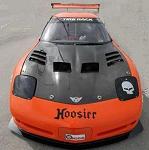
Lou would know as he has had his car in the wind tunnel and Kerry/ACP gets data from GM. The lip creates a rolling vortex which acts as an air curtain to prevent leakage of air to the underside. Easy to see without a wind tunnel with yarn taped on to show the flow and some video.
click for bigger picture.

By doing that it would not be dependent on height I would think.
click for bigger picture.

By doing that it would not be dependent on height I would think.
Last edited by John Shiels; Jan 12, 2007 at 02:09 PM.
Drifting

Joined: Apr 2002
Posts: 1,614
Likes: 1
From: DFW TX
The added surface area under the skirts (if your undertray goes out to the skirt edge) ma also be useful in generating downforce. The more square inches the better, as I understand it.
If the vortices off the skirts can curtain off some of that even better, that may be a few inches on each side of the car working in your favor.
Sure would be nice to have this all CFD modeled to play with
If the vortices off the skirts can curtain off some of that even better, that may be a few inches on each side of the car working in your favor.
Sure would be nice to have this all CFD modeled to play with
Team Owner
Joined: Sep 2003
Posts: 43,084
Likes: 33
From: Raleigh / Rolesville NC
I wonder if going to Home Depot or Lowes and getting some 4" black rubber commercail toe molding ( use for the edge of floors and walls in offices) and bolting it to the rocker pannel would work as a side skirt??

Pro

Joined: Oct 2005
Posts: 558
Likes: 0
From: Durham California
Pro
Joined: Oct 2005
Posts: 558
Likes: 0
From: Durham California
My understanding is that most racing orgs. have banned side skirting because it has a tendency to come off in the heat of racing with disasterious results when downforce suddenly and unexpectedly is removed from a car.
Team Owner
Joined: Sep 2003
Posts: 43,084
Likes: 33
From: Raleigh / Rolesville NC
Team Owner
Joined: Jul 1999
Posts: 50,808
Likes: 10
From: Buy USA products! Check the label! Employ Americans
Nice photo. What are the bulges in the undertray, brake cooling ducts? Also what are the little dots in the splitter?[/QUOTE]
Dots are flush fasteners which bolt CF under-try to top facia. Rise in under-tray are venturi tunnels. Lower static pressure more downforce. This increases the velocity of the air flow under the splitter. Get air out from under car faster = more suction. THat is what a rear diffuser does also.
Dots are flush fasteners which bolt CF under-try to top facia. Rise in under-tray are venturi tunnels. Lower static pressure more downforce. This increases the velocity of the air flow under the splitter. Get air out from under car faster = more suction. THat is what a rear diffuser does also.
Last edited by John Shiels; Jan 12, 2007 at 06:12 PM.
Pro
Joined: Oct 2005
Posts: 558
Likes: 0
From: Durham California
The fasteners explain the different color materials. The back portion is carbon fiber which attaches to the splitter which is painted.
The venture tunnels, do they connect to some other device, it would seem that they would be dumping air into the engine compartment. But I guess that is the point just to release the air somewhere.
Does anyone put in a flat bottom from engine to diff? What material, CF or Al sheet.
How low can side skirts go before they start hitting stuff, like trailers or the track?
Team Owner
Joined: Sep 2003
Posts: 43,084
Likes: 33
From: Raleigh / Rolesville NC
The bottom of the vette is flat, so adding a tunnel plat would help flatten most of the underside. The big parachute is from the transmission to the rear bumper. This part needs help or a flat undertray diffuser.
Team Owner
Joined: Jul 1999
Posts: 50,808
Likes: 10
From: Buy USA products! Check the label! Employ Americans
Dots are flush fasteners which bolt CF under-try to top facia. Rise in under-tray are venturi tunnels. Lower static pressure more downforce. This increases the velocity of the air flow under the splitter. Get air out from under car faster = more suction. THat is what a rear diffuser does also.
The venture tunnels, do they connect to some other device, it would seem that they would be dumping air into the engine compartment. But I guess that is the point just to release the air somewhere.
Does anyone put in a flat bottom from engine to diff? What material, CF or Al sheet.
How low can side skirts go before they start hitting stuff, like trailers or the track?[/QUOTE]
you can mount an aluminum sheet on the bottom. You can make side skirts with slots where they mount so they would slide up if they contact the ground.
The black carbon fiber goes under the entire splitter right to the front edge. When it is all bolted up it is real strong. You can get one piece nose but if you hit something it is all junk not just the splitter.

click for bigger pic's
Brace from splitter to nose

Maybe you can tell from this where it dumps out.


I vented the back of the fenderwells the same way out through the gills on the side.
Last edited by John Shiels; Jan 13, 2007 at 12:49 AM.