




Engine tuning help please

Thread Starter
Moderator


Joined: Jun 1999
Posts: 7,117
Likes: 51
From: Dove Mountain Arizona
 Engine tuning help please
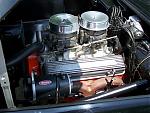
Man this is driving me nuts! Below 3000 rpm at any time, neutral or in gear when I step on the throttle the engine just boggs. It will remain in a bogged condition as long as the throttle is held down, sometimes sending big fire out the carb. You can throttle it up slowly and it will run fine. Once on the road (or in neutral) at 3000 rpm or better you can mash the throttle and it takes off like a rocket, no lag, no bogg, nothing. I timed it a 4, 6, 8 and 12 btdc, backed off the lifter adj. to 1/4 turn in, installed a Street Avenger 670, all with no real difference. The 670 helped a little. The 750 is back on it now. The raw gas smell coming out the exhaust is overwhelming also. Engine; SBC .030 over, flat tops, Dart 76cc heads @ 8.5 to 1 CR. Edl air gap intake, Holly 750 vac secondary carb, no choke. Cam, I'm told is the hyd version of the 327 375hp vette. Std Chev HEI dist that has been rebuilt. I have two and tried them both. Engine shows 15+ on the vac gauge. I suspect the cam, but am reluctant to change it out without knowing for sure. It has an elec fuel pump and I've pulled the sight plugs off the carb (suspecting over pressure) and it does not overflow (although I seem to remember the pump stopping when the carb filled and now it continues to run...not sure tho). Also installed new power valves, std. 6.5 in it now. I've set the level hi and low with no difference. I once installed an adj vac can and had it pinging so bad you could hear it above the side pipes. I'm lost....anyone have any ideas?

Melting Slicks


Joined: Nov 2004
Posts: 2,302
Likes: 26
From: Cave Creek AZ
Just for kicks, try a new coil. I had a similar problem with my 67 Coupe last year (under heavy throttle). After going through everything you are trying (and weeks of pulling out my hair), I replaced the coil and the problem was solved. I just re-read your post and see you have a HEI Distributor. My problem was with a standard coil so I am not sure this would apply to you.
Roy
Roy
Last edited by 67-427ci; Dec 5, 2005 at 11:09 AM.
Race Director


Joined: Oct 2005
Posts: 12,468
Likes: 1,548
From: Camp Verde AZ
C1 of Year Finalist (performance mods) 2019
2017 C1 of Year Finalist
couple suggestions:
Set the timing using a vacuum gauge.
Disconnect the line to the vac advance,and attach your vac gauge here (should a port below the throttle plate).
At idle, advance the distributor until max manifold vac is obtained, then back off your distributor timing until vac drops 1" HG.
Cgheck your static timign witha timing light and record. You will now be timed for that engine.
On your carb, i can only tell you what i did with a Holley 650 4777.
I went a lot smaller (6-7 jet sizes) than factory on the primary jets, and installed two sizes up on the primary squirter nozzles. the rest of teh carb was as from out of teh box.
Car ran great, no gas smell, gas mileage was not so great.
Doug
Set the timing using a vacuum gauge.
Disconnect the line to the vac advance,and attach your vac gauge here (should a port below the throttle plate).
At idle, advance the distributor until max manifold vac is obtained, then back off your distributor timing until vac drops 1" HG.
Cgheck your static timign witha timing light and record. You will now be timed for that engine.
On your carb, i can only tell you what i did with a Holley 650 4777.
I went a lot smaller (6-7 jet sizes) than factory on the primary jets, and installed two sizes up on the primary squirter nozzles. the rest of teh carb was as from out of teh box.
Car ran great, no gas smell, gas mileage was not so great.
Doug
Burning Brakes


Joined: Mar 2004
Posts: 1,108
Likes: 4
From: Plano Texas
Masterdave, I'm guessing it's a carb problem....running way too rich. Pul a spark plug on either side of the engine. If they're black, it's a fuel delivery problem. A couple of things to check......
1. Are the floats soldered brass or black foam types (nitrile)? If they're the black nitrile types they may be soaking up fuel and getting too heavy to regulate the fuel coming in to the carb. Replacements would be needed. If they're brass, check that they do not have any fuel in them. They have been known to get leaks in solder joints that separate.
2. With an electric fuel pump you may need to install an inline fuel pressure regulator and guage to regulate the fuel pressure to around 6 to 7 pounds. That's all a carb needs to perform adequately. You may be overfilling the carb.
3. Are your primary jets the correct ones for the engine? You may have jets installed that are too large for the carb model.
4. Did you install a correct gasket behind the power valve in the primary side of the carb block? If not, this will cause a huge internal fuel leak.
5. Is your primary discharge valve under the front primary bowl in good shape? A hole here will cause the symptoms you refer to.
If all of these items check out, I would still look at the carb for any internal fuel leaks. Check the fuel discharge nozzle to see if a pintle or ball is installed under it and that they are free and sealing properly.
Hope this helps.
1. Are the floats soldered brass or black foam types (nitrile)? If they're the black nitrile types they may be soaking up fuel and getting too heavy to regulate the fuel coming in to the carb. Replacements would be needed. If they're brass, check that they do not have any fuel in them. They have been known to get leaks in solder joints that separate.
2. With an electric fuel pump you may need to install an inline fuel pressure regulator and guage to regulate the fuel pressure to around 6 to 7 pounds. That's all a carb needs to perform adequately. You may be overfilling the carb.
3. Are your primary jets the correct ones for the engine? You may have jets installed that are too large for the carb model.
4. Did you install a correct gasket behind the power valve in the primary side of the carb block? If not, this will cause a huge internal fuel leak.
5. Is your primary discharge valve under the front primary bowl in good shape? A hole here will cause the symptoms you refer to.
If all of these items check out, I would still look at the carb for any internal fuel leaks. Check the fuel discharge nozzle to see if a pintle or ball is installed under it and that they are free and sealing properly.
Hope this helps.
Thread Starter
Moderator
Joined: Jun 1999
Posts: 7,117
Likes: 51
From: Dove Mountain Arizona
Originally Posted by Coves4me
Masterdave, I'm guessing it's a carb problem....running way too rich. Pul a spark plug on either side of the engine. If they're black, it's a fuel delivery problem. A couple of things to check......
1. Are the floats soldered brass or black foam types (nitrile)? If they're the black nitrile types they may be soaking up fuel and getting too heavy to regulate the fuel coming in to the carb. Replacements would be needed. If they're brass, check that they do not have any fuel in them. They have been known to get leaks in solder joints that separate.
2. With an electric fuel pump you may need to install an inline fuel pressure regulator and guage to regulate the fuel pressure to around 6 to 7 pounds. That's all a carb needs to perform adequately. You may be overfilling the carb.
3. Are your primary jets the correct ones for the engine? You may have jets installed that are too large for the carb model.
4. Did you install a correct gasket behind the power valve in the primary side of the carb block? If not, this will cause a huge internal fuel leak.
5. Is your primary discharge valve under the front primary bowl in good shape? A hole here will cause the symptoms you refer to.
If all of these items check out, I would still look at the carb for any internal fuel leaks. Check the fuel discharge nozzle to see if a pintle or ball is installed under it and that they are free and sealing properly.
Hope this helps.
1. Are the floats soldered brass or black foam types (nitrile)? If they're the black nitrile types they may be soaking up fuel and getting too heavy to regulate the fuel coming in to the carb. Replacements would be needed. If they're brass, check that they do not have any fuel in them. They have been known to get leaks in solder joints that separate.
2. With an electric fuel pump you may need to install an inline fuel pressure regulator and guage to regulate the fuel pressure to around 6 to 7 pounds. That's all a carb needs to perform adequately. You may be overfilling the carb.
3. Are your primary jets the correct ones for the engine? You may have jets installed that are too large for the carb model.
4. Did you install a correct gasket behind the power valve in the primary side of the carb block? If not, this will cause a huge internal fuel leak.
5. Is your primary discharge valve under the front primary bowl in good shape? A hole here will cause the symptoms you refer to.
If all of these items check out, I would still look at the carb for any internal fuel leaks. Check the fuel discharge nozzle to see if a pintle or ball is installed under it and that they are free and sealing properly.
Hope this helps.
Burning Brakes

Joined: Oct 2004
Posts: 953
Likes: 27
check that #1 piston TDC is really 0 degrees on your timing tab. you could have a balancer that has slipped or a timing tab location problem.
there are several ways to do it. i like the piston stop method. could be that your timing is way out of whack because of this.
there are several ways to do it. i like the piston stop method. could be that your timing is way out of whack because of this.
Thread Starter
Moderator
Joined: Jun 1999
Posts: 7,117
Likes: 51
From: Dove Mountain Arizona
Originally Posted by ls6racer
check that #1 piston TDC is really 0 degrees on your timing tab. you could have a balancer that has slipped or a timing tab location problem.
there are several ways to do it. i like the piston stop method. could be that your timing is way out of whack because of this.
there are several ways to do it. i like the piston stop method. could be that your timing is way out of whack because of this.
Done it, it's right on.
Corvette Stories
The Best of Corvette for Corvette Enthusiasts

150 hp to 1,250 hp: Every Corvette Generation Compared by the Specs That Matter
Joe Kucinski
8 Coolest Corvette Pace Cars (and Replicas) of All Time
Verdad Gallardo
Top 10 Corvette Engines RANKED by Peak Torque (70+ Years of Muscle!)
Joe Kucinski
Corvette ZR1X Will Be Pacing the Indy 500, And Could Probably Race, Too!
Verdad Gallardo
Top 10 Corvettes Coming to Mecum Indy 2026!
Brett Foote
Top 10 C9 Corvette MUST-HAVES to Fix These C8 Generation Flaws!
Michael S. Palmer
10 Revolutionary 'Corvette Firsts' Most People Don't Know
Joe Kucinski
5 Reasons to Upgrade to an LS6-Powered Corvette; 5 Reasons to Stay LT2
Michael S. Palmer
2027 Corvette vs The World: Every C8 vs Its Closest Competitor
Joe Kucinski
Tech Contributor

Joined: Aug 1999
Posts: 14,373
Likes: 6,370
From: At my Bar drinking and wrenching in Lafayette Colorado
If you have a bog associated with a backfire up through the carb, you're lean - not rich. A rich condition can produce a hesitation if severe, but it won't give you a backfire. Lean will backfire. You can get a rich fuel smell out the exhaust from a lean condition because you will get lean misfire, causing unburned fuel to go out the tailpipe, often burning incompletely in the exhaust system (with associated rumbling and popping in the exhaust on deceleration). I'd richen it up, if I were you. Make sure your initial timing is in the 16-18 degree range, and verify total timing at 36 degrees.
Lars
Lars

Thread Starter
Moderator
Joined: Jun 1999
Posts: 7,117
Likes: 51
From: Dove Mountain Arizona
My brain hurts....Lars, I do not get any afterfiring/popping, etc on deceleration. I'll up the timing and let ya know. On a side note here, when I first drove this it acted up and I remembered I had an old HEI out of a '79 vette L-82. I stuck it in and it was pretty near perfect.  Drove it for a weekend and while sitting at a light I got a big bang and it quit. Got it started a couple times but not well enough to drive it. I had the old dist with me and stuck it in and off I went with the old problem back. I took the vette dist to Honest Perf and they said the module went out. They put a new one in and curved the dist at the same time. Guess what, back to the same problem with both dist's. Lars, is there a clue here?
Drove it for a weekend and while sitting at a light I got a big bang and it quit. Got it started a couple times but not well enough to drive it. I had the old dist with me and stuck it in and off I went with the old problem back. I took the vette dist to Honest Perf and they said the module went out. They put a new one in and curved the dist at the same time. Guess what, back to the same problem with both dist's. Lars, is there a clue here?

Burning Brakes
Joined: Jan 2005
Posts: 1,163
Likes: 1
From: Indiana

