



Reverse Engineering an Engine

Thread Starter
Racer


Joined: May 2007
Posts: 357
Likes: 28
From: Northern AL
 Reverse Engineering an Engine
Good morning,
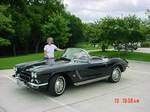
I have a NOM 350 installed in a 62 vette that is supposed to have 345hp. However, it feels nothing like 345hp but somewhere in the low-mid 200s.
I know I can take the car to a dyno and get my answer but what fun is that?
Instead, I was wondering if the forum can provide a couple of answers:
- The carb is a Edelbrock 1405 600cfm (never feel the vacuum secondaries open but I'll read the tons of posts on this subject)
- The intake is an Edelbrock Torker II (single plane)
- I'm still trying to find more details of when the block was built. The only number I can find is the block casting number 3970010 which says it was used between 1969-1980. There is also a "clock" embossed on the block. I believe this emblem is unique to blocks made in Saginaw
Q1: If I start to tear apart the engine, will there be any markings on the cam and the heads to identify part & manufacturer? I believe there will be a head casting number but I'm not sure if I can trace this back to a manufacturer/specs.
Q2: Does someone have a good combo of cam & heads bringing their HP to ~350hp?
Q3: Is this a worthy block to build-up or what else can I do to determine if this block is worthy to build-up?
Q4: General recommendations?
Again, all your comments are welcomed.
Jim
I have a NOM 350 installed in a 62 vette that is supposed to have 345hp. However, it feels nothing like 345hp but somewhere in the low-mid 200s.
I know I can take the car to a dyno and get my answer but what fun is that?
Instead, I was wondering if the forum can provide a couple of answers:
- The carb is a Edelbrock 1405 600cfm (never feel the vacuum secondaries open but I'll read the tons of posts on this subject)
- The intake is an Edelbrock Torker II (single plane)
- I'm still trying to find more details of when the block was built. The only number I can find is the block casting number 3970010 which says it was used between 1969-1980. There is also a "clock" embossed on the block. I believe this emblem is unique to blocks made in Saginaw
Q1: If I start to tear apart the engine, will there be any markings on the cam and the heads to identify part & manufacturer? I believe there will be a head casting number but I'm not sure if I can trace this back to a manufacturer/specs.
Q2: Does someone have a good combo of cam & heads bringing their HP to ~350hp?
Q3: Is this a worthy block to build-up or what else can I do to determine if this block is worthy to build-up?
Q4: General recommendations?
Again, all your comments are welcomed.
Jim
Burning Brakes


Joined: Mar 2004
Posts: 1,108
Likes: 4
From: Plano Texas
Jim, my first suggestion would be to replace the single plane Torker II manifold with a dual-plane Edelbrock or factory manifold. A single-plane manifold reduces the velocity of the intake charge to the cylinders at low RPM. That's probably why it feels sluggish. A dual plane manifold will give you good torque from 1500 to 6500 RPM. Now, the BIG question.....what type of cam are you running. If it's not matched to your manifold and rear end gears, the engine will not perform well. There are several good combos out there from Edelbrock that work well on small blocks. Good luck. 

Le Mans Master

Joined: Jan 2005
Posts: 8,226
Likes: 2
From: Lake Wylie SC
Jim, my first suggestion would be to replace the single plane Torker II manifold with a dual-plane Edelbrock or factory manifold. A single-plane manifold reduces the velocity of the intake charge to the cylinders at low RPM. That's probably why it feels sluggish. A dual plane manifold will give you good torque from 1500 to 6500 RPM. Now, the BIG question.....what type of cam are you running. If it's not matched to your manifold and rear end gears, the engine will not perform well. There are several good combos out there from Edelbrock that work well on small blocks. Good luck.

My sentiments exactly
Once you get the right combo you can only increase performance through part changes by 3% per item but that is after you get the right combo going for you. Your intake needs to go on e-bay but depending on trans and rear end the best choice is still up for grabs. If you can come back with that input I am sure there a lot of SB owners here waiting to help you.
BTW once you get in the right ball park component wise there is a 30% variable just from tuning. That is when you need a good street dyno man and unfortunately they are a little tough to find. A good rule to follow though is if the dyno does not intersect your hp and torque at 5250 rpm then you should be able to leave without any charge. They still might be a good mechanic but something in their dyno is not right.
Doug
Racer


Joined: Feb 2007
Posts: 262
Likes: 2
From: FREDERICKSBURG VA
The 0010 block was a high nickel content (good) & they had 4 bolt mains when used in trucks & LT-1's. What is the engine ID on the pad in front of the passenger head? That will tell you the original application, when used with the date code on the back passenger side of the block. I'm not a fan of the torker intake, but it'll make 350hp. I use the performer RPM. The heads have a casting# that will ID them, most chevy heads will make 350hp, all you need is a good cam, lifter & spring kit.

Safety Car


Joined: Feb 2003
Posts: 4,068
Likes: 27
From: St. Joseph Mo
Torque is made by Displacement and Compression ratio. The cam timing/lift and intake configuration determines where in the operating range the max torque and resultant horsepower is produced.
Thread Starter
Racer
Joined: May 2007
Posts: 357
Likes: 28
From: Northern AL
Hi folks,
Thanks for the quick response. Some of my responses to the posts:
- I don't know what the cam setup is. Thats part of the reasoning of my post. I was debating tearing the engine apart to determine what cam I have installed. However, once I get it apart, will it have markings that can help trace manufacturer/specs?
- Block build date is still not determined. I've been under a few times and can't find it. I know the general location of it but haven't stumbled across it yet. I'll try again today assuming I have some time without kids at my feet : )
Thanks again,
Jim
Thanks for the quick response. Some of my responses to the posts:
- I don't know what the cam setup is. Thats part of the reasoning of my post. I was debating tearing the engine apart to determine what cam I have installed. However, once I get it apart, will it have markings that can help trace manufacturer/specs?
- Block build date is still not determined. I've been under a few times and can't find it. I know the general location of it but haven't stumbled across it yet. I'll try again today assuming I have some time without kids at my feet : )
Thanks again,
Jim
Le Mans Master
Joined: Jan 2007
Posts: 6,003
Likes: 1,509
From: Prescott Arizona
Cam ID
When you finally have the cam out, you should find the info stamped on the end of the cam. It will typically show the manufacturer name and their part number. Run the number on their website, or just post it here, to find out the specs on the cam. By the way, it seems that there is a lot of 'unknown info' on this engine, so how did the figure of 345 horsepower come up?
Thread Starter
Racer
Joined: May 2007
Posts: 357
Likes: 28
From: Northern AL
The person who sold me the car had the figure. He bought the engine off someone who took it out of another Vette. When I drove it, I knew it didn't have the juice but I wasn't too concerned since it wasn't an original numbers engine. I was more interested in the correct body, frame, parts, top, interior, etc...
The car starts fine, runs good, and is fine for day-to-day driving. There is nothing wrong with how it performs as a daily driver - if you forget that it is a Corvette! : )
Jim
The car starts fine, runs good, and is fine for day-to-day driving. There is nothing wrong with how it performs as a daily driver - if you forget that it is a Corvette! : )
Jim
Corvette Stories
The Best of Corvette for Corvette Enthusiasts

Top 10 Most Expensive Corvettes Ever Sold on Bring A Trailer
Brett Foote
10 Things Every Corvette Owner Needs (2026 Edition)
Michael S. Palmer
8 Most "Only Corvette Owners Understand" Quirks and Problems
Pouria Savadkouei
10 Reasons the C6 Z06 is Still A Performance Benchmark After 20 Years
Joe Kucinski
How Much Horsepower Every Corvette Engine "LOST" in 1972
Joe Kucinski
Top 10 DOs and DON'Ts for Protecting Your Convertible Top!
Michael S. Palmer
Top 10 Most Explosive Corvettes Ever Made: Power-to-Weight Ratio Ranked!
Joe Kucinski
150 hp to 1,250 hp: Every Corvette Generation Compared by the Specs That Matter
Joe Kucinski
8 Coolest Corvette Pace Cars (and Replicas) of All Time
Verdad Gallardo
Le Mans Master
Joined: Apr 2001
Posts: 9,556
Likes: 288
From: Granbury Texas
A simple solution would be to run your car at a drag strip, and look at the SPEED at the end of the quarter. Make several runs and average them. Weigh your car (as raced with driver) and the HP formula will give you very close to what horsepower your engine is actually putting out.

Le Mans Master


Joined: Jun 2004
Posts: 9,015
Likes: 331
From: Southeast Missouri
Jim, my first suggestion would be to replace the single plane Torker II manifold with a dual-plane Edelbrock or factory manifold. A single-plane manifold reduces the velocity of the intake charge to the cylinders at low RPM. That's probably why it feels sluggish. A dual plane manifold will give you good torque from 1500 to 6500 RPM. Now, the BIG question.....what type of cam are you running. If it's not matched to your manifold and rear end gears, the engine will not perform well. There are several good combos out there from Edelbrock that work well on small blocks. Good luck.
Start here, not too much expense involved, and may give you what you're looking for without much or any further work!!

Team Owner


Joined: Oct 2000
Posts: 38,897
Likes: 1,926
From: Washington Michigan
Although it will only tell you when it was cast, the block casting date code is on the passenger side rear flange of the block, about six inches toward that side from the distributor; the stampings on the machined pad in front of the pass. side cylinder head will tell you what it was originally.
Most aftermarket cams have the manufacturer's ID and grind number stamped on the end of the cam; GM factory cams will have a raised casting number between the lobes which will ID the grind, as every grind had a specific casting for the core. The head casting numbers are visible when you remove the valve covers, but you can't tell the size of the valves without removing the heads and measuring them.

Most aftermarket cams have the manufacturer's ID and grind number stamped on the end of the cam; GM factory cams will have a raised casting number between the lobes which will ID the grind, as every grind had a specific casting for the core. The head casting numbers are visible when you remove the valve covers, but you can't tell the size of the valves without removing the heads and measuring them.

Le Mans Master
Joined: Jan 2002
Posts: 8,913
Likes: 283
You should not be able to "Hear" the secondaries open up. That classical air sucking sound is the sound of them opening to soon.
Get a dual plane intake, (something that fits your carb) and start there.
Next, check and map out your timing and distributor functions, and check/install proper vacuum can.
The cam is probably one of any number of "idle to 5500" rpm magazine cams.
An all out racing intake (4500-8000 RPM) like many open plenum intakes are worthless on the street. They may make power, but unless you have a solid cam, big heads, and open headers, are worthless below 4500-5000 RPM. Remove any of the above mentioned, and even if you get to those RPM's something else will choke it off.
So:
Hyd. Cam, open plane manifold and you will never get to the RPM to make the intake perform
Anything less then worked over 2.02/1.60's, even if you could get to 7000 RPM, your choked by the heads.
So, if you build the above, then strap an exhaust system to it (anything short of open headers) and you will have a turd below 4500 RPM.
Get a dual plane intake, (something that fits your carb) and start there.
Next, check and map out your timing and distributor functions, and check/install proper vacuum can.
The cam is probably one of any number of "idle to 5500" rpm magazine cams.
An all out racing intake (4500-8000 RPM) like many open plenum intakes are worthless on the street. They may make power, but unless you have a solid cam, big heads, and open headers, are worthless below 4500-5000 RPM. Remove any of the above mentioned, and even if you get to those RPM's something else will choke it off.
So:
Hyd. Cam, open plane manifold and you will never get to the RPM to make the intake perform
Anything less then worked over 2.02/1.60's, even if you could get to 7000 RPM, your choked by the heads.
So, if you build the above, then strap an exhaust system to it (anything short of open headers) and you will have a turd below 4500 RPM.

Racer
Joined: Dec 2005
Posts: 274
Likes: 0
Any suggestions as to an exhaust system for this type of set-up? I am guessing he has 2in horns with 2in dual exhaust. How much can be expected by going to 2 1/4 or 2 1/2? I can imagine the 2 1/2 would be a hard fit though
Drifting

Joined: Apr 2004
Posts: 1,302
Likes: 36
From: Allen Park Mi
Well there is alot of good advice here, but you have got to start somewhere,
and unless youhave a ton of camshaft.. that intake is too much.
go with an Edelbrok performer... it will clear your hood, and runs from 1000 to 5500 which will work fine for you.
Get your distributor checked out also... a fautly distributor will make a 365hp motor feel like a 250hp or worse.
without tearing the motor apart, you can put a dial indicator on both the intake and exhaust pushrods and measure your max lobe lift... post those numbers here and someone will be able to tell you what cam you have (1) if it is a GM cam, or (2) on of the more popular aftermarket cams..... either way, the lobe lift will give us an indication as to whether it is a performance or OE type camshaft.
Unfortunatly, unless you know exactly what is in that motor, you probably are never going to be able to make the combination work properly.... don't forget the rest of the equation...
a perfectly tuned and running 365hp motor will feel soft untill 3000rpm, and if you have 3.36 gears in it, you'll be above most legal speed limits before you can even feel the power of the motor.
sounds to me like you have a typical missmatched combination.
Good luck
and unless youhave a ton of camshaft.. that intake is too much.
go with an Edelbrok performer... it will clear your hood, and runs from 1000 to 5500 which will work fine for you.
Get your distributor checked out also... a fautly distributor will make a 365hp motor feel like a 250hp or worse.
without tearing the motor apart, you can put a dial indicator on both the intake and exhaust pushrods and measure your max lobe lift... post those numbers here and someone will be able to tell you what cam you have (1) if it is a GM cam, or (2) on of the more popular aftermarket cams..... either way, the lobe lift will give us an indication as to whether it is a performance or OE type camshaft.
Unfortunatly, unless you know exactly what is in that motor, you probably are never going to be able to make the combination work properly.... don't forget the rest of the equation...
a perfectly tuned and running 365hp motor will feel soft untill 3000rpm, and if you have 3.36 gears in it, you'll be above most legal speed limits before you can even feel the power of the motor.
sounds to me like you have a typical missmatched combination.
Good luck
Thread Starter
Racer
Joined: May 2007
Posts: 357
Likes: 28
From: Northern AL
Hi Aaron,
I was able to dig up some stuff on the engine/tranny.
The casting # is 3970010 which is common between 1969-1979 and used for truck, car, and Vette
The Engine Assembly Date is V0510TYZ (Flint, May 10, 1975 Conv Cab with 165HP) What is odd is that it also has the clock stamping indicating the shift which I thought was unique to Saginaw (Saginaw and Flint both have engine assembly plant codes).
Behind the oil filter is 010 020 178 which is 1% tin and 2% nickel which from what I understand is desireable.
I don't know what the 178 is.
Behind the distributor is a marking of E07 but it is not too readable. I'm assuming this is the casting date of May (E) but the 07 would not make since based on the casting # and assembly date.
On the tranny main case is GM 3851325 which equates to a Muncie between 1964-1965.
As you mentioned, it is a mutt.
Jim
I was able to dig up some stuff on the engine/tranny.
The casting # is 3970010 which is common between 1969-1979 and used for truck, car, and Vette
The Engine Assembly Date is V0510TYZ (Flint, May 10, 1975 Conv Cab with 165HP)
What is odd is that it also has the clock stamping indicating the shift which I thought was unique to Saginaw (Saginaw and Flint both have engine assembly plant codes).Behind the oil filter is 010 020 178 which is 1% tin and 2% nickel which from what I understand is desireable.
I don't know what the 178 is.
Behind the distributor is a marking of E07 but it is not too readable. I'm assuming this is the casting date of May (E) but the 07 would not make since based on the casting # and assembly date.
On the tranny main case is GM 3851325 which equates to a Muncie between 1964-1965.
As you mentioned, it is a mutt.
Jim
Team Owner
Joined: Oct 2000
Posts: 38,897
Likes: 1,926
From: Washington Michigan