






"Original Engine" Questions

Thread Starter
Intermediate


Joined: Feb 2009
Posts: 45
Likes: 0
 "Original Engine" Questions
The thread on how many C2's still have their original engines has me a bit confused and I'm hoping for an explanation from someone knowledgeable .
Various people posted that a significant percentage of the original engines were "blown" decades ago. I don't think many folks knew then that these cars would be worth the money today that they are.
So I would think the vast majority of the original engines were scrapped. But here's where I'm baffled. [I'll use a 1966 427 engine as an example.] I know Chevrolet offered the 427/425 engine in other vehicles such as the Impala, but it's not like they built a gazillion of them back then. And how many of those vehicles are still around? Some of those cars are now sought after and it probably isn't financially viable to buy a 427 Impala for say $25-30K just to harvest the engine from.
I just don't see it being a relatively simple undertaking to create a numbers matching car. I would think the inventory of required parts must be pretty small.
Various people posted that a significant percentage of the original engines were "blown" decades ago. I don't think many folks knew then that these cars would be worth the money today that they are.
So I would think the vast majority of the original engines were scrapped. But here's where I'm baffled. [I'll use a 1966 427 engine as an example.] I know Chevrolet offered the 427/425 engine in other vehicles such as the Impala, but it's not like they built a gazillion of them back then. And how many of those vehicles are still around? Some of those cars are now sought after and it probably isn't financially viable to buy a 427 Impala for say $25-30K just to harvest the engine from.
I just don't see it being a relatively simple undertaking to create a numbers matching car. I would think the inventory of required parts must be pretty small.

Team Owner


Joined: Oct 2000
Posts: 38,897
Likes: 1,926
From: Washington Michigan


Le Mans Master


Joined: Apr 2001
Posts: 9,556
Likes: 288
From: Granbury Texas
It's not that difficult; in addition to the actual engine assemblies built for production usage, there were thousands of blocks, heads, cranks, intakes, etc. made for GM Service stocks, and almost any configuration can be duplicated with period-correct casting numbers and dates. Just takes time and money.

Racer
Joined: Mar 2010
Posts: 306
Likes: 16
From: Central Florida
As I see it, the Original Engine is the actual motor that came with the vehicle from the factory.
A Matching Numbers engine is obviously the motor with a manufacturing stamped number on the block that matches the VIN. Usually the "original" engine.
Period or Era correct, just means it was manufactured in the same timeframe of the vehicle, but could have been in any particular vehicle of the era.
If I got it wrong, post up and clear the air !!


Melting Slicks


Joined: Jun 2008
Posts: 2,111
Likes: 31
From: Columbia, SC
Team Owner
Joined: Oct 2000
Posts: 38,897
Likes: 1,926
From: Washington Michigan
Race Director


Joined: Oct 2005
Posts: 12,470
Likes: 1,548
From: Camp Verde AZ
C1 of Year Finalist (performance mods) 2019
2017 C1 of Year Finalist
I know Chevrolet offered the 427/425 engine in other vehicles such as the Impala, but it's not like they built a gazillion of them back then. And how many of those vehicles are still around? Some of those cars are now sought after and it probably isn't financially viable to buy a 427 Impala for say $25-30K just to harvest the engine from.
Doug
Corvette Stories
The Best of Corvette for Corvette Enthusiasts

Top 10 Most Expensive Corvettes Ever Sold on Bring A Trailer
Brett Foote
10 Things Every Corvette Owner Needs (2026 Edition)
Michael S. Palmer
8 Most "Only Corvette Owners Understand" Quirks and Problems
Pouria Savadkouei
10 Reasons the C6 Z06 is Still A Performance Benchmark After 20 Years
Joe Kucinski
How Much Horsepower Every Corvette Engine "LOST" in 1972
Joe Kucinski
Top 10 DOs and DON'Ts for Protecting Your Convertible Top!
Michael S. Palmer
Top 10 Most Explosive Corvettes Ever Made: Power-to-Weight Ratio Ranked!
Joe Kucinski
150 hp to 1,250 hp: Every Corvette Generation Compared by the Specs That Matter
Joe Kucinski
8 Coolest Corvette Pace Cars (and Replicas) of All Time
Verdad Gallardo
Racer
Joined: Aug 2009
Posts: 307
Likes: 1
From: dallas texas
amen john z. those engines did not have near the durability of todays motors. most vette owners i knew back in the 60's were on their second engine within a year or so. that doesn't mean some originals did not survive, but the odds were against it. these cars were hammered hard every saturday nite; blown engines, stripped gears, blown clutches, broken drive shafts were not uncommon, and after 3 or 4 months of hard racing the rings wore out and the engine began to smoke. most of us kids back then wanted to have the baddest car in town which made you push it to the limit when the flagman dropped his arms. don't fool yourself these are great cars, but very few are still "original".

Race Director
Joined: Mar 2009
Posts: 19,777
Likes: 4,592
From: Canada's capital
2020 Corvette of the Year Finalist (appearance mods)
C1 of Year Finalist (appearance mods) 2019
JohnZ;"It's not that difficult; in addition to the actual engine assemblies built for production usage, there were thousands of blocks, heads, cranks, intakes, etc. made for GM Service stocks, and almost any configuration can be duplicated with period-correct casting numbers and dates. Just takes time and money."
In addition to these, there were a gazillion trucks on the road, and a lot of them had the same blocks, although there were also truck 427's that were a little different, but also show up in cars nowadays. Just check out the ads for engine blocks in Hemming's, there are thousands of them in warehouses to date.
In addition to these, there were a gazillion trucks on the road, and a lot of them had the same blocks, although there were also truck 427's that were a little different, but also show up in cars nowadays. Just check out the ads for engine blocks in Hemming's, there are thousands of them in warehouses to date.

Race Director
Joined: Aug 2007
Posts: 10,977
Likes: 19
From: Canboro Ontario
How about just calling them, period correct, I know you can take parts of engines and piece together a matching number engine, it may not have come from that car, however with numbers and dates, who really knows, I am sure GM boys just pick parts of the shelf that was closest to them, or shift changes, before the engine was complete, and the next guy might have gone to another area on the shelf, numbers are numbers and if they match, well?

Team Owner
Joined: Aug 2007
Posts: 58,061
Likes: 7,146
Army

Race Director
Joined: Nov 2002
Posts: 12,142
Likes: 54
From: Taylor Michigan
Obviously there is a difference between original engine vs. matching numbers.
As I see it, the Original Engine is the actual motor that came with the vehicle from the factory.
A Matching Numbers engine is obviously the motor with a manufacturing stamped number on the block that matches the VIN. Usually the "original" engine.
Period or Era correct, just means it was manufactured in the same timeframe of the vehicle, but could have been in any particular vehicle of the era.
If I got it wrong, post up and clear the air !!
As I see it, the Original Engine is the actual motor that came with the vehicle from the factory.
A Matching Numbers engine is obviously the motor with a manufacturing stamped number on the block that matches the VIN. Usually the "original" engine.
Period or Era correct, just means it was manufactured in the same timeframe of the vehicle, but could have been in any particular vehicle of the era.
If I got it wrong, post up and clear the air !!

Race Director
Joined: Jan 2007
Posts: 13,671
Likes: 14
From: Down on the bayou in south Louisiana
St. Jude Donor '10
I've been discounting the phrase "original engine" for years. These cars are 40+ years old and it's doubtfull any current owner can be sure the engine in the car now is the same one that came in the car when new. Numbers matching is somthing I can verify. M2C

Le Mans Master
Joined: Dec 2007
Posts: 8,000
Likes: 659
From: Puget Sound

Jim

Race Director
Joined: Jan 2007
Posts: 13,671
Likes: 14
From: Down on the bayou in south Louisiana
St. Jude Donor '10
 If you are the original owner of the car I might believe you. Otherwise the guarantee means about as much as "the check is in the mail" or "Baby, I promise I won't ...".
 I have a friend with a 72 that he bought when it was about six months old. He took over the note and he KNEW the car was all original. We had it judged and found the windshield date was wrong. The original owner still lives in town so we called him. He said that within a week of getting the car the windshield was broken and replaced.
Le Mans Master
Joined: Dec 2007
Posts: 8,000
Likes: 659
From: Puget Sound
If you are the original owner of the car I might believe you. Otherwise the guarantee means about as much as "the check is in the mail" or "Baby, I promise I won't ...". I have a friend with a 72 that he bought when it was about six months old. He took over the note and he KNEW the car was all original. We had it judged and found the windshield date was wrong. The original owner still lives in town so we called him. He said that within a week of getting the car the windshield was broken and replaced.
Your example is just another case of someone not checking out a car prior to purchase, however having the windshield replaced doesn't mean it's not an original car. Mine does have all it's original glass in perfect condition.
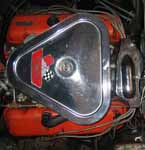
Oh, and all the numbers are original AND match.Jim
Le Mans Master


Joined: Dec 2004
Posts: 5,232
Likes: 419
Furthermore, Al Grenning can, by examining the broach marks on the stamp pad, also guarantee whether or not any particular cylinder case is the original or not. And anybody purchasing a mid year big block who doesn't verify the engine with Al (if claimed as original) is penny wise and pound foolish.