When you click on links to various merchants on this site and make a purchase, this can result in this site earning a commission. Affiliate programs and affiliations include, but are not limited to, the eBay Partner Network.
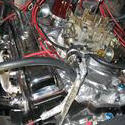
I recently had a chat with one of the Chevy inline six engine gurus, and he told me I should swap a 261 L6 for the 235 L6 currently in my car. According to Tom Langdon this swap is so easy it's like buttering hot toast. All the 235 parts like the water pump, intake and carbs, exhaust, etc. fit the 261 with no modification. The engine is a drop-in replacement. All that's needed is a late model Corvette aluminum powerglide and a 12 volt conversion. The 261 makes significantly more power than the 235.
I'm sure it will make more power and it would be a direct swap. But WHY??? Is 20-50 HP worth all the trouble? At this cars stage in life are you really driving where you need to have more power?
I'm sure it will make more power and it would be a direct swap. But WHY??? Is 20-50 HP worth all the trouble? At this cars stage in life are you really driving where you need to have more power?
Good point. I was thinking ahead. I will not rebuild the 235 engine again, and it is unlikely I will be able to replace it with a period correct engine when that time comes. I do want to preserve the character of my car, and the 261 is indistinguishable from the 235 without checking casting numbers. If power alone was my goal I would put a small block in it, but that is getting close to restomod territory, and I don't want to go there.
I have a 1955 261 engine in my 1953 Corvette #276 - the 261 has been in the car for more than 50 years. My website has some details, and includes a good back in the day article about putting 261 engines in the early Corvettes. 1953 #276 engine story.
I put #276 on the dyno after rebuilding the engine. 190hp and gobs of tree stump pulling torque:
My 53 has a 4 speed, so I don't know about the need for an alum power glide. But the car is still a 6 volt job, and it starts right up using a correct 53 corvette starter motor. The other mods to the engine are described in the link above.
I have a 1955 261 engine in my 1953 Corvette #276 - the 261 has been in the car for more than 50 years. My website has some details, and includes a good back in the day article about putting 261 engines in the early Corvettes. 1953 #276 engine story.
I put #276 on the dyno after rebuilding the engine. 190hp and gobs of tree stump pulling torque:
My 53 has a 4 speed, so I don't know about the need for an alum power glide. But the car is still a 6 volt job, and it starts right up using a correct 53 corvette starter motor. The other mods to the engine are described in the link above.
I started my car life with my 51 Chevy, which I still have, in 1962. Bought it from Granddad just before going to Nam. It had is perfectly good running 216 babbit beater, but I wanted more. My uncle (Mom's older brother) had a 1961 261 out of a truck which needed rebuilding. By chance I ran across a 6cyl Corvette tri-carb/dual exhaust setup, rebuilt the 261 (bored .030) and bolted it all in the 51 and promptly started breaking stock 3spds, U-joints and one axle. The next step was switching to an open drive line with a 57 axle housing (which is still in the car) and a 58 3sp. Compared to the stock 216 babbit beater, it was a torque monster! But it wasn't a V8. So in 1967 out came the 261 with 3 carbs and dual exhaust manifold. I got rid of all of it (except the ex manifold which is still on the shelf) for $100. WHAT A MISTAKE!!!!!!!!!!!!! The 261 was promptly replaced with a 283/2x4 carbs and Muncie. The 51 now has a 383/Muncie/3.08 posi.
Wish I still had the 261, but with Muncie and 3.08.
Is there a bid difference with a 261? There was in my 51 Chevy.
I have a very close cousin who has a 1st series 55 pickup that has a 261 bored/stroked to 283/Saginaw 4sp/pass car 3.08 posi. Runs great and has lots of torque. His really makes me wish l'd kept my 261.
A little more trouble but many also swapped in the 270/301 CI GMC engine.
I've seen one of these 301 6 bangers but not next to a 235/261 engine so I could make a visual comparison. Are the 301s longer or taller than the 235 series engines? How do the port spacings compare?
Last edited by jim lockwood; Mar 5, 2017 at 01:32 PM.
I've seen one of these 301 6 bangers but not next to a 235/261 engine so I could make a visual comparison. Are the 301s longer or taller than the 235 series engines? How do the port spacings compare?
I haven't thought about that information in decades but I'm pretty sure the 270 GMC is a couple inches longer than the Chevy. The GMC engine block used a couple different deck heights. 270 may have been low deck vs high deck for 302. Best to search for that info instead of relying on my guess.
Typo in first post. Should have been 302, not 301.
I have a 1955 261 engine in my 1953 Corvette #276 - the 261 has been in the car for more than 50 years. My website has some details, and includes a good back in the day article about putting 261 engines in the early Corvettes.
I put #276 on the dyno after rebuilding the engine. 190hp and gobs of tree stump pulling torque:
My 53 has a 4 speed, so I don't know about the need for an alum power glide. But the car is still a 6 volt job, and it starts right up using a correct 53 corvette starter motor. The other mods to the engine are described in the link above.
Hope this help,
Russ
Thanks, Russ. I will begin looking for a 261 right away. Maybe I will live long enough to need it.
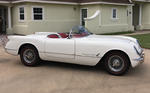
When I bought my '54 two years ago my original goal was to have an NCRS Top Flight car. That quickly got out of hand, and I changed my goal to having a nice fair weather driver. I wanted to preserve the 1954 character of my Corvette, so a powerglide was a must. If I ever do install a 261 I have a '62 aluminum powerglide from a '62 Corvette, so it has the right mounting bosses for the shifter and makes an easy install I hope. Not there yet, since my newly rebuilt 235 is fresh and runs like a champ.
Thanks again for your comments. It's always nice to hear from someone who has gone there before.
Ummmmmmmmmmmmmmmmmmmm, to the best of my knowledge, there was never an ALUMINUM PG that would mate to the 216-235-261 family.
The LAST year for this family of Chevy 6cyl engines was 1962. The FIRST year for the alum PG was 1962, BUUUUUUUUUUUUT, the 1962 Chevy cars with a 6cyl and PG, got a CAST IRON PG (as I remember).
So, with that said, the 235-261 engines in SOME trucks with an auto tranny received a Hyramatic. I remember clearly some friends with 6cyl/Hydramatic 55-57 Cameos.
Ummmmmmmmmmmmmmmmmmmm, to the best of my knowledge, there was never an ALUMINUM PG that would mate to the 216-235-261 family.
The LAST year for this family of Chevy 6cyl engines was 1962. The FIRST year for the alum PG was 1962, BUUUUUUUUUUUUT, the 1962 Chevy cars with a 6cyl and PG, got a CAST IRON PG (as I remember).
So, with that said, the 235-261 engines in SOME trucks with an auto tranny received a Hyramatic. I remember clearly some friends with 6cyl/Hydramatic 55-57 Cameos.
This is my understanding... In late '55 the 265 SB was installed in Corvettes. This meant a change in the bolt pattern on powerglides to fit SBs. My guess would be that everything after '56 that used a powerglide, cast iron or not, would have a SB bolt pattern. I can't see Chevy making two different transmission housings for different engines. Weren't most of the later 261s made in Canada? TH300s and 400s all mate to SBs, right? If 261s used a TH trans wouldn't they have a SB bolt pattern? I will admit that my understanding is often wrong, so I am open to being set straight on this. Also, aren't all of the 250, 292 sixes made with SB bolt pattern to mount the trans?
I can't see Chevy making two different transmission housings for different engines. Weren't most of the later 261s made in Canada? TH300s and 400s all mate to SBs, right? If 261s used a TH trans wouldn't they have a SB bolt pattern? I will admit that my understanding is often wrong, so I am open to being set straight on this. Also, aren't all of the 250, 292 sixes made with SB bolt pattern to mount the trans?
Don
The man with the sticky shift key is telling you right.
The cast iron PowerGlide had at least two different adaptor bellhousings to adapt it to the mating engine. One for the 235-261 six cylinder and one for the later V-8's starting in '55.
The next generation, 194-292 six cylinder was introduced in 1962 in the Chevy II along with the aluminum powerglide. The bellhousing was integral with the transmission and would mate to the new six cylinder or the carryover V-8's.
The transmission "sticky shift key" is talking about was the early Hydra-Matic transmission, not the much later 350-400 Turbo models. He is talking about the Hydro used from about 1939 through the early '60's, mostly in Cadillacs, Oldsmobile and Pontiacs.
I can't comment on a '62 Corvette aluminum PG as I have no knowledge of them.
If I have erred in this reporting, it is because my old brain has let me down, not on purpose.
1962 Powerglide
Nineteen-Sixty-Two saw the introduction of a new aluminum Powerglide transmission to replace, in most cases, the cast iron job. The aluminum unit was used with the Chevy II four and six cylinder engines, as well as with the 250 and 300 horsepower 327 engines in passenger cars and Corvettes. The cast iron Powerglide continued use with the 235 six cylinder and 283 V-8 passenger car engines.
These aluminum Powerglides were manufactured at Toledo, Ohio, in 1962, and they received a "B" character prefix in the unit identification date of manufacture stamping to indicate Toledo. Initially, these stampings were located on the right front corner of the transmission, covered by the converter cover. During the second week of November, 1961, the stamping location was changed to the right-hand side, on the base of the pan. As illustrated, "B1204N" indicates a Toledo Powerglide manufactured December 4th, during the night shift.
Internally, there were significant differences between the lighter aluminum Powerglides built for the Chevy II's, as opposed to those built for the V-8 engine models. In general, fewer clutch disks and smaller clutch piston areas wouldn't allow these lighter transmissions to survive under the requirements of the larger V-8's.
Externally in 1962, the major difference was that the passenger cars required a tailshaft extension housing that was 9-3/64" long, while the Corvette required an extension that was 11-1/4" long with three cast-in bosses for floor-shifter mounting. This is the primary difference (see photos). If you were to simply lengthen the driveshaft to compensate for the difference in extension length, the shifter still will not mount to the shorter housing, nor would it come through the floor in the correct position. A bit of help is to locate a 1962 Chevy II Powerglide, because it is of the correct extension length (11-1/4" long). The only problem is that the Chevy II Powerglide transmission was not heavy enough internally to handle the power of the Corvette 327 engine.
I haven't bothered to check it's authenticity, but this is the powerglide I took out of my 1962 when I got it. The factory shifter bolted on to the extension housing and the trans itself worked great. The engine was a "Targetmaster" 350 with a cracked head, so if anyone wants a boat anchor, PM me.
The man with the sticky shift key is telling you right.
The cast iron PowerGlide had at least two different adaptor bellhousings to adapt it to the mating engine. One for the 235-261 six cylinder and one for the later V-8's starting in '55.
The next generation, 194-292 six cylinder was introduced in 1962 in the Chevy II along with the aluminum powerglide. The bellhousing was integral with the transmission and would mate to the new six cylinder or the carryover V-8's.
The transmission "sticky shift key" is talking about was the early Hydra-Matic transmission, not the much later 350-400 Turbo models. He is talking about the Hydro used from about 1939 through the early '60's, mostly in Cadillacs, Oldsmobile and Pontiacs.
I can't comment on a '62 Corvette aluminum PG as I have no knowledge of them.
If I have erred in this reporting, it is because my old brain has let me down, not on purpose.
Further research is leading me in this direction. I do have a correct aluminum case PG for a 62 Corvette. It has the cast in bosses for the shifter, and an 11 1/4" tail shaft. So, I guess I'm stuck with a PG I can't use for the purpose I had intended. Oh well. It's not hurting anything where it sits.
Now I remember the hydramatic. It was used by several drag racers if I remember right. That trans was pretty beefy.
I haven't bothered to check it's authenticity, but this is the powerglide I took out of my 1962 when I got it. The factory shifter bolted on to the extension housing and the trans itself worked great. The engine was a "Targetmaster" 350 with a cracked head, so if anyone wants a boat anchor, PM me.
Interesting information. Your PG looks like mine. Since my Al PG is from a '62 Corvette I'm gonna assume it is the beefier model. It does have the correct tail shaft with shifter mounting bosses.
Thanks,
Don
Last edited by dgmoses; Mar 5, 2017 at 09:12 PM.
Reason: added comment
A company called Bendtsen's makes a transmission adapter for 216, 235 and 261s. I have read good things about the company. Good quality comes at a price.
A company called Bendtsen's makes a transmission adapter for 216, 235 and 261s. I have read good things about the company. Good quality comes at a price.
I know of them. There are problems with adapters because they all seem to require a late model 12 volt starter. I will not change my 6 volt system for the sake of a transmission swap.
Designer Imagines A Corvette That Looks More Like a Corvette Than the Corvette
Slideshow: A Jaguar designer's personal project imagines what a modern front-engined Corvette might look like if Chevrolet revisited the golden age of the Stingray.





 1954 engine upgrade question