


Floor Jack

Team Owner


Joined: Aug 2008
Posts: 33,068
Likes: 6,626
From: Rochester NY
St. Jude Donor '09 thru '26

I always use two separate methods to hold a vehicle up when working on it. I have jack stands, also wood blocking. The only time I would use the jack itself for one of the two would be if I am NOT going to be under it - for instance changing a tire when I am going to remain outside the body of the car. I don't care how good quality the jack is or what country it was made in, I'm not going to get under with nothing but a jack to protect me.

Melting Slicks


Joined: Apr 2012
Posts: 3,081
Likes: 871
From: EHT NJ
I bought a Harbor Freight Nascar style floor jack 10yrs ago. It works fine better quality then I expected. I had a 2-ton walker jack but it blew a seal after 30yrs. It was big n heavy so I had an excuse to buy a new one. I havent looked lately so I dont know if they still sell them. I have 4-walker jack-stands with rubber protectors on them. I'm starting to look at heavy-duty bottle jacks for when my car is tight to my garage wall.

Safety Car


Joined: Feb 2007
Posts: 4,782
Likes: 2,451
From: Northern California CA
Unfortunately, there's not many jacks made that are of the quality the old Walkers, or similar American made jacks.
I have purchased a few old jacks (but in good shape), at estate sales and such. I take them home and rebuild them.
I have an old Walker, and an old Snap On that I rebuilt.
I test them by jacking up the back of my one ton truck and see if they hold pressure overnight. Fortunately, both of them have.
They are great jacks and will last me a long...long time. What's really nice is that the wheels actually roll and move as they're designed to do!
With what I paid for the jacks, and then the rebuild kit, I'm sure you could purchase a new one cheaper. But for me, it's not always about the cheapest. I would prefer quality rather than cheap off shore stuff.
As for safety items; I use jack stands, the jack, and slide the wheel I remove under the edge of the frame. Unfortunately, in my past career, I've seen at least a handful of events where safety standards (vehicle jacks), were not in practice.
I have purchased a few old jacks (but in good shape), at estate sales and such. I take them home and rebuild them.
I have an old Walker, and an old Snap On that I rebuilt.
I test them by jacking up the back of my one ton truck and see if they hold pressure overnight. Fortunately, both of them have.
They are great jacks and will last me a long...long time. What's really nice is that the wheels actually roll and move as they're designed to do!
With what I paid for the jacks, and then the rebuild kit, I'm sure you could purchase a new one cheaper. But for me, it's not always about the cheapest. I would prefer quality rather than cheap off shore stuff.
As for safety items; I use jack stands, the jack, and slide the wheel I remove under the edge of the frame. Unfortunately, in my past career, I've seen at least a handful of events where safety standards (vehicle jacks), were not in practice.
Le Mans Master


Joined: Feb 2008
Posts: 6,528
Likes: 1,939
From: Folsom CA
I have owned 2 of the Harbor Freight 2 tons and they both failed me. They did give a couple years of service first.
I purchased 2 professional jacks from a shop that was closing. A Lincoln 2 ton and a Compac 2 ton. The Lincoln needed new seals when I bought it, I put seals in the Lincoln and it has worked perfect for 8 years or so.
The Compac has never needed any work it just continues to be a first class piece of equipment. Mine was made in Norway, I understand there is a Chinese Copy out there also. The Compac offers a little lower entry height and it has both the traditional handle pump and a foot pump for close work or quick pump up. They are both Steel and heavy but you wont go wrong buying a quality part. I trust both of these for any job.
Aluminum would be nice for sure but how often do we actually lift a floor jack? Mine roll around just fine. Both of these are $500 jacks but you get what you pay for.
I think the Lincoln, Walker and Hein Warner brand floor jacks all merged into one brand years ago, if not they are all very similar.
Safety warning: My driveway is exposed aggregate with 3/8 salt and pepper rock finish. If I use the floor jacks on this I learned you have to be very careful. The jack wheels will stop in the aggregate finish and as you pump up the jack the vehicle will start pulling back towards the jack. Not an issue if the front wheel are on the ground but if the front is already up on stands the stands will tip back towards the jack. I have to focus on the wheels when jacking on this surface, if they stop moving with each pump I have to jiggle the jack to free them. Once before realizing this the front jack stands were tilted back and the front was about 1 inch off the ground on each stand. If I had lifted more it could have been a major problem. A learning experience for me.
I purchased 2 professional jacks from a shop that was closing. A Lincoln 2 ton and a Compac 2 ton. The Lincoln needed new seals when I bought it, I put seals in the Lincoln and it has worked perfect for 8 years or so.
The Compac has never needed any work it just continues to be a first class piece of equipment. Mine was made in Norway, I understand there is a Chinese Copy out there also. The Compac offers a little lower entry height and it has both the traditional handle pump and a foot pump for close work or quick pump up. They are both Steel and heavy but you wont go wrong buying a quality part. I trust both of these for any job.
Aluminum would be nice for sure but how often do we actually lift a floor jack? Mine roll around just fine. Both of these are $500 jacks but you get what you pay for.
I think the Lincoln, Walker and Hein Warner brand floor jacks all merged into one brand years ago, if not they are all very similar.
Safety warning: My driveway is exposed aggregate with 3/8 salt and pepper rock finish. If I use the floor jacks on this I learned you have to be very careful. The jack wheels will stop in the aggregate finish and as you pump up the jack the vehicle will start pulling back towards the jack. Not an issue if the front wheel are on the ground but if the front is already up on stands the stands will tip back towards the jack. I have to focus on the wheels when jacking on this surface, if they stop moving with each pump I have to jiggle the jack to free them. Once before realizing this the front jack stands were tilted back and the front was about 1 inch off the ground on each stand. If I had lifted more it could have been a major problem. A learning experience for me.
Last edited by Westlotorn; Feb 25, 2018 at 01:42 PM.

Race Director


Joined: Jun 2006
Posts: 17,901
Likes: 751
From: Inverness FL
St. Jude Donor '07
Unfortunately, there's not many jacks made that are of the quality the old Walkers, or similar American made jacks.
I have purchased a few old jacks (but in good shape), at estate sales and such. I take them home and rebuild them.
I have an old Walker, and an old Snap On that I rebuilt.
I test them by jacking up the back of my one ton truck and see if they hold pressure overnight. Fortunately, both of them have.
They are great jacks and will last me a long...long time. What's really nice is that the wheels actually roll and move as they're designed to do!
With what I paid for the jacks, and then the rebuild kit, I'm sure you could purchase a new one cheaper. But for me, it's not always about the cheapest. I would prefer quality rather than cheap off shore stuff.
As for safety items; I use jack stands, the jack, and slide the wheel I remove under the edge of the frame. Unfortunately, in my past career, I've seen at least a handful of events where safety standards (vehicle jacks), were not in practice.
I have purchased a few old jacks (but in good shape), at estate sales and such. I take them home and rebuild them.
I have an old Walker, and an old Snap On that I rebuilt.
I test them by jacking up the back of my one ton truck and see if they hold pressure overnight. Fortunately, both of them have.
They are great jacks and will last me a long...long time. What's really nice is that the wheels actually roll and move as they're designed to do!
With what I paid for the jacks, and then the rebuild kit, I'm sure you could purchase a new one cheaper. But for me, it's not always about the cheapest. I would prefer quality rather than cheap off shore stuff.
As for safety items; I use jack stands, the jack, and slide the wheel I remove under the edge of the frame. Unfortunately, in my past career, I've seen at least a handful of events where safety standards (vehicle jacks), were not in practice.
wish there is a way to salvage it, it has been faithful all these years
Bill
Safety Car
Joined: Feb 2007
Posts: 4,782
Likes: 2,451
From: Northern California CA
my 40yo Blackhawk has developed a leak... the jack rebuilder has tried to fix it twice, no luck... but he says if I leave it partially jacked up instead of all the way down it doesn't leak.... kinda messy..
wish there is a way to salvage it, it has been faithful all these years
Bill
wish there is a way to salvage it, it has been faithful all these years
Bill
A few months ago, I picked up one they refer to as the "Alligator". It was in great condition, but just way too big for my needs.
I ended up selling it to a buddy who has a large shop, and he loves it!
Pat
Race Director
Joined: Jun 2006
Posts: 17,901
Likes: 751
From: Inverness FL
St. Jude Donor '07
Darn Bill, that's a tough one to retire out. The old Blackhawks were awesome jacks.
A few months ago, I picked up one they refer to as the "Alligator". It was in great condition, but just way too big for my needs.
I ended up selling it to a buddy who has a large shop, and he loves it!
Pat
A few months ago, I picked up one they refer to as the "Alligator". It was in great condition, but just way too big for my needs.
I ended up selling it to a buddy who has a large shop, and he loves it!
Pat
Bill

Team Owner
Joined: Mar 2003
Posts: 26,118
Likes: 1,874
From: Greenville, Indiana
1. Holes must be vertical. That is how they are designed to hold weight in compression. Holes horizontal will break. Frankie's picture is the classic fail.
2. NEVER put a point load on the block. Never support a car frame, axle, a-arm, jack stand, etc. that places its load on a small point of contact. ALWAYS spread that load using a wide block of wood on the concrete.
3. Always place the block on a smooth and level surface. Across broken surfaces, not equal height slabs, and such will put uneven stress on the block and may break it.
4. Use fresh blocks. The older a block is, the more likely it is to break and crumble. That block you have had around since you built the house 30 years ago is not a good idea.
5. It is always better to use jack stands, however, there is a possible problem there, too, if the height of the jack is too high compared to the width of the base, where it may topple over. In cases like that, the concrete block is probably more stable.
6. Never fully trust any of them.

Especially #2 and #3.
Last edited by MikeM; Feb 25, 2018 at 01:56 PM.
Corvette Stories
The Best of Corvette for Corvette Enthusiasts

Every 2027 Corvette Engine Explained
Joe Kucinski
Designer Imagines A Corvette That Looks More Like a Corvette Than the Corvette
Verdad Gallardo
10 Ugly Corvettes That We Still Kinda Love
Joe Kucinski
Top 10 Most Expensive Corvettes Ever Sold on Bring A Trailer
Brett Foote
10 Things Every Corvette Owner Needs (2026 Edition)
Michael S. Palmer
8 Most "Only Corvette Owners Understand" Quirks and Problems
Pouria Savadkouei
10 Reasons the C6 Z06 is Still A Performance Benchmark After 20 Years
Joe Kucinski
How Much Horsepower Every Corvette Engine "LOST" in 1972
Joe Kucinski
Top 10 DOs and DON'Ts for Protecting Your Convertible Top!
Michael S. Palmer
Team Owner
Joined: Aug 2007
Posts: 58,061
Likes: 7,146
Army
If two jack stands on cinder blocks assisted by a floor jack can't hold up a what ? 70-100 lb rear axle for 40 minutes while I snake rear leaf springs into place and bolt them up then I guess I just do dangerous stuff...
However, I don't use cinder blocks as supports as a regular practice, I certainly don't support a 2950lb car's weight on them and even with all the bulletized advice above I'd never use them for anything beyond what I did in the picture above.
However, I don't use cinder blocks as supports as a regular practice, I certainly don't support a 2950lb car's weight on them and even with all the bulletized advice above I'd never use them for anything beyond what I did in the picture above.
Last edited by Frankie the Fink; Feb 25, 2018 at 03:41 PM.
Team Owner
Joined: Mar 2003
Posts: 26,118
Likes: 1,874
From: Greenville, Indiana
A car that has spent as much time on jack stands as some here should probably have a two post lift available to do the contiuous, almost non-stop tinkering that gets done on it.
Lifts are much safer than jacks and jack stands any way you slice it.
Or you could just buy a good one that doesn't need constant redoing, refurbing or other tinkering.
That's what I did.
Lifts are much safer than jacks and jack stands any way you slice it.
Or you could just buy a good one that doesn't need constant redoing, refurbing or other tinkering.
That's what I did.
Le Mans Master

Joined: Apr 2006
Posts: 6,183
Likes: 1,198
From: Oklahoma City Oklahoma
One of the best improvements that I made in my garage (in an effort to create more space and make it more useable) was to replace those big older bulky items that took up so much space and replaced them with more modern, much more compact tools. I gave away my 1.5 ton Hein-Werner jack, my Schmuacher battery charger, my old Shop-Vac, my Technics home stereo, complete with amplifier, turntable, dual-cassette deck and replaced them with an aluminum E-Z Carry 2-ton jack, a Jump & Go chargeable portable battery pack, a wheled mini-vac and a Bluetooth speaker for my phone. I also purchased a decent battery-powered 1/2" drive impact gun. Of course, I kept my 1950's Snap On ****-O-Scope cabinet setup that I never use. 
Ray
Ray

Melting Slicks<br><img src="/forums/images/ranks/3k-4k.gif" border="0">

Joined: Mar 2008
Posts: 3,274
Likes: 2,220
From: Colorado Springs Colorado
2024 C2 of the Year Finalist - Modified
2023 C2 of the Year Finalist - Unmodified
It would be nice, but not everyone has the space and/or money to put a lift in their garage so we are stuck using jack stands (sans cinder blocks).
).

CF Community Team

Joined: Apr 2016
Posts: 14,181
Likes: 7,456
From: Pittsburgh
2025 C6 of the Year Finalist - Unmodified
2024 C6 of the Year Finalist - Unmodified
2023 C6 of the Year Finalist - Unmodified
2022 C6 of the Year Finalist - Unmodified
2021 C6 of the Year Finalist - Unmodified
First, they probably are not cinder blocks, but regular concrete blocks.
Second, a concrete block is more than capable of supporting a car IF (notice it is a BIG if) the following are followed:
1. Holes must be vertical. That is how they are designed to hold weight in compression. Holes horizontal will break. Frankie's picture is the classic fail.
2. NEVER put a point load on the block. Never support a car frame, axle, a-arm, jack stand, etc. that places its load on a small point of contact. ALWAYS spread that load using a wide block of wood on the concrete.
3. Always place the block on a smooth and level surface. Across broken surfaces, not equal height slabs, and such will put uneven stress on the block and may break it.
4. Use fresh blocks. The older a block is, the more likely it is to break and crumble. That block you have had around since you built the house 30 years ago is not a good idea.
5. It is always better to use jack stands, however, there is a possible problem there, too, if the height of the jack is too high compared to the width of the base, where it may topple over. In cases like that, the concrete block is probably more stable.
6. Never fully trust any of them.
Second, a concrete block is more than capable of supporting a car IF (notice it is a BIG if) the following are followed:
1. Holes must be vertical. That is how they are designed to hold weight in compression. Holes horizontal will break. Frankie's picture is the classic fail.
2. NEVER put a point load on the block. Never support a car frame, axle, a-arm, jack stand, etc. that places its load on a small point of contact. ALWAYS spread that load using a wide block of wood on the concrete.
3. Always place the block on a smooth and level surface. Across broken surfaces, not equal height slabs, and such will put uneven stress on the block and may break it.
4. Use fresh blocks. The older a block is, the more likely it is to break and crumble. That block you have had around since you built the house 30 years ago is not a good idea.
5. It is always better to use jack stands, however, there is a possible problem there, too, if the height of the jack is too high compared to the width of the base, where it may topple over. In cases like that, the concrete block is probably more stable.
6. Never fully trust any of them.

Burning Brakes


Joined: Oct 2012
Posts: 847
Likes: 359
From: Philo IL
Here's where I add my encouragement for you to take a long look at rebuilding your old jack. It sounds like yours is an older American made jack that is almost certainly worthy of your efforts.

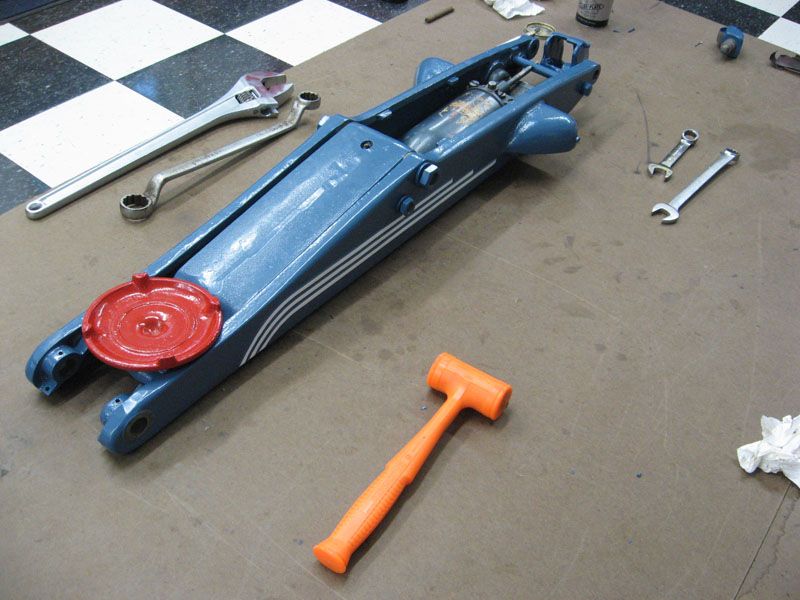
This Walker jack was made in the 1940's, has a 4 ton lift capacity and was among the all the ton's of junk left behind in the old shop I restored a few years ago. This jack weights 187 lbs and is extremely well made.

It would pump up but slowly leak down so the family I bought the shop from didn't want it. So I did some research and found a gentleman who had correct seals and packing for the power cylinder. With the power cylinder rebuilt...

...it was then just a matter of disassembling the rest of it and finding out what parts of the jack assemble were worn...


... or broken and undertaking the tasks necessary to restore/rebuild the jack. The above parts were just some of the axles, bushings or pins that needed attention.

I realize most of you don't have a lathe but you can find someone to do any machining necessary, it's nothing exotic.
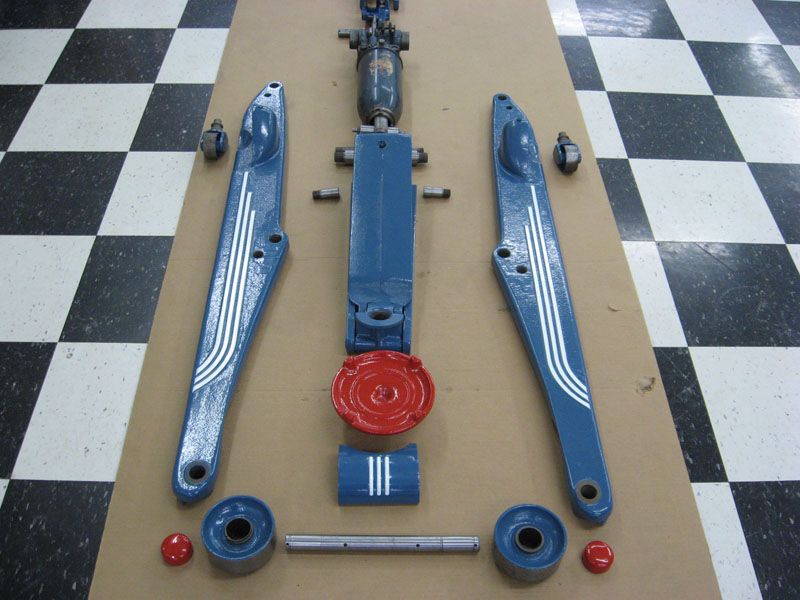

With all the parts repaired or replaced it's just a matter of cleaning, painting or powder coating. I use powder coating for its durability.



Go from this...

...to this...

...all it takes is some effort but...

...look what you'll have when you're done. Floor jacks are relatively simple compared to maintaining/restoring a Corvette. Many times the cost to repair an older jack is less than the cost of the several new ones you'll purchase over a lifetime. I still have and use the first jack I ever bought new over 40 years ago.
Any of you who have an older, American made floor jack that is in need of attention please consider servicing it just as you would your car. These older jacks were built to be serviced, not discarded when a problem develops. If you are unable to service them, please get them into the hands of others who will take the time to bring them back to life.
Garage Journal:
https://www.garagejournal.com/forum/
is an excellent forum to find help servicing your older floor jacks and older equipment in general. I highly recommend it when seeking information on shops and equipment.
Sorry for the lengthily post, but I just hate seeing good, vintage equipment being discarded or worse junked because the owner didn't know it could be saved and have a new, useful life.
Thomas

This Walker jack was made in the 1940's, has a 4 ton lift capacity and was among the all the ton's of junk left behind in the old shop I restored a few years ago. This jack weights 187 lbs and is extremely well made.

It would pump up but slowly leak down so the family I bought the shop from didn't want it. So I did some research and found a gentleman who had correct seals and packing for the power cylinder. With the power cylinder rebuilt...

...it was then just a matter of disassembling the rest of it and finding out what parts of the jack assemble were worn...


... or broken and undertaking the tasks necessary to restore/rebuild the jack. The above parts were just some of the axles, bushings or pins that needed attention.

I realize most of you don't have a lathe but you can find someone to do any machining necessary, it's nothing exotic.


With all the parts repaired or replaced it's just a matter of cleaning, painting or powder coating. I use powder coating for its durability.


Go from this...

...to this...

...all it takes is some effort but...

...look what you'll have when you're done. Floor jacks are relatively simple compared to maintaining/restoring a Corvette. Many times the cost to repair an older jack is less than the cost of the several new ones you'll purchase over a lifetime. I still have and use the first jack I ever bought new over 40 years ago.
Any of you who have an older, American made floor jack that is in need of attention please consider servicing it just as you would your car. These older jacks were built to be serviced, not discarded when a problem develops. If you are unable to service them, please get them into the hands of others who will take the time to bring them back to life.
Garage Journal:
https://www.garagejournal.com/forum/
is an excellent forum to find help servicing your older floor jacks and older equipment in general. I highly recommend it when seeking information on shops and equipment.
Sorry for the lengthily post, but I just hate seeing good, vintage equipment being discarded or worse junked because the owner didn't know it could be saved and have a new, useful life.
Thomas
Melting Slicks
Joined: Aug 2010
Posts: 2,823
Likes: 484
From: El Dorado Hills CA
Here's where I add my encouragement for you to take a long look at rebuilding your old jack. It sounds like yours is an older American made jack that is almost certainly worthy of your efforts.
This Walker jack was made in the 1940's, has a 4 ton lift capacity and was among the all the ton's of junk left behind in the old shop I restored a few years ago. This jack weights 187 lbs and is extremely well made.
It would pump up but slowly leak down so the family I bought the shop from didn't want it. So I did some research and found a gentleman who had correct seals and packing for the power cylinder. With the power cylinder rebuilt...
...it was then just a matter of disassembling the rest of it and finding out what parts of the jack assemble were worn...
... or broken and undertaking the tasks necessary to restore/rebuild the jack. The above parts were just some of the axles, bushings or pins that needed attention.
I realize most of you don't have a lathe but you can find someone to do any machining necessary, it's nothing exotic.
With all the parts repaired or replaced it's just a matter of cleaning, painting or powder coating. I use powder coating for its durability.
Go from this...
...to this...
...all it takes is some effort but...
...look what you'll have when you're done. Floor jacks are relatively simple compared to maintaining/restoring a Corvette. Many times the cost to repair an older jack is less than the cost of the several new ones you'll purchase over a lifetime. I still have and use the first jack I ever bought new over 40 years ago.
Any of you who have an older, American made floor jack that is in need of attention please consider servicing it just as you would your car. These older jacks were built to be serviced, not discarded when a problem develops. If you are unable to service them, please get them into the hands of others who will take the time to bring them back to life.
Garage Journal:
https://www.garagejournal.com/forum/
is an excellent forum to find help servicing your older floor jacks and older equipment in general. I highly recommend it when seeking information on shops and equipment.
Sorry for the lengthily post, but I just hate seeing good, vintage equipment being discarded or worse junked because the owner didn't know it could be saved and have a new, useful life.
Thomas
This Walker jack was made in the 1940's, has a 4 ton lift capacity and was among the all the ton's of junk left behind in the old shop I restored a few years ago. This jack weights 187 lbs and is extremely well made.
It would pump up but slowly leak down so the family I bought the shop from didn't want it. So I did some research and found a gentleman who had correct seals and packing for the power cylinder. With the power cylinder rebuilt...
...it was then just a matter of disassembling the rest of it and finding out what parts of the jack assemble were worn...
... or broken and undertaking the tasks necessary to restore/rebuild the jack. The above parts were just some of the axles, bushings or pins that needed attention.
I realize most of you don't have a lathe but you can find someone to do any machining necessary, it's nothing exotic.
With all the parts repaired or replaced it's just a matter of cleaning, painting or powder coating. I use powder coating for its durability.
Go from this...
...to this...
...all it takes is some effort but...
...look what you'll have when you're done. Floor jacks are relatively simple compared to maintaining/restoring a Corvette. Many times the cost to repair an older jack is less than the cost of the several new ones you'll purchase over a lifetime. I still have and use the first jack I ever bought new over 40 years ago.
Any of you who have an older, American made floor jack that is in need of attention please consider servicing it just as you would your car. These older jacks were built to be serviced, not discarded when a problem develops. If you are unable to service them, please get them into the hands of others who will take the time to bring them back to life.
Garage Journal:
https://www.garagejournal.com/forum/
is an excellent forum to find help servicing your older floor jacks and older equipment in general. I highly recommend it when seeking information on shops and equipment.
Sorry for the lengthily post, but I just hate seeing good, vintage equipment being discarded or worse junked because the owner didn't know it could be saved and have a new, useful life.
Thomas
Burning Brakes
Joined: Oct 2012
Posts: 847
Likes: 359
From: Philo IL
my 40yo Blackhawk has developed a leak... the jack rebuilder has tried to fix it twice, no luck... but he says if I leave it partially jacked up instead of all the way down it doesn't leak.... kinda messy..
wish there is a way to salvage it, it has been faithful all these years
Bill
wish there is a way to salvage it, it has been faithful all these years
Bill
Case in point, I restored the old, in ground, Rotary Lift manufactured in 1928 that was in the old shop I restored a few years back and was in need of attention.


It has been over 10 years ago that I did this lift restoration and that lift still operates as smooth and securely as the day it was made 90 years ago!
Your Blackhawk can and should be salvaged. If your present jack rebuilder has done all he can do for it, look elsewhere for assistance. It will take funds and the willingness to do it but when you're done it will give you decades of faithful service. Please give it serious consideration. Good luck with it.
If you haven't seen this before, for a look at other vintage equipment that I've restored, look here: https://www.garagejournal.com/forum/...ad.php?t=51567
Thomas
Melting Slicks<br><img src="/forums/images/ranks/3k-4k.gif" border="0">
Joined: Mar 2008
Posts: 3,274
Likes: 2,220
From: Colorado Springs Colorado
2024 C2 of the Year Finalist - Modified
2023 C2 of the Year Finalist - Unmodified
Melting Slicks
Joined: Aug 2010
Posts: 2,823
Likes: 484
From: El Dorado Hills CA
Bill, I'm the champion of lost causes as you might know. Blackhawk jacks are among some of the most beautiful, well made jacks ever built, especially those made in the 1930-40-50's. Many models are highly sought after by collectors of vintage equipment. As well made as they are, I'm confident yours can be repaired to operate properly and safely.
Case in point, I restored the old, in ground, Rotary Lift manufactured in 1928 that was in the old shop I restored a few years back and was in need of attention.


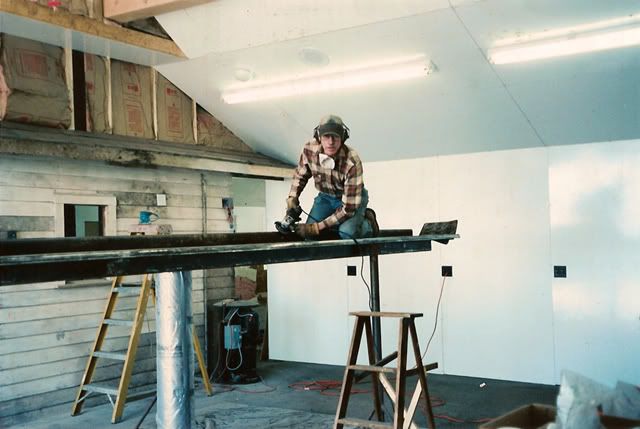


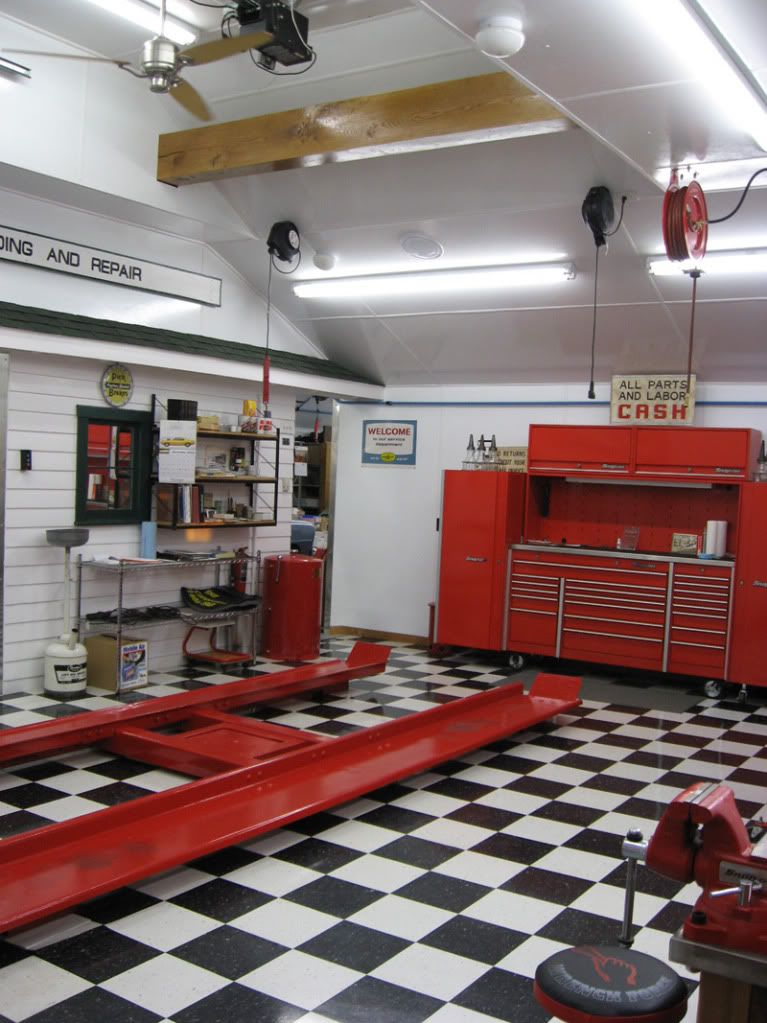


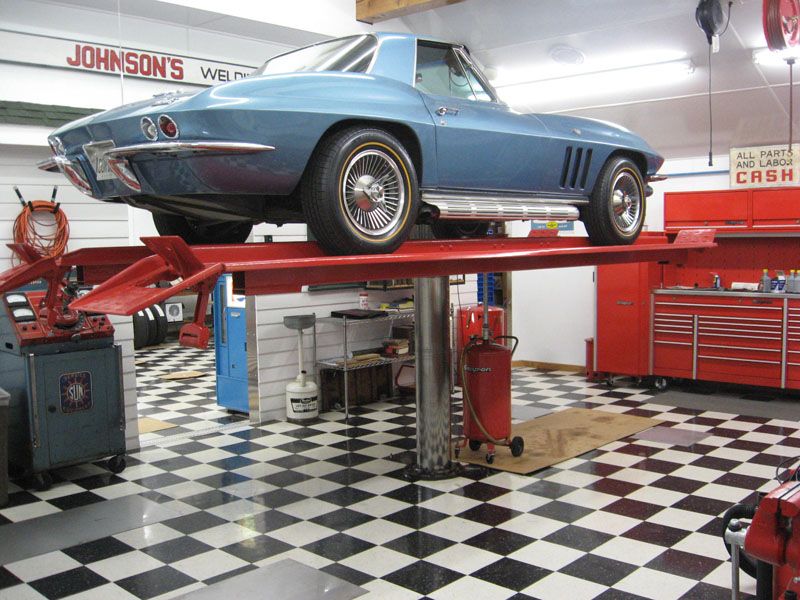
It has been over 10 years ago that I did this lift restoration and that lift still operates as smooth and securely as the day it was made 90 years ago!
Your Blackhawk can and should be salvaged. If your present jack rebuilder has done all he can do for it, look elsewhere for assistance. It will take funds and the willingness to do it but when you're done it will give you decades of faithful service. Please give it serious consideration. Good luck with it.
If you haven't seen this before, for a look at other vintage equipment that I've restored, look here: https://www.garagejournal.com/forum/...ad.php?t=51567
Thomas
Case in point, I restored the old, in ground, Rotary Lift manufactured in 1928 that was in the old shop I restored a few years back and was in need of attention.
It has been over 10 years ago that I did this lift restoration and that lift still operates as smooth and securely as the day it was made 90 years ago!
Your Blackhawk can and should be salvaged. If your present jack rebuilder has done all he can do for it, look elsewhere for assistance. It will take funds and the willingness to do it but when you're done it will give you decades of faithful service. Please give it serious consideration. Good luck with it.
If you haven't seen this before, for a look at other vintage equipment that I've restored, look here: https://www.garagejournal.com/forum/...ad.php?t=51567
Thomas
Ed

Pro

Joined: Oct 2011
Posts: 671
Likes: 105
From: Sydney NSW
I have the harbor freight 3 ton. When I got it I thought it almost weighed 3 ton, the thing is heavy. I haven't had a single issue with it, very capable for what I use it for. I recently got one of the little ones as well for portability, nothing like the quality of the big one !
I also have paranoia, have several sets of jack stands and often place other solid objects near the area I am working as a buffer ! The concrete block photo obviously gave me the creeps.
I also have paranoia, have several sets of jack stands and often place other solid objects near the area I am working as a buffer ! The concrete block photo obviously gave me the creeps.