


Flywheel question
Thread Starter
Le Mans Master


Joined: Oct 2007
Posts: 6,014
Likes: 1,763
From: Richmond Kentucky
2025 Corvette of the Year Winner- Modified
2024 C2 of the Year Winner - Modified
2022 Corvette of the Year Finalist -- Modified
2021 C2 of the Year Winner - Modified
2021 C1 of the Year Winner - Modified
2020 Corvette of the Year (stock)
C2 of Year Winner (stock) 2019
2017 C1 of the Year Finalist
 Flywheel question
Are any of you currently or have you in the past used an aluminum flywheel in your street driven Corvette? If so, did you like it and why or why not?
Thanks,
Rex
Thanks,
Rex
Race Director


Joined: Mar 2018
Posts: 10,775
Likes: 2,222
From: Golden Colorado
Depends.........

Thread Starter
Le Mans Master
Joined: Oct 2007
Posts: 6,014
Likes: 1,763
From: Richmond Kentucky
2025 Corvette of the Year Winner- Modified
2024 C2 of the Year Winner - Modified
2022 Corvette of the Year Finalist -- Modified
2021 C2 of the Year Winner - Modified
2021 C1 of the Year Winner - Modified
2020 Corvette of the Year (stock)
C2 of Year Winner (stock) 2019
2017 C1 of the Year Finalist
Good points...............................
427 engine, 11:1 compression, hydraulic roller cam; torque curve / output unknown at this time; M-22 trans with 3.70 rear; 67 Corvette so 3100 lbs.
Thanks,
Rex

Race Director


Joined: Jan 2003
Posts: 17,723
Likes: 3,708
From: Central Arkansas
I'm using an aluminum RAM flywheel in my BB 66 car and like it fine. I believe from memory it's around 18 lbs so it's not one of the ultra-light units. To be honest in the amount of driving I've done since I installed it I haven't noticed a lot of difference from the 30 lb Hays I took out of it.

Team Owner

Joined: Mar 2003
Posts: 26,118
Likes: 1,874
From: Greenville, Indiana
I've had a couple of them. Used them on 327 and 302. For my driving, they didn't enhance anything except quick revving of the engine. I just put another one in an engine I haven't run yet. Just because........................
Race Director
Joined: Mar 2018
Posts: 10,775
Likes: 2,222
From: Golden Colorado
Imho
The largest problem is to high rear gear ratio or not a broad flat torque curve causing the car to bough down. Heavy car can be a problem also. The heavier flywheel “stores” energy in the form of inertia and drives the car at lower rpms. Another important consideration again IMHO is this makes a scatter shield mandatory. Especially in a glass car. Missed shift at higher rpms could be a very unpleasant experience. Just my .02
Race Director

Joined: Oct 2005
Posts: 12,470
Likes: 1,548
From: Camp Verde AZ
C1 of Year Finalist (performance mods) 2019
2017 C1 of Year Finalist
What weight flywheel?
The 15 lb, 153 tooth factory Chevy ZL1/L88 cast iron FW worked quite well in my L79 '61 Corvette,and also works almost as well in my 427 SB.
I say almost as well because the 427 has less rotating mass in the crank and rods than the L79 did, so the 427 would be happier with perhaps an 18-20 lb FW starting out from a stop, on a hill, especially with some bozo in his automatic car stopped 3 feet behind you. Its not an issue on flat ground. It was not an issue with the L79. It may be cam and big head port volume related, partially.
If your BB car has a normal GM crank and steel rods, the 15 LB FW will be fine,and easy to drive with any rear end/1st gear combo of 9:1 or higher (higher meaning like 10:1).
If you are looking at a real light weight FW of 14 lb or less, I can give no input. A larger dia 168 tooth FW of same weight as a 153 tooth FW will have different characteristics.
Doug
The 15 lb, 153 tooth factory Chevy ZL1/L88 cast iron FW worked quite well in my L79 '61 Corvette,and also works almost as well in my 427 SB.
I say almost as well because the 427 has less rotating mass in the crank and rods than the L79 did, so the 427 would be happier with perhaps an 18-20 lb FW starting out from a stop, on a hill, especially with some bozo in his automatic car stopped 3 feet behind you. Its not an issue on flat ground. It was not an issue with the L79. It may be cam and big head port volume related, partially.
If your BB car has a normal GM crank and steel rods, the 15 LB FW will be fine,and easy to drive with any rear end/1st gear combo of 9:1 or higher (higher meaning like 10:1).
If you are looking at a real light weight FW of 14 lb or less, I can give no input. A larger dia 168 tooth FW of same weight as a 153 tooth FW will have different characteristics.
Doug
Last edited by AZDoug; Jun 2, 2019 at 12:11 PM.
Corvette Stories
The Best of Corvette for Corvette Enthusiasts

Every 2027 Corvette Engine Explained
Joe Kucinski
Designer Imagines A Corvette That Looks More Like a Corvette Than the Corvette
Verdad Gallardo
10 Ugly Corvettes That We Still Kinda Love
Joe Kucinski
Top 10 Most Expensive Corvettes Ever Sold on Bring A Trailer
Brett Foote
10 Things Every Corvette Owner Needs (2026 Edition)
Michael S. Palmer
8 Most "Only Corvette Owners Understand" Quirks and Problems
Pouria Savadkouei
10 Reasons the C6 Z06 is Still A Performance Benchmark After 20 Years
Joe Kucinski
How Much Horsepower Every Corvette Engine "LOST" in 1972
Joe Kucinski
Top 10 DOs and DON'Ts for Protecting Your Convertible Top!
Michael S. Palmer


Melting Slicks

Joined: May 2007
Posts: 2,415
Likes: 154
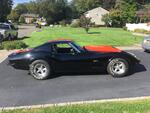
flywheel weight was how I tuned our dirt track cars. light wheel when the track was tackey and good traction and a heavy wheel when the track was dry slick and slippery. . the 65 396 corvette had the 15# light nodular iron GM flywheel from the factory
Last edited by PAmotorman; Jun 2, 2019 at 07:59 PM.
Le Mans Master

Joined: Mar 2001
Posts: 6,240
Likes: 1,013
From: Watkinsville, GA and Glen Cove, NY
Rex, have used a 10 pound aluminum flywheel on my 69 with a 502. Would want it any other way. Love the way the light wheel drives. Our cars are light enough that they work great. 3.70 gears with an M21. Using it on my new combo as well. Richmond 4+1 with 3.08 gears.

Safety Car


Joined: Feb 2007
Posts: 4,782
Likes: 2,452
From: Northern California CA
Have aluminum flywheels on the '62 Vette (350 roller motor), and the '55 Nomad with the 427/435 motor.
Both rev quickly, and they both sound incredible.
There are times that you need to rev it a bit higher to get them going, but I would still run them again if I had to make a choice.
Pat
Both rev quickly, and they both sound incredible.
There are times that you need to rev it a bit higher to get them going, but I would still run them again if I had to make a choice.
Pat
Thread Starter
Le Mans Master
Joined: Oct 2007
Posts: 6,014
Likes: 1,763
From: Richmond Kentucky
2025 Corvette of the Year Winner- Modified
2024 C2 of the Year Winner - Modified
2022 Corvette of the Year Finalist -- Modified
2021 C2 of the Year Winner - Modified
2021 C1 of the Year Winner - Modified
2020 Corvette of the Year (stock)
C2 of Year Winner (stock) 2019
2017 C1 of the Year Finalist
Thanks everyone for your input. It's most informative and I appreciate everyone's comments. Since I have a mint L-88 nodular flywheel (16.8 lbs) I will probably use it.
Rex
Rex

Le Mans Master


Joined: Nov 2003
Posts: 5,772
Likes: 694
From: Maryland
St. Jude Donor '05, '09, '15
Rex. I am using a 17lb L88 flywheel in my 65 SB. 355 ci with Richmond non-od 5 speed. I like the way the eng revs up so easily. Fun to drive. One thing though no one has mentioned. The rpms also drop much quicker than with a stock 30lb flywheel between shifts. It changes the way the car cruises and decelerates with clutch engaged. Not a bad thing but different. I got used to it pretty quickly and still prefer it over a stock weight flywheel.
Tom
Tom
Last edited by Sky65; Jun 2, 2019 at 08:58 PM.

Team Owner

Joined: Sep 2002
Posts: 38,369
Likes: 2,085
From: California
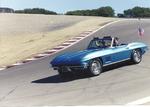
I love the inertia of a heavier flywheel for road racing! I have enough power (head porting) to deal with a slightly faster revving engine competitor!
Last edited by TCracingCA; Jun 3, 2019 at 11:37 AM.
Race Director

Joined: Aug 2004
Posts: 15,328
Likes: 2,271
From: NorCal
One additional consideration (a bonus?) is that a lighter flywheel will enhance the effect/sound of a lumpy idle. Less rotational mass and resultant inertia does less smoothing out of exhaust pulses at idle speed.
I like that that and the quicker revving!
I like that that and the quicker revving!
Last edited by tuxnharley; Jun 3, 2019 at 11:42 AM.
Race Director
Joined: Jan 2003
Posts: 17,723
Likes: 3,708
From: Central Arkansas
We tend to think of a Chevy 30 lb flywheel as a heavy weight but I believe many Fords used flywheels as heavy as 40 lbs and I've heard of 47 lbs but haven't been able to verify that one.
Burning Brakes

Joined: Dec 2010
Posts: 1,224
Likes: 361
From: Southington CT
I use a 9 lb aluminum flywheel with a steel heat shield in my Nova.
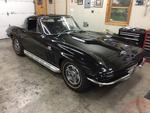
I use a 15 lb Ram aluminum flywheel in the 66 Corvette behind a 496 BBC, Autogear M22 2.56 1st gear, 3.73 gear car. In this car the 496 has quite a lot of TQ and good gearing the stored energy of a heavy flywheel is simply not needed. Unless you have a short crank 283, 327, 350 with no power I'd almost always go with an aluminum flywheel. But then again I don't build mild hp engines for my cars.

