







I'm Stumped

Thread Starter
Team Owner


Joined: Mar 2003
Posts: 26,118
Likes: 1,874
From: Greenville, Indiana
 I'm Stumped
December 1st, 2019, 07:16 PM

I've had an engine sitting on this test stand for about five years now. The engine is a 400 SB, the Injector is a 3680 unit that I was going to put on my Chevy II. I went through it about 10-12 years ago and the thing ran perfectly. About a year or more ago, I started it up one day and the damn thing was running so rich it fouled the plugs out. Out of the clear blue.
Well, the problem has to be in the fuel meter doesn't it? The axle link that was in it was worn so I stuck a brand new one in it when I went through it. Main control diaphragm was new and nothing wrong there. All the vacuum lines were tight. WTF??????
So, I thought about this for a long time. What could make one suddenly go rich? Last summer, I got the idea that the starting fuel enrichment solenoid just might be sticking open. This would let fuel pressure bypass the normal fuel metering system and load the system up with gasoline.. That is the only thing I could think of that would cause this problem. Keeping in mind, this same fuel solenoid stuck closed a few years ago and wouldn't open to let fuel pass until it finally came unstuck one day. When that happened, I had to shoot a shot of starter fluid in the intake to start it.
Anyway, today, I had a chance to check it out. I unhooked the solenoid line from the float bowl and applied vacuum to the solenoid line. It held vacuum. No problem here.
So I put it back together. Got some fresh gasoline and hooked it up to the fuel pump. The thing fired right up, ran right. Not flooding and seemed to run perfectly.
WTF?????????
Anyway, it's now going on the engine in the Chevy II. Been waiting several years for this to happen.
I've had an engine sitting on this test stand for about five years now. The engine is a 400 SB, the Injector is a 3680 unit that I was going to put on my Chevy II. I went through it about 10-12 years ago and the thing ran perfectly. About a year or more ago, I started it up one day and the damn thing was running so rich it fouled the plugs out. Out of the clear blue.
Well, the problem has to be in the fuel meter doesn't it? The axle link that was in it was worn so I stuck a brand new one in it when I went through it. Main control diaphragm was new and nothing wrong there. All the vacuum lines were tight. WTF??????
So, I thought about this for a long time. What could make one suddenly go rich? Last summer, I got the idea that the starting fuel enrichment solenoid just might be sticking open. This would let fuel pressure bypass the normal fuel metering system and load the system up with gasoline.. That is the only thing I could think of that would cause this problem. Keeping in mind, this same fuel solenoid stuck closed a few years ago and wouldn't open to let fuel pass until it finally came unstuck one day. When that happened, I had to shoot a shot of starter fluid in the intake to start it.
Anyway, today, I had a chance to check it out. I unhooked the solenoid line from the float bowl and applied vacuum to the solenoid line. It held vacuum. No problem here.
So I put it back together. Got some fresh gasoline and hooked it up to the fuel pump. The thing fired right up, ran right. Not flooding and seemed to run perfectly.
WTF?????????
Anyway, it's now going on the engine in the Chevy II. Been waiting several years for this to happen.

Race Director


Joined: Feb 2007
Posts: 15,455
Likes: 8,914
From: northern california
C2 of Year Finalist (track prepared) 2019
At very low FI system fuel pressure, like idling, only a spring keeps the valve closed against the pressure of the engine-mounted fuel pump. You know this already.
Maybe the last fuel in the unit gummed up that valve such that the spring couldn't force it shut.
Run plenty of fresh fuel through the starting circuit by driving that Chebby II often and that'll clean the valve and prevent a re-occurrence.
That's my theory and I'm stickin' to it.
Jim
Thread Starter
Team Owner
Joined: Mar 2003
Posts: 26,118
Likes: 1,874
From: Greenville, Indiana
When I put vacuum on the line, I might have unstuck it and pulled it shut. As soon as I did that, I thought it might have better to blow through the line first to see if the circuit was open?
Race Director
Joined: Feb 2007
Posts: 15,455
Likes: 8,914
From: northern california
C2 of Year Finalist (track prepared) 2019
Had you blown air thru the valve (unpowered) from the fuel meter side, you would have overpowered the spring and the valve would have opened. That might make you think the valve has failed, but that isn't necessarily true.
Apply air pressure from the spider side. Doing so will force the valve closed even more tightly than the spring alone. With the valve not powered, there should be no air flow.
Thread Starter
Team Owner
Joined: Mar 2003
Posts: 26,118
Likes: 1,874
From: Greenville, Indiana
Le Mans Master


Joined: Apr 2006
Posts: 6,183
Likes: 1,195
From: Oklahoma City Oklahoma
Corvette Stories
The Best of Corvette for Corvette Enthusiasts

Top 10 Most Expensive Corvettes Ever Sold on Bring A Trailer
Brett Foote
10 Things Every Corvette Owner Needs (2026 Edition)
Michael S. Palmer
8 Most "Only Corvette Owners Understand" Quirks and Problems
Pouria Savadkouei
10 Reasons the C6 Z06 is Still A Performance Benchmark After 20 Years
Joe Kucinski
How Much Horsepower Every Corvette Engine "LOST" in 1972
Joe Kucinski
Top 10 DOs and DON'Ts for Protecting Your Convertible Top!
Michael S. Palmer
Top 10 Most Explosive Corvettes Ever Made: Power-to-Weight Ratio Ranked!
Joe Kucinski
150 hp to 1,250 hp: Every Corvette Generation Compared by the Specs That Matter
Joe Kucinski
8 Coolest Corvette Pace Cars (and Replicas) of All Time
Verdad Gallardo
Race Director

Joined: Apr 2015
Posts: 17,571
Likes: 3,460
From: Fresno California
Mike, I am not familiar with these units but know basic mechanics. I think your explanation is probably correct. I also think that when you get it installed on the car and it is driven regularly, the issue will not repeat itself. As we all know, these cars like to be driven and hate being put in mothballs. Good luck, and please post pics when you are done.
Thread Starter
Team Owner
Joined: Mar 2003
Posts: 26,118
Likes: 1,874
From: Greenville, Indiana
I have been around these Rochester FI's since 1965. I've owned six of these units. Put kits in two of them, changed a couple of cranking signal valves, a main controls diaphragm and used the Kent-Moore monometer on two of them. Contrary to popular belief, these things don't really need a whole lot of attention and so if you're like me and have a little problem every 10-15 years, it makes you scratch your head just a little.
The guys that mess with them all the time like Jim have a real advantage when it comes to odd ball stuff like this.
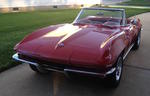
This unit will go on this car. Same one I had the first one on back in '65.

Last edited by MikeM; Dec 2, 2019 at 01:58 PM.
Thread Starter
Team Owner
Joined: Mar 2003
Posts: 26,118
Likes: 1,874
From: Greenville, Indiana
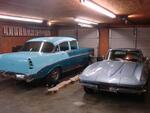
The Chevy II has a '66 L79 engine in it with the 30-30 cam so it's same as factory 327/375.
I had this 400 in another '65 Chevy II with a 350 Turbo. Pulled like a freight train. No as fast as today's fast cars but plenty for the day and time.
You can use the short oil filter in a regular pass car block and clear the clutch linkage but the Chevy II uses a unique cross shaft ball location in the block. Easily taken care of with a home made piece.
Since you're reading this, did you know a guy named Gary Wade in Brandon, Fla or Valrico, Fla. that worked for FelPro, Speed Pro and others in the auto parts business?
I had this 400 in another '65 Chevy II with a 350 Turbo. Pulled like a freight train. No as fast as today's fast cars but plenty for the day and time.
You can use the short oil filter in a regular pass car block and clear the clutch linkage but the Chevy II uses a unique cross shaft ball location in the block. Easily taken care of with a home made piece.
Since you're reading this, did you know a guy named Gary Wade in Brandon, Fla or Valrico, Fla. that worked for FelPro, Speed Pro and others in the auto parts business?
Last edited by MikeM; Dec 4, 2019 at 01:07 PM.
Le Mans Master

Joined: Feb 2008
Posts: 6,482
Likes: 1,918
From: Folsom CA
Gary Wade does not ring a bell, my history with Fel Pro did not start till we bought them in 1998.
Our engine guy in Florida was Gaines Matheny back then.
Typical in mergers about 80% of the original Fel Pro guys did not survive the merger. I went though 12 mergers over the years, not one was pretty.
Our engine guy in Florida was Gaines Matheny back then.
Typical in mergers about 80% of the original Fel Pro guys did not survive the merger. I went though 12 mergers over the years, not one was pretty.
Last edited by Westlotorn; Dec 4, 2019 at 01:16 PM.