






[C2] Sway bars

Thread Starter
Race Director

Joined: Nov 2003
Posts: 10,696
Likes: 3,090
From: Cottonwood AZ
C1 of Year Finalist (performance mods) 2019
Race Director


Joined: Feb 2007
Posts: 15,455
Likes: 8,915
From: northern california
C2 of Year Finalist (track prepared) 2019

Safety Car


Joined: Sep 2014
Posts: 4,301
Likes: 959
From: in the country North Carolina

Well, thanks for thinking of me.
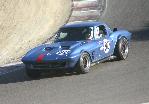
FWIW, I do NOT run a rear bar on my vintage racer. I don't see the need. The handling at the limit is as close to neutral as I can achieve. My car is very predictable and starts to break away very gradually. I like it like that.
The prevailing wisdom when I was crafting my car was to run a stiff front bar, no rear bar, but very stiff rear spring. That's the way my car is set up and the handling at the limit makes no-talent me look like a hero driver. I wouldn't change a thing.
That said, if you want your street driven car to "handle" (whatever that means for a street driven car), get sticky tires and forgo the catalog-engineered suspension bits.
FWIW, I do NOT run a rear bar on my vintage racer. I don't see the need. The handling at the limit is as close to neutral as I can achieve. My car is very predictable and starts to break away very gradually. I like it like that.
The prevailing wisdom when I was crafting my car was to run a stiff front bar, no rear bar, but very stiff rear spring. That's the way my car is set up and the handling at the limit makes no-talent me look like a hero driver. I wouldn't change a thing.
That said, if you want your street driven car to "handle" (whatever that means for a street driven car), get sticky tires and forgo the catalog-engineered suspension bits.
Race Director

Joined: Mar 2002
Posts: 13,637
Likes: 3,584
From: NorCal
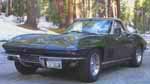
I've run a wide range of front and rear bars on my 67 327 ragtop for autocross purposes. Eventually I went back to the OEM front bar and no rear bar. Whatever you're running now, adding a rear bar will increase oversteer.

Race Director
Joined: May 2000
Posts: 12,712
Likes: 2,270
The set up for a big track is VERY DIFFERENT than for autocross. If you compute the roll stiffness distribution for base and F40/41 you realize that F40/41 has more understeer bias. That's because it was designed for road racing on big tracks.
In autocross you need to get the car to very quickly develop a BIG yaw rate, so big negative front camber and toe-out gets the car to turn in fast and develop a high yaw rate then you steer with the throttle.
Take a car with a good autocross setup to Willow Springs and try to power through Turn 8 at triple digit speeds with the big boys and you'll be in the weeds every lap.
The first thing in setting up a car is replacing the normal trailer/van tires that most guys run with decent performance tires. The Avon CR6ZZ is the pick of the litter, but there are a handful of others that have decent grip and high speed ratings, but harder compounds for longer tread life.
The other thing to start with along with the tires are rebound adjustable shocks like Spax or QA-1.
C2 small blocks have a tendency to snap into oversteer at the limit, especially with low grip tires. This is due to compression of the front anti-roll bar link bushings, which reduces front roll stiffness that effectively transfers roll stiffness to the rear and too much rear roll stiffness can get you into oversteer. This can be at least mitigated if not eliminated by replacing the front bar rubber link bushings with hard urethane. The OE type rubber pillow block bushings are okay.
The next thing is to set alignment at the "sport" settings which is negative one degree camber and 1/32" toe-in at all four corners and as much positive caster, both sides equal, as you can get with the negative one degree camber.
Then go out and do some testing. The car should have mild understeer on turn-in and be neutral as you add power and approach the limit. Transient response is very important and must be evaluated. If you lift off in a constant radius corner the front should tuck in slightly. If the rear wants to come around, that's a problem that must be corrected. Same with a decreasing radius turn. If you go in too hot and lift and the rear comes around you may be in the weeds or over a cliff. If you're not an experienced test driver work up to these limits gradually.
You should also evaluate braking. Once the tires are heated up and at maximum grip can you do a maximum performance deceleration without the rear locking (The fronts should always lock first.), and can you trail brake into a corner without the rear getting loose?
Once you've done all the above then you can think about different anti-roll bars. Not only do larger bars reduce roll, but they are an easy way to tune front-rear roll stiffness distribution to get the understeer/oversteer balance you want, and since their contribution to roll stiffness increases with the FOURTH power of diameter a 1/32" diameter change will make a noticeable difference in both roll and handling.
Also understand that roll is a feedback mechanism, among others, that tells us how close we are to the limit. For a high performance road car that you drive in a sporting manner and maybe do do some track time events, a good objective is to allow about 3 degrees roll per g of cornering force, and with the OE springs that won't make it ride like a buckboard on public roads that are in reasonable condition.
Duke
In autocross you need to get the car to very quickly develop a BIG yaw rate, so big negative front camber and toe-out gets the car to turn in fast and develop a high yaw rate then you steer with the throttle.
Take a car with a good autocross setup to Willow Springs and try to power through Turn 8 at triple digit speeds with the big boys and you'll be in the weeds every lap.
The first thing in setting up a car is replacing the normal trailer/van tires that most guys run with decent performance tires. The Avon CR6ZZ is the pick of the litter, but there are a handful of others that have decent grip and high speed ratings, but harder compounds for longer tread life.
The other thing to start with along with the tires are rebound adjustable shocks like Spax or QA-1.
C2 small blocks have a tendency to snap into oversteer at the limit, especially with low grip tires. This is due to compression of the front anti-roll bar link bushings, which reduces front roll stiffness that effectively transfers roll stiffness to the rear and too much rear roll stiffness can get you into oversteer. This can be at least mitigated if not eliminated by replacing the front bar rubber link bushings with hard urethane. The OE type rubber pillow block bushings are okay.
The next thing is to set alignment at the "sport" settings which is negative one degree camber and 1/32" toe-in at all four corners and as much positive caster, both sides equal, as you can get with the negative one degree camber.
Then go out and do some testing. The car should have mild understeer on turn-in and be neutral as you add power and approach the limit. Transient response is very important and must be evaluated. If you lift off in a constant radius corner the front should tuck in slightly. If the rear wants to come around, that's a problem that must be corrected. Same with a decreasing radius turn. If you go in too hot and lift and the rear comes around you may be in the weeds or over a cliff. If you're not an experienced test driver work up to these limits gradually.
You should also evaluate braking. Once the tires are heated up and at maximum grip can you do a maximum performance deceleration without the rear locking (The fronts should always lock first.), and can you trail brake into a corner without the rear getting loose?
Once you've done all the above then you can think about different anti-roll bars. Not only do larger bars reduce roll, but they are an easy way to tune front-rear roll stiffness distribution to get the understeer/oversteer balance you want, and since their contribution to roll stiffness increases with the FOURTH power of diameter a 1/32" diameter change will make a noticeable difference in both roll and handling.
Also understand that roll is a feedback mechanism, among others, that tells us how close we are to the limit. For a high performance road car that you drive in a sporting manner and maybe do do some track time events, a good objective is to allow about 3 degrees roll per g of cornering force, and with the OE springs that won't make it ride like a buckboard on public roads that are in reasonable condition.
Duke
Last edited by SWCDuke; Aug 15, 2021 at 09:45 AM.
Old Pro Solo Guy


Joined: Dec 2017
Posts: 8,076
Likes: 4,430
From: Marlton NJ
IMHO 3 degrees is a lot of roll. It makes for very slow transitions. It takes a while to get settled. That is pretty much what a SB C2/3 would do with stock springs and bars. It will use up over 1.7 inches of suspension travel in a turn and as much as 2.7" accelerating out of a corner, or trail-braking. You will be on the bump stops already. And if you hit a bump it will shoot into oversteer, and that might not be a great surprise.
For optimum street handling, and certainly for autocross or track use, I would cut the roll angle back by some. Maybe by 25% - 33% or so. Cutting it to 50%, well that is like an autocross setup. It would also handle/feel more like a newer Vette, and not spend so much time rolling around.
Feel free to check out the excel spreadsheet I wrote just for our C2 / C3s. Dynamic handling gets incredibly complex. This should help most with the math. I did spend 27 years doing Pro-Solo, tuning suspension, and road racing..... so....Enjoy!
(If someone thinks of something you want me to tweak or add let me know)
For optimum street handling, and certainly for autocross or track use, I would cut the roll angle back by some. Maybe by 25% - 33% or so. Cutting it to 50%, well that is like an autocross setup. It would also handle/feel more like a newer Vette, and not spend so much time rolling around.
Feel free to check out the excel spreadsheet I wrote just for our C2 / C3s. Dynamic handling gets incredibly complex. This should help most with the math. I did spend 27 years doing Pro-Solo, tuning suspension, and road racing..... so....Enjoy!
(If someone thinks of something you want me to tweak or add let me know)
Thread Starter
Race Director
Joined: Nov 2003
Posts: 10,696
Likes: 3,090
From: Cottonwood AZ
C1 of Year Finalist (performance mods) 2019
IMHO 3 degrees is a lot of roll. It makes for very slow transitions. It takes a while to get settled. That is pretty much what a SB C2/3 would do with stock springs and bars. It will use up over 1.7 inches of suspension travel in a turn and as much as 2.7" accelerating out of a corner, or trail-braking. You will be on the bump stops already. And if you hit a bump it will shoot into oversteer, and that might not be a great surprise.
For optimum street handling, and certainly for autocross or track use, I would cut the roll angle back by some. Maybe by 25% - 33% or so. Cutting it to 50%, well that is like an autocross setup. It would also handle/feel more like a newer Vette, and not spend so much time rolling around.
Feel free to check out the excel spreadsheet I wrote just for our C2 / C3s. Dynamic handling gets incredibly complex. This should help most with the math. I did spend 27 years doing Pro-Solo, tuning suspension, and road racing..... so....Enjoy!
(If someone thinks of something you want me to tweak or add let me know)
For optimum street handling, and certainly for autocross or track use, I would cut the roll angle back by some. Maybe by 25% - 33% or so. Cutting it to 50%, well that is like an autocross setup. It would also handle/feel more like a newer Vette, and not spend so much time rolling around.
Feel free to check out the excel spreadsheet I wrote just for our C2 / C3s. Dynamic handling gets incredibly complex. This should help most with the math. I did spend 27 years doing Pro-Solo, tuning suspension, and road racing..... so....Enjoy!
(If someone thinks of something you want me to tweak or add let me know)
Corvette Stories
The Best of Corvette for Corvette Enthusiasts

Top 10 Most Expensive Corvettes Ever Sold on Bring A Trailer
Brett Foote
10 Things Every Corvette Owner Needs (2026 Edition)
Michael S. Palmer
8 Most "Only Corvette Owners Understand" Quirks and Problems
Pouria Savadkouei
10 Reasons the C6 Z06 is Still A Performance Benchmark After 20 Years
Joe Kucinski
How Much Horsepower Every Corvette Engine "LOST" in 1972
Joe Kucinski
Top 10 DOs and DON'Ts for Protecting Your Convertible Top!
Michael S. Palmer
Top 10 Most Explosive Corvettes Ever Made: Power-to-Weight Ratio Ranked!
Joe Kucinski
150 hp to 1,250 hp: Every Corvette Generation Compared by the Specs That Matter
Joe Kucinski
8 Coolest Corvette Pace Cars (and Replicas) of All Time
Verdad Gallardo
Race Director
Joined: Jan 2003
Posts: 17,681
Likes: 3,678
From: Central Arkansas
On a BB car it should not hurt a thing to step up to a slightly bigger front bar and use poly sway bar components. Leave the rear bar alone. I would stick with a GM bar as then you have a pretty good reference between it and your stock bar. If you go to aftermarket you really can’t be sure of what it represents compared to your stock bar.
Race Director
Joined: Feb 2007
Posts: 15,455
Likes: 8,915
From: northern california
C2 of Year Finalist (track prepared) 2019
On a BB car it should not hurt a thing to step up to a slightly bigger front bar and use poly sway bar components. Leave the rear bar alone. I would stick with a GM bar as then you have a pretty good reference between it and your stock bar. If you go to aftermarket you really can’t be sure of what it represents compared to your stock bar.
1. The nose heavy BB cars want to understeer at the limit. The rear bar was included to mitigate this tendency, making the handling at the limit more nearly neutral. Increase the size of the front bar and you bring back the tendency to understeer.
2. Even slight changes to bar size have a huge impact on the bar torsional stiffness because torsional stiffness is proportional the 4th power of bar diameter. In English, suppose the present bar is 15/16" and you replace it with a 1" bar, a 6.7% increase in diameter. That 6.7% increase in diameter will result in a 29% increase in torsional stiffness. That's huge.
If I had a BB car, I believe I'd leave the front and rear bars as they were engineered by GM.
Race Director
Joined: May 2000
Posts: 12,712
Likes: 2,270
You've received plenty of suggestions on tires, shocks, and alignment. So get to it, then start test driving. My bet is that you won't find any real need for different bars, but I suspect you just won't be able resist tinkering and will proceed to screw up the handling with aftermarket anti-roll bars.
Duke
Race Director
Joined: Jan 2003
Posts: 17,681
Likes: 3,678
From: Central Arkansas
I know Jim - my thinking is that on the street a little additional roll stiffness up front gives the perceived feel of better responsiveness in transition and a bit flatter cornering at low/medium speeds - which seems to me to be what he’s after. I didn’t hear that he plans to compete the car in any way. Not many of us - at least at my age - explore the limits of understeer/ oversteer of our car on normal street cruising. And in the event we misjudge a street corner or curve a little, we are better off with some understeer. Yes, on the track it may well not be as balanced or desired.
I probably should have put a 15/16 bar on my car as with aluminum heads/intake on the BB and no power or other weight accessories I’m probably not that far off of a SB car with a couple power accessories in weight. Either that or remove the rear bar. But I’ve made due with poly bushing on the front BB car. It’s close enough on the street.
I probably should have put a 15/16 bar on my car as with aluminum heads/intake on the BB and no power or other weight accessories I’m probably not that far off of a SB car with a couple power accessories in weight. Either that or remove the rear bar. But I’ve made due with poly bushing on the front BB car. It’s close enough on the street.
Safety Car
Joined: Sep 2014
Posts: 4,301
Likes: 959
From: in the country North Carolina
I had a c3 bb car that I autocrossed back in the late 70's and early to mid 80's. I ran it at least 4 times a month and sometimes more. I changed almost everything on the suspension at one point or another. We found that with my car it was faster with the rear bar removed. It didn't feel as fast but it was. We'd disconnect the bar and run then reconnect and run. It was always faster with the rear bar disconnected. I can't remember which front bar we used and since we didn't have email back then but it was either the stock bar or one step up. I also had daytona springs and Bilstein shocks, solid a-frame bushings, and solid mounts for motor, transmission, and rear end.


Drifting<br><img src="/forums/images/ranks/2k-3k.gif" border="0">


Joined: Aug 2016
Posts: 1,868
Likes: 827
From: Grosse Pointe, MI
IMHO 3 degrees is a lot of roll. It makes for very slow transitions. It takes a while to get settled. That is pretty much what a SB C2/3 would do with stock springs and bars. It will use up over 1.7 inches of suspension travel in a turn and as much as 2.7" accelerating out of a corner, or trail-braking. You will be on the bump stops already. And if you hit a bump it will shoot into oversteer, and that might not be a great surprise.
For optimum street handling, and certainly for autocross or track use, I would cut the roll angle back by some. Maybe by 25% - 33% or so. Cutting it to 50%, well that is like an autocross setup. It would also handle/feel more like a newer Vette, and not spend so much time rolling around.
Feel free to check out the excel spreadsheet I wrote just for our C2 / C3s. Dynamic handling gets incredibly complex. This should help most with the math. I did spend 27 years doing Pro-Solo, tuning suspension, and road racing..... so....Enjoy!
(If someone thinks of something you want me to tweak or add let me know)
For optimum street handling, and certainly for autocross or track use, I would cut the roll angle back by some. Maybe by 25% - 33% or so. Cutting it to 50%, well that is like an autocross setup. It would also handle/feel more like a newer Vette, and not spend so much time rolling around.
Feel free to check out the excel spreadsheet I wrote just for our C2 / C3s. Dynamic handling gets incredibly complex. This should help most with the math. I did spend 27 years doing Pro-Solo, tuning suspension, and road racing..... so....Enjoy!
(If someone thinks of something you want me to tweak or add let me know)
Patrick

Safety Car


Joined: Mar 2002
Posts: 3,780
Likes: 442
From: Southwest MI
 …. In race trim? Something to keep in mind:
Weight, and weight distribution, is what should we consider in designing/selecting suspension components, not “BB“ per se…. I believe a big block coupe with aluminum heads and headers, and no power driver assist devices, weights virtually the same as a stock small block convert with hardtop and those devices (I’d have to check my data files to get the exact weight differences to validate ).
Last edited by 66427-450; Sep 30, 2021 at 10:59 AM.

Drifting

Joined: Jun 2006
Posts: 1,608
Likes: 182
From: Durham ON
With stock springs, good quality replacement shocks and radial tires I found that replacing the stock front sway bar with a 1 1/8" bar made a good improvement in handling.
I didn't use the rear bar that came in the kit.
Last edited by DSR; Sep 30, 2021 at 11:05 AM.
Race Director

Joined: Aug 2004
Posts: 15,304
Likes: 2,263
From: NorCal
Wow! What kind of “improvement “ were you looking for? It seems to me that your change would have resulted in a significant increase in understeer.
Race Director
Joined: Feb 2007
Posts: 15,455
Likes: 8,915
From: northern california
C2 of Year Finalist (track prepared) 2019
Drifting
Joined: Jun 2006
Posts: 1,608
Likes: 182
From: Durham ON
I'm not sure what the difference is between understeer / oversteer. But I don't get so much body roll, much firmer ride, car likes to accelerate in the curves rather then roll over into the ditch. An improvement over what I had for sure.