When you click on links to various merchants on this site and make a purchase, this can result in this site earning a commission. Affiliate programs and affiliations include, but are not limited to, the eBay Partner Network.
I have a '67 vert with rebuilt suspension in the front (stock arms, poly bushings, 1" sway bar, factory style power steering, not sure on the spring lb/hr, but higher than stock). The rear has a sway bar, not sure of the size as well as a fiberglass transverse spring (not sure of brand or rate...my dad put it in the car back in the mid-90's). The car drives great, but when you get it into turns, it's pretty darty and does not come back to center. I feel like when I go into a turn with even moderate aggression, it oversteers, that is, it turns way more than I want it to.
Is this a factor of not enough caster in the front alignment? The wheel does not come back to center very easily.
I don't expect it to handle like a new car, but sometimes I feel like it's about to get away from me and I'm not doing anything crazy with it either.
First thing I would do it check all the suspension components for wear. Darty in corners is typically worn rear TA bushings, but steering that doesn’t return to center is typically front end alignment. Once you verify the suspension components are sound, get a good four wheel alignment. Worn TA bushings or missing rear shims can also cause a rear steer issue where coming out of a corner, the rear end tries to continue taking the turn. Not a very pleasant experience!
Check the poly bushings they totally disintegrate you are much better off with the factory bushings but as stated check the trailing arm bushings and shams alignment is very important on these cars
Some guys on here say the rear traction bar on a small block (327) car will cause poor cornering. I don't know myself, just rumor. I do know that I have used poly bushings and found they disintegrate very quickly and then are gone causing major problems. Stick with OEM rubber is my recommendation.
Of course, your alignment must be correct for the tire type: radial or bias ply - much different.
First thing I would do it check all the suspension components ….
Start there, and first off, take a look at the rear strut rod bushings. And as you’ve read, poly bushings were a mistake, they will need to be replaced at some point.
if as your profile says the car is a small block that rear sway bar may be part of the problem. i'm sure someone here more knowledgeable will chime in soon.
if as your profile says the car is a small block that rear sway bar may be part of the problem. i'm sure someone here more knowledgeable will chime in soon.
This car is really my father's car, but it needs a few things (rebuilt heater core, putting on a set of McJack's headers, and a few odds and ends) so it's in my care for now My pop is too old to do this work now, but it's been in the family since 1978. It is a small black car btw (300HP 327 with a 3 speed originally, but now has a warmed over ZZ3 with an M20...we still have the original block and trans of course!) Anyway, here's what I know. The front end was completely rebuilt in the mid-90's. Stock uppers and lowers certainly with poly bushings of some kind. Tie rods, ball joints, sway bar bushings, everything is in good condition. Steering is tight and responsive...the box is fine for sure and I don't think any of the front components are worn out. Brakes are completely rebuilt with stainless sleeves. Not sure what shocks it has...I think it has higher than stock rated front springs and like I said, a fiberglass spring in the rear (rate unknown) The car has probably been driven more by me this summer than it has in the past 25 years and the front end components all look solid. The car tracks straight, doesn't follow grooves in the road, and generally speaking is great to drive. But I have no idea what the specs on the alignment actually are...I mean absolutely no idea.
Now onto the rear. Everything, aside from the aforementioned fiberglass rear spring and the sway bar (I know it didn't have one originally) are what came on the car from the factory. So, all the bushings and everything else in the rear have never been touched. I can say that aside from the odd steering feeling in corners, when you get on it and shift, it feels like the car wants to move to one side when you get back in the gas. It's unsettling for sure.
Would it be wise to start in the rear?
I have it in mind to put a set of Global West upper control arms on the front, but if the rear suspension is the likely culprit I'll start there. FWIW, I know this car decently well since we've had it for so long (I learned to drive in this car and took it to prom in highschool so it has a lot of sentimental value). I have a '56 Belair with C4 suspension (and del-a-lum bushings in the control arms which are great!) and it definitely handles better than this C2 and isn't unsettled but it's a very different car too.
Last edited by hutchenc; Aug 14, 2021 at 06:53 PM.
Of course, your alignment must be correct for the tire type: radial or bias ply - much different.
I wouldn't call less toe-in "much different", which is the only major alignment difference for radials versus bias ply. Why don't you state the actual difference instead of just trying to scare people with BS?
I have it in mind to put a set of Global West upper control arms on the front, but if the rear suspension is the likely culprit I'll start there. FWIW, I know this car decently well since we've had it for so long (I learned to drive in this car and took it to prom in highschool so it has a lot of sentimental value). I have a '56 Belair C4 suspension (and del-a-lum bushings in the control arms which are great!) and it definitely handles better than this C2 and isn't unsettled but it's a very different car too.
Putting more aftermarket junk on the car is just going to dig you a deeper hole. Get rid of the rear bar and fiind a competent person who understands C2 Corvettes to do a thorough inspection of the chassis including getting some ballpark alignment numbers that you can get with an inclinometer and tape measure. Chances are your're goint to find some deteriorated suspension bushings, and I bet the alignment, especially rear toe is way off.
Replace the old worn out parts then get the car to a competent alignment shop.
Search the CF for tires and alignment discussions, and buy a complete set of service and overhaul manuals for the car before you touch it again with a tool.
Steering not returning to center can be an indication of the front end caster not being properly set (too little caster).
Perhaps I missed it but how old/what type/what inflation are the tires?
If this were my car I would NOT change everything being discussed as suspect all at once, but rather inspect/replace in a sequence of steps:
1. Trailing arm bushings
2. Front suspension bushings
3. Front and rear alignment
4. Remove rear sway bar
I wouldn't call less toe-in "much different", which is the only major alignment difference for radials versus bias ply. Why don't you state the actual difference instead of just trying to scare people with BS?
Duke
I respectfully disagree with toe-in being the only major alignment difference, but this is not the place to have a spat.
I aligned R66 with John Z's criteria and it did make a major difference over the bias ply alignment the car had before the change. Wish I could still get a $150 alignment, I wouldn't have done it myself.
In the 40+ years I've been driving my Corvette, I've had the rear end try to steer under hard acceleration / deceleration twice. Once was a failing rear wheel bearing and the other was a failing trailing arm bushing. There was one other time but it was operator error when I failed to tighten down some bolts when I went through my modified rear suspension phase.
Since the car's handling changes dramatically with power application, that's a dead give-away that the rear suspension is loose. First of all, check to make sure the rear trailing arm shims are present and retained by a large cotter pin. If they are, you can shine a flashlight in there and take a peak at the edge of the trailing arm bushings. Given their age, they might look like this (not good):
As mentioned above, rear bearing can also be a loose point.
I agree with removing the rear sway. The C2 has a higher rear roll center than the C3 and will not be neutral with a rear sway bar. Especially considering the fiberglass spring which likely has a much higher rate than the original.
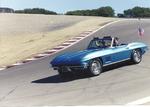
Resist the aftermarket snake oil sellers. The C2 suspension that Zora and team came up with is pretty doggone good. Here's a "race" between my F40 equipped 1964 and my 1995 "Super Miata" (basically a Spec Miata without any throttle restrictions on the 1.8 engine). You can see that the Vette doesn't give up much at all in the turns. The only changes to the Vette's suspension are a 1" front roll bar, 1 coil cut from each front spring, poly bushings in the front and a careful setup.
If you want pop's car to drive and handle well, don't add more "upgrades", and do remove all previous "upgrades" and take it back to stock configuration, (except for radial tires).
Have a proper 4 wheel alignment done and then drive it like you stole it. Those old fogy white short sleeve shirt, skinny black tie, pocket protector full of pencils GM engineers were boring as hell, but they knew stuff. Heck, Duke still wears those clothes. (maybe not the tie)
Thanks for the advice fellas! I've checked the front control arm bushings and they look brand new. That's certainly not the problem. Tires are Goodyear radials...they're maybe 3 years old? They're in fine shape.
I need to get under the car and look at the rear control arms. I'm guessing the bushings are shot. If that's the case, I might just rebuild the whole thing. I do have a press so I can do that work. Can't be any worse than re-doing the C4 stuff that's on my '56.
I may experiment with removing the rear sway bar...sounds counter-intuitive, but I do understand that it could make a big difference as it did on my tri-five too (it's better without the rear bar).
As far as front end caster, is it actually possible to get to 3 to 4 degrees of positive caster with stock a-arms? If so that's great, but I know on my tri-five, with stock stuff, 0 to 1 was about all you could get. I've seen a few posts where guys either slot the holes, run offset bars, or run aftermarket uppers to gain more. I'm not going to mess with the alignment right now, just trying to understand the limits of what the stock setup are.
The limits of the stock set up is fair more then the average drivers limits
I was asking more about numerical alignment limits, specifically caster. I don't drive this car very aggressively. It's just a cruiser, but the occasional romp is fun if you know what I mean.
After my Borgeson PS install I got close to 3* caster on my 67 when it was maxed out. That worked great for steering return, road feedback, and responsiveness. With PS, set things in the fast ratio holes and you should be good to go. I wouldn’t recommend it w/o PS tho.
Definitely do check those TA bushings and shims ASAP!



 C2 steering/handling question
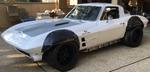


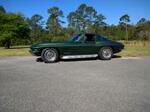



 My pop is too old to do this work now, but it's been in the family since 1978. It is a small black car btw (300HP 327 with a 3 speed originally, but now has a warmed over ZZ3 with an M20...we still have the original block and trans of course!) Anyway, here's what I know. The front end was completely rebuilt in the mid-90's. Stock uppers and lowers certainly with poly bushings of some kind. Tie rods, ball joints, sway bar bushings, everything is in good condition. Steering is tight and responsive...the box is fine for sure and I don't think any of the front components are worn out. Brakes are completely rebuilt with stainless sleeves. Not sure what shocks it has...I think it has higher than stock rated front springs and like I said, a fiberglass spring in the rear (rate unknown) The car has probably been driven more by me this summer than it has in the past 25 years and the front end components all look solid. The car tracks straight, doesn't follow grooves in the road, and generally speaking is great to drive. But I have no idea what the specs on the alignment actually are...I mean absolutely no idea.