






Paint pimples

Thread Starter
Cruising

Joined: Apr 2019
Posts: 13
Likes: 0
 Paint pimples
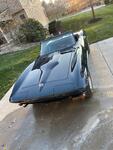
I had my C2 painted 20 years ago and noticed about 10 years ago the hood had what looked like small dust particles (pimples) show up only on the hood. I finally took the hood off and brought it to the man who painted it. He had no idea what caused it and said the pimples appeared to have a liquid underneath them. He had painted many corvettes. I then took it to another restoration shop 2 months ago, he sanded it down to the fiberglass, put 2 coats of primer on it, let it dry and then put a heat lamp on it to see if any pimples developed. None did. He then Base coat and cleared it, let it dry and a week later noticed that the same small pimples appeared again. He called me totally flabbergasted wondering what could have happened. Do any other corvette owners know what is causing this? Please let me know, thanks.
Pro


Joined: Feb 2003
Posts: 749
Likes: 288
From: Carlisle Pa.
2025 C1 of the Year - Unmodified Finalist
2020 Corvette of the Year Finalist (stock)
2019 C1 of Year Winner (stock)
If it is a C60 car and the bubbles are above the AC compressor, it is possible that it is compressor oil trapped
in the fiberglass from a leaking compressor seal. I am not sure if it is possible to remove this liquid.
If the bubble are near the master cylinder, it is possible that it was caused by brake fluid vapors.
in the fiberglass from a leaking compressor seal. I am not sure if it is possible to remove this liquid.
If the bubble are near the master cylinder, it is possible that it was caused by brake fluid vapors.
Race Director


Joined: Jul 2018
Posts: 10,586
Likes: 8,408
From: San Antonio, TX/Mahopac, NY
2026 Restomod of the Year Winner
2024 Corvette of the Year Finalist - Modified
2024 Corvette of the Year Finalist - Unmodified
2023 C7 of the Year Winner - Modified
Can you share some pictures? Sounds like solvent pop, but pictures would help. I also agree that AC oil and or brake fluid could be the cause. Another thought is the source of the hood. Is it oem or aftermarket or was it replaced at some point in its history?

Le Mans Master


Joined: Aug 2005
Posts: 6,539
Likes: 1,970
From: Temple Terrace Florida
A compressor seal let go on a Sanden in my 68. The compressor oil wicked its way up through the top coat of the paint. I added an aluminum cover on the compressors on my 66 and 68. Post a picture if you get a chance. Jerry
Race Director
Joined: Jul 2018
Posts: 10,586
Likes: 8,408
From: San Antonio, TX/Mahopac, NY
2026 Restomod of the Year Winner
2024 Corvette of the Year Finalist - Modified
2024 Corvette of the Year Finalist - Unmodified
2023 C7 of the Year Winner - Modified
No OEM C2 Corvette panel ever had gel coat.
Corvette Stories
The Best of Corvette for Corvette Enthusiasts

Top 10 Most Expensive Corvettes Ever Sold on Bring A Trailer
Brett Foote
10 Things Every Corvette Owner Needs (2026 Edition)
Michael S. Palmer
8 Most "Only Corvette Owners Understand" Quirks and Problems
Pouria Savadkouei
10 Reasons the C6 Z06 is Still A Performance Benchmark After 20 Years
Joe Kucinski
How Much Horsepower Every Corvette Engine "LOST" in 1972
Joe Kucinski
Top 10 DOs and DON'Ts for Protecting Your Convertible Top!
Michael S. Palmer
Top 10 Most Explosive Corvettes Ever Made: Power-to-Weight Ratio Ranked!
Joe Kucinski
150 hp to 1,250 hp: Every Corvette Generation Compared by the Specs That Matter
Joe Kucinski
8 Coolest Corvette Pace Cars (and Replicas) of All Time
Verdad Gallardo
Racer

Joined: Feb 2003
Posts: 443
Likes: 45
From: Reading Pa
Was there an issue with Corvette Image glass? I have the same issue. My front fenders on the top side started popping up 10 years after after being installed and painted. It was a complete Corvette Image front end done in 2000.
Race Director
Joined: Jul 2018
Posts: 10,586
Likes: 8,408
From: San Antonio, TX/Mahopac, NY
2026 Restomod of the Year Winner
2024 Corvette of the Year Finalist - Modified
2024 Corvette of the Year Finalist - Unmodified
2023 C7 of the Year Winner - Modified
Oh boy, yes. CI had a known period of time when their panels had the potential for trapped, uncatalized resin. It would later show up as solvent pops. Keith knows more about this issue.


Team Owner


Joined: Feb 2003
Posts: 54,103
Likes: 9,418
From: Sitting in his Nowhere land Hanover Pa
2024 C2 of the Year Finalist - Unmodified
2015 C2 of Year Finalist
yes. there are many owners with the problem and the only cure are to replace the glass.
Team Owner
Joined: Feb 2003
Posts: 54,103
Likes: 9,418
From: Sitting in his Nowhere land Hanover Pa
2024 C2 of the Year Finalist - Unmodified
2015 C2 of Year Finalist
that about sums it up. dad bought a front clip from them around 1992 sat around until 96 when it was installed. the car was painted in lacquer in 97. took about two years for the problem to show. the only answer we got was to replace

Burning Brakes

Joined: Jan 2022
Posts: 1,069
Likes: 42
If that is a response to me, I never said they did. I offer what is said to be an effective preventative for oil penetration from backside surfaces showing itself on the top surface.
I do my own painting. If this were my car I would strip and clean both sides of the hood to bare glass, who knows what was painted over on the backside, and seal the top surface with gel coat. Another option is to get a new hood and deal with making it fit, most of the time I've regretted not fixing what I already had because of fitment issues.
I do my own painting. If this were my car I would strip and clean both sides of the hood to bare glass, who knows what was painted over on the backside, and seal the top surface with gel coat. Another option is to get a new hood and deal with making it fit, most of the time I've regretted not fixing what I already had because of fitment issues.


Team Owner
Joined: Feb 2003
Posts: 54,103
Likes: 9,418
From: Sitting in his Nowhere land Hanover Pa
2024 C2 of the Year Finalist - Unmodified
2015 C2 of Year Finalist
If it’s only isolated in a panel and not the whole car then that really helps to figure out what caused it



Melting Slicks


Joined: Feb 2015
Posts: 2,569
Likes: 1,122
From: Huntsville AL & Hills of Southern TN
Not sure if true, but I remember hearing they had an issue with the mold release product they were using. Molds are seasoned and re-treated with a release agent every so many part pulls. If your mold release maybe had silicones or something bad chemically the part producer might not realize mold release agents are getting into the part and over time cause this problem or also out gas. Also a producer is at the mercy of the technicians prepping/releasing the molds to properly use the mold release, not use it to make their job easier. I'm thinking they changed their supplier for mold release a long time ago, but MANY parts were shipped and time passed before there was realization there was a problem. We use Locktite Frekote. If the problem appeared on various parts, that would imply manufacturing contamination.
Racer
Joined: Mar 2017
Posts: 327
Likes: 95
From: York PA
I would grind the area out a little and use resin and some matte. If it’s uncured resin it shouldn’t come up through that. I would use epoxy as my first layer also. If you do these two things and it still shows up then either live with it or replace panels.

Le Mans Master

Joined: May 2006
Posts: 5,814
Likes: 414
From: Pittsburgh suburbs Pa.
 I am going through this right now with my 66 original factory corvette fiberglass on the panel right behind the hood and down the top of the drivers fender about 1/4 or the way forward and read that it is trapped gas bubbles coming out of the old fiberglass . True or not I have found that the only way to eliminate it is to grind part way into the surface and use new resin and fiberglass to repair the surface . I have found that this works. The bubbles will just come back if you just use fillers.