When you click on links to various merchants on this site and make a purchase, this can result in this site earning a commission. Affiliate programs and affiliations include, but are not limited to, the eBay Partner Network.
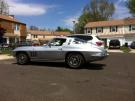
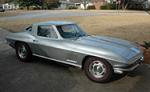
My 65 coupe has a drift to the right when you take your hands off the steering wheel on a nice straight flat street with very little to no crown.
Not a quick jerk to the right just a gentle steady drift.
It has been aligned on two different machines and is dead on specs both front and rear.
Have checked the following and all are good.
Tire presure
Switched wheels and tires
Checked for brake pad drag.
When applying brakes it is smooth and straight with no pull or drift.
Centered steering wheel
Am I missing something?
What adjustment can be done to correct this?
Is this an ever since type problem? Or have you been chasing this drift ever since u owned the car or did it just slowly develop?
I worked/managed a tire/repair shop that did a ton of alignments 90% of the time we would ask the customer why they were requesting to have an alignment done , was there a current problem/condition they were experiencing currently??
Shimmy & drifts were alot of problems customers were trying to rectify, 90% of the time it was a tire issue causing the drift/shimmy.. Please don’t rule out a slightly shifted belt in the tire,pressures,or wear pattern causing it..
Does the drift get worse after driving or is it there all the time??
Any play in the steering box? There is no such thing as a perfectly flat road. All have a crown, even if it is very slight. A properly aligned car will drift to the right slightly.
This problem is new after all new suspension bushings and alignment.
I am using specs supplied by a CF member for "touring" using power steering and radial tires and had no problems using them in the past.
Also photo of latest alignment specs.
When I was taught how to align a front end way back in the late 60's, the old timer always told me to add a 1/4 to 1/2 degree more positive on the right side. I have my own alignment equipment in my garage and still do it to this day and have since with no drift issues.
When I was taught how to align a front end way back in the late 60's, the old timer always told me to add a 1/4 to 1/2 degree more positive on the right side. I have my own alignment equipment in my garage and still do it to this day and have since with no drift issues.
More positive caster would probably help, but it’s difficult on these front ends without some minor modifications.
Offset upper control arm shafts.
Slotting the shaft, so you can slide them back.
Or longer shaft bolts and a lot more shims are just a few.
A little more “toe in” could also help in tracking straight.
The first thing you should do is swap the front tires side to side. If nothing changes then the tires are probably not the cause, and you can proceed to tweaking the caster.
I always recommend setting front camber and caster as close to equal on both sides as possible, and of course total rear toe must be split evenly between both sides. Theoretically on a zero camber road the car should track straight, however, virtually all roads have a bit of camber to promote water drainage.
On a two lane highway if the driver falls asleep a very slight drift to the right will cause the car to go off on the right side of the road rather than the left and crash into an on coming car.
On a divided interstate type highway the car should drift slightly right in the right lane and slightly left in the left lane.
I've been doing my own alignments for 40 years, and this is how I set up all my cars, including maximum negative camber (up to minus one degree) and positive caster, equal on both sides allowed by the adjustments.
If you have more right drift than you like a bit more right caster will reduce or eliminate it. You can do this by taking a shim out of the front right upper A-arm and movi it to the rear. This will add a bit more right caster and reduce the right drift. As far as how thick a shim you should move that's your guess, but I would suggest starting with the thinnest one installed. If that's not enough put it back and swap a thicker one. Keep good records so you don't get lost and can go back to the initial setting if necessary.
Moving a thin shim front to rear will have little affect on camber and minimal effect on toe. You'll know if the steering wheel clocking moves in straight line driving toe might have changed, so it should be checked and adjusted as necessary.
Alternatively you could slightly reduce caster on the left side by moving a thin shim from the rear to front upper A-arm stud.
The first thing you should do is swap the front tires side to side. If nothing changes then the tires are probably not the cause, and you can proceed to tweaking the caster.
I always recommend setting front camber and caster as close to equal on both sides as possible, and of course total rear toe must be split evenly between both sides. Theoretically on a zero camber road the car should track straight, however, virtually all roads have a bit of camber to promote water drainage.
On a two lane highway if the driver falls asleep a very slight drift to the right will cause the car to go off on the right side of the road rather than the left and crash into an on coming car.
On a divided interstate type highway the car should drift slightly right in the right lane and slightly left in the left lane.
I've been doing my own alignments for 40 years, and this is how I set up all my cars, including maximum negative camber (up to minus one degree) and positive caster, equal on both sides allowed by the adjustments.
If you have more right drift than you like a bit more right caster will reduce or eliminate it. You can do this by taking a shim out of the front right upper A-arm and movi it to the rear. This will add a bit more right caster and reduce the right drift. As far as how thick a shim you should move that's your guess, but I would suggest starting with the thinnest one installed. If that's not enough put it back and swap a thicker one. Keep good records so you don't get lost and can go back to the initial setting if necessary.
Moving a thin shim front to rear will have little affect on camber and minimal effect on toe. You'll know if the steering wheel clocking moves in straight line driving toe might have changed, so it should be checked and adjusted as necessary.
Alternatively you could slightly reduce caster on the left side by moving a thin shim from the rear to front upper A-arm stud.
The resulting “steer ahead” alignment result of .02 is to the right. So that very slight tendency to drift right, plus the pull of the road crown probably explains what you are experiencing. The alignment results look good except some might prefer a bit more neg camber up front for more spirited driving. He probably would have had to spend more time with playing with the toe and caster settings to get rid of that .02 steer ahead to the right result. If you take it back they might try to get that out or they might just tell you everything is well within tolerances and good.
I’m dealing with a similar alignment issue with my wife’s Lexus that Discount Tires aligned. The factory alignment specs are so broad they actually allow everything from toe out to the more desired toe in. It tracks good, steer ahead is 0.00. But when they corrected an imbalance in R and L front toe, and toe out, it threw the camber slightly out of spec on one side and it’s not adjustable as built. And it was set with toe in at front but toe out at the rear. But both are in spec? I just decided to take it to Lexus to let them figure it all out.
I do a lot of alignments...car as well as 18 wheeler stuff. I trained them for years. Those mega long vehicles are really challenging as the length magnifies things. My own are aligned at home and drive fine. No pull and my '67 is rock steady even at the TX Mile at 200 MPH..
I'll say I've never gone along with the concept of "all vehicles pull to the right". Yes, there is a crown on just about any road and depending on the region of the country it can be pretty severe. And folks say if it's going to wander it should go to the ditch and not oncoming traffic. I get that...but you can get them driving well and the most aggravating comment I ever hear from alignment shops is "it's within specs".
What happens is you're constantly holding the wheel to the left which causes tire wear and driver fatigue/ annoyance.
Yep..."in specs" is cool...but if it's not driving correctly and wearing tires properly...it's not properly aligned. I agree a little caster juggling can make the driving part good....but you have to watch what folks do. For example, in the "big truck" world, alignment shops love to throw a giant caster shim under one side of the axle (remember- it's a solid front axle) to make it drive straight. And it does...yet it's still eating the tires up because 9 times out of 10 the real issue is the alignment of the rear tandem axles. And since that's a little harder to mess with (time consuming), shops hit the "easy button" and then tell you later when the tires are worn off (not from the caster...but from the thigns out of align the caster is compensating for) that you must have hit something so you need another alignment. And etc, etc etc.....
Until it drives right..it's not aligned. It's a REAL issue with new cars using lane departure systems.
Adding .5 degrees of caster to the right front should make the car pull slightly to the left on a flat surface and will likely will make the car drive close to straight on a normally crowned road.
I noticed that you quoted specs for power steering. If your car has power steering I would recommend increasing the caster as high as you can get out of the suspension and still keep it equal on both sides.
This will improve the cornering of the car and the centering of the steering wheel.
The first thing you should do is swap the front tires side to side. If nothing changes then the tires are probably not the cause, and you can proceed to tweaking the caster.
I always recommend setting front camber and caster as close to equal on both sides as possible, and of course total rear toe must be split evenly between both sides. Theoretically on a zero camber road the car should track straight, however, virtually all roads have a bit of camber to promote water drainage.
On a two lane highway if the driver falls asleep a very slight drift to the right will cause the car to go off on the right side of the road rather than the left and crash into an on coming car.
On a divided interstate type highway the car should drift slightly right in the right lane and slightly left in the left lane.
I've been doing my own alignments for 40 years, and this is how I set up all my cars, including maximum negative camber (up to minus one degree) and positive caster, equal on both sides allowed by the adjustments.
If you have more right drift than you like a bit more right caster will reduce or eliminate it. You can do this by taking a shim out of the front right upper A-arm and movi it to the rear. This will add a bit more right caster and reduce the right drift. As far as how thick a shim you should move that's your guess, but I would suggest starting with the thinnest one installed. If that's not enough put it back and swap a thicker one. Keep good records so you don't get lost and can go back to the initial setting if necessary.
Moving a thin shim front to rear will have little affect on camber and minimal effect on toe. You'll know if the steering wheel clocking moves in straight line driving toe might have changed, so it should be checked and adjusted as necessary.
Alternatively you could slightly reduce caster on the left side by moving a thin shim from the rear to front upper A-arm stud.
Duke
I reduced the caster on the left side by 1/2 degree and 90% of the drift is gone. Not sure I could ever get it to !00% without grief from the alignment shop since he has already had it on his two
machines a total of seven times.
Thanks to all the responses it was very helpful.
Jim
I reduced the caster on the left side by 1/2 degree and 90% of the drift is gone. Not sure I could ever get it to !00% without grief from the alignment shop since he has already had it on his two
machines a total of seven times.
Thanks to all the responses it was very helpful.
Jim
Curious if you ever swapped the front tires side to side to see what affect that had.











 Alignment mystery