



[C1] Electronic Ignition
Thread Starter
Le Mans Master


Joined: Apr 2013
Posts: 5,003
Likes: 1,056
From: Arlington TX
2024 C1 of the Year Finalist - Unmodified
2023 Restomod of the Year Finalist
2023 C1 of the Year Finalist - Unmodified
 Electronic Ignition
Which is better, in your opinion, Pertronic III or Breakerless SE?

Drifting


Joined: Apr 2011
Posts: 1,668
Likes: 415
From: Australia
Melting Slicks


Joined: Apr 2002
Posts: 3,105
Likes: 2,367
From: Allison Park, PA
https://www.lectriclimited.com/produ...conversion-10/
Tom
Thread Starter
Le Mans Master
Joined: Apr 2013
Posts: 5,003
Likes: 1,056
From: Arlington TX
2024 C1 of the Year Finalist - Unmodified
2023 Restomod of the Year Finalist
2023 C1 of the Year Finalist - Unmodified

Melting Slicks

Joined: Jul 2004
Posts: 2,462
Likes: 315
From: Scottsdale AZ
Small cap HEI is stock ish. Who's judging? Or use this https://www.rockauto.com/en/catalog/...cid+v8,1322941
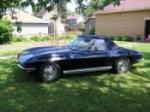
Good looking blue car you have. I noticed the soft top fits remarkably well. Is your engine still painted blue?
Good looking blue car you have. I noticed the soft top fits remarkably well. Is your engine still painted blue?
Last edited by John S 1961; Oct 17, 2024 at 09:19 PM.
Thread Starter
Le Mans Master
Joined: Apr 2013
Posts: 5,003
Likes: 1,056
From: Arlington TX
2024 C1 of the Year Finalist - Unmodified
2023 Restomod of the Year Finalist
2023 C1 of the Year Finalist - Unmodified
Small cap HEI is stock ish. Who's judging? Or use this https://www.rockauto.com/en/catalog/...cid+v8,1322941
Good looking blue car you have. I noticed the soft top fits remarkably well. Is your engine still painted blue?
Good looking blue car you have. I noticed the soft top fits remarkably well. Is your engine still painted blue?


Corvette Stories
The Best of Corvette for Corvette Enthusiasts

Corvette & Porsche 911: How Two Icons Conquered the Last 25 Years
Joe Kucinski
2027 Chevrolet Silverado 1500 First Look: Everything You NEED to Know!
Michael S. Palmer
5 Best & 5 Worst Corvette Daily Drivers
Joe Kucinski
The Headlights of Every Corvette Generation Explained
Joe Kucinski
5 Best & 5 Most Overrated Corvette Track Packages of All Time!
Joe Kucinski
Every 2027 Corvette Engine Explained
Joe Kucinski
Designer Imagines A Corvette That Looks More Like a Corvette Than the Corvette
Verdad Gallardo
10 Ugly Corvettes That We Still Kinda Love
Joe Kucinski
Top 10 Most Expensive Corvettes Ever Sold on Bring A Trailer
Brett Foote
Thread Starter
Le Mans Master
Joined: Apr 2013
Posts: 5,003
Likes: 1,056
From: Arlington TX
2024 C1 of the Year Finalist - Unmodified
2023 Restomod of the Year Finalist
2023 C1 of the Year Finalist - Unmodified
Okay, I just installed the Breakerless SE and I have a couple of questions that I can’t find an answer to, and can’t get customer support today.
1. I don’t have a ballast resistor anymore. Do I need one?
2. I have two coils, one with a primary resistance reading of 1.2 ohms, the other 1.7. Which should I use?
3. I installed the 1.2 and I’m getting erratic readings on my tachometer. Does that mean I using the wrong coil? Is the tach bad?
Thanks for help you can give me
1. I don’t have a ballast resistor anymore. Do I need one?
2. I have two coils, one with a primary resistance reading of 1.2 ohms, the other 1.7. Which should I use?
3. I installed the 1.2 and I’m getting erratic readings on my tachometer. Does that mean I using the wrong coil? Is the tach bad?
Thanks for help you can give me
Racer


Joined: Nov 2013
Posts: 252
Likes: 84
From: Uhrichsville Ohio
Don't know what part number you have, but number 38131 uses the original resistor. From the instructions. Substitute coils that have a primary resistance of 1.2 to 1.8 ohms are also compatible. Here is a link to 38131 instructions. JP https://breakerless.com/pdfs/92965073.pdf
Le Mans Master


Joined: Feb 2014
Posts: 8,995
Likes: 5,548
From: Richardson Texas
Okay, I just installed the Breakerless SE and I have a couple of questions that I can’t find an answer to, and can’t get customer support today.
1. I don’t have a ballast resistor anymore. Do I need one?
2. I have two coils, one with a primary resistance reading of 1.2 ohms, the other 1.7. Which should I use?
3. I installed the 1.2 and I’m getting erratic readings on my tachometer. Does that mean I using the wrong coil? Is the tach bad?
Thanks for help you can give me
1. I don’t have a ballast resistor anymore. Do I need one?
2. I have two coils, one with a primary resistance reading of 1.2 ohms, the other 1.7. Which should I use?
3. I installed the 1.2 and I’m getting erratic readings on my tachometer. Does that mean I using the wrong coil? Is the tach bad?
Thanks for help you can give me
COIL The Breakerless SE is optimized for use with either the factory original coil or Breakerless Replacement Plus series coil. Substitute coils that have a primary resistance of 1.2 to 1.8 ohms are also compatible. Very low resistance MSD Blaster and Accel Super coils are supplied with a supplemental resistor to raise the primary resistance to 1.5 ohms. Failure to use this supplemental resistor will damage the Breakerless SE module.
IMPORTANT: Ballast Resistor - This ignition is designed to work with the factory installed ballast resistor. The ballast usually takes the form of resistor wire that is part of the engine compartment wiring harness. It may also be in the form of a small white ceramic block mounted on the firewall in series with the +12V supply to the coil. Its purpose is to limit current to prevent coil overheating and point burning. The ballast typically has a resistance in the range of 1.2 to 1.8 ohms. The ballast resistor (or resistance wire) should not be removed when installing the Breakerless SE
Team Owner

Joined: Jul 2006
Posts: 22,226
Likes: 4,202
From: Kannapolis NC
Okay, I just installed the Breakerless SE and I have a couple of questions that I can’t find an answer to, and can’t get customer support today.
1. I don’t have a ballast resistor anymore. Do I need one?
2. I have two coils, one with a primary resistance reading of 1.2 ohms, the other 1.7. Which should I use?
3. I installed the 1.2 and I’m getting erratic readings on my tachometer. Does that mean I using the wrong coil? Is the tach bad?
Thanks for help you can give me
1. I don’t have a ballast resistor anymore. Do I need one?
2. I have two coils, one with a primary resistance reading of 1.2 ohms, the other 1.7. Which should I use?
3. I installed the 1.2 and I’m getting erratic readings on my tachometer. Does that mean I using the wrong coil? Is the tach bad?
Thanks for help you can give me
You also should have noted in your original question that you are not running a stock tachometer. Stock runs by cable off the generator, and you are running an alternator. Unless you have replaced the distributor with to a C2 style with cable output, you no longer have a mechanical tach. I am running an SE Breakerless with an electronic tach AND a ballast resistor and the tach is very stable.
Thread Starter
Le Mans Master
Joined: Apr 2013
Posts: 5,003
Likes: 1,056
From: Arlington TX
2024 C1 of the Year Finalist - Unmodified
2023 Restomod of the Year Finalist
2023 C1 of the Year Finalist - Unmodified
Thanks for the replies, everyone, would help to read the instructions. I will order a new 1.6 ohm (right?) ceramic resistor tomorrow.


Thread Starter
Le Mans Master
Joined: Apr 2013
Posts: 5,003
Likes: 1,056
From: Arlington TX
2024 C1 of the Year Finalist - Unmodified
2023 Restomod of the Year Finalist
2023 C1 of the Year Finalist - Unmodified
Please explain something to me as I don’t understand. If a coil has a resistance of 1.2 ohms then why do I need a ballast resistor of 1.2 ohms?