





Weird fuel problem

Thread Starter
Le Mans Master


Joined: May 2000
Posts: 6,158
Likes: 395
From: Halifax, Nova Scotia, Canada NS
 Weird fuel problem
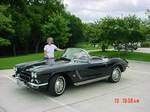
Today after showing my 1960 at a local show and shine I took her for a cruise. 15 minutes into the cruise she is working fine but starts to stall as I have to stop at a red light. I wasn't adroit enough to work the clutch, brake and gas so the car stalls. A couple of lads pull up along side me and offer to push me into a vacant parking lot.
I take off the breather and pull back on the accelerator linkage and notice no gass coming out of the jets. I call my Dad on my cell phone and he comes. We remove the fuel line from the carb and place it over the carb bowl. I turn over the engine and no fuel is being delivered.
Call a flat bed to bring her home.
Ironically nearby is a 1933 Chevy that's having clutch problems. He was driving home from the same show & shine. He is now awaiting a flat bed as well....
Attempt to start her once home trying the same tricks above but no go. Dad puts some gass into the bowl, the car now gets gass from the carb's jets.
Now the same thing has been happening to me over the past three years and since that time I've....
- Replaced the electric fuel pump with a GM mechanical...(originally thought this was the problem)...
- Replaced the original coil with an Accell
- Replaced points and condensor and ballist resistor
-Replaced original intake and Carter AFB with Edelbrock units...
- Replaced spark plug wires...
Is this a vapour lock problem and if so how do I trouble shoot it....????
TIA
I take off the breather and pull back on the accelerator linkage and notice no gass coming out of the jets. I call my Dad on my cell phone and he comes. We remove the fuel line from the carb and place it over the carb bowl. I turn over the engine and no fuel is being delivered.
Call a flat bed to bring her home.
Ironically nearby is a 1933 Chevy that's having clutch problems. He was driving home from the same show & shine. He is now awaiting a flat bed as well....
Attempt to start her once home trying the same tricks above but no go. Dad puts some gass into the bowl, the car now gets gass from the carb's jets.
Now the same thing has been happening to me over the past three years and since that time I've....
- Replaced the electric fuel pump with a GM mechanical...(originally thought this was the problem)...
- Replaced the original coil with an Accell
- Replaced points and condensor and ballist resistor
-Replaced original intake and Carter AFB with Edelbrock units...
- Replaced spark plug wires...
Is this a vapour lock problem and if so how do I trouble shoot it....????
TIA

Race Director


Joined: Nov 2000
Posts: 10,340
Likes: 664
From: Beverly Hills (Pine Ridge) Florida
Kenmo,
You have several possibilities:
1. Vapor lock, whereas the fuel to the pump has turned into vapor due to excess heat on the inlet side of the pump. This would "solve" itself once everything cooled back down. Long term fix is to insulate or move fuel line away from heat sources.
2. Blocked pump inlet due to crap in the fuel. Disconnect fuel line at the pump and see if fuel runs out? Long term, clean out tank and lines.
3. Or vent in the tank blocked causing a vacuum. Opening the gas cap would temporarily solve that. Long term, uncork vent.
4. Faulty pump. Always possible (check valve stuck open), and "could" fix itself temporarily. Long term fix is to replace pump.
If this occurred with the electric pump also, then doubt it is items 1 (electric pumps - if mounted properly near the tank, arn't prone to vapor lock) & 4 (doubt that 2 different style pumps would act the same way).
Also went to a show and shine today, and came away with a trophy and met a bunch of very nice people (even talked to some Mustang folks!).
Plasticman
You have several possibilities:
1. Vapor lock, whereas the fuel to the pump has turned into vapor due to excess heat on the inlet side of the pump. This would "solve" itself once everything cooled back down. Long term fix is to insulate or move fuel line away from heat sources.
2. Blocked pump inlet due to crap in the fuel. Disconnect fuel line at the pump and see if fuel runs out? Long term, clean out tank and lines.
3. Or vent in the tank blocked causing a vacuum. Opening the gas cap would temporarily solve that. Long term, uncork vent.
4. Faulty pump. Always possible (check valve stuck open), and "could" fix itself temporarily. Long term fix is to replace pump.
If this occurred with the electric pump also, then doubt it is items 1 (electric pumps - if mounted properly near the tank, arn't prone to vapor lock) & 4 (doubt that 2 different style pumps would act the same way).
Also went to a show and shine today, and came away with a trophy and met a bunch of very nice people (even talked to some Mustang folks!).
Plasticman
Last edited by Plasticman; Jul 18, 2004 at 07:48 PM.

Le Mans Master


Joined: Jun 2004
Posts: 9,015
Likes: 331
From: Southeast Missouri
Originally Posted by kenmo
Today after showing my 1960 at a local show and shine I took her for a cruise. 15 minutes into the cruise she is working fine but starts to stall as I have to stop at a red light. I wasn't adroit enough to work the clutch, brake and gas so the car stalls. A couple of lads pull up along side me and offer to push me into a vacant parking lot.
Is this a vapour lock problem and if so how do I trouble shoot it....????
TIA
Is this a vapour lock problem and if so how do I trouble shoot it....????
TIA
The best way I know to troubleshoot is to insulate the suspect line & see if operation improves. You can also cool a hot line with ice temporarily to see if you can get it back to pumping fuel.
I'm sure some other folks wiill chime in with some suggestions, also.

Le Mans Master
Joined: Jun 2004
Posts: 9,015
Likes: 331
From: Southeast Missouri
Originally Posted by Vetterodder
#3 sounds the most likely to me. It's been many years since cars were made with vented caps and it's no suprise when a "standard" non-vented cap finds it's way onto a vented system.
Thread Starter
Le Mans Master
Joined: May 2000
Posts: 6,158
Likes: 395
From: Halifax, Nova Scotia, Canada NS
I have an aftermakret fuel tank made out of the type of plastic service station gas cans are made of. It's made for C1s and appears identical to the original except there is no baffle. Instead there is an large hole in the middle of the tank (ie: I can see the Vette's body underneath. This is inlieu of the baffle. I purchased it from Blue Ribbon Corvettes in Atlanta.
http://www.blueribbonproducts.com/
The old tank got rusty inside so I replaced it with this unit about 10 years ago.... BUT ever since I swapped tanks, it's a bit of a chore to fill up at a gas station. If I apply full presure to the gas pump gun, the gas will gush out onto my toes... Also when I take the cover off of the tank I can hear a slight sucking noise as air gushes in...
There is an air vent tube. I've taken off of the gas door of the Vette and blow into it. It appears fine...
http://www.blueribbonproducts.com/
The old tank got rusty inside so I replaced it with this unit about 10 years ago.... BUT ever since I swapped tanks, it's a bit of a chore to fill up at a gas station. If I apply full presure to the gas pump gun, the gas will gush out onto my toes... Also when I take the cover off of the tank I can hear a slight sucking noise as air gushes in...
There is an air vent tube. I've taken off of the gas door of the Vette and blow into it. It appears fine...
Race Director
Joined: Nov 2000
Posts: 10,340
Likes: 664
From: Beverly Hills (Pine Ridge) Florida
Kenmo,
If you hear a sucking noise when you remove the gas cap, then the tank vent is not working (or so it would seem), since a vacuum in the tank should not occur if the tank is vented properly.
Check to make sure that when you blow into the vent hose, that it is connected to the inside of the tank (hose could be broken and your just blowing air through to where it is severed). Try applying air pressure to the vent hose, and see if pressure comes out of the gas fill connection (remove the gas cap first).
The vent hose could also be pinched sightly (and somes is clear, and sometimes it is not).
Plasticman
If you hear a sucking noise when you remove the gas cap, then the tank vent is not working (or so it would seem), since a vacuum in the tank should not occur if the tank is vented properly.
Check to make sure that when you blow into the vent hose, that it is connected to the inside of the tank (hose could be broken and your just blowing air through to where it is severed). Try applying air pressure to the vent hose, and see if pressure comes out of the gas fill connection (remove the gas cap first).
The vent hose could also be pinched sightly (and somes is clear, and sometimes it is not).
Plasticman

Instructor

Joined: Dec 2000
Posts: 187
Likes: 0
From: Edgerton Ohio
Another thing to consider is the flexibles fuel line from the frame line to the pump inlet. Old ones can start to deteriorate on the inside and it can suck shut from pump vacuum. After setting awhile it will relax and allow fuel to pass through again.
Tom
Tom
Corvette Stories
The Best of Corvette for Corvette Enthusiasts

10 Reasons the C6 Z06 is Still A Performance Benchmark After 20 Years
Joe Kucinski
How Much Horsepower Every Corvette Engine "LOST" in 1972
Joe Kucinski
Top 10 DOs and DON'Ts for Protecting Your Convertible Top!
Michael S. Palmer
Top 10 Most Explosive Corvettes Ever Made: Power-to-Weight Ratio Ranked!
Joe Kucinski
150 hp to 1,250 hp: Every Corvette Generation Compared by the Specs That Matter
Joe Kucinski
8 Coolest Corvette Pace Cars (and Replicas) of All Time
Verdad Gallardo
Top 10 Corvette Engines RANKED by Peak Torque (70+ Years of Muscle!)
Joe Kucinski
Corvette ZR1X Will Be Pacing the Indy 500, And Could Probably Race, Too!
Verdad Gallardo
Top 10 Corvettes Coming to Mecum Indy 2026!
Brett Foote
Burning Brakes


Joined: Aug 2002
Posts: 1,145
Likes: 0
From: Texas
St. Jude Donor '09
I agree, if it's vented there's nothing to suck as the tank would be at equaliztion. think I would start right there and figure out what's causing the sucking noise that you hear. Have had non vented caps do as you're describing but vent line could also cause. Let us know what it washes out to be as this subject comes up here on the forum quite often. Good luck
Burning Brakes


Joined: Mar 2004
Posts: 1,108
Likes: 4
From: Plano Texas
Ok, I'll offer my $0.02 worth. I would look first at the fuel pump. The diaphragm inside the pump could develop a tear or pinhole that would prevent any kind of any suction from occurring. There are also springs inside that could weaken or break with age effectively shutting down the pump. The next thing I would look at would be the strainer sock on the fuel pick-up. I had a 67 GTO back in the late 60's that would lean out and backfire at wide open throttle. After much frustration, I looked at the sock and found it full of crud and rust. Once gone, the car ran great. I just replaced my gas tank in my 62 and found the sock on the sending unit dark brown with crap and rust. A new sock looks remarkably different. Good Luck. 
Le Mans Master
Joined: Jun 2004
Posts: 9,015
Likes: 331
From: Southeast Missouri
Originally Posted by kenmo
My gas cap is an oem cap. I believe it's non vented. Would a quick fix be to drill a few small holes in the gas cap and try that ?
Thanks
Thanks
Thread Starter
Le Mans Master
Joined: May 2000
Posts: 6,158
Likes: 395
From: Halifax, Nova Scotia, Canada NS
I know what about the gas vent line, but I've not heard of a vented gas cap. I'm 50 so I'm not young and I'm not really ancient (yet) BUT how is a vented gas cap different then a none vented one (obviously it's vented, but how is it vented).
I asked my 73 yr old Dad who does 90% of the work on his vehicles himself and he couldn't recall of a vented gas cap either....so please jog our memories....
Cheers
Kenmo
I asked my 73 yr old Dad who does 90% of the work on his vehicles himself and he couldn't recall of a vented gas cap either....so please jog our memories....
Cheers
Kenmo
Le Mans Master
Joined: Jun 2004
Posts: 9,015
Likes: 331
From: Southeast Missouri
Vented gas caps do not totally seal the tank off when installed, they allow air to pass thru so as not to create a partial vacuum in the tank as fuel is being used. All of the earlier cars (read early 60's and before) were vented systems.
When EPA pollution regulations came along, the fuel system was sealed and it became a closed system, the gas cap totally sealed the tank to the outside air. Fuel vapors were no longer allowed to escape into the air. This system is still in use today.
But the difference in the two systems with regard to the gas filler cap is that one cap (the vented one) has a small hole somewhere in the cap above its gasket which allows the passage of air into and out of the tank. The unvented cap totally seals the tank filler opening from the outside. Corvette fuel tanks were vented (either by a vented filler cap or by a vent tube to the atmosphere) until at least 1966, not sure how much later!
When EPA pollution regulations came along, the fuel system was sealed and it became a closed system, the gas cap totally sealed the tank to the outside air. Fuel vapors were no longer allowed to escape into the air. This system is still in use today.
But the difference in the two systems with regard to the gas filler cap is that one cap (the vented one) has a small hole somewhere in the cap above its gasket which allows the passage of air into and out of the tank. The unvented cap totally seals the tank filler opening from the outside. Corvette fuel tanks were vented (either by a vented filler cap or by a vent tube to the atmosphere) until at least 1966, not sure how much later!
Last edited by Ron Miller; Jul 19, 2004 at 08:17 PM.

Melting Slicks


Joined: May 2000
Posts: 2,743
Likes: 146
From: Chuckanut WA
The C-1s used a non-vented cap as they all had a separate vent hose to maintain atmospheric pressure in the tank. You can run a vented or a non-vented cap if you like. The only thing with a vented cap on these cars is that with a full tank you can get some gas seepage out of the vented cap especially in right turns. Fix your vent and use a non-vented cap and your problem should go away. 




Team Owner


Joined: Oct 2000
Posts: 38,897
Likes: 1,926
From: Washington Michigan
'53-'56 and halfway through '57 used non-vented tanks and a vented cap; the vented tank appeared in mid-'57 (with a non-vented cap) and continued through '62. Midyear tanks were non-vented and used a vented cap, and this continued into the early C3's until evaporative emissions regulations vented the tank into a charcoal canister and the sealed cap became part of the package.
I'd verify that the tank vent line is open and functioning, and check the "sock" on the sender pickup - they're a very fine mesh, and over the years they can get plugged with varnish and sediment, severely restricting fuel flow.
I'd verify that the tank vent line is open and functioning, and check the "sock" on the sender pickup - they're a very fine mesh, and over the years they can get plugged with varnish and sediment, severely restricting fuel flow.
Thread Starter
Le Mans Master
Joined: May 2000
Posts: 6,158
Likes: 395
From: Halifax, Nova Scotia, Canada NS
It's a new tank (replaced about 10 yrs ago) but it's made of the type of plastic gas cans are made of. I've been told that unlike a metal tank these tanks require better ventilation. It has been explained to me that as the gas is removed, the plastic can start to move in on itself.
Also one side of the tank has the ventilation. The other doesn't. Perhaps I need to add another ventilation line.
I'm on vacation after thursday, so I'm going to play with the Vette then...
Also one side of the tank has the ventilation. The other doesn't. Perhaps I need to add another ventilation line.
I'm on vacation after thursday, so I'm going to play with the Vette then...
Le Mans Master
Joined: Jun 2004
Posts: 9,015
Likes: 331
From: Southeast Missouri
Originally Posted by kenmo
Also one side of the tank has the ventilation. The other doesn't. Perhaps I need to add another ventilation line.
