



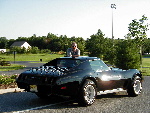


Which sander ?

Thread Starter
Melting Slicks


Joined: Jul 2004
Posts: 2,577
Likes: 2
From: Long Island New York
 Which sander ?
Which is best sander for sanding down the body of the car for fast paint removal and the smoothest finish after stripping the paint? I've got most of the car stripped with a razor blade but there are some tough areas where the paint does'nt come off as easy. Is a orbital sander, or a random orbital sander the correct one to use? A standard non orbital vibrating palm sander is not cutting it. I am using 80 or 100 grit for paint removal and then 150 for smoothing it out prior to priming it, is the correct?

Drifting


Joined: Jul 2005
Posts: 1,562
Likes: 2
From: Spring Texas
Perhaps a real paint and body man will jump in here with an informed and inteligent reply, but for my .02, I never use any power sander on bare or near bare fibreglass, unless I am shaping a large repair area. After I strip a car, I wet sand by hand (with a block or sanding sponge) with 200 grit or finer.
Orville
Orville

Melting Slicks
Joined: May 2001
Posts: 2,131
Likes: 4
From: May help you? You can sure as hell try!
It's hard to beat an air powered DA (dual action sander) for speeding up a sanding job. They are light weight and powerful. You need a moderately sized air compressor, however. There are electric versions available ( I think DeWalt and Porter-Cable have versions of these) but I can't vouch for how well they work.
The dual action comes from the orbital motion of the pad that also spins randomly as the sander is moved across the surface. For the final shaping and smoothing however, there's no substitute for hand sanding with a block.
The dual action comes from the orbital motion of the pad that also spins randomly as the sander is moved across the surface. For the final shaping and smoothing however, there's no substitute for hand sanding with a block.

Le Mans Master

Joined: Jul 2005
Posts: 5,752
Likes: 4
From: Austin Texas
The D/A sander can speed things up, but if you are not experienced and careful, you can kill the edges easily. Stay away from edges and corners, hand sand those. Don't get into the fiberglass, stop at the existing primer......
Thread Starter
Melting Slicks
Joined: Jul 2004
Posts: 2,577
Likes: 2
From: Long Island New York
Originally Posted by David Ey
Why not give the razor blade method a try?
Corvette Stories
The Best of Corvette for Corvette Enthusiasts

Top 10 Most Expensive Corvettes Ever Sold on Bring A Trailer
Brett Foote
10 Things Every Corvette Owner Needs (2026 Edition)
Michael S. Palmer
8 Most "Only Corvette Owners Understand" Quirks and Problems
Pouria Savadkouei
10 Reasons the C6 Z06 is Still A Performance Benchmark After 20 Years
Joe Kucinski
How Much Horsepower Every Corvette Engine "LOST" in 1972
Joe Kucinski
Top 10 DOs and DON'Ts for Protecting Your Convertible Top!
Michael S. Palmer
Top 10 Most Explosive Corvettes Ever Made: Power-to-Weight Ratio Ranked!
Joe Kucinski
150 hp to 1,250 hp: Every Corvette Generation Compared by the Specs That Matter
Joe Kucinski
8 Coolest Corvette Pace Cars (and Replicas) of All Time
Verdad Gallardo
Advanced

Joined: Aug 2005
Posts: 64
Likes: 0
Yes, random orbital sander...
You can get an electric one that is 70% as good as an air d/a as we call them. Ryobi makes one. Yes, don't grind your gel coat. yes, use 220 and only cut the paint. You can cut the paint until you get it really thin. Maybe then you want to go to paper and a block. When you get it stripped, you can fill in those gouges that the razor made. You may want to use some form of resin so that the glass is sealed. Been here, done this. Too much.

Drifting

Joined: Nov 2001
Posts: 1,469
Likes: 6
From: 68 427 4.11s Roadster
Before buying a tool try block sanding it with very course paper. The jitter bug is probably locking onto the paint and shaking your hand. Swinging it around might help but hand sanding might work also.
Besides you will have to block sand eventually
Besides you will have to block sand eventually
Thread Starter
Melting Slicks
Joined: Jul 2004
Posts: 2,577
Likes: 2
From: Long Island New York
Originally Posted by jackmoore
You can get an electric one that is 70% as good as an air d/a as we call them. Ryobi makes one. Yes, don't grind your gel coat. yes, use 220 and only cut the paint. You can cut the paint until you get it really thin. Maybe then you want to go to paper and a block. When you get it stripped, you can fill in those gouges that the razor made. You may want to use some form of resin so that the glass is sealed. Been here, done this. Too much.
 Yes, that is exactly what I'm looking to do, knock the paint down with the sander to where it's thin enough so that I can block sand it by hand. I didn't do to bad with the razor blades, not too many gouges or knicks to fill in that were caused by me. I did however find some that were under there already from the previous owners who had painted the car about 3 different times and probably did the razor blade thing. I also have 6 holes to fill in on the rear deck where I removed the luggage rack.
  They look good on NCRS chrome bumper cars but not on rubber bumper cars IMO.

Le Mans Master


Joined: Nov 2004
Posts: 7,186
Likes: 45
From: detroit area
block it ........ it's a bit harder but u won't have to re-feather it all again...... do 120 grit........ i used an orbital hand sander only for knocking down fiberglass that i layed for the bumpers......
b
b

Racer
Joined: May 2001
Posts: 394
Likes: 0
From: Jackson, MS USA
going back through some post from a couple of days ago, and thought I would give my .02. I just got through doing the very thing you are doing. You cannot beat an air powered DA, as mentioned above. It is a good Idea to stay away from the edges. On those, you will just have to gut it out with a hand full of 80 grit. Use 80 on entire car if you want. I am sure I will get some disagreement, but I do not believe you have a "gel coat" in the truest meaning of the word. I believe they sprayed the inside of the mold with resin (what some people think is the gel coat), and then use a chop gun to spray in the "body".
Go to harbor freight, or somewhere similar, and get some small picks, they work great in the corners. Just scrape like hell, do not worry to much, don't dig to China, but you can go at it pretty good.
While you are at Harbor Friegh pick up a double scotch brite pad set up for a electric/air drill. These work great in area that the DA will not get into. HOWEVER, AGAIN, DO NOTTTTTTT USE THIS THING ON THE CORNERS, OR YOU WILL BE DOING BODY WORK. If you are worried about the corners get some masking tape(the good 3M stuff), and run it along any corner you are working, and work one side of the corner at a time, switching the tape when you get finished with one side. Then you will have to force yourself to work to that corner, never touching the "down hill (or uphill) side" from the side you are working.
About the gouges. DO NOT WORRY. Surfacer will fill them in, and it will be slick as glass (no pun intended). You can have your painter, or you make about two passes around the car with surfacer, and then block it, you will be impressed, and also quickly find your high and low spots.
Go to harbor freight, or somewhere similar, and get some small picks, they work great in the corners. Just scrape like hell, do not worry to much, don't dig to China, but you can go at it pretty good.
While you are at Harbor Friegh pick up a double scotch brite pad set up for a electric/air drill. These work great in area that the DA will not get into. HOWEVER, AGAIN, DO NOTTTTTTT USE THIS THING ON THE CORNERS, OR YOU WILL BE DOING BODY WORK. If you are worried about the corners get some masking tape(the good 3M stuff), and run it along any corner you are working, and work one side of the corner at a time, switching the tape when you get finished with one side. Then you will have to force yourself to work to that corner, never touching the "down hill (or uphill) side" from the side you are working.
About the gouges. DO NOT WORRY. Surfacer will fill them in, and it will be slick as glass (no pun intended). You can have your painter, or you make about two passes around the car with surfacer, and then block it, you will be impressed, and also quickly find your high and low spots.

Instructor
Joined: Aug 2005
Posts: 114
Likes: 0
From: St. George Ontario, Canada
Originally Posted by 71rdster
Perhaps a real paint and body man will jump in here with an informed and inteligent reply, but for my .02, I never use any power sander on bare or near bare fibreglass, unless I am shaping a large repair area. After I strip a car, I wet sand by hand (with a block or sanding sponge) with 200 grit or finer.
Orville
Orville
i'm no pro, but i have worked for a few body men when I was in school and they would all agree that you have to block sand on glas. Ok to use a random orbital sander to take down repairs, but the risk of breaking through the skin, and creating flat spots machine sanding is not worth the the time savings. Burn through a couple times, and you will be longer than if you hand sand / wet sand with good clean paper.
Last edited by 1bumprfan; Sep 1, 2005 at 09:21 AM.
