




RHD Conversion-How is it done?

Thread Starter
Drifting


Joined: Oct 2003
Posts: 1,426
Likes: 1
From: VetteMOD
St. Jude Donor '05-'07
 RHD Conversion-How is it done?
I am not thinking of converting to RHD but I am interested in how it's been done. Seems like a lot of stuff needs to move (like the heater box). Are these custom components (like the pedal ***'y) or parts from other RHD cars? Are there companies that convert cars to RHD?
Anyone have pictures of the conversion?
Anyone have pictures of the conversion?
Instructor

Joined: May 2005
Posts: 200
Likes: 0
From: wollongong NSW Australia
there is a few mobs over here in oz which do them there use to be a lot more but were closed down due to new rules on converting cars.
They use to allow a few different ways of converting vets e.g chain conversions to full mirror conversions i have seen some very dodgee conversions on cars over here.
They use to allow a few different ways of converting vets e.g chain conversions to full mirror conversions i have seen some very dodgee conversions on cars over here.
Melting Slicks


Joined: Dec 2003
Posts: 2,487
Likes: 1
From: Sydney
Originally Posted by MJ355
there is a few mobs over here in oz which do them there use to be a lot more but were closed down due to new rules on converting cars.
They use to allow a few different ways of converting vets e.g chain conversions to full mirror conversions i have seen some very dodgee conversions on cars over here.
They use to allow a few different ways of converting vets e.g chain conversions to full mirror conversions i have seen some very dodgee conversions on cars over here.
 Hey there MJ. Yeah all I can say regarding a lot of RHD conversions is BODGY. I actually had a third gen camaro that was RHD converted and that is the main reason I sold it, the steering was terrible.
Another sickening thing is that they often use ford steering components when converting to RHD

A friend was saying to me the other day how he was calling FORD to order a new rag joint for his chrome bumpered C3. Now you should never have to call ford for any part on your C3!
As MJ said there are several kinds of conversion, some relocate the brake booster and everything else to the RHS (mirror), others relocate the steering to the RHS and leave the brake setup on the LHS connecting it with a rod setup, the last (and worst) is a chain drive where the steering is left on the LHS and connected with a chain and cogs/sprokets to the steering wheel located on the RHS, now you can only imagine how terrible the feel is you get from the steering with this setup.

Cosmic
Thread Starter
Drifting
Joined: Oct 2003
Posts: 1,426
Likes: 1
From: VetteMOD
St. Jude Donor '05-'07
The mirror configuration is the conversion that I was asking about. That certainly seems the most challenging.
Is the mirror conversion done with Ford RHD components? The engine in a C3 is shifted to right. The footwell is already cramped, what's it like?
Is the mirror conversion done with Ford RHD components? The engine in a C3 is shifted to right. The footwell is already cramped, what's it like?
Drifting

Joined: May 2003
Posts: 1,634
Likes: 2
From: Melbourne, Victoria, Australia, the World
Okely dokely,
Here's my take on the RHD conversions. My experience is with a 68 and some of it does not apply to late C3 Vettes, mainly the dash.
The standard conversion for a C2/3 used to be mirror the drag link or make a new RHD one. With this drag link you can use a 70/1 (Australian) Falcon GT or Fairlane RHD steering box as it is closest in ratio and dimensions to the original. The RH engine mount needs to be relieved to fit this box in the correct position.
The factory motor position is offset to the RH side for clearance on the drivers side.The engine is usually moved over about an inch by modifying the engine mounts. This is to gain clearance for the steering box. The front crossmember may also have to be relieved for the balancer. Don't forget to move the fan shroud as well.
Some conversions used the LHD box on the outside of the Chassis but this severely limited the steering lock. I think most of these have been reconverted to the Ford box.
Other converters leave the steering box in the LHD position and use a heavy duty chain and cog system similar to a timing chain. It leaves all the original steering components in place removing errors which may enter by moving and changing the box. I am not a fan of this system but it is reliable and safe. This method usually has a rod operated brake as the brake master is left on the LH side as well. Hard to do with a 4sp though. It reduces the area available for the heater /A/C as well.
My steering is a Rack and pinion conversion with no bumpsteer and theoretically correct acherman angles.
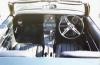
The dash is modified by cutting the speedo, tach, light switch and ignition switch (68 only) out of the LH panel and cutting the same shape out of the RH panel. The instruments are then glassed into the RH panel and smoothed up before recovering. The section out of the RH panel has the same procedure for the LH panel.
The Firewall is usually replaced by one which is made up by one of the converting companies with a full mirror of the LHD one. Cut it out and glass in the new one. Very rare to move the transmission tunnel back as you require all the room for the gearbox. This gives a tight fit for the pedals. With the mirrored firewall the original pedalbox and steering column mount are slightly modified to fit because of the curve of the dash and birdcage. You can extend the footwell at this time as the original passenger footwell is not very deep.
I did a flat firewall conversion and made my own pedal box/column mount loosely based on a Holden design.
The heater is flipped upside down and then modified to make the demist and heat functions correct. The fan and duct in the engine bay has to be reversed as well. I have no experience with an A/C Vette but it is the same procedure, but more to do. I did convert my 68 Bonnie with air but there is more room to move with a full size car.
The next step is to rewire the car to suit the new fusebox location. Don't forget the engine bay. The tail lamps also have to be modified to give amber rear indicators as per Australian Design rules which came in 1st of January 1969.
I have covered most of the main bits and of course it is more complex for C4/5/6. Current conversions for the C6 are in vicinity of $35K and have to be done by a Registered Automotive Work Shop (RAWS) who have paid heaps to the government for a licence to do the particular year and model conversion. You can't get the car off the docks without a booking to convert the car already in place. All up, to get a C6 landed, converted and on the road you would not have much change from $200K.
Here's my take on the RHD conversions. My experience is with a 68 and some of it does not apply to late C3 Vettes, mainly the dash.
The standard conversion for a C2/3 used to be mirror the drag link or make a new RHD one. With this drag link you can use a 70/1 (Australian) Falcon GT or Fairlane RHD steering box as it is closest in ratio and dimensions to the original. The RH engine mount needs to be relieved to fit this box in the correct position.
The factory motor position is offset to the RH side for clearance on the drivers side.The engine is usually moved over about an inch by modifying the engine mounts. This is to gain clearance for the steering box. The front crossmember may also have to be relieved for the balancer. Don't forget to move the fan shroud as well.
Some conversions used the LHD box on the outside of the Chassis but this severely limited the steering lock. I think most of these have been reconverted to the Ford box.
Other converters leave the steering box in the LHD position and use a heavy duty chain and cog system similar to a timing chain. It leaves all the original steering components in place removing errors which may enter by moving and changing the box. I am not a fan of this system but it is reliable and safe. This method usually has a rod operated brake as the brake master is left on the LH side as well. Hard to do with a 4sp though. It reduces the area available for the heater /A/C as well.
My steering is a Rack and pinion conversion with no bumpsteer and theoretically correct acherman angles.
The dash is modified by cutting the speedo, tach, light switch and ignition switch (68 only) out of the LH panel and cutting the same shape out of the RH panel. The instruments are then glassed into the RH panel and smoothed up before recovering. The section out of the RH panel has the same procedure for the LH panel.
The Firewall is usually replaced by one which is made up by one of the converting companies with a full mirror of the LHD one. Cut it out and glass in the new one. Very rare to move the transmission tunnel back as you require all the room for the gearbox. This gives a tight fit for the pedals. With the mirrored firewall the original pedalbox and steering column mount are slightly modified to fit because of the curve of the dash and birdcage. You can extend the footwell at this time as the original passenger footwell is not very deep.
I did a flat firewall conversion and made my own pedal box/column mount loosely based on a Holden design.
The heater is flipped upside down and then modified to make the demist and heat functions correct. The fan and duct in the engine bay has to be reversed as well. I have no experience with an A/C Vette but it is the same procedure, but more to do. I did convert my 68 Bonnie with air but there is more room to move with a full size car.
The next step is to rewire the car to suit the new fusebox location. Don't forget the engine bay. The tail lamps also have to be modified to give amber rear indicators as per Australian Design rules which came in 1st of January 1969.
I have covered most of the main bits and of course it is more complex for C4/5/6. Current conversions for the C6 are in vicinity of $35K and have to be done by a Registered Automotive Work Shop (RAWS) who have paid heaps to the government for a licence to do the particular year and model conversion. You can't get the car off the docks without a booking to convert the car already in place. All up, to get a C6 landed, converted and on the road you would not have much change from $200K.
Thread Starter
Drifting
Joined: Oct 2003
Posts: 1,426
Likes: 1
From: VetteMOD
St. Jude Donor '05-'07
That is a very involved conversion! You must love these cars to have undertaken such a task. Some times I burn out on the modification projects I am doing to my car. Thinking about what you have done with your car might motivate me.
Corvette Stories
The Best of Corvette for Corvette Enthusiasts

Top 10 Most Expensive Corvettes Ever Sold on Bring A Trailer
Brett Foote
10 Things Every Corvette Owner Needs (2026 Edition)
Michael S. Palmer
8 Most "Only Corvette Owners Understand" Quirks and Problems
Pouria Savadkouei
10 Reasons the C6 Z06 is Still A Performance Benchmark After 20 Years
Joe Kucinski
How Much Horsepower Every Corvette Engine "LOST" in 1972
Joe Kucinski
Top 10 DOs and DON'Ts for Protecting Your Convertible Top!
Michael S. Palmer
Top 10 Most Explosive Corvettes Ever Made: Power-to-Weight Ratio Ranked!
Joe Kucinski
150 hp to 1,250 hp: Every Corvette Generation Compared by the Specs That Matter
Joe Kucinski
