





Accelerometer arrived today.
Thread Starter
Instructor

Joined: Nov 2005
Posts: 229
Likes: 0
From: Plano TX
 Accelerometer arrived today.
Had to start a new thread.
Just purchased the Vector FX2 and delivered today off of EBAY for 33.00 (what a steal).
Anyone used this yet and if so, how accurate vs. track results.
measures 0-60 times, 1/4 mile and g-force.
Thanks!
Just purchased the Vector FX2 and delivered today off of EBAY for 33.00 (what a steal).
Anyone used this yet and if so, how accurate vs. track results.
measures 0-60 times, 1/4 mile and g-force.
Thanks!

Team Owner

Joined: Aug 2006
Posts: 24,125
Likes: 15
From: Columbia Missouri
That's cool man, got any pics of the unit? My Kenwood head unit does all that stuff too. It's called the G-Analyzer function.
Instructor
Joined: Sep 2007
Posts: 197
Likes: 0
From: Norton MA
Toyed around with a friend's GTech Pro with my old WRX and it was fairly accurate, compared to actual dyno numbers. The main thing was calibrating the exact weight of the car as that has the biggest affect over everything... not sure about the Vector but it's probably similar.
Thread Starter
Instructor
Joined: Nov 2005
Posts: 229
Likes: 0
From: Plano TX
Performance runs
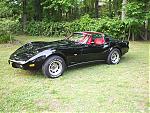
Tried the accelerometer on my 03 infinitti sedan (auto) and the 72 coupe today (383) three speed auto. First time I've ran the 383 over 100.
about 68 degrees, country road far from everything. Did a few 0-60 runs and then I got in two 1/4 mile runs.
Alot of tire spin I need to work on. 18" 275's on the back. O.K. enough foreplay.
best 1/4 mile (out of two)
60ft 2.18
330ft 5.88
0-60 5.23
0-100 12.63
1/8 8.85 at 83.1
1000ft 11.4
1/4 13.6 at 102.7
My best run out of three for 0-60 was 5.0 flat (tire spin).
By the way, Inf G35 sedan auto 0-60 was 6.5.
about 68 degrees, country road far from everything. Did a few 0-60 runs and then I got in two 1/4 mile runs.
Alot of tire spin I need to work on. 18" 275's on the back. O.K. enough foreplay.
best 1/4 mile (out of two)
60ft 2.18
330ft 5.88
0-60 5.23
0-100 12.63
1/8 8.85 at 83.1
1000ft 11.4
1/4 13.6 at 102.7
My best run out of three for 0-60 was 5.0 flat (tire spin).
By the way, Inf G35 sedan auto 0-60 was 6.5.
Thread Starter
Instructor
Joined: Nov 2005
Posts: 229
Likes: 0
From: Plano TX
By the way. 383- 770 Holley Street Avenger, Edelbrock Perfomer RPM manifold, I am not numbers to post for my cam but I have them. ADV INT 272 INT and 272 EXH/ .050 Dur-216 INT and 216 exh. 4340 crank. world class heads. TH400 and B&M holeshot 2400 stall speed.
How can I get better results? (besides trying to reduce wheelspin).
How can I get better results? (besides trying to reduce wheelspin).
Last edited by ChancWds; Nov 2, 2007 at 11:11 PM. Reason: More info
Melting Slicks


Joined: Dec 1999
Posts: 2,116
Likes: 156
From: Mid West
Cruise-In III Veteran
 .
.
Corvette Stories
The Best of Corvette for Corvette Enthusiasts

5 Best & 5 Worst Corvette Daily Drivers
Joe Kucinski
The Headlights of Every Corvette Generation Explained
Joe Kucinski
5 Best & 5 Most Overrated Corvette Track Packages of All Time!
Joe Kucinski
Every 2027 Corvette Engine Explained
Joe Kucinski
Designer Imagines A Corvette That Looks More Like a Corvette Than the Corvette
Verdad Gallardo
10 Ugly Corvettes That We Still Kinda Love
Joe Kucinski
Top 10 Most Expensive Corvettes Ever Sold on Bring A Trailer
Brett Foote
10 Things Every Corvette Owner Needs (2026 Edition)
Michael S. Palmer
8 Most "Only Corvette Owners Understand" Quirks and Problems
Pouria Savadkouei
Drifting


Joined: Sep 2004
Posts: 1,625
Likes: 4
From: Miami FL
yeah...that is a cool new toy. I got a G-tech last year for x-mas and used it several times including the track. It was dead on after I made all the fine tuning adjustments such as weight and rollout when starting at the starting line in the 1/4 mile track. The track I went to had no problem with me using it...so I used it and got it dialed in consistently to less than 0.05 secs difference in time slips. It told me how slow my shifts were, etc. The dyno was dead on the money but you definitely have to weigh your car to get a correct figure.