




Suggestions for buffer wanted

Drifting


Joined: Aug 2007
Posts: 1,838
Likes: 13
From: Kingman AZ
 check it out.
http://www.coastaltool.com/cgi-bin/S...htm?E+coastest
Use 6 in foam pads. For new paint just use the softest. (white? I think)The others are for deeper polishing which you wont need on newer paint.
Use 6 in foam pads. For new paint just use the softest. (white? I think)The others are for deeper polishing which you wont need on newer paint.
Last edited by rayluka; Feb 4, 2008 at 05:42 PM.
Melting Slicks

Joined: Jan 2006
Posts: 2,664
Likes: 1
From: Nashville TN
Dewalt, variable speed buffer. Make sure its a buffer and not anything else converted to a buffer.
If you havent ever used a buffer to wetsand and buff new paint dont do it. It would be well worth your money to not buy a $300 buffer and pay someone the $300 to wetsand and buff your car who has the experience.
If you havent ever used a buffer to wetsand and buff new paint dont do it. It would be well worth your money to not buy a $300 buffer and pay someone the $300 to wetsand and buff your car who has the experience.
Pro


Joined: Jun 2005
Posts: 552
Likes: 2
From: Waynesboro GA
I have the variable speed Makita and have been very happy. It has been worth the extra bucks. Harbor Freight had one on sale the other day when I was shopping around, can't say if it is any good, but might be OK for an occasional user, just buy some good pads. I like the 3M foam pads.
Corvette Stories
The Best of Corvette for Corvette Enthusiasts

Top 10 Most Expensive Corvettes Ever Sold on Bring A Trailer
Brett Foote
10 Things Every Corvette Owner Needs (2026 Edition)
Michael S. Palmer
8 Most "Only Corvette Owners Understand" Quirks and Problems
Pouria Savadkouei
10 Reasons the C6 Z06 is Still A Performance Benchmark After 20 Years
Joe Kucinski
How Much Horsepower Every Corvette Engine "LOST" in 1972
Joe Kucinski
Top 10 DOs and DON'Ts for Protecting Your Convertible Top!
Michael S. Palmer
Top 10 Most Explosive Corvettes Ever Made: Power-to-Weight Ratio Ranked!
Joe Kucinski
150 hp to 1,250 hp: Every Corvette Generation Compared by the Specs That Matter
Joe Kucinski
8 Coolest Corvette Pace Cars (and Replicas) of All Time
Verdad Gallardo
Thread Starter
Melting Slicks
Joined: Aug 2003
Posts: 2,135
Likes: 2
From: Dayton Oh
Dewalt, variable speed buffer. Make sure its a buffer and not anything else converted to a buffer.
If you havent ever used a buffer to wetsand and buff new paint dont do it. It would be well worth your money to not buy a $300 buffer and pay someone the $300 to wetsand and buff your car who has the experience.
If you havent ever used a buffer to wetsand and buff new paint dont do it. It would be well worth your money to not buy a $300 buffer and pay someone the $300 to wetsand and buff your car who has the experience.

Safety Car


Joined: Jul 2005
Posts: 3,694
Likes: 833
From: WI
I agree, if you haven't wet sanded and buffed a car before, and don't feel comfortable doing it, you might want to pay a shop to do it. You should have at least 3 coats of clear on it. One concern is buffng through the clearcoat, but truthfully, for guys that have buffed out a few cars, you almost have to be neglegant to do so. But for a beginner, it's almost a certainty to burn through at least one area.
As far as the buffers go, I've used a few:
Wen: This is a hobbiest's buffer. They're low priced. I used one for years and buffed out a lot of cars/trucks with one. I bought another one and still have it. They're 2-speed. Main drawback is it doesn't have a standard 5/8" arbor so you're stuck with their pad.
Harbor Freight buffer for $29. It's made well, steel gears. A great deal for occasional buffing projects, but the variable speed is on the thumb-dial, not the trigger and that's kind of a hassle for good speed control in critical areas. But drfinitely not a deal breaker.
Makita: Some in the autobody field say it's the best buffer out there. One feature it has is the electronic speed control. This means you can keep it at a certain speed and no matter how much pressure you put on the pad, it'll maintain that speed. I haven't really used mine that much since I bought it, so I can't give a full review. Just from the little I have used it, it seems like the speed control might actually be a hassle because it kinda jerks the pad from start-up. The Harbor freight unit is basically a clone of this buffer. I've thought it might be cool to get a Makita variable speed trigger and put it in a Harbor Freight buffer.
Dewalt: I haven't used this buffer, but considered it closely before buying the Makita. It's got all the Makita has except the speed control. After using the Makita, I'm thinking it would be more intuitive to use the Dewalt over the Makita.
Milwaukee: Their buffer is built like a tank. My brother has this buffer. It'll last a lifetime and more. On the other hand, it's bulky and heavy. Some guys like that, a lot prefer a lighter buffer. It's personal preference.
As far as the buffers go, I've used a few:
Wen: This is a hobbiest's buffer. They're low priced. I used one for years and buffed out a lot of cars/trucks with one. I bought another one and still have it. They're 2-speed. Main drawback is it doesn't have a standard 5/8" arbor so you're stuck with their pad.
Harbor Freight buffer for $29. It's made well, steel gears. A great deal for occasional buffing projects, but the variable speed is on the thumb-dial, not the trigger and that's kind of a hassle for good speed control in critical areas. But drfinitely not a deal breaker.
Makita: Some in the autobody field say it's the best buffer out there. One feature it has is the electronic speed control. This means you can keep it at a certain speed and no matter how much pressure you put on the pad, it'll maintain that speed. I haven't really used mine that much since I bought it, so I can't give a full review. Just from the little I have used it, it seems like the speed control might actually be a hassle because it kinda jerks the pad from start-up. The Harbor freight unit is basically a clone of this buffer. I've thought it might be cool to get a Makita variable speed trigger and put it in a Harbor Freight buffer.
Dewalt: I haven't used this buffer, but considered it closely before buying the Makita. It's got all the Makita has except the speed control. After using the Makita, I'm thinking it would be more intuitive to use the Dewalt over the Makita.
Milwaukee: Their buffer is built like a tank. My brother has this buffer. It'll last a lifetime and more. On the other hand, it's bulky and heavy. Some guys like that, a lot prefer a lighter buffer. It's personal preference.
Melting Slicks
Joined: Dec 2006
Posts: 2,669
Likes: 3
From: Kingston Ontario
Made up your mind to not do it?
You can easily damage the finish. You can easily cut through the clear on a flat surface and super fast on an edge or a urethane bumper.
That being said; if you still want to wet sand and buff.
- buy a buffer with substantial weight. ie: Makita or Milwaukee
- make certain it is variable speed 1300-1400 RPM best for most applications
- wool pads are best left to the professionals (easily burn finish)
- 3M foam pads available in different textures to complete each phase
- 3M cutting, buffing and polishing compounds will serve you well
Suggest you get professional guidance and test your skill on a daily driver, before you attempt this on the corvette.
If you price out the supplies to properly complete this job you could easily spend more money than what a body shop would charge you to do the job for you.
You can easily damage the finish. You can easily cut through the clear on a flat surface and super fast on an edge or a urethane bumper.
That being said; if you still want to wet sand and buff.
- buy a buffer with substantial weight. ie: Makita or Milwaukee
- make certain it is variable speed 1300-1400 RPM best for most applications
- wool pads are best left to the professionals (easily burn finish)
- 3M foam pads available in different textures to complete each phase
- 3M cutting, buffing and polishing compounds will serve you well
Suggest you get professional guidance and test your skill on a daily driver, before you attempt this on the corvette.
If you price out the supplies to properly complete this job you could easily spend more money than what a body shop would charge you to do the job for you.
Safety Car
Joined: Jul 2005
Posts: 3,694
Likes: 833
From: WI
Good advice, Danny. However, I disagree on two things:
1) I don't think it's nearly as easy to buff through clearcoat as people generally say. Of all the cars/trucks I've wetsanded and buffed over the years (many) I think I only buffed through a couple corners on the first vehicle I buffed on. Those were partly gross neglect on my part, and ultimately edges are typically easy to repair. Guys with a good head should be able to do it. It really takes gross neglect to buff through flat areas ...and corner when you get the hang of it. That being said, C3's would are more difficult to buff out than other modern vehicles ...with all the razor-sharp shark edges. I always put an extra coat of clear on the edges of a body line at the end of a paint job.
2) Having used a Milwaukee buffer, I wouldn't recommend them over a Dewalt of Makita. They weight several lbs more. It's nice when doing a hood or trunk but gets old fast when buffing vertical surfaces. Plus they are taller and hard to get into areas like around mirrors. The Makita is not just a little lighter, it's a LOT lighter. I guess it's just personal preference.
1) I don't think it's nearly as easy to buff through clearcoat as people generally say. Of all the cars/trucks I've wetsanded and buffed over the years (many) I think I only buffed through a couple corners on the first vehicle I buffed on. Those were partly gross neglect on my part, and ultimately edges are typically easy to repair. Guys with a good head should be able to do it. It really takes gross neglect to buff through flat areas ...and corner when you get the hang of it. That being said, C3's would are more difficult to buff out than other modern vehicles ...with all the razor-sharp shark edges. I always put an extra coat of clear on the edges of a body line at the end of a paint job.
2) Having used a Milwaukee buffer, I wouldn't recommend them over a Dewalt of Makita. They weight several lbs more. It's nice when doing a hood or trunk but gets old fast when buffing vertical surfaces. Plus they are taller and hard to get into areas like around mirrors. The Makita is not just a little lighter, it's a LOT lighter. I guess it's just personal preference.
Drifting
Joined: May 2006
Posts: 1,480
Likes: 2
From: Circleville Ohio
Vader Vette
Buffer why would you paint the car then buff it ? Seems like every car I have seen someone buff in the light at dark you can see circles . What ever happen to wax? Wax on Wax off No swirls in the paint do the trunk or something and then look at night say under a street light.What is the clear coat for if your gonna just buff it thinner.I must be missing something I guess I need Edjamkated.
Thread Starter
Melting Slicks
Joined: Aug 2003
Posts: 2,135
Likes: 2
From: Dayton Oh
Buffer why would you paint the car then buff it ? Seems like every car I have seen someone buff in the light at dark you can see circles . What ever happen to wax? Wax on Wax off No swirls in the paint do the trunk or something and then look at night say under a street light.What is the clear coat for if your gonna just buff it thinner.I must be missing something I guess I need Edjamkated.

Drifting

Joined: Jan 2006
Posts: 1,944
Likes: 22
From: Yooperville MI
Obviously there are different responses and opinions mainly because buffing paint is an art and everyone has their own way of doing this work based on how they learned and the tools they have. All the differnent techniques and equipment get the job done, but some work better than others.
Buffing paint is not difficult to learn but you do need practice. If you want to do this yourself, buy the equipment and practice on the daily drivers as mentioned and you'll quickly learn how to handle the machine. Every body shape has challenges with edges and trim, Vette's really are no different.
To do a show quality job you need 2 machines, a rotary to start with and a orbital for finishing and eliminating fine scratches and swirl marks to get the "wet" look. The cost of both machines, pads and chemicals should come in the same or slightly less than if you hired it done. The benefit of doing it yourself is you get to keep the tools.
The Makita is my choice for the rotary type. The variable speed is controlled by the trigger and you simply set the maximum speed you want to achieve at full trigger. You'll seldom use the max speed. One nice feature is it starts at a very slow rpm and builds up to your trigger setting slowly, this helps prevent spraying compound all over the place therefore limiting waste. Mark G stated that "it seems like the speed control might actually be a hassle because it kinda jerks the pad from start-up"
but it's really not an issue once you get used to it and you set a limit on the maximum rpm setting.
You don't want a heavy machine because you will get fatigue from using a pro type machine. You control the pad pressure as you work the surface, not the weight of the machine, so weight is a disadvantage. You will be going around the car with the buffer 2 or 3 times with different grade polishes before switching to the orbital, so unless your arms and back are conditioned, you will tire very quickly and that's when mistakes are likely to occur.
Everyone has different ideas on pads and I'm old school using wool pads for the rotary. They cut faster, build gloss quicker, and last longer. The 3M pads shown will last many years of occasional use just by washing them after every job. The foam pads are ideal for the orbital machine and Porter Cable is one of the best for fine polishing and waxing, but it won't polish after wet sanding unless you are very patient.
These 2 machines and pads will assure you of a very nice job once you learn the technique.

the wool pad screws onto the buffer with an adapter also sold by 3M.

Buffing paint is not difficult to learn but you do need practice. If you want to do this yourself, buy the equipment and practice on the daily drivers as mentioned and you'll quickly learn how to handle the machine. Every body shape has challenges with edges and trim, Vette's really are no different.
To do a show quality job you need 2 machines, a rotary to start with and a orbital for finishing and eliminating fine scratches and swirl marks to get the "wet" look. The cost of both machines, pads and chemicals should come in the same or slightly less than if you hired it done. The benefit of doing it yourself is you get to keep the tools.
The Makita is my choice for the rotary type. The variable speed is controlled by the trigger and you simply set the maximum speed you want to achieve at full trigger. You'll seldom use the max speed. One nice feature is it starts at a very slow rpm and builds up to your trigger setting slowly, this helps prevent spraying compound all over the place therefore limiting waste. Mark G stated that "it seems like the speed control might actually be a hassle because it kinda jerks the pad from start-up"
but it's really not an issue once you get used to it and you set a limit on the maximum rpm setting.
You don't want a heavy machine because you will get fatigue from using a pro type machine. You control the pad pressure as you work the surface, not the weight of the machine, so weight is a disadvantage. You will be going around the car with the buffer 2 or 3 times with different grade polishes before switching to the orbital, so unless your arms and back are conditioned, you will tire very quickly and that's when mistakes are likely to occur.
Everyone has different ideas on pads and I'm old school using wool pads for the rotary. They cut faster, build gloss quicker, and last longer. The 3M pads shown will last many years of occasional use just by washing them after every job. The foam pads are ideal for the orbital machine and Porter Cable is one of the best for fine polishing and waxing, but it won't polish after wet sanding unless you are very patient.
These 2 machines and pads will assure you of a very nice job once you learn the technique.
the wool pad screws onto the buffer with an adapter also sold by 3M.
Melting Slicks
Joined: Dec 2006
Posts: 2,669
Likes: 3
From: Kingston Ontario
Good advice, Danny. However, I disagree on two things:
1) I don't think it's nearly as easy to buff through clearcoat as people generally say. Of all the cars/trucks I've wetsanded and buffed over the years (many) I think I only buffed through a couple corners on the first vehicle I buffed on. Those were partly gross neglect on my part, and ultimately edges are typically easy to repair. Guys with a good head should be able to do it. It really takes gross neglect to buff through flat areas ...and corner when you get the hang of it. That being said, C3's would are more difficult to buff out than other modern vehicles ...with all the razor-sharp shark edges. I always put an extra coat of clear on the edges of a body line at the end of a paint job.
2) Having used a Milwaukee buffer, I wouldn't recommend them over a Dewalt of Makita. They weight several lbs more. It's nice when doing a hood or trunk but gets old fast when buffing vertical surfaces. Plus they are taller and hard to get into areas like around mirrors. The Makita is not just a little lighter, it's a LOT lighter. I guess it's just personal preference.
1) I don't think it's nearly as easy to buff through clearcoat as people generally say. Of all the cars/trucks I've wetsanded and buffed over the years (many) I think I only buffed through a couple corners on the first vehicle I buffed on. Those were partly gross neglect on my part, and ultimately edges are typically easy to repair. Guys with a good head should be able to do it. It really takes gross neglect to buff through flat areas ...and corner when you get the hang of it. That being said, C3's would are more difficult to buff out than other modern vehicles ...with all the razor-sharp shark edges. I always put an extra coat of clear on the edges of a body line at the end of a paint job.
2) Having used a Milwaukee buffer, I wouldn't recommend them over a Dewalt of Makita. They weight several lbs more. It's nice when doing a hood or trunk but gets old fast when buffing vertical surfaces. Plus they are taller and hard to get into areas like around mirrors. The Makita is not just a little lighter, it's a LOT lighter. I guess it's just personal preference.
You burnt through the first couple that you buffed!

Burning Brakes


Joined: Jul 2006
Posts: 1,047
Likes: 12
From: SoCal
http://www.coastaltool.com/cgi-bin/S...htm?E+coastest
Use 6 in foam pads. For new paint just use the softest. (white? I think)The others are for deeper polishing which you wont need on newer paint.
Use 6 in foam pads. For new paint just use the softest. (white? I think)The others are for deeper polishing which you wont need on newer paint.
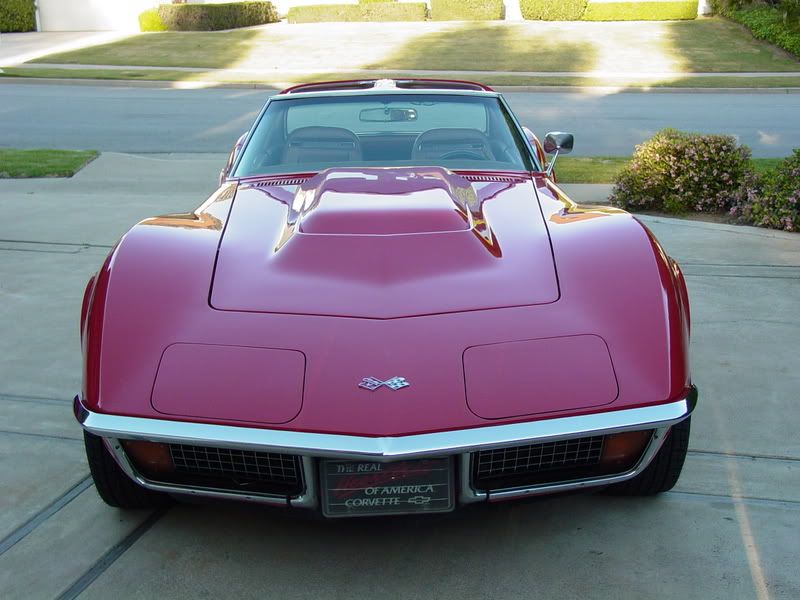
 This is what I bought, and who I bought it from. See the picture below if you have any doubts!
Burning Brakes
Joined: Jan 2004
Posts: 1,043
Likes: 4
From: Va
I ran across this on the net, pricey but probably the best at preventing swirl marks.
http://www.cyclotoolmakers.com/
http://www.cyclotoolmakers.com/