1974 Cowl Induction System

Race Director


Joined: Jul 2001
Posts: 15,892
Likes: 42

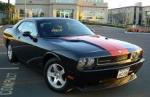
And once again we're not talking about racing or applications other than 1973-75 Corvettes. The car in the photo is an earlier year car with an aftermarket design hood and intake.

Race Director


Joined: Jul 2004
Posts: 12,706
Likes: 329
From: Scottsdale Arizona
While that's certainly true as far as air flow goes, I think he was trying to demonstrate the priciple of higher aire pressure at the base of the windshield. Those little strings really illustrate that it works. Just doesn't show how much flow there is.

Race Director
Joined: Feb 2005
Posts: 16,100
Likes: 17
I could not fit my vane anomometer to measure velocities thru cowl,but underhood temps dropped 25 degrees just driving hwy speeds during test...(just 7 miles)...that proves cowl induction works and probably much better in a working 73/74 system.....note that at "idle" ,yarn does not get sucked into cowl as engine fan blows air out...that all changes when vette reaches at least 30 mph....so with vette in motion,air off windshield overcomes air exhausted thru cowl by engine fan...
This pic was taken at "idle"...note yarn is being blown towards windshield...

Rich
Last edited by rihwoods; May 23, 2008 at 08:29 AM.
Race Director
Joined: Feb 2005
Posts: 16,100
Likes: 17
(Ambient outside air temps the day I did test was 80 F)......I took temps at air cleaner to gage temperature drop(before run/after run)....Quite frankly,I was suprised....

I'm going to repeat test in a few weeks,except this time take video's...
Rich
Last edited by rihwoods; May 23, 2008 at 09:58 AM.

Drifting

Joined: Aug 2007
Posts: 1,924
Likes: 6
Mine worked but I took it all the way out Then I put A red light up in the same area.So now when I floor it I get the four barrell and A red light form way under the hood it looks cool (but not like the cops or anything).It looks like A Fire you know something we all dont want under our Hoods.
that'd be K
 L
L
Race Director
Joined: Jul 2001
Posts: 15,892
Likes: 42
I was careful with temp readings because I knew that would be a good indicator of what was happening between firewall and air cleaner...
(Ambient outside air temps the day I did test was 80 F)......I took temps at air cleaner to gage temperature drop(before run/after run)....Quite frankly,I was suprised....
I'm going to repeat test in a few weeks,except this time take video's...
Rich
(Ambient outside air temps the day I did test was 80 F)......I took temps at air cleaner to gage temperature drop(before run/after run)....Quite frankly,I was suprised....
I'm going to repeat test in a few weeks,except this time take video's...
Rich
If I get ambitious, I'll measure what happens to airflow and temps on my '73 under three conditions:
- door opens in response the floor switch
- door open at all times
- door disabled, closed
But I'm not expecting miracles.
Corvette Stories
The Best of Corvette for Corvette Enthusiasts

Top 10 Most Expensive Corvettes Ever Sold on Bring A Trailer
Brett Foote
10 Things Every Corvette Owner Needs (2026 Edition)
Michael S. Palmer
8 Most "Only Corvette Owners Understand" Quirks and Problems
Pouria Savadkouei
10 Reasons the C6 Z06 is Still A Performance Benchmark After 20 Years
Joe Kucinski
How Much Horsepower Every Corvette Engine "LOST" in 1972
Joe Kucinski
Top 10 DOs and DON'Ts for Protecting Your Convertible Top!
Michael S. Palmer
Top 10 Most Explosive Corvettes Ever Made: Power-to-Weight Ratio Ranked!
Joe Kucinski
150 hp to 1,250 hp: Every Corvette Generation Compared by the Specs That Matter
Joe Kucinski
8 Coolest Corvette Pace Cars (and Replicas) of All Time
Verdad Gallardo
Race Director
Joined: Jul 2004
Posts: 12,706
Likes: 329
From: Scottsdale Arizona
I'd actually be very interested in what you find. Rich's setup has the advantage of a much larger cross section for flow than does ours. I doubt you'd see the same change in underhood temps that he does, but if you were able to isolate the air temp in the air cleaner or, better yet, on the inside of the air filter, I think you'd see a difference.
Race Director
Joined: Feb 2005
Posts: 16,100
Likes: 17
Here is an interesting comparison of ram air to cowl induction...
http://www.carcraft.com/techarticles...car/index.html
Race Director
Joined: Jul 2001
Posts: 15,892
Likes: 42
Unless I misunderstood, you mentioned that your under hood temps drop by 25* with the car in motion, and have attributed that drop to the flow of cool air coming from the cowl induction.
My suggestion was to perform the same test with the cowl induction blocked to see if you still get a temperature drop (or not).
The difference in temps (blocked vs. open) will indicate how much of a benefit your cowl induction is.
I would perform a similar test on my '73 with the stock GM components in place.
My suggestion was to perform the same test with the cowl induction blocked to see if you still get a temperature drop (or not).
The difference in temps (blocked vs. open) will indicate how much of a benefit your cowl induction is.
I would perform a similar test on my '73 with the stock GM components in place.
Race Director
Joined: Feb 2005
Posts: 16,100
Likes: 17
Unless I misunderstood, you mentioned that your under hood temps drop by 25* with the car in motion, and have attributed that drop to the flow of cool air coming from the cowl induction.
My suggestion was to perform the same test with the cowl induction blocked to see if you still get a temperature drop (or not).
The difference in temps (blocked vs. open) will indicate how much of a benefit your cowl induction is.
I would perform a similar test on my '73 with the stock GM components in place.
My suggestion was to perform the same test with the cowl induction blocked to see if you still get a temperature drop (or not).
The difference in temps (blocked vs. open) will indicate how much of a benefit your cowl induction is.
I would perform a similar test on my '73 with the stock GM components in place.
Rich
Le Mans Master

Joined: Oct 2002
Posts: 7,098
Likes: 378
From: Las Vegas - Just stop perpetuating myths please.
My money says it works.
The corvette cowl induction was a functional design from everthing i have read where as some hood scoops like the Pontic GTO used were too low in the boundry layer and not effective at all.
The idea is the carburetor air cleaner is sealed to the hood passage feed by the cowl area where air is pileling up at the base of the windshield. This air source is also cooler than what makes into the eng compart via the radiator.
Its just a cooler air source at a little higher pressure than what the eng comp is at.
There are some critical dimisions to ensure air flow all the way to carb at higher press. But again from what i have read the corvette cowl induction did help horse power and somewhat a free hp lunch. And u will see a nearly idential cowl induction on every NASCAR racing vehical still today.
It would be a job and halve to do the testing on a vette with cowl induct and then without it and i don't have any numbers to prove this system works on our C3s. But my money is bet on that it works. Well best of luck to anyone that makes the effort here to prove or disprove it.
Let it breath and good luck Paul,
cardo0
The idea is the carburetor air cleaner is sealed to the hood passage feed by the cowl area where air is pileling up at the base of the windshield. This air source is also cooler than what makes into the eng compart via the radiator.
Its just a cooler air source at a little higher pressure than what the eng comp is at.
There are some critical dimisions to ensure air flow all the way to carb at higher press. But again from what i have read the corvette cowl induction did help horse power and somewhat a free hp lunch. And u will see a nearly idential cowl induction on every NASCAR racing vehical still today.
It would be a job and halve to do the testing on a vette with cowl induct and then without it and i don't have any numbers to prove this system works on our C3s. But my money is bet on that it works. Well best of luck to anyone that makes the effort here to prove or disprove it.
Let it breath and good luck Paul,
cardo0