



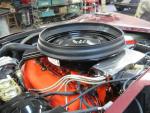


1974 Cowl Induction System

Thread Starter
Team Owner


Joined: Aug 1999
Posts: 30,995
Likes: 99
From: Ontario
 1974 Cowl Induction System
Interesting what you find as you explore your "new" old Corvette, in my case a 1974. I found some cut wires under the hood liner and traced them to this unit. Looks like an electrically actuated air flapper intake for the cowl at the back of the hood. Default was flapper closed, and it was. How it was actuated and where and what the sensing device was I do not know. But I just gutted it, re-installed the cover plate with goop to seal, and will let the air flow freely from the cowl into the carb. Anyone know the purpose of this device and how it worked?


Last edited by Paul L; Apr 20, 2008 at 06:23 PM.

Race Director


Joined: Apr 1999
Posts: 15,157
Likes: 477
From: NM
check out the '73 Spot by clicking on the car below.
Or just go to this link to get directly there...
http://www.corvetteforum.net/c3/vette73/cowlintake.htm
Or just go to this link to get directly there...
http://www.corvetteforum.net/c3/vette73/cowlintake.htm
Thread Starter
Team Owner
Joined: Aug 1999
Posts: 30,995
Likes: 99
From: Ontario
check out the '73 Spot by clicking on the car below.
Or just go to this link to get directly there...
http://www.corvetteforum.net/c3/vette73/cowlintake.htm
Or just go to this link to get directly there...
http://www.corvetteforum.net/c3/vette73/cowlintake.htm
That was very informative. Thank you. I presume by removing the flapper unit no harm will be done on normal operation of the engine aside from air intake noise.
Last edited by Paul L; Apr 20, 2008 at 07:20 PM.
Race Director
Joined: Apr 1999
Posts: 15,157
Likes: 477
From: NM
Thread Starter
Team Owner
Joined: Aug 1999
Posts: 30,995
Likes: 99
From: Ontario
Hadn't thought of rain. But in 20+ years of driving Corvettes I have only seen rain twice so not a major issue. And the opening to the carb intake area at the cowl is very small, ~1 1/2" high.

Safety Car

Joined: Feb 2006
Posts: 3,557
Likes: 0
From: Ridgeway VA
That switch on the gas pedal opens the flap - you really don't need the flap to open - but most important it also goes to the tranny so if you floor it you go into passing gear and the "roar" from the engine is when more air gets in.

Race Director
Joined: Mar 2006
Posts: 14,112
Likes: 28
From: Florida
Even heavy rain is not an issue. All water will puddle and drain in the wiper cowl. Any water mist will be stopped by the air filter. In the remote possibility that the air filter becomes saturated, then just consider this a good way to decarbon the valves and pistons. T doubt that would ever happen

Corvette Stories
The Best of Corvette for Corvette Enthusiasts

5 Best & 5 Worst Corvette Daily Drivers
Joe Kucinski
The Headlights of Every Corvette Generation Explained
Joe Kucinski
5 Best & 5 Most Overrated Corvette Track Packages of All Time!
Joe Kucinski
Every 2027 Corvette Engine Explained
Joe Kucinski
Designer Imagines A Corvette That Looks More Like a Corvette Than the Corvette
Verdad Gallardo
10 Ugly Corvettes That We Still Kinda Love
Joe Kucinski
Top 10 Most Expensive Corvettes Ever Sold on Bring A Trailer
Brett Foote
10 Things Every Corvette Owner Needs (2026 Edition)
Michael S. Palmer
8 Most "Only Corvette Owners Understand" Quirks and Problems
Pouria Savadkouei
Drifting

Joined: May 2006
Posts: 1,480
Likes: 2
From: Circleville Ohio
Vader Vette
Mine worked but I took it all the way out Then I put A red light up in the same area.So now when I floor it I get the four barrell and A red light form way under the hood it looks cool (but not like the cops or anything).It looks like A Fire you know something we all dont want under our Hoods.

Race Director

Joined: Jul 2001
Posts: 15,892
Likes: 42
The flapper valves on '73-'75 are all show and very little 'go'. Nice marketing effort by GM but an inherently flawed system.
There's not enough forward velocity while accelerating to create much ram air flow.
The majority of the engine air is still supplied by the open ducts under the hood.
There's not enough forward velocity while accelerating to create much ram air flow.
The majority of the engine air is still supplied by the open ducts under the hood.
Safety Car
Joined: Feb 2006
Posts: 3,557
Likes: 0
From: Ridgeway VA
It's not the air flow that's important. If the switch on the pedal is working you will go into passing gear - because that switch is also connected to the tranny - then you will go much faster.
Thread Starter
Team Owner
Joined: Aug 1999
Posts: 30,995
Likes: 99
From: Ontario
The flapper valves on '73-'75 are all show and very little 'go'. Nice marketing effort by GM but an inherently flawed system.
There's not enough forward velocity while accelerating to create much ram air flow.
The majority of the engine air is still supplied by the open ducts under the hood.
There's not enough forward velocity while accelerating to create much ram air flow.
The majority of the engine air is still supplied by the open ducts under the hood.
Race Director
Joined: Jul 2001
Posts: 15,892
Likes: 42
The theory of RAM air induction is correct- if you go fast enough, there will be an area of high pressure at the bottom of the windshield. This does not happen at legal highway speeds however.
Second issue- the plenum where the 'high pressure' air is supposed to collect is also vented down the sides of the firewall into the passenger cabin. The action of opening the 'Astro Venilation' vents in the footwells essentially bleeds out all the pressure.
Third issue- the crossectional area of the ducting inside the hood going to the air cleaner is very small. Nowhere near big enough to feed the engine at WOT. The poster who is relying on this duct 100% is probably starving his engine
Fourth issue- the air cleaner housing has two open snorkels- no check valves. Any air pressure that did mkae it past the obstacles above would be vented into the engine compartment.
Aside from the above it works great.
Second issue- the plenum where the 'high pressure' air is supposed to collect is also vented down the sides of the firewall into the passenger cabin. The action of opening the 'Astro Venilation' vents in the footwells essentially bleeds out all the pressure.
Third issue- the crossectional area of the ducting inside the hood going to the air cleaner is very small. Nowhere near big enough to feed the engine at WOT. The poster who is relying on this duct 100% is probably starving his engine
Fourth issue- the air cleaner housing has two open snorkels- no check valves. Any air pressure that did mkae it past the obstacles above would be vented into the engine compartment.
Aside from the above it works great.
 .
.
Race Director
Joined: Apr 1999
Posts: 15,157
Likes: 477
From: NM
The flapper valves on '73-'75 are all show and very little 'go'. Nice marketing effort by GM but an inherently flawed system.
There's not enough forward velocity while accelerating to create much ram air flow.
The majority of the engine air is still supplied by the open ducts under the hood.
There's not enough forward velocity while accelerating to create much ram air flow.
The majority of the engine air is still supplied by the open ducts under the hood.
And it worked. When introduced in '73, the new L82 was down only 5 hp from the famous LT1. The big block LS4 produced 5 more HP than the previous LS5.
The only reason it was dropped is the sound. As the Vette turned into a blvd cruiser the sound levels became more important, so Chevy did away with the cowl induction to help sooth the passangers ears.

Team Owner


Joined: Jan 2006
Posts: 37,637
Likes: 3,118
From: Crossville TN
I didn't read all the posts above, but I'll provide my .02c....
The induction flap serves the primary purpose of restricting [cold] inlet air at engine start-up so that ingested air will be [as much as possible] pre-heated by the engine to 'tame' a cold engine and to minimize waste hydrocarbon emissions. Secondarily, it also allows the flap to open on-demand at WOT, whether it is warm or not. It was 'marketed' as a performance gizmo that allowed higher pressure air to be 'forced' into the air inlet. Its location takes advantage of a high pressure spot at the base of the windshield. As long as your car doesn't need the flap to be shut during warm-up, leaving it in the "open" position is just fine. Originally, it was wired up through a temp-activated vacuum switch so that it only functioned in the 'open' mode once the engine was up to operating temps.
The induction flap serves the primary purpose of restricting [cold] inlet air at engine start-up so that ingested air will be [as much as possible] pre-heated by the engine to 'tame' a cold engine and to minimize waste hydrocarbon emissions. Secondarily, it also allows the flap to open on-demand at WOT, whether it is warm or not. It was 'marketed' as a performance gizmo that allowed higher pressure air to be 'forced' into the air inlet. Its location takes advantage of a high pressure spot at the base of the windshield. As long as your car doesn't need the flap to be shut during warm-up, leaving it in the "open" position is just fine. Originally, it was wired up through a temp-activated vacuum switch so that it only functioned in the 'open' mode once the engine was up to operating temps.
Race Director
Joined: Jul 2001
Posts: 15,892
Likes: 42
Maybe you should have read them. This is a different system that has nothing to do with engine warm up. There is no temp activated switch.

Race Director
Joined: Jul 2001
Posts: 15,892
Likes: 42
The cowl induction system is NOT a ram or a forced air system. Its key is to provide cooler air to the engine. Cooler air = more HP.
And it worked. When introduced in '73, the new L82 was down only 5 hp from the famous LT1. The big block LS4 produced 5 more HP than the previous LS5.
And it worked. When introduced in '73, the new L82 was down only 5 hp from the famous LT1. The big block LS4 produced 5 more HP than the previous LS5.
SAE tests require that the data be normalised to a specified temperature. No credit is given for cold air intakes other than when 'marketing' numbers are given.


Race Director
Joined: Mar 2006
Posts: 14,112
Likes: 28
From: Florida
The theory of RAM air induction is correct- if you go fast enough, there will be an area of high pressure at the bottom of the windshield. This does not happen at legal highway speeds however.
Second issue- the plenum where the 'high pressure' air is supposed to collect is also vented down the sides of the firewall into the passenger cabin. The action of opening the 'Astro Venilation' vents in the footwells essentially bleeds out all the pressure.
This is not ram induction. Ram induction is a completely different system and is exampled by the Olds Cutlass W30 system and even some old GTO front hood openings.
The cowl induction was on several of Gm’s line including the T/A shaker hood and some Camaros and Chevelles.
It’s not meant to force anything, just provide a passage for cooler ambient air, no positive pressure at all.
Gm's position is stated in the link posted.
http://www.corvetteforum.net/c3/vette73/cowlintake.htm
Third issue- the crossectional area of the ducting inside the hood going to the air cleaner is very small. Nowhere near big enough to feed the engine at WOT. The poster who is relying on this duct 100% is probably starving his engine
The smallest area of the induction passage measures larger than the area opening of the carb so that is obviously not an issue. That also includes WOT. Air does not act like a fluid at flow since it is compressable. The restrictive issue here is, the type of air filter and that is used no matter what system is in use.
Fourth issue- the air cleaner housing has two open snorkels- no check valves. Any air pressure that did mkae it past the obstacles above would be vented into the engine compartment.
Don’t know what that is supposed to mean.
The air filter assembly is sealed to the induction passage. So there is no pressure anywhere.
Aside from the above it works great.
Second issue- the plenum where the 'high pressure' air is supposed to collect is also vented down the sides of the firewall into the passenger cabin. The action of opening the 'Astro Venilation' vents in the footwells essentially bleeds out all the pressure.
This is not ram induction. Ram induction is a completely different system and is exampled by the Olds Cutlass W30 system and even some old GTO front hood openings.
The cowl induction was on several of Gm’s line including the T/A shaker hood and some Camaros and Chevelles.
It’s not meant to force anything, just provide a passage for cooler ambient air, no positive pressure at all.
Gm's position is stated in the link posted.
http://www.corvetteforum.net/c3/vette73/cowlintake.htm
Third issue- the crossectional area of the ducting inside the hood going to the air cleaner is very small. Nowhere near big enough to feed the engine at WOT. The poster who is relying on this duct 100% is probably starving his engine
The smallest area of the induction passage measures larger than the area opening of the carb so that is obviously not an issue. That also includes WOT. Air does not act like a fluid at flow since it is compressable. The restrictive issue here is, the type of air filter and that is used no matter what system is in use.
Fourth issue- the air cleaner housing has two open snorkels- no check valves. Any air pressure that did mkae it past the obstacles above would be vented into the engine compartment.
Don’t know what that is supposed to mean.
The air filter assembly is sealed to the induction passage. So there is no pressure anywhere.
Aside from the above it works great.
The 2 snorkels are blocked off and it runs as good or better than without them blocked. In fact there is a very slight increase in mpg.
Even at 3500rpm cruising the secondaries are not open, so the hood induction is more than adequate.
I've done it to several vettes and to a couple of old TransAms way back when and they all got just a little bit better gas mileage with no ill affects at all.

You can see from Rich’s pics how the air flows.