







question

Thread Starter
Former Vendor
Joined: Jan 2009
Posts: 12,288
Likes: 23
From: League City Texas
Houston Events Coordinator
St. Jude Donor '11-'12, '14
I believe in the Beer Fairy
 question
how do you find the orig. build sheets for your vehicle? When I had my GTO I had to go through PHS documentation is there something similar with corvettes?

Team Owner


Joined: Jun 2000
Posts: 38,923
Likes: 1,482
From: Southbound
Cruise-In II Veteran
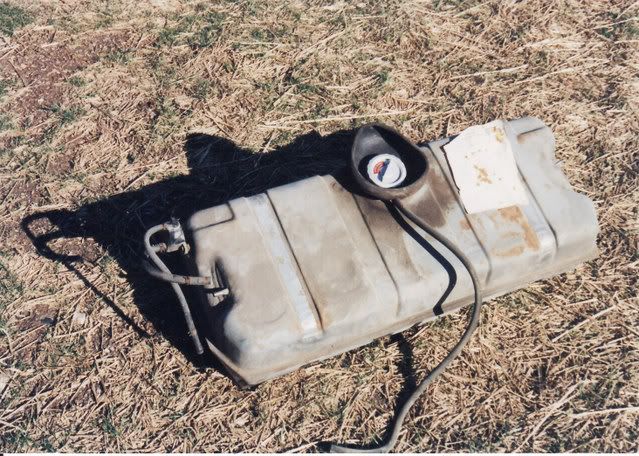
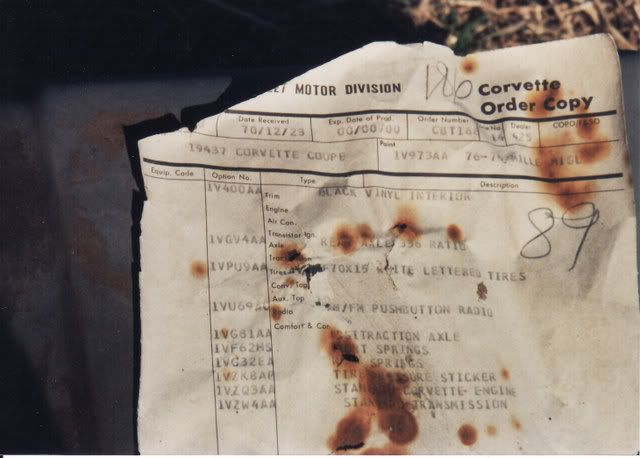
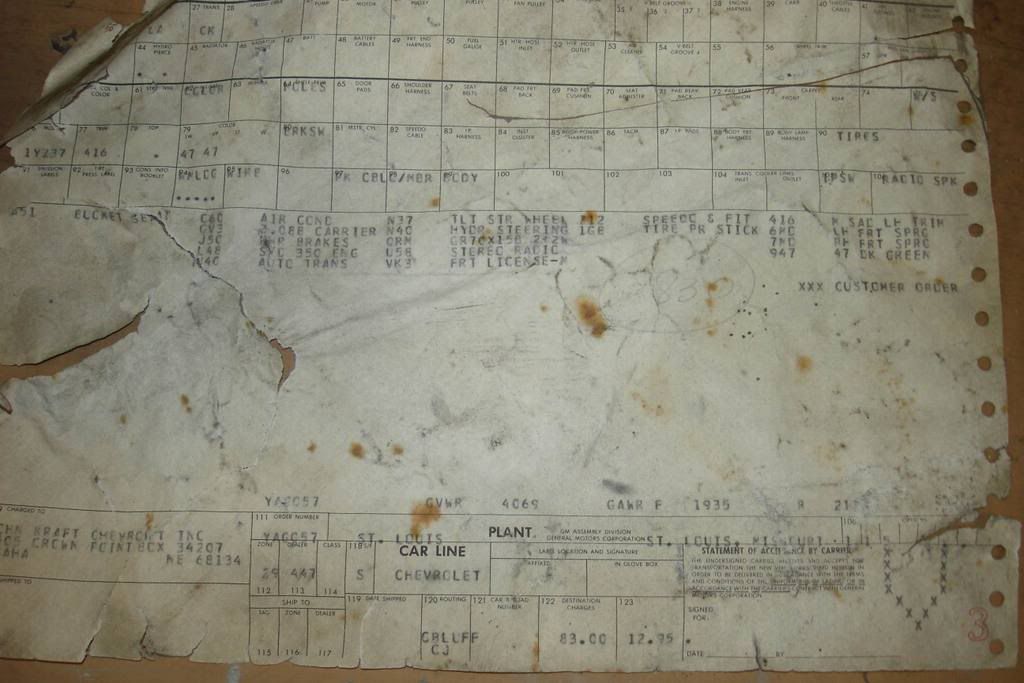
No. Nothing similar for Corvettes. 68-72 C3s had a copy of the Corvette build order glued to the top of the fuel tank, giving rise to the term "tank sticker." These documents were only meant to be aids to assembly line workers and were never meant to be permanently affixed to the car. Some owners have been fortunate enough to find them, others have not. It is also possible to find part of a build sheet with the rest of it missing, or to be a fragment of a document which cannot be read.

Typical. The tank sticker is there, but it's illegible after years of accumulated road gook.
Beginning in 1973, the format of the build sheet changed and they began to be taped to the front of the fuel tank.
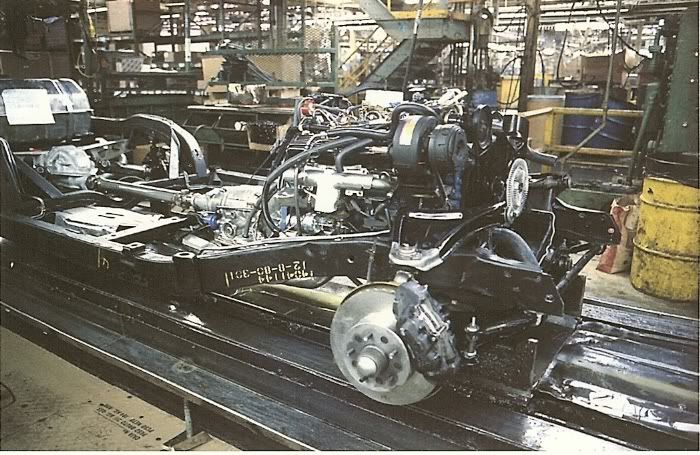
The single best source of original documentation for a C3 should come with the car at time of sale.
For some of the 77-81 models, GM contracted with a company called Allied-Vaughn to microfiche copies of the original dealer invoices. These are available from Allied-Vaughn. Order copies for most of the Bowling Green built C3s are available from the National Corvette Museum. In either situation, information for a specific Corvette may, or may not, be available.

Typical. The tank sticker is there, but it's illegible after years of accumulated road gook.
Beginning in 1973, the format of the build sheet changed and they began to be taped to the front of the fuel tank.
The single best source of original documentation for a C3 should come with the car at time of sale.
For some of the 77-81 models, GM contracted with a company called Allied-Vaughn to microfiche copies of the original dealer invoices. These are available from Allied-Vaughn. Order copies for most of the Bowling Green built C3s are available from the National Corvette Museum. In either situation, information for a specific Corvette may, or may not, be available.
Last edited by Easy Mike; Jan 7, 2009 at 12:36 PM.

Drifting


Joined: Jul 2002
Posts: 1,697
Likes: 3
From: Woodinville WA

Only photo I have with gamma adjusted to better read the writing.
Team Owner
Joined: Jun 2000
Posts: 38,923
Likes: 1,482
From: Southbound
Cruise-In II Veteran
Only the last two pages had the VIN info on them, but you could take the bundle, flip to the last page, get the VIN, subtract 500, and pencil in a job number on the first copy (early method) or jot down the last three digits of the VIN (later method). The 209 on Razman's sticker is a perfect example. Ditto for the 89 on yours.
Razman: out of curisoity, does your VIN end with 709 or 209?
Alan: what are the last three digits of your VIN?

Last edited by Easy Mike; Jan 7, 2009 at 04:35 PM.
Corvette Stories
The Best of Corvette for Corvette Enthusiasts

5 Best & 5 Worst Corvette Daily Drivers
Joe Kucinski
The Headlights of Every Corvette Generation Explained
Joe Kucinski
5 Best & 5 Most Overrated Corvette Track Packages of All Time!
Joe Kucinski
Every 2027 Corvette Engine Explained
Joe Kucinski
Designer Imagines A Corvette That Looks More Like a Corvette Than the Corvette
Verdad Gallardo
10 Ugly Corvettes That We Still Kinda Love
Joe Kucinski
Top 10 Most Expensive Corvettes Ever Sold on Bring A Trailer
Brett Foote
10 Things Every Corvette Owner Needs (2026 Edition)
Michael S. Palmer
8 Most "Only Corvette Owners Understand" Quirks and Problems
Pouria Savadkouei




Thread Starter
Former Vendor
Joined: Jan 2009
Posts: 12,288
Likes: 23
From: League City Texas
Houston Events Coordinator
St. Jude Donor '11-'12, '14
I believe in the Beer Fairy
well thats no good wanted to verify some things., I have a neighbor that had a 68 as well and told me that the car orig. had a 427 according the the heavy duty springs that are in it. It currently has a350 in it. It does however still have the M22 rock crusher transmission.
how do I go about verifying the engine that was in there and if i do find a 427 that was built in that year/time frame would that be considered a numbers matching car then?
how do I go about verifying the engine that was in there and if i do find a 427 that was built in that year/time frame would that be considered a numbers matching car then?

Team Owner


Joined: Sep 2006
Posts: 31,318
Likes: 4,424
From: Westminster Maryland
The last part of your question has the most straight forward answer. Most people use the NCRS guide that a car's parts should not proceed it's build date by more than 6 months.
Determining if a car WAS a BIG BLOCK car is a lot more of a slippery slope.
Regards,
Alan
Determining if a car WAS a BIG BLOCK car is a lot more of a slippery slope.
Regards,
Alan
Team Owner
Joined: Jun 2000
Posts: 38,923
Likes: 1,482
From: Southbound
Cruise-In II Veteran
Your only hope is original documentation which came with the car (dealer invoice, window sticker, POP, etc.) or a legible tank sticker.
Some say yes; some say no. A replacement engine with the correct part numbers and date codes would be correct for judging, but it will not be numbers matching.
...if i do find a 427 that was built in that year/time frame would that be considered a numbers matching car then...