




1981 HP Question
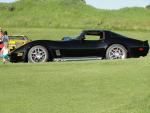
Thread Starter
Safety Car


Joined: Nov 2004
Posts: 4,359
Likes: 57
From: Mundelein Illinois
 1981 HP Question
The L81 motor was 190 HP at 4100 RPM. Is this rated at the crank or rear wheels. If this is the crank then the rear wheel HP had to be around 120 HP.
Am I correct or am I on something?
I just dynoed my car Last September and its now 290 RWHP. Was it that much of a dog?
Am I correct or am I on something?
I just dynoed my car Last September and its now 290 RWHP. Was it that much of a dog?
Le Mans Master


Joined: Dec 2004
Posts: 5,230
Likes: 418
The L81 motor was 190 HP at 4100 RPM. Is this rated at the crank or rear wheels. If this is the crank then the rear wheel HP had to be around 120 HP.
Am I correct or am I on something?
I just dynoed my car Last September and its now 290 RWHP. Was it that much of a dog?
Am I correct or am I on something?
I just dynoed my car Last September and its now 290 RWHP. Was it that much of a dog?

Race Director


Joined: Jul 2004
Posts: 12,696
Likes: 329
From: Scottsdale Arizona
I don't think it was at the crank. I think it was 190 HP at the rear wheels (net). The change to net HP occured in the early 70s (I think). That and the change to unleaded fuel and emission controls were the reasons for the steady decline in HP.

Drifting

Joined: Aug 2007
Posts: 1,924
Likes: 6

Race Director


Joined: Dec 1999
Posts: 19,610
Likes: 778
From: Forked River NJ
Net HP is not at the rear wheels. It is with all the acc. hooked up and run like it is in the car with manifolds. The old way was just the crank HP without all the acc. Rear wheel HP was never advertised or never really used until the newer cars came around.
So yes the 190 HP Vette was a real dog as far as performance. I actually drove one in about 82 and the V6 Citation I had then was actually faster.
So yes the 190 HP Vette was a real dog as far as performance. I actually drove one in about 82 and the V6 Citation I had then was actually faster.
Le Mans Master
Joined: Dec 2004
Posts: 5,230
Likes: 418
I can not believe that people are out there who believe that any HP rating would be at the rear wheels. There are simply too many variables for the OEM to confirm. An engine system in a dyno room is much easier to control with respect to everything from fuel to ambient temperature. All HP ratings (net or gross) are engine only. The gross ratings from pre-72 included exhaust headers and no accessories. It also does not include the effect of the package environment, like access to airflow, engine heat from the radiator, cooling strategy, etc. Net HP takes all that into consideration.
RWHP is ideal for individual cars though and can give one an indication of how fast and efficient that one car can be.
Corvette Stories
The Best of Corvette for Corvette Enthusiasts

Top 10 Most Explosive Corvettes Ever Made: Power-to-Weight Ratio Ranked!
Joe Kucinski
150 hp to 1,250 hp: Every Corvette Generation Compared by the Specs That Matter
Joe Kucinski
8 Coolest Corvette Pace Cars (and Replicas) of All Time
Verdad Gallardo
Top 10 Corvette Engines RANKED by Peak Torque (70+ Years of Muscle!)
Joe Kucinski
Corvette ZR1X Will Be Pacing the Indy 500, And Could Probably Race, Too!
Verdad Gallardo
Top 10 Corvettes Coming to Mecum Indy 2026!
Brett Foote
Top 10 C9 Corvette MUST-HAVES to Fix These C8 Generation Flaws!
Michael S. Palmer
10 Revolutionary 'Corvette Firsts' Most People Don't Know
Joe Kucinski
5 Reasons to Upgrade to an LS6-Powered Corvette; 5 Reasons to Stay LT2
Michael S. Palmer
Team Owner


Joined: Jan 2006
Posts: 37,637
Likes: 3,116
From: Crossville TN
You should also note that the rated HP was specified at 4100 rpm. It's not that the engine's max HP occurred at 4100 rpm...it's just that the engine generated that much HP at that point on the curve. If you revved it higher, it would make more power. But, rated HP was a 'killer' for insurance rates, so GM de-rated engine power so their customers wouldn't get "soaked" by the insurance industry.
Check the engine power specs on Corvettes from 1972 through 1991. Specified power points are as low as 4000 rpm...all in an effort to "beat the system". Even though those engines weren't as powerful as in earlier years, they would make more power than was spec'd.
Check the engine power specs on Corvettes from 1972 through 1991. Specified power points are as low as 4000 rpm...all in an effort to "beat the system". Even though those engines weren't as powerful as in earlier years, they would make more power than was spec'd.

Drifting

Joined: May 2007
Posts: 1,491
Likes: 2
From: North Royaton Ohio
You should also note that the rated HP was specified at 4100 rpm. It's not that the engine's max HP occurred at 4100 rpm...it's just that the engine generated that much HP at that point on the curve. If you revved it higher, it would make more power. But, rated HP was a 'killer' for insurance rates, so GM de-rated engine power so their customers wouldn't get "soaked" by the insurance industry.
Check the engine power specs on Corvettes from 1972 through 1991. Specified power points are as low as 4000 rpm...all in an effort to "beat the system". Even though those engines weren't as powerful as in earlier years, they would make more power than was spec'd.
Check the engine power specs on Corvettes from 1972 through 1991. Specified power points are as low as 4000 rpm...all in an effort to "beat the system". Even though those engines weren't as powerful as in earlier years, they would make more power than was spec'd.

Burning Brakes

Joined: Jan 2009
Posts: 1,224
Likes: 1
From: Clarksville Indiana
does anybody know how desk top dyno results compare to factory ratings when you input stock specs? just curious, wondering if you can say factory says it was xxx but it realy was xxx ?