





New Guy With ????
Racer


Joined: Nov 2005
Posts: 478
Likes: 0
From: Ellicott City MD

Welcome to the forum!
Here is a website for TPI parts (harness, ECM, etc.)
Jims Performance
http://www.jimsperformance.com/
Here is a website for TPI parts (harness, ECM, etc.)
Jims Performance
http://www.jimsperformance.com/

Thread Starter
Racer
Joined: Apr 2009
Posts: 354
Likes: 0
From: Gurley Alabama
Chassis is sandblasted & painted with a 2-part epoxy primer (MILSPEC)....
Oh, the frame is PERFECT!! No rust, no problems! WOO-HOO!
I don't like to work with dirty, grease-covered parts; so, I just sandblast & paint everything (you'll notice the u-joints, vents, and steering are wrapped with duct tape even though I'll replace all the u-joints)...working with old, dirty, grease-covered parts is just hard: bolts won't come loose, the garage gets dirty, I get dirty....you get the idea.
After its painted with Sherwin Williams high gloss black, I'll take it home to my personal garage and start disassembly....if anything needs a sandblast touch-up when it comes apart (& they will), I'll do it in my sandblast cabinet at home, reprime & repaint them...then I can reassemble with all new parts.
The rotors will probably get tossed...I'll check run-out just for the heck of it; however, they're old! Calipers will get replaced with rebuilts & every bushing, bearing, u-joint, shock, etc. will be replaced....Fuel and brake lines will be blown out, recleaned & inspected...those that fail my inspection will be replaced (gotta do some things with the fuel lines anyway since I'm installing a TPI engine)....& steering will be rebuilt as will differential.
Just my personal way of doing things - might create a little extra work but it goes faster & easier once its in my garage....oh, I don't powdercoat cars I'm gonna drive: paint is easier to repair if it gets scratched or beatup on bad roads. Sorry for the long explanation...everybody who sees me rebuilding a car always asks me why I do things the way I do; so, I thought I'd just explain upfront.
Just my way of doing things....


Oh, the frame is PERFECT!! No rust, no problems! WOO-HOO!
I don't like to work with dirty, grease-covered parts; so, I just sandblast & paint everything (you'll notice the u-joints, vents, and steering are wrapped with duct tape even though I'll replace all the u-joints)...working with old, dirty, grease-covered parts is just hard: bolts won't come loose, the garage gets dirty, I get dirty....you get the idea.
After its painted with Sherwin Williams high gloss black, I'll take it home to my personal garage and start disassembly....if anything needs a sandblast touch-up when it comes apart (& they will), I'll do it in my sandblast cabinet at home, reprime & repaint them...then I can reassemble with all new parts.
The rotors will probably get tossed...I'll check run-out just for the heck of it; however, they're old! Calipers will get replaced with rebuilts & every bushing, bearing, u-joint, shock, etc. will be replaced....Fuel and brake lines will be blown out, recleaned & inspected...those that fail my inspection will be replaced (gotta do some things with the fuel lines anyway since I'm installing a TPI engine)....& steering will be rebuilt as will differential.
Just my personal way of doing things - might create a little extra work but it goes faster & easier once its in my garage....oh, I don't powdercoat cars I'm gonna drive: paint is easier to repair if it gets scratched or beatup on bad roads. Sorry for the long explanation...everybody who sees me rebuilding a car always asks me why I do things the way I do; so, I thought I'd just explain upfront.
Just my way of doing things....

Safety Car


Joined: Dec 1999
Posts: 3,602
Likes: 837
From: PA
Regards,
Thread Starter
Racer
Joined: Apr 2009
Posts: 354
Likes: 0
From: Gurley Alabama
Thanks!
The frame is now black!
My trailer is hooked up & ready to go get it tomorrow morning...when I get it home & on jack stands, I'll start the disassembly & rebuild of the chassis.
Some photos:


The frame is now black!
My trailer is hooked up & ready to go get it tomorrow morning...when I get it home & on jack stands, I'll start the disassembly & rebuild of the chassis.
Some photos:

Melting Slicks


Joined: Dec 2006
Posts: 2,483
Likes: 1
From: Bay Area CA
Wondering why you did not remove them since you almost got close to a complete frame off rebuid.
Thread Starter
Racer
Joined: Apr 2009
Posts: 354
Likes: 0
From: Gurley Alabama
Originally Posted by autoist
I don't like to work with dirty, grease-covered parts; so, I just sandblast & paint everything (you'll notice the u-joints, vents, and steering are wrapped with duct tape even though I'll replace all the u-joints)...working with old, dirty, grease-covered parts is just hard: bolts won't come loose, the garage gets dirty, I get dirty....you get the idea.
After its painted with Sherwin Williams high gloss black, I'll take it home to my personal garage and start disassembly....if anything needs a sandblast touch-up when it comes apart (& they will), I'll do it in my sandblast cabinet at home, reprime & repaint them...then I can reassemble with all new parts.
The rotors will probably get tossed...I'll check run-out just for the heck of it; however, they're old! Calipers will get replaced with rebuilts & every bushing, bearing, u-joint, shock, etc. will be replaced....Fuel and brake lines will be blown out, recleaned & inspected...those that fail my inspection will be replaced (gotta do some things with the fuel lines anyway since I'm installing a TPI engine)....& steering will be rebuilt as will differential.
Just my personal way of doing things - might create a little extra work but it goes faster & easier once its in my garage....oh, I don't powdercoat cars I'm gonna drive: paint is easier to repair if it gets scratched or beatup on bad roads. Sorry for the long explanation...everybody who sees me rebuilding a car always asks me why I do things the way I do; so, I thought I'd just explain upfront.
Just my way of doing things....
After its painted with Sherwin Williams high gloss black, I'll take it home to my personal garage and start disassembly....if anything needs a sandblast touch-up when it comes apart (& they will), I'll do it in my sandblast cabinet at home, reprime & repaint them...then I can reassemble with all new parts.
The rotors will probably get tossed...I'll check run-out just for the heck of it; however, they're old! Calipers will get replaced with rebuilts & every bushing, bearing, u-joint, shock, etc. will be replaced....Fuel and brake lines will be blown out, recleaned & inspected...those that fail my inspection will be replaced (gotta do some things with the fuel lines anyway since I'm installing a TPI engine)....& steering will be rebuilt as will differential.
Just my personal way of doing things - might create a little extra work but it goes faster & easier once its in my garage....oh, I don't powdercoat cars I'm gonna drive: paint is easier to repair if it gets scratched or beatup on bad roads. Sorry for the long explanation...everybody who sees me rebuilding a car always asks me why I do things the way I do; so, I thought I'd just explain upfront.
Just my way of doing things....
Corvette Stories
The Best of Corvette for Corvette Enthusiasts

Top 10 Most Expensive Corvettes Ever Sold on Bring A Trailer
Brett Foote
10 Things Every Corvette Owner Needs (2026 Edition)
Michael S. Palmer
8 Most "Only Corvette Owners Understand" Quirks and Problems
Pouria Savadkouei
10 Reasons the C6 Z06 is Still A Performance Benchmark After 20 Years
Joe Kucinski
How Much Horsepower Every Corvette Engine "LOST" in 1972
Joe Kucinski
Top 10 DOs and DON'Ts for Protecting Your Convertible Top!
Michael S. Palmer
Top 10 Most Explosive Corvettes Ever Made: Power-to-Weight Ratio Ranked!
Joe Kucinski
150 hp to 1,250 hp: Every Corvette Generation Compared by the Specs That Matter
Joe Kucinski
8 Coolest Corvette Pace Cars (and Replicas) of All Time
Verdad Gallardo

Drifting

Joined: Jul 2002
Posts: 1,944
Likes: 20
From: The only Corvettes in Highett Victoria
Great job!
autoist,
Love the work you're doing, and I have a few words of advice.
DO NOT put the body on until the fuel (and brake) lines are in place! Some say that it is doable with the body on, but experienced Corvetters would argue against it. Several vendors offer pre-bent new fuel (and brake) lines in both mild and stainless that are guaranteed to fit perfectly if your old ones are suspect.
Brakes: the Corvette factory rivetted the rotors to the hubs and then machined them TOGETHER before fitting to the car. This means that if you fit a brand new rotor to the old hub, you will probably have major runout problems. If you must remove the rotor for checking or cleaning etc, make sure you mark its position on the hub first. Also, five rivets will have to be removed before the rotor and hub will separate. I'm sure I don't need to tell you that they do not need to be replaced.
Steering: I'd recommend that you fit a modern integral power steering box such as the Borgeson unit. It has 2.7 turns lock to lock with a 12.7:1 ratio and does away with the old sloppy control valve, power ram and half of the hoses, all sources of leaks in such an old car. Check out www.borgeson.com .
I'm sure that others will chime in with their words of advice. Keep up the good work!
Regards from Down Under
aussiejohn
6 weeks to go
Love the work you're doing, and I have a few words of advice.
DO NOT put the body on until the fuel (and brake) lines are in place! Some say that it is doable with the body on, but experienced Corvetters would argue against it. Several vendors offer pre-bent new fuel (and brake) lines in both mild and stainless that are guaranteed to fit perfectly if your old ones are suspect.
Brakes: the Corvette factory rivetted the rotors to the hubs and then machined them TOGETHER before fitting to the car. This means that if you fit a brand new rotor to the old hub, you will probably have major runout problems. If you must remove the rotor for checking or cleaning etc, make sure you mark its position on the hub first. Also, five rivets will have to be removed before the rotor and hub will separate. I'm sure I don't need to tell you that they do not need to be replaced.
Steering: I'd recommend that you fit a modern integral power steering box such as the Borgeson unit. It has 2.7 turns lock to lock with a 12.7:1 ratio and does away with the old sloppy control valve, power ram and half of the hoses, all sources of leaks in such an old car. Check out www.borgeson.com .
I'm sure that others will chime in with their words of advice. Keep up the good work!
Regards from Down Under
aussiejohn
6 weeks to go
Thread Starter
Racer
Joined: Apr 2009
Posts: 354
Likes: 0
From: Gurley Alabama
Originally Posted by aussiejohn
DO NOT put the body on until the fuel (and brake) lines are in place!
Originally Posted by aussiejohn
If you must remove the rotor for checking or cleaning etc, make sure you mark its position on the hub first.
Chassis is in my garage now....I'm getting ready to put it on jackstands & disassemble the wheel/tires so I can check wheels & sandblast/paint them.
I'll pull the rotors next to check them out.....seems you're telling me that if I can reuse them, I should?
Good tip also on the power steering....thanks again.
Drifting
Joined: Apr 2007
Posts: 1,892
Likes: 3
From: Springfield Illinois
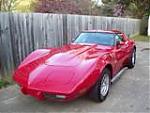
Wow! This is impressive! Looks like you got that vette at a great price and your restoration is going by quickly!
As for the rotors, I would keep them! The aftermarket/replacement rotors are no where near the quality of the original rotors.. I have 3 73's that all have slightly over 100K on the clock. All of the rotors on all 3 cars show absolutely no signs of wear. The price of aftermarket rotors looks convincing, but I worry that metal used is no where near as strong as what GM put on originally. I also fear that if you do a lot of driving with this car, you will be replacing rotors again in 2-3 years.
Thats my .02 for today. Too bad I havent seen this thread sooner. Good luck with build and I cant wait to watch every step of the way.
As for the rotors, I would keep them! The aftermarket/replacement rotors are no where near the quality of the original rotors.. I have 3 73's that all have slightly over 100K on the clock. All of the rotors on all 3 cars show absolutely no signs of wear. The price of aftermarket rotors looks convincing, but I worry that metal used is no where near as strong as what GM put on originally. I also fear that if you do a lot of driving with this car, you will be replacing rotors again in 2-3 years.
Thats my .02 for today. Too bad I havent seen this thread sooner. Good luck with build and I cant wait to watch every step of the way.
Thread Starter
Racer
Joined: Apr 2009
Posts: 354
Likes: 0
From: Gurley Alabama
Wow! This is impressive! Looks like you got that vette at a great price and your restoration is going by quickly!
As for the rotors, I would keep them! The aftermarket/replacement rotors are no where near the quality of the original rotors.. I have 3 73's that all have slightly over 100K on the clock. All of the rotors on all 3 cars show absolutely no signs of wear. The price of aftermarket rotors looks convincing, but I worry that metal used is no where near as strong as what GM put on originally. I also fear that if you do a lot of driving with this car, you will be replacing rotors again in 2-3 years.
Thats my .02 for today. Too bad I havent seen this thread sooner. Good luck with build and I cant wait to watch every step of the way.
As for the rotors, I would keep them! The aftermarket/replacement rotors are no where near the quality of the original rotors.. I have 3 73's that all have slightly over 100K on the clock. All of the rotors on all 3 cars show absolutely no signs of wear. The price of aftermarket rotors looks convincing, but I worry that metal used is no where near as strong as what GM put on originally. I also fear that if you do a lot of driving with this car, you will be replacing rotors again in 2-3 years.
Thats my .02 for today. Too bad I havent seen this thread sooner. Good luck with build and I cant wait to watch every step of the way.



Thread Starter
Racer
Joined: Apr 2009
Posts: 354
Likes: 0
From: Gurley Alabama
NAH! I never build a budget for my restorations - nor do I keep up with how much one costs me....when I decide to do a car, I decide to spend what it costs to get the end product I'm looking for....what I'm looking for with this one is a reliable, fun weekend driver which means it can go quicker than were I building a show car - & doesn't have to be so perfect.
Drifting
Joined: Apr 2007
Posts: 1,892
Likes: 3
From: Springfield Illinois
That is not a bad idea.. I was just saying to keep your rotors. Autozone sells remanufactured calipers that comes with SS sleeves and a lifetime warranty for something like $60 + core. It might be something to look into if you have one near you as it would be easier to deal with them in person than trying to deal with a large corvette parts dealer thats a 1000 miles away (that is if you were to ever have problems with the rebuilt calipers).
Thread Starter
Racer
Joined: Apr 2009
Posts: 354
Likes: 0
From: Gurley Alabama
That is not a bad idea.. I was just saying to keep your rotors. Autozone sells remanufactured calipers that comes with SS sleeves and a lifetime warranty for something like $60 + core. It might be something to look into if you have one near you as it would be easier to deal with them in person than trying to deal with a large corvette parts dealer thats a 1000 miles away (that is if you were to ever have problems with the rebuilt calipers).
Tomorrow, I'm pulling the calipers & rotors & dropping the rotors off to have them checked for thickness & to make sure they're not warped....if they check out, I'll have them magnafluxed.
Also dropping my wheels off at my friend's bodyshop to have them sandblasted & primered...then, I'll take them to another friend's tire place so he can check them for 'roundness' (is that the right word?)
Thread Starter
Racer
Joined: Apr 2009
Posts: 354
Likes: 0
From: Gurley Alabama
In my garage on jack stands and, as you can see, I've started disassembly.

And here's why I sandblast, prime, and paint everything before starting disassembly. Things come apart easily. I then lay everything out under the chassis where the parts will stay until I start reassembly. This way I can inspect everything & make decisions about what to keep or what to replace.
As you can see in the photo below, I'm planning on replacing the flex brake hoses to the calipers so I just cut them. And the hard line at the bottom of the photo will be replaced because the small 3/8" nut on the flare end is rounded off.
And you can see that I was able to compress the driver-side shock & it stayed compressed. All the shocks will be replaced.

Passenger side. I'll also replace, in addition to all the bushings, all the tie rods and will rebuild the steering.

After the front is renewed and reassembled, I'll tackle the rear end.
Next: compressing the springs.
And here's why I sandblast, prime, and paint everything before starting disassembly. Things come apart easily. I then lay everything out under the chassis where the parts will stay until I start reassembly. This way I can inspect everything & make decisions about what to keep or what to replace.
As you can see in the photo below, I'm planning on replacing the flex brake hoses to the calipers so I just cut them. And the hard line at the bottom of the photo will be replaced because the small 3/8" nut on the flare end is rounded off.
And you can see that I was able to compress the driver-side shock & it stayed compressed. All the shocks will be replaced.
Passenger side. I'll also replace, in addition to all the bushings, all the tie rods and will rebuild the steering.
After the front is renewed and reassembled, I'll tackle the rear end.
Next: compressing the springs.