




One more Vette gone :(

Race Director


Joined: Jul 2001
Posts: 15,892
Likes: 42

The text below the video says:
"Boxing day 2010 , this happened on way home after 18 months in a workshop guy only got to drive it a total of 3 hours this 69 corvette died a slow painful death"
My guess is rubber fuel line- always the #1 cause of fires................
"Boxing day 2010 , this happened on way home after 18 months in a workshop guy only got to drive it a total of 3 hours this 69 corvette died a slow painful death"
My guess is rubber fuel line- always the #1 cause of fires................

Race Director
Joined: Aug 2007
Posts: 10,977
Likes: 19
From: Canboro Ontario
I saw one catch on fire a couple of years ago, on the side of the hiway. It was totally gone, in a matter of minutes. It is always a sad thing to see one go like that. It actually gave me a sick feeling in my stomack.

Team Owner


Joined: Feb 2003
Posts: 54,107
Likes: 9,422
From: Sitting in his Nowhere land Hanover Pa
2024 C2 of the Year Finalist - Unmodified
2015 C2 of Year Finalist
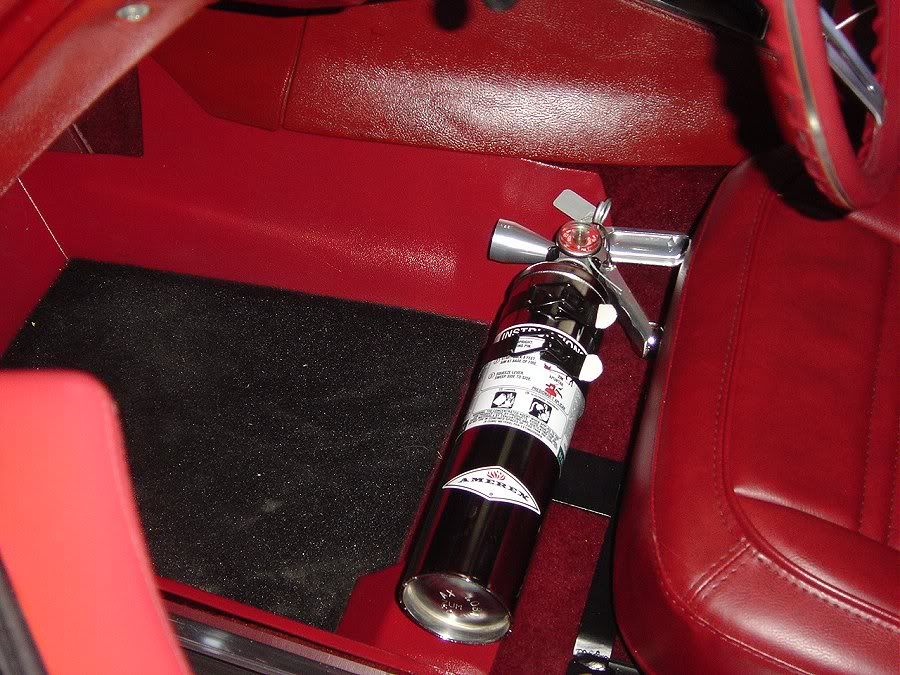
one more reason to carry a fire extinguisher. I never leave home with out one in my classic car.
Corvette Stories
The Best of Corvette for Corvette Enthusiasts

Top 10 Most Expensive Corvettes Ever Sold on Bring A Trailer
Brett Foote
10 Things Every Corvette Owner Needs (2026 Edition)
Michael S. Palmer
8 Most "Only Corvette Owners Understand" Quirks and Problems
Pouria Savadkouei
10 Reasons the C6 Z06 is Still A Performance Benchmark After 20 Years
Joe Kucinski
How Much Horsepower Every Corvette Engine "LOST" in 1972
Joe Kucinski
Top 10 DOs and DON'Ts for Protecting Your Convertible Top!
Michael S. Palmer
Top 10 Most Explosive Corvettes Ever Made: Power-to-Weight Ratio Ranked!
Joe Kucinski
150 hp to 1,250 hp: Every Corvette Generation Compared by the Specs That Matter
Joe Kucinski
8 Coolest Corvette Pace Cars (and Replicas) of All Time
Verdad Gallardo


Thread Starter
Drifting


Joined: Jul 2000
Posts: 1,347
Likes: 0
From: Melbourne Australia
Poor taste Bruce 
As for fire extinguishers............remember to give them a good shake regularly as the vibrations of the car will settle the powder to the bottom of the extinguisher like concrete and when you pull the trigger there will be no powder action
As for fire extinguishers............remember to give them a good shake regularly as the vibrations of the car will settle the powder to the bottom of the extinguisher like concrete
and when you pull the trigger there will be no powder action

Team Owner

Joined: Aug 1999
Posts: 30,995
Likes: 99
From: Ontario


Melting Slicks

Joined: May 2009
Posts: 3,079
Likes: 315
2024 C3 of the Year Finalist - Unmodified
Whenever I drive across the Alligator Alley down here, I notice dozens of blackened spots on the right shoulder. Newer cars with fuel injection systems evidently can develop a leak and continue to push fuel from the tank, spraying it onto a hot engine. Few people carry a fire extinguisher, so they have no choice but to bail out and watch their car melt into a puddle. No fire stations for miles.