




Originally a big block?

Safety Car


Joined: Sep 2007
Posts: 4,458
Likes: 331
From: Indy Indiana

1. copper radiator
2. BB hood, and 427 letters
3. Rear sway bar, yes a certain thinkness
4. Caps on your Ujoints at the yokes
5. Larger front sway bar, yes a certain thickness
6. heavier front spring with a certain label attached
7. Wider Radiator Support
8. Console engine tag that says 427
9. Tachometer redline
10. emmissions sticker behind your master cylinder
11. fuel line differences
12. transistor ignition ( some BB's did not have it though)
13. testamony from previous owners.
14. Fan Shroud.
15. Documentation, tank sticker, invoice, window sticker.. etc...
all of the above can be faked and added to make the car look like it was originally a BB car.
your NCRS judging guide will elaborate..
2. BB hood, and 427 letters
3. Rear sway bar, yes a certain thinkness
4. Caps on your Ujoints at the yokes
5. Larger front sway bar, yes a certain thickness
6. heavier front spring with a certain label attached
7. Wider Radiator Support
8. Console engine tag that says 427
9. Tachometer redline
10. emmissions sticker behind your master cylinder
11. fuel line differences
12. transistor ignition ( some BB's did not have it though)
13. testamony from previous owners.
14. Fan Shroud.
15. Documentation, tank sticker, invoice, window sticker.. etc...
all of the above can be faked and added to make the car look like it was originally a BB car.
your NCRS judging guide will elaborate..

Administrator


Joined: Jul 2000
Posts: 53,982
Likes: 6,210
From: About 1100 miles from where I call home.
In that case, you will have a numbers-matching fake big block.
Otherwise, its an NOM and the fact it USED to be a big block means nothing if you put in another big block.
Administrator
Joined: Jul 2000
Posts: 53,982
Likes: 6,210
From: About 1100 miles from where I call home.
I dunno. I think the VIN will give you the original engine size. Try using this classic VIN decoder: http://www.vinwiz.com/ Just type in your VIN.

Melting Slicks

Joined: Apr 2007
Posts: 3,189
Likes: 111
From: Tolland CT
It will never be a numbers-matching big block again, unless you go to the trouble of getting a properly part numbered 427 block that has the appropriate casting date, then have the pad decked while replicating the original style broach marks and then restamping it.
In that case, you will have a numbers-matching fake big block.
Otherwise, its an NOM and the fact it USED to be a big block means nothing if you put in another big block.
In that case, you will have a numbers-matching fake big block.
Otherwise, its an NOM and the fact it USED to be a big block means nothing if you put in another big block.
If the owner replaces the big block with another big block, it's STILL a big block. What else is it going to be, a small block? A NOM block? True, not original or numbers matching but that doesn't change the fact it's a big block.
If the owner wants to go to the trouble of finding a 'correct' block, proper casting numbers and date code, it will fly with minor deductions under NCRS judging. It's a restoration. Doesn't need to be a restamp unless the owner wishes to pass it off as original. In that case, yes, a fake, fraud.
The assertion "it will never be... bla bla bla..." is the purists point of view. Put an 'original' big block Corvette beside a so called 'fake' (actually one which has had the block replaced) side by side, outside of the collectors circle nobody will give a damn. They'll see them as the same car. Bet they'll drive the same as well.
Collector value is another matter.

Thread Starter
Racer

Joined: Nov 2005
Posts: 340
Likes: 0
From: Dublin
Hey
Thanks for all the advice. Not looking to make a fake Numbers matching car. But it would be nice to know if I did put a Big Block in that it was " the correct engine size for that car " plus a little less parts to change while dropping her in.
Thinking it could possibly have been originally a BB car.
Rear sway bar is thinner than the front. Rad is copper (but wouldnt count that yet, could have been replaced with the front clip)
7 Leaf Rear Spring.
Wont see the car for a few days to check the rest
Should the front springs be thicker on the BB car?
Thanks for all the advice. Not looking to make a fake Numbers matching car. But it would be nice to know if I did put a Big Block in that it was " the correct engine size for that car " plus a little less parts to change while dropping her in.
Thinking it could possibly have been originally a BB car.
Rear sway bar is thinner than the front. Rad is copper (but wouldnt count that yet, could have been replaced with the front clip)
7 Leaf Rear Spring.
Wont see the car for a few days to check the rest
Should the front springs be thicker on the BB car?
Last edited by briaineo; Feb 1, 2011 at 12:33 PM.
Le Mans Master


Joined: Jan 2006
Posts: 6,506
Likes: 139
From: Butler Pa
The assertion "it will never be... bla bla bla..." is the purists point of view. Put an 'original' big block Corvette beside a so called 'fake' (actually one which has had the block replaced) side by side, outside of the collectors circle nobody will give a damn. They'll see them as the same car. Bet they'll drive the same as well.
Collector value is another matter.
Collector value is another matter.
Le Mans Master
Joined: Jan 2006
Posts: 6,506
Likes: 139
From: Butler Pa
Melting Slicks
Joined: Apr 2007
Posts: 3,189
Likes: 111
From: Tolland CT
I said if it was built with a big block and had the block replaced, it's STILL a big block. True, it's no longer original, but it may still be configured exactly as it left the factory. The ONLY difference is the value to a collector who demands the 'original' block won't be there. It's then a NOM.
If an owner wants to convert a small block to a big block, another matter, then sure, they can replicate a factory big block which would be identical to an 'original' with exception of numbers. The two cars would look and run exactly alike.
The issue is the assertion that once a car with option code LS5 or LS6 has had the block replaced it can never be an LS5/6 again. This makes no sense. The LS5 or LS6 option code never stated a matching number was part of the package. Even the NCRS, an organization which people bash for being pure accepts a 'restoration', correct block with only a minor deduction.
The value of the vehicle is another matter, I'm not disputing that once the block is replaced, the collector value disappears.
Corvette Stories
The Best of Corvette for Corvette Enthusiasts

Top 10 Most Expensive Corvettes Ever Sold on Bring A Trailer
Brett Foote
10 Things Every Corvette Owner Needs (2026 Edition)
Michael S. Palmer
8 Most "Only Corvette Owners Understand" Quirks and Problems
Pouria Savadkouei
10 Reasons the C6 Z06 is Still A Performance Benchmark After 20 Years
Joe Kucinski
How Much Horsepower Every Corvette Engine "LOST" in 1972
Joe Kucinski
Top 10 DOs and DON'Ts for Protecting Your Convertible Top!
Michael S. Palmer
Top 10 Most Explosive Corvettes Ever Made: Power-to-Weight Ratio Ranked!
Joe Kucinski
150 hp to 1,250 hp: Every Corvette Generation Compared by the Specs That Matter
Joe Kucinski
8 Coolest Corvette Pace Cars (and Replicas) of All Time
Verdad Gallardo
Le Mans Master
Joined: Jan 2006
Posts: 6,506
Likes: 139
From: Butler Pa
The LS5 or LS6 option code never stated a matching number was part of the package. Even the NCRS, an organization which people bash for being pure accepts a 'restoration', correct block with only a minor deduction.

Team Owner

Joined: Jul 2008
Posts: 23,419
Likes: 22
From: In limbo
St. Jude Donor '13-'15, '17 thru '22
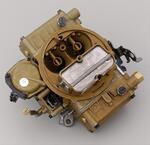
The LS5 used an expansion tank in '70. From recollection (read, high probability it could be wrong), the L-36 used one in '69 as well. It was different than the small block tank though IIRC.

Race Director

Joined: Oct 2000
Posts: 12,680
Likes: 3,134
From: Shamong, NJ
The radiators (and their core supports) can be identified by their width. The aluminum, manual trans SB radiator is 19" wide, and has no coolant tanks on it's ends and no provision for a cap. The SB auto or AC radiator has a 26" wide core, while the BB radiator has a 27.5" wide core. Both of the copper rads have coolant tanks as part of the radiator. Each of the 3 different radiators, have their own unique core support. The openings in the support match the core width, 19", 26" and 27.5".
Your talking about the long round copper expansion tank that was tucked up in the right inner fender. It was my thinking that it was only used with 69-72 air conditioned big blocks?
Melting Slicks
Joined: Apr 2007
Posts: 3,189
Likes: 111
From: Tolland CT
Two different arguments here. Was it originally a (-- fill in the RPO --)?
The fact the original block isn't there doesn't prove it never was built as ---- nor does a car with what is thought to be 'numbers match' prove it ever was. It comes down to a best guess based on available information, documentation. If there's sufficient evidence, tank sticker, POP, dealer invoice, etc, it's still a (-- fill in the RPO --) which has had a major component replaced. Won't fly as original so it's unlikely to get the premium price when sold.
Other argument is what constitutes (-- fill in the RPO --)? The factory assembly manual clearly states what parts make up this option. It makes no sense to declare it's not (RPO) if ALL the correct parts are there. May be a clone, or may not be.
If we're talking about collector value, that's another matter. The collector market requires original parts where serial numbers are involved. I'm not disputing this at all.


Burning Brakes

Joined: Jul 2009
Posts: 1,240
Likes: 294
From: ESCONDIDO CA
2025 C2 of the Year ('63 and '67) Finalist - Unmodified
C2 of Year Finalist (appearance mods) 2019
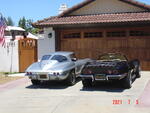
I've had the same question about mine, the current BB is not original to the car.
For awhile, I just figured that they had replaced a small block.
But the preponderance of evidence says that it was on original BB.
The fuel supply without a return line is when I decided that it had been a an original BB car.
Leave me out of the "whether it matters" debate, it mattered to me.
But, tell me if I'm wrong here, all small block cars had a fuel return line in 69; no big block cars were so equipped.
For awhile, I just figured that they had replaced a small block.
But the preponderance of evidence says that it was on original BB.
The fuel supply without a return line is when I decided that it had been a an original BB car.
Leave me out of the "whether it matters" debate, it mattered to me.
But, tell me if I'm wrong here, all small block cars had a fuel return line in 69; no big block cars were so equipped.

Race Director


Joined: Apr 1999
Posts: 15,146
Likes: 477
From: NM
Cars equiped with a Holley carb did not have a return line. Those with the Q-jet did have a return line.
So the high performance engines, small block and big block, did not have a return line.


Safety Car
Joined: Sep 2007
Posts: 4,458
Likes: 331
From: Indy Indiana
in 69, there were no holley small blocks, in 70 yes ( LT-1 ).
so in 69, no return line = holley carbs = big block
but the opposite may not be true.. the 427-390 was a quadrajet.. so dual fuel lines could be a big block, but a single fuel line cannot be a small block.. Again.. 69.. per the OP's question..
so in 69, no return line = holley carbs = big block
but the opposite may not be true.. the 427-390 was a quadrajet.. so dual fuel lines could be a big block, but a single fuel line cannot be a small block.. Again.. 69.. per the OP's question..


Instructor

Joined: May 2009
Posts: 185
Likes: 2
In the case of a 1969 the VIN will not tell you the engine size, however a later year big block such as a 1972-74 (Big Block Years) the VIN will tell you the engine size. Just an FYI because this was stated prior to the year being posted on the thread.....
