




Vintage Air Install

Instructor


Joined: Jun 2008
Posts: 100
Likes: 1

I am just finishing my a/c install. I bought the Hot Rod air system a few years back. By the time I decided to install it they were out of business. Now I know why. I have two different install manuals, neither one had pictures of the system I received. So many wrong, extra parts. Be ready to bastardize your car with any system you buy, they do not just bolt into place! I called VA about purchasing their evaporator so I could utilize my existing controls. The customer service guy could not have been worse. The kicker here is that my 1st install manual had Chisenhall all over it. And Jack Chisenhall is the top dog at VA, same guy that had Hot Rod Air?
If you are thinking about adding an a/c system, consider the car you are installing it in.
If you are thinking about adding an a/c system, consider the car you are installing it in.

Race Director


Joined: Jul 2004
Posts: 12,703
Likes: 329
From: Scottsdale Arizona
I didn't realize that HR AIr was out of business. I suppose that makes it pretty easy to choose between the aftermarket systems now 
Having VA techs posting on the forum makes this even more of a no brainer.
Having VA techs posting on the forum makes this even more of a no brainer.

Le Mans Master


Joined: Jan 2007
Posts: 5,485
Likes: 7
From: Peekskill NY
Hi Guys,
I manage the engineering department at Vintage Air. One of our technicians came across this thread while doing research for our new C2 kit and passed it on to me. I’d like to thank you for your input and also explain a bit how we go about developing these systems.
When we developed this kit, we brought in four C3 cars which we did complete installations on. The development cars were a ’68 small block car, a ’68 big block convertible car, a 70 small block factory air car, and a 76 small block factory air car. We also studied several others to confirm whether or not certain details were carried throughout all models. We have several installers that we work closely with who get the first systems to install on customer cars, then provide additional feedback. Since release, the majority of the feedback we received concerned interference of some factory radios with the VA evaporator case. Even though we test fitted three factory radios during the original development, there was apparently one that was still deeper than those we tried. We brought one of the cars back in and made a further revision to the case, providing an additional ½” of clearance in the problem area.
We strive to thoroughly research each vehicle platform that we are developing kits for and we try to bring in a good representation of actual vehicles for installs. We typically bring in 2-8 examples of each platform. Of these, obviously not all option combinations are represented but we do our best.
We value this type of feedback on our systems as we strive to continuously improve our products. Sometimes, when we’re working so close to it, we oversimplify details that are important for the installer/end user. Your observations about the wiring diagram and hose routing are good ones. I have discussed this with Jack Chisenhall, our President, and I have called one of our dealers who has installed quite a few of the C3 Kits to get his feedback as well. We are very aware of how tight the confines of these cars are. In fact, we had to make several revisions to our base Gen 4 evaporator module to allow it to even fit in the car. We will be bringing a C3 back in to investigate the feasibility of adding a hard duct to allow routing to the driver side register under the steering column. In addition, we will be making some additions to the wiring diagram to give suggestions on wire routing. Due to grounding issues inherent in these cars specifically and many others in general, we always recommend that both power and ground leads be run straight to the battery. We leave the harnesses long and un-terminated as most of our customers have their own idea of the ideal routing and placement of wiring.
Vintage air is owned and operated by classic car enthusiasts. Most of us have our own street rods, muscle cars, and collector cars. Many of us spend our free time tinkering on our own cars and contributing to forums like these. Again, thank you for your input, we appreciate it.
Ryan Zwicker
Director of Engineering
Vintage Air, Inc.
I manage the engineering department at Vintage Air. One of our technicians came across this thread while doing research for our new C2 kit and passed it on to me. I’d like to thank you for your input and also explain a bit how we go about developing these systems.
When we developed this kit, we brought in four C3 cars which we did complete installations on. The development cars were a ’68 small block car, a ’68 big block convertible car, a 70 small block factory air car, and a 76 small block factory air car. We also studied several others to confirm whether or not certain details were carried throughout all models. We have several installers that we work closely with who get the first systems to install on customer cars, then provide additional feedback. Since release, the majority of the feedback we received concerned interference of some factory radios with the VA evaporator case. Even though we test fitted three factory radios during the original development, there was apparently one that was still deeper than those we tried. We brought one of the cars back in and made a further revision to the case, providing an additional ½” of clearance in the problem area.
We strive to thoroughly research each vehicle platform that we are developing kits for and we try to bring in a good representation of actual vehicles for installs. We typically bring in 2-8 examples of each platform. Of these, obviously not all option combinations are represented but we do our best.
We value this type of feedback on our systems as we strive to continuously improve our products. Sometimes, when we’re working so close to it, we oversimplify details that are important for the installer/end user. Your observations about the wiring diagram and hose routing are good ones. I have discussed this with Jack Chisenhall, our President, and I have called one of our dealers who has installed quite a few of the C3 Kits to get his feedback as well. We are very aware of how tight the confines of these cars are. In fact, we had to make several revisions to our base Gen 4 evaporator module to allow it to even fit in the car. We will be bringing a C3 back in to investigate the feasibility of adding a hard duct to allow routing to the driver side register under the steering column. In addition, we will be making some additions to the wiring diagram to give suggestions on wire routing. Due to grounding issues inherent in these cars specifically and many others in general, we always recommend that both power and ground leads be run straight to the battery. We leave the harnesses long and un-terminated as most of our customers have their own idea of the ideal routing and placement of wiring.
Vintage air is owned and operated by classic car enthusiasts. Most of us have our own street rods, muscle cars, and collector cars. Many of us spend our free time tinkering on our own cars and contributing to forums like these. Again, thank you for your input, we appreciate it.
Ryan Zwicker
Director of Engineering
Vintage Air, Inc.
Glenn

Thread Starter
Melting Slicks


Joined: Jun 2005
Posts: 2,239
Likes: 74
From: Palatine, Peoples Republic of Illinois
St. Jude Donor '09-'10-'11-12-'13-'14-'15-'16-'17-‘18
NCM Sinkhole Donor
Maybe with all this help we're giving VA they'll make some sort of discount deal for forum members! Maybe not.

6th Gear
Joined: Apr 2011
Posts: 6
Likes: 2
Thanks Ryan, for taking an interest in our concerns with your product. I'd like to add a couple of things.
I put your kit in a 72 that came with factory air. The templates for where to drill additional mounting holes leave a lot to be desired. I followed your instructions as closely as I thought was possible, and still ended up with a hole that was off. Although it is extra work, I would suggest you add to your instructions that the DIYer mount the evap up and use the actual item to mark drilling locations. Along these same lines, the black plastic cover that goes over the four lines coming out of the cockpit and into the engine bay, on my car at least, was too small in diameter. When I secured one side with the screw through the fire wall, the piece was not large enough for me to hit firewall on the other side. The cover lined up for holes at 3 and 9 o'clock. Only one side or the other would hit firewall. I had to drill additional holes at the 12 and 6 o'clock positions to be able to secure the cover.
I put your kit in a 72 that came with factory air. The templates for where to drill additional mounting holes leave a lot to be desired. I followed your instructions as closely as I thought was possible, and still ended up with a hole that was off. Although it is extra work, I would suggest you add to your instructions that the DIYer mount the evap up and use the actual item to mark drilling locations. Along these same lines, the black plastic cover that goes over the four lines coming out of the cockpit and into the engine bay, on my car at least, was too small in diameter. When I secured one side with the screw through the fire wall, the piece was not large enough for me to hit firewall on the other side. The cover lined up for holes at 3 and 9 o'clock. Only one side or the other would hit firewall. I had to drill additional holes at the 12 and 6 o'clock positions to be able to secure the cover.
I did some looking into this and, if I understand your issue, you are talking about the holes to mount the firewall cover rather than the unit. The unit uses factory holes front and rear, with one additional hole drilled in the underside of the cowl. It is possible that the factory hole we use in the firewall could be located differently than our development car. We try to always consider what the factory holes are used for to determine the likelihood that they will be positioned consistently across all cars.
The firewall cover does call for two additional holes to be drilled, using templates. I agree that these two holes could probably be drilled by using the cover as a template. The firewall cover's position is important as I believe it led to your problem with the fitment of the black plastic line cover. This cover is easily large enough to cover the hole (over 1/2" overlap on all sides and the ability to float +/- 1/4" and still have the mounting screws hit) but it's position is dictated by the lines running through it. If the cover is out of position relative to the evaporator by more than 1/4" I can see the screws missing the opening in the firewall cover. When I get another car in here, I'll take a closer look at that area. Also, we have updated the round cover and it's now made of steel.
Finally, and this is a problem that is probably limited in scope for our vintage Corvettes, but I have a serpentine system and I'm not the only one who has made this modification, so others may feel the same way. I'm sure this next point has applications with other modders outside the Corvette community, too. The brackets you include to adapt your compressor to the stock GM compressor mount are just plain cheesy. They look terrible, and I'm still working on getting the compressor pulley to line up with the rest of my pulleys.
Thanks again for entertaining our input.
Thanks again for entertaining our input.
For a very nice, aesthetically appealing, and extremely reliable system, check out our Front Runner drives.
Ryan
6th Gear
Joined: Apr 2011
Posts: 6
Likes: 2
Ryan, thanks for posting. The changes you are making are exactly what I had recommended to your support people when I called earlier in the week. It's great to know someone is actually listening and responding.
I handled the wiring issue a little more directly. I drilled a 5/8 hole in the firewall cover plate and ran all the wire through it. I mounted the relays to the dash framing and the fuse holder to the side wall above the kick panel. This makes life a lot easier. I am then running the positive connection directly to the starter terminal (which connects directly to the battery) and the ground to the frame. My only investment in doing it this way is $.55 for a rubber grommet and about a dollar a couple connectors.
I know the changes you are making won't help me with my install but I'm sure future customers will really appreciate what you are doing!
Thanks again.
Jim
I handled the wiring issue a little more directly. I drilled a 5/8 hole in the firewall cover plate and ran all the wire through it. I mounted the relays to the dash framing and the fuse holder to the side wall above the kick panel. This makes life a lot easier. I am then running the positive connection directly to the starter terminal (which connects directly to the battery) and the ground to the frame. My only investment in doing it this way is $.55 for a rubber grommet and about a dollar a couple connectors.
I know the changes you are making won't help me with my install but I'm sure future customers will really appreciate what you are doing!
Thanks again.
Jim
We have found that many older cars have had modifications done to them that make them very noisy (EMI). The causes are often poor grounds from painted frames, radio isolation capacitors removed, MSD or other high powered ignitions not installed properly and often installed under the dash-bad idea, poor quality plug wires (one of the big names in particular is absolutely terrible for EMI), battery mounted in the trunk and not properly ground strapped, etc.
Our ECU has undergone several revisions (it is considerably better than even the unit we used in the Ford GT, which easily passed Ford's EMI testing), continuously improving its performance against EMI, but some cars are just too poorly set up. For this reason, we recommend best practices to help the customer avoid trouble.
I am in the process of re-designing one of our wiring diagrams to further describe proper connection techniques.
Also, we recommend mounting the circuit breaker as close to the source as possible. The reason for this is that only the wiring after the breaker is protected. If you have a short between the source and the breaker, you could have a fire. It is common for customers to mount the breaker under the dash where it is not seen but it's not recommended.
Thread Starter
Melting Slicks
Joined: Jun 2005
Posts: 2,239
Likes: 74
From: Palatine, Peoples Republic of Illinois
St. Jude Donor '09-'10-'11-12-'13-'14-'15-'16-'17-‘18
NCM Sinkhole Donor
Thanks Ryan,
One of the reasons I replaced the engine wiring harness along with the VA install was its general poor condition. There were a lot of splices, cut wires and wires that had simply seen better days. Radio noise has never been a problem with this car so I don't anticipate any problems. I attached the fuse just above the passenger kick panel so it's out of sight but accessible.
I have to share the concerns regarding the firewall panel fitment. After mounting the evaporator inside the cabin the position of the tubes coming through the firewall dictated the position of the panel. In order to get thing to fit properly I had to drill 2 mounting holes.
Part of the problem with doing any work on these cars is that close tolerances were a concept they hadn't quite grasped in the '70's. It's not uncommon to have holes and panels not line up without a lot of "encouragement." While +- 1/4 inch is plenty for a more modern vehicle, it's cutting it close on these!
Thanks again,
Jim
One of the reasons I replaced the engine wiring harness along with the VA install was its general poor condition. There were a lot of splices, cut wires and wires that had simply seen better days. Radio noise has never been a problem with this car so I don't anticipate any problems. I attached the fuse just above the passenger kick panel so it's out of sight but accessible.
I have to share the concerns regarding the firewall panel fitment. After mounting the evaporator inside the cabin the position of the tubes coming through the firewall dictated the position of the panel. In order to get thing to fit properly I had to drill 2 mounting holes.
Part of the problem with doing any work on these cars is that close tolerances were a concept they hadn't quite grasped in the '70's. It's not uncommon to have holes and panels not line up without a lot of "encouragement." While +- 1/4 inch is plenty for a more modern vehicle, it's cutting it close on these!
Thanks again,
Jim
6th Gear
Joined: Apr 2011
Posts: 6
Likes: 2
I am just finishing my a/c install. I bought the Hot Rod air system a few years back. By the time I decided to install it they were out of business. Now I know why. I have two different install manuals, neither one had pictures of the system I received. So many wrong, extra parts. Be ready to bastardize your car with any system you buy, they do not just bolt into place! I called VA about purchasing their evaporator so I could utilize my existing controls. The customer service guy could not have been worse. The kicker here is that my 1st install manual had Chisenhall all over it. And Jack Chisenhall is the top dog at VA, same guy that had Hot Rod Air?
If you are thinking about adding an a/c system, consider the car you are installing it in.
If you are thinking about adding an a/c system, consider the car you are installing it in.
HRA has absolutely no affiliation with Vintage Air. His focus was to sell on price. Cheap product. They are out of business for many very good reasons as you have discovered. You can do a google search to learn more.
Corvette Stories
The Best of Corvette for Corvette Enthusiasts

Top 10 Most Expensive Corvettes Ever Sold on Bring A Trailer
Brett Foote
10 Things Every Corvette Owner Needs (2026 Edition)
Michael S. Palmer
8 Most "Only Corvette Owners Understand" Quirks and Problems
Pouria Savadkouei
10 Reasons the C6 Z06 is Still A Performance Benchmark After 20 Years
Joe Kucinski
How Much Horsepower Every Corvette Engine "LOST" in 1972
Joe Kucinski
Top 10 DOs and DON'Ts for Protecting Your Convertible Top!
Michael S. Palmer
Top 10 Most Explosive Corvettes Ever Made: Power-to-Weight Ratio Ranked!
Joe Kucinski
150 hp to 1,250 hp: Every Corvette Generation Compared by the Specs That Matter
Joe Kucinski
8 Coolest Corvette Pace Cars (and Replicas) of All Time
Verdad Gallardo
6th Gear
Joined: Apr 2011
Posts: 6
Likes: 2
Your dealers that install these systems, how long does a installation take on average? I ask, because the new owner of my vette is having your system installed in a 70 non-air SB, by a reputable Vette shop. I want them to have as much upfront info as possible before they start the job. This thread will be very helpful, but any additional suggestions, tips etc would be great.
Glenn
Glenn
Like others have said, the tightest area is behind the center gauge stack. That's the place to take your time getting everything routed as neatly as possible. Some factory radios are very tight but our current systems should clear all of them. Avoid mounting MSD boxes in the car and absolutely ground them perfectly. CDIs are noisy.
Thread Starter
Melting Slicks
Joined: Jun 2005
Posts: 2,239
Likes: 74
From: Palatine, Peoples Republic of Illinois
St. Jude Donor '09-'10-'11-12-'13-'14-'15-'16-'17-‘18
NCM Sinkhole Donor
One more detail for you: your heating lines are both 5/8. These cars have one 5/8 and one 3/4.


Race Director
Joined: Aug 2004
Posts: 10,628
Likes: 132
From: Duvall, WA
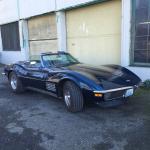
I have some huge boxes in the garage full of the VA kit for my '71 convertible. I'm pulling the engine next weekend because I'm putting in a rebuilt one. I thought it would be easier to install the A/C with the engine out of the way. By next summer, I should have a first class cruising machine.
Thread Starter
Melting Slicks
Joined: Jun 2005
Posts: 2,239
Likes: 74
From: Palatine, Peoples Republic of Illinois
St. Jude Donor '09-'10-'11-12-'13-'14-'15-'16-'17-‘18
NCM Sinkhole Donor
The engine didn't cause any problem for me. Once you have the old heater box out of the way it's amazing how much room you have in there.
6th Gear
Joined: Apr 2011
Posts: 6
Likes: 2
One of our dealers who does a lot of these along with many of our other systems says he spends about 23-25hr on this install (and the C1, C2). He spends about 20hr on most of our other kits. He says it takes him less than 30minutes to complete the conversion on the control panel.
This dealer takes his time and does a nice, clean, and reliable install.
He noted that he has installed this kit in '80-82 Vettes by using our three **** control panel instead of the supplied panel conversion kit.
This dealer takes his time and does a nice, clean, and reliable install.
He noted that he has installed this kit in '80-82 Vettes by using our three **** control panel instead of the supplied panel conversion kit.

Racer
Joined: Feb 2007
Posts: 270
Likes: 1
From: Niceville Fl


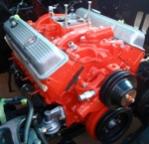
A couple more Vintage Air issues to make known. The first photo is my compressor mounted to an early 90s F-Body serpentine bracket. All my pulleys are lined up and the six groove belt has to sit to the inside of the seven groove pulley that is our only choice with the compressor provided by VA. Using the adapter brackets provided by VA to mount the Sanden compressor to the serpentine bracket, I end up with the belt rubbing the nut that attaches the adapter to the AC mounting bracket. It doesn't matter which way I install the bolt, the belt makes contact with either the nut or the head of the bolt.
The next two photos are of the placard VA provides to replace the original that is in the car. When you install a VA kit, the vacuum controls are replaced by electronics, but the thumbwheels remain in order to retain the stock appearance. This conversion requires a new placard because the position of the thumbwheel relative to what it's controlling is different from the stock configuration. I had to shoot the pictures at an angle or the flash would make the placard impossible to see, but the pictures still show what I wish to display. This placard is installed in the original housing as far to the right as I could set it, which wasn't much because there is very limited room to slide it over. As you can see in the photos, the labels on the left side of the placard all but disappear behind the cover plate. When viewed straight on, the printing is barely visible. When the controller is set in position in the center console, the print is NOT visible from the driver's position. We've mentioned many issues in this thread and have found ways to work around them. This one, there's no getting around and it is purely unacceptable. Ryan, if you're following still, you've got to fix this.


2nd Gear
Joined: Jun 2020
Posts: 2
Likes: 1
From: Houston TX
Ryan, do you have any specific information about the convertible install with restrict to the two braces on the passenger side that attach to the transmission tunnel housing saddle. I have read that the braces are there to prevent the cowling from rattling when driving and to support the bird cage. Has VA determined that the braces should be discarded? Are there any safety issues with them being removed? Not much framing in the 75 convertible bird cage. Perhaps you guys should sell a modified brace option for the corvette convertibles.
Thanks for your feedback
Chris Nolan
chris.nolan@maddieloweproperties.com
Thanks for your feedback
Chris Nolan
chris.nolan@maddieloweproperties.com

Team Owner

Joined: Jul 2004
Posts: 40,404
Likes: 791
From: Redondo Beach, California

The expected RH Dash Panel interference with the Evaporator Assembly. My finger points out where the enterference begines. Notice the RH Dash lower left "horn" extends too far back. Doesn't mate well with the Shift Console Assembly.

The Dash pad consists of a sandwich of red skin, black foam, and the plastic substrate. I've peeled the red skin back slightly and inserted a putty knife between the black foam and the plastic substrate.

Now I'm cutting away a section of the plastic substrate with a Dremel cut off disk. The putty knife underneath the plastic substrate prevents the Dremel disk from cutting into the black foam/red skin layers. Depend upon the putty knife from keeping you from cutting the red skin layer....a new RH Dash pad costs about $410!

With a segment of the plastic substrate substrate cut away, the Dash Panel interference with the Evaporator Assembly is reduced and the Dash Pad is moved slight fowward to fit in it's desired location mating with the Shift Console Assembly. Notice the slight bend on the lower edge of the RH Dash.....with the plastic substrate cut away, the RH Dash has a little flexibility to wrap around the Evaporator. It's not that noticeable.

The Center Gauge Bezel wiring and wiring to the Shift Console Assembly is easy to connect to the interior firewall harness because I've cut the wires going from the firewall harness..extended the wire lengths with butt splices and added connectors. After installing the LH Dash Pad, the Center Gauge Bezel and Shift Console assembly, I just snap the connectors together and push them up under the dash to hide them. With all duct work behiind the Center Gauge Bezel, you aren't going to get your hand in back there to make a conventional mating of the interior firwell dash.harness and the gauges on the Bezel. The radio you see is modern repro of the Delco radio. It's made by Antique Automobile Radio and it's much much smaller than the Delco original so you get more room to squeeze all the Vintage Air duct work together!!
Last edited by 68/70Vette; Jul 15, 2020 at 06:42 PM.