How safe are the C3s?

Melting Slicks

Joined: Aug 2008
Posts: 2,200
Likes: 3
From: Lehigh county Pennsylvania

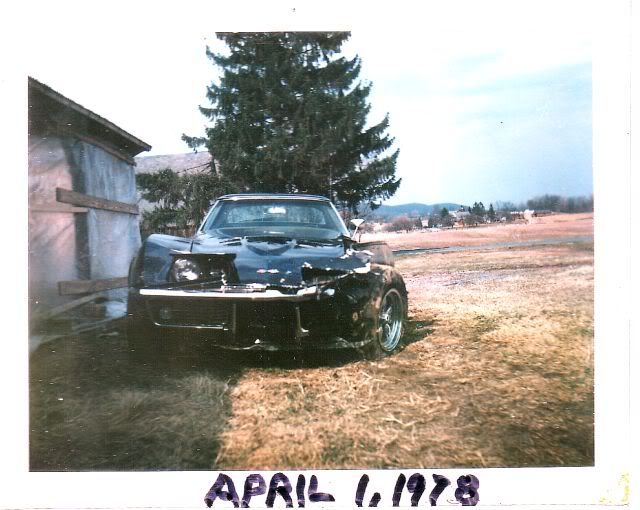
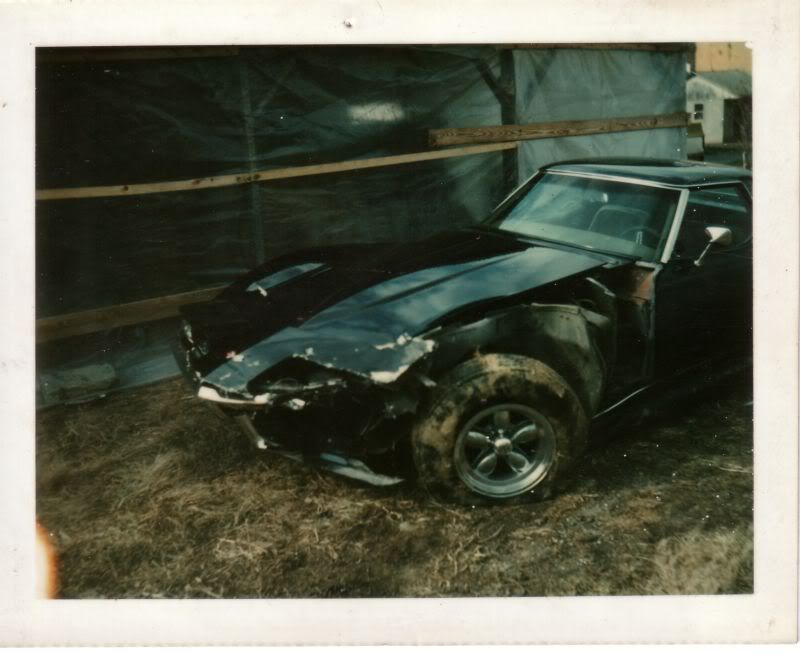
Collision with a utility pole bent the frame and ripped the left lower control arm off. Not a scratch on me. I wouldn't be typing this if the same accident happened while riding my Harley. So I say, plenty safe.

Team Owner


Joined: Aug 2003
Posts: 24,500
Likes: 312
From: Scottsdale AZ
Your C3 is certainly not as safe as most cars constructed today that are designed with energy absorbing systems, crumple zones, air bags and the like.
That said- 1973 was a significant year for Corvette with respect to safety- at least for the time- with the addition of side guard door beams and an impact absorbing front bumper.
Relative to the time, they were good steps and as posted by another- the spare tire beneath the fuel tank and behind the rear axle was indeed a part of Corvette's safety strategy. You can see the same thinking today on Pathfinders and a host of SUV's where you can see the spare under the tail of the vehicle.
Some of the stories posted here reflect survivals that were simply luck IMO--they could have just as easily gone the other way. The 73 Corvette certainly wasn't the tinderbox the Pinto sedans of the day suffered - - but relative to it's C3 brothers, it was an improvement.
That said- 1973 was a significant year for Corvette with respect to safety- at least for the time- with the addition of side guard door beams and an impact absorbing front bumper.
Relative to the time, they were good steps and as posted by another- the spare tire beneath the fuel tank and behind the rear axle was indeed a part of Corvette's safety strategy. You can see the same thinking today on Pathfinders and a host of SUV's where you can see the spare under the tail of the vehicle.
Some of the stories posted here reflect survivals that were simply luck IMO--they could have just as easily gone the other way. The 73 Corvette certainly wasn't the tinderbox the Pinto sedans of the day suffered - - but relative to it's C3 brothers, it was an improvement.

Le Mans Master


Joined: Apr 2007
Posts: 7,353
Likes: 72
From: Graceland in a Not Correctly Restored Stingray
True, todays vehicles are safer, but IIRC in '78 (as well as likely in other years) the Corvette scored at or near the top in crash safety tests. That said, during years since production a number of owners have compromised safety by removing components in the name of weight savings.
Le Mans Master

Joined: Feb 2011
Posts: 5,943
Likes: 61
From: Southern NH
It's true about the spare tire being part of the design of the vehicle, even on today's cars. My 2005 CTS-V comes stock with runflats so there's no spare tire. In it's place in the tire tub is a metal brace that runs front to back.

Le Mans Master
Joined: Feb 2011
Posts: 5,783
Likes: 400
From: Paoli, IN
St. Jude Donor '17, '19
Some amazing accidents on this thread where people walked away. Thank God.
I have never had an accident in a corvette, but I had a bad one a few years ago. I went off the road a little and over compensated to get back on and spun out. I was on interstate 65 and going about 75. After spinning, it started sliding backward with the front of the car facing the oncoming traffic. A few few feet before I was plowed over by a red semi, I spun again and went off the road into the median suspension cables. The right side was destroyed, the rear and the front ends of the car were ripped off, and the air bags did NOT deploy.
God was watching over me as I walked about without a bruise.
I have never had an accident in a corvette, but I had a bad one a few years ago. I went off the road a little and over compensated to get back on and spun out. I was on interstate 65 and going about 75. After spinning, it started sliding backward with the front of the car facing the oncoming traffic. A few few feet before I was plowed over by a red semi, I spun again and went off the road into the median suspension cables. The right side was destroyed, the rear and the front ends of the car were ripped off, and the air bags did NOT deploy.
God was watching over me as I walked about without a bruise.
Advanced

Joined: Dec 2007
Posts: 58
Likes: 1
From: Austin TX
Thanks in advance!

Team Owner


Joined: Jan 2006
Posts: 37,637
Likes: 3,118
From: Crossville TN
If you think that GM still has the [paper] documentation on crash testing with & without the spare tire, you have a lot more faith in their records system than I do. Stuff was not computerized like it is today. And all those paper files would have been stored in some basement archive after about 3 years. If that info does still exist, there's no one left that knows where it is.
Le Mans Master


Joined: Jan 2006
Posts: 6,506
Likes: 139
From: Butler Pa
If you think that GM still has the [paper] documentation on crash testing with & without the spare tire, you have a lot more faith in their records system than I do. Stuff was not computerized like it is today. And all those paper files would have been stored in some basement archive after about 3 years. If that info does still exist, there's no one left that knows where it is.
Personally I don't believe that safety was a design consideration when the tire was mounted back there.
Corvette Stories
The Best of Corvette for Corvette Enthusiasts

Top 10 Most Expensive Corvettes Ever Sold on Bring A Trailer
Brett Foote
10 Things Every Corvette Owner Needs (2026 Edition)
Michael S. Palmer
8 Most "Only Corvette Owners Understand" Quirks and Problems
Pouria Savadkouei
10 Reasons the C6 Z06 is Still A Performance Benchmark After 20 Years
Joe Kucinski
How Much Horsepower Every Corvette Engine "LOST" in 1972
Joe Kucinski
Top 10 DOs and DON'Ts for Protecting Your Convertible Top!
Michael S. Palmer
Top 10 Most Explosive Corvettes Ever Made: Power-to-Weight Ratio Ranked!
Joe Kucinski
150 hp to 1,250 hp: Every Corvette Generation Compared by the Specs That Matter
Joe Kucinski
8 Coolest Corvette Pace Cars (and Replicas) of All Time
Verdad Gallardo
Burning Brakes

Joined: Mar 2006
Posts: 793
Likes: 1
From: Houston Texas
I would urge us to not forget, your butt is about 10 inches from the pavement. Try rear-ending or a head-on with a Suburban or similar and see who walks away. Height above the other guy is important.

Race Director


Joined: Oct 2000
Posts: 12,683
Likes: 3,137
From: Shamong, NJ
With no trunk, the position of the gas tank, and the short rear overhang of the 63 Corvette, the spare probaly ended up under the car, because there was no where else to put it.

I think that it was more of a lucky by-product, or a happy coincidence, that the spare was later found to help absorb energy, in a rear end collision.


Instructor
Joined: Oct 2011
Posts: 125
Likes: 2
From: carmel indiana


Drifting

Joined: Oct 2010
Posts: 1,972
Likes: 6
From: Chester Virginia
not sure you'd want to...
lance p.
Melting Slicks
Joined: Jun 2006
Posts: 2,071
Likes: 147
From: S Nevada
When I had my heart surgery I had to go on blood thinners for life. At the time I was an avid motorcyclist. My wife was freaking about the bike and vulnerability. She was right, so I sold it and she bought my 92 corvette as consolation. Now I have the 72 as well. I know they are not as safe as compared to my f150 but, lets put it this way, when its your time to go, it could be a simple fall off of a roof or ladder. It could be high blood pressure left unchecked. It could be a jackwad texting while driving. How safe my corvettes are in a crash are the least of my concerns.
But, if my vette were to crash into one of todays smaller cars, I think it would be OK, an 18 wheeler, maybe not.
But, if my vette were to crash into one of todays smaller cars, I think it would be OK, an 18 wheeler, maybe not.
Burning Brakes
Joined: Sep 2009
Posts: 1,124
Likes: 140
From: Western New York
I highly doubt that GM had safety in mind when they placed the spare where they did. If you take a look at Chevy/GMC pickups, the spare was placed in the same area and it wasn't for safety reasons. There was just nowhere else to put it. If you really think GM was concerned with safety, just take another look at where they placed the gas tank on the early 60's pickups. In the cab behind the driver isn't showing concern for safety.
Duane
Duane
Le Mans Master
Joined: Apr 2007
Posts: 7,353
Likes: 72
From: Graceland in a Not Correctly Restored Stingray
I do recall an article, circa 1978, that detailed how the rear spare was indeed part of the rear impact system and its contributuion to safety. I've looked for it a couple of times when this has come up in the past, but haven't had luck finding it. If ever I do I will definitely post.
I've also learned Jim Shea is one of the guys here who knows what he's talking about.

I've also learned Jim Shea is one of the guys here who knows what he's talking about.
Melting Slicks
Joined: Dec 2006
Posts: 2,669
Likes: 3
From: Kingston Ontario
Common sense says the C3 isn't as safe as today's vehicles.
I do wonder how safe some of the newer vehicles really are?
For example the Smart car has excellent crash ratings. But really; I get a strong urge to punt one off the road!
I do wonder how safe some of the newer vehicles really are?
For example the Smart car has excellent crash ratings. But really; I get a strong urge to punt one off the road!
Burning Brakes
Joined: Jan 2011
Posts: 954
Likes: 2
From: San Jose CA
Death trap
--No air bag
--worn out safety belts
--Fiberglass body instead of steel
--manufactured before current safety requirements and new technology
But your dead body will look great in a cool looking wreck
--No air bag
--worn out safety belts
--Fiberglass body instead of steel
--manufactured before current safety requirements and new technology
But your dead body will look great in a cool looking wreck
Le Mans Master
Joined: Mar 2008
Posts: 5,948
Likes: 72
From: Oxford MA-----You just lost the game!!!!
IMHO, C3 'vettes are one of the most dangerous cars on the road. Who knows how many accidents have been caused by drivers looking at a C3, when they should be watching the road.
Scott
Scott
Burning Brakes


Joined: Oct 2002
Posts: 1,196
Likes: 47
From: Scarborough Maine Fredericksburg VA
I had a car run into the back of my 72 at less than 5 mph and did $1,500 of damage including cracks in the fiberglass.Those bumpers are for looks only.
I also had a frontal crash at 45 mph in a C5. Broke the frame in 3 places and the engine cradle so the engine drops down - all just like it is supposed to. I was knocked out and had a cut on my forehead from the airbag. I was back home that afternoon with a headache and a totaled car but not much else. I would have died if I had been in my C3.

I also had a frontal crash at 45 mph in a C5. Broke the frame in 3 places and the engine cradle so the engine drops down - all just like it is supposed to. I was knocked out and had a cut on my forehead from the airbag. I was back home that afternoon with a headache and a totaled car but not much else. I would have died if I had been in my C3.