



How Do You Set Your Mixture Screws?

Thread Starter
Melting Slicks


Joined: Sep 2011
Posts: 3,372
Likes: 215
From: Peoria Arizona
 How Do You Set Your Mixture Screws?
Just a general question. I've been in the practice of using a vacuum gauge and adjusting my idle screws in search of the highest reading I can reach, then adjusting idle speed back to where I want it. I've also been in the habit of setting my timing first, adjusting idle speed back to where I want it then moving onto the idle mixture.
Does anyone have a better way of doing this, or am I doing this correctly?
Thanks for any advice,
Adam
Does anyone have a better way of doing this, or am I doing this correctly?
Thanks for any advice,
Adam
Thread Starter
Melting Slicks
Joined: Sep 2011
Posts: 3,372
Likes: 215
From: Peoria Arizona
I have mine at 1 3/4 turns out right now. Just rebuilt the carb yesterday and I'll be doing a final adjustment today. Seems pretty good for an initial setting - not rich smelling behind the car. Was curious if this vacuum method is the best way to go without having access to an exhaust sniffer.

Pro

Joined: May 2011
Posts: 581
Likes: 5
From: BC
A more accurate method is to use a tach with a 0-1000 rpm scale, so that you can see very small changes in rpm. Start with them 1 turn out from lightly bottomed. Turn them out 1/4 turn at a time (together, 1/4 rt, 1/4 turn lt) and let the rpm stabalize after each 1/4 turn. Back them out until the rpm is no longer increases. Adjust your idle stop screw as you're doing this to maintain correct idle speed while adjusting. Turn them back in to the point that the rpm stopped increases.
Using vacuum is doing the same thing, the max vacuum is at the highest rpm point, but You are able to define it better.
In pre emmission era carbs when you back them out too far the rpm will start to drop. However, if you're dealing with a post 73ish carb you can simply back them out until they're at risk of falling out and leave them there. They are internally restricted to create a lean idle condition and the best you can do is let them flow as much as they can and live with the lean idle.
Steve g
Using vacuum is doing the same thing, the max vacuum is at the highest rpm point, but You are able to define it better.
In pre emmission era carbs when you back them out too far the rpm will start to drop. However, if you're dealing with a post 73ish carb you can simply back them out until they're at risk of falling out and leave them there. They are internally restricted to create a lean idle condition and the best you can do is let them flow as much as they can and live with the lean idle.
Steve g
Thread Starter
Melting Slicks
Joined: Sep 2011
Posts: 3,372
Likes: 215
From: Peoria Arizona
Hello Steve,
Wish I had a tach like that... would be a great way to work with it.
Guess I should have stated that I am using a Edelbrock Performer carb - 600cfm. Model 1406 with electric choke. Stock jetting and rods. New motor is a 9 1/5 flat top, 464 / 280 summit racing cam, 1.94 heads, headers, Performer intake, HEI with an Accell Supercoil. Maybe more info than needed but thought it might help with any advice. Oh yeah, manual trans as well. Idle speed is perfect at 700 and fast idle at 1350.
Thanks again!
Adam
Wish I had a tach like that... would be a great way to work with it.
Guess I should have stated that I am using a Edelbrock Performer carb - 600cfm. Model 1406 with electric choke. Stock jetting and rods. New motor is a 9 1/5 flat top, 464 / 280 summit racing cam, 1.94 heads, headers, Performer intake, HEI with an Accell Supercoil. Maybe more info than needed but thought it might help with any advice. Oh yeah, manual trans as well. Idle speed is perfect at 700 and fast idle at 1350.
Thanks again!
Adam
Pro
Joined: May 2011
Posts: 581
Likes: 5
From: BC
Hello Steve,
Wish I had a tach like that... would be a great way to work with it.
Guess I should have stated that I am using a Edelbrock Performer carb - 600cfm. Model 1406 with electric choke. Stock jetting and rods. New motor is a 9 1/5 flat top, 464 / 280 summit racing cam, 1.94 heads, headers, Performer intake, HEI with an Accell Supercoil. Maybe more info than needed but thought it might help with any advice. Oh yeah, manual trans as well. Idle speed is perfect at 700 and fast idle at 1350.
Thanks again!
Adam
Wish I had a tach like that... would be a great way to work with it.
Guess I should have stated that I am using a Edelbrock Performer carb - 600cfm. Model 1406 with electric choke. Stock jetting and rods. New motor is a 9 1/5 flat top, 464 / 280 summit racing cam, 1.94 heads, headers, Performer intake, HEI with an Accell Supercoil. Maybe more info than needed but thought it might help with any advice. Oh yeah, manual trans as well. Idle speed is perfect at 700 and fast idle at 1350.
Thanks again!
Adam
There is an optimum idle mixture, by optimum I mean one that creates the smoothest idle with the lowest throttle valve opening to set correct speed. When emission controls hit hard in the early 70's you were no longer able to adjust to that point. They were restricted so that no matter how far you backed the screw out (after you broke off the plastic limiter caps it left the factory with) you ran with a lean condition at idle, just rich enough to prevent lean misfire, but you could never get what those that did tune ups prior to emmissions would call a "nice idle".
I suspect your carb is the same thing. If it is internally restricted and after backing them out to max speed gain any further turn out seems to make no difference whatsoever, that's what you have and what you want to do is just back the screws out as far as you can without them falling out. You're still too lean, but that's as good as you're going to get.
Steve g

Team Owner


Joined: Jan 2006
Posts: 37,637
Likes: 3,117
From: Crossville TN
Mixture screws are the last things to work on. First, verify that you have no significant vacuum system leaks. These need to be fixed before doing any engine tuning work. Then, you need to adjust the distributor for the timing performance you want. Set carb/choke adjustments. Then set 'fast' idle and curb idle speed.
Finally you can set mixture screws by making small adjustments, alternately on both screws, going CCW until engine no longer increases in rpm; then turning CW until engine speed drops about 20 rpm, or so.
If you need to make a last adjustment to curb idle speed, that's OK.
Finally you can set mixture screws by making small adjustments, alternately on both screws, going CCW until engine no longer increases in rpm; then turning CW until engine speed drops about 20 rpm, or so.
If you need to make a last adjustment to curb idle speed, that's OK.
Pro
Joined: May 2011
Posts: 581
Likes: 5
From: BC
Mixture screws are the last things to work on. First, verify that you have no significant vacuum system leaks. These need to be fixed before doing any engine tuning work. Then, you need to adjust the distributor for the timing performance you want. Set carb/choke adjustments. Then set 'fast' idle and curb idle speed.
Finally you can set mixture screws by making small adjustments, alternately on both screws, going CCW until engine no longer increases in rpm; then turning CW until engine speed drops about 20 rpm, or so.
If you need to make a last adjustment to curb idle speed, that's OK.
Finally you can set mixture screws by making small adjustments, alternately on both screws, going CCW until engine no longer increases in rpm; then turning CW until engine speed drops about 20 rpm, or so.
If you need to make a last adjustment to curb idle speed, that's OK.
Idles speed should be constantly corrected as you go through the mixture procedure. As rpm increases and you continue to adjust mixture you will achieve optimum mixture setting for that throttle opening. When you change throttle opening as a last adjustment you may not still be at optimum mixture setting. That's what we were taught at trade school and all the little seminars you went to back in the day.
I wouldn't lean it out for the rpm drop unless I was in a very strict emmissions monitoring situation. It's hard enough to get a decent idle on a restricted carb without leaning it out further. They run smoother and use less fuel at idle when set to optimum mixture. It may be counter intuitive that richening the mixture can result in less fuel usage, but with the difference in throttle opening it becomes more efficient.
Steve g
Corvette Stories
The Best of Corvette for Corvette Enthusiasts

10 Reasons the C6 Z06 is Still A Performance Benchmark After 20 Years
Joe Kucinski
How Much Horsepower Every Corvette Engine "LOST" in 1972
Joe Kucinski
Top 10 DOs and DON'Ts for Protecting Your Convertible Top!
Michael S. Palmer
Top 10 Most Explosive Corvettes Ever Made: Power-to-Weight Ratio Ranked!
Joe Kucinski
150 hp to 1,250 hp: Every Corvette Generation Compared by the Specs That Matter
Joe Kucinski
8 Coolest Corvette Pace Cars (and Replicas) of All Time
Verdad Gallardo
Top 10 Corvette Engines RANKED by Peak Torque (70+ Years of Muscle!)
Joe Kucinski
Corvette ZR1X Will Be Pacing the Indy 500, And Could Probably Race, Too!
Verdad Gallardo
Top 10 Corvettes Coming to Mecum Indy 2026!
Brett Foote
Thread Starter
Melting Slicks
Joined: Sep 2011
Posts: 3,372
Likes: 215
From: Peoria Arizona
The carb is all setup except for adjusting the mixture screws. Just went through the whole carb yesterday and set everything. Most of it was pretty close "out of the box", except for the accelerator pump which needed a fair amount of adjustment. This carb was on the car when we got it, but had never been apart from the looks of the gaskets and accelerator pump which was still the black shaft (stock). Replacement shafts are white.
Going out in a few to get the rest taken care of and double check the timing. Then a short road test to see how it is at speed.
Thanks guys!
Adam
Going out in a few to get the rest taken care of and double check the timing. Then a short road test to see how it is at speed.
Thanks guys!
Adam
Thread Starter
Melting Slicks
Joined: Sep 2011
Posts: 3,372
Likes: 215
From: Peoria Arizona
Well, its seems by setting everything according to the Edelbrock "manual" I have only made it worse. Surging at steady speed is worse and it actually flooded out on me when I turned back onto my street. Removed the air cleaner and all four venturis were dripping gas. Finally got it started again and back home.
Idle is not staying consistent either. Sometimes it comes back to 700 (my setting) sometimes it's 1,000 or 1,100. Seems to start hard(er) when hot etc. Also seems like power is down some, but I'm not sure on that because I haven't really gotten into this motor hard as it only has about 5 miles on it so far.
Sooo.. what to do next - other than buy a Holley
Idle is not staying consistent either. Sometimes it comes back to 700 (my setting) sometimes it's 1,000 or 1,100. Seems to start hard(er) when hot etc.
Also seems like power is down some, but I'm not sure on that because I haven't really gotten into this motor hard as it only has about 5 miles on it so far.Sooo.. what to do next - other than buy a Holley
Pro
Joined: May 2011
Posts: 581
Likes: 5
From: BC
Well, obviously it's flooding. That's why the hard hot start as well. Also accounts for erratic idle speed. If the choke is fully off your problem is needle/seat/float related.
Back in the day on carbs that used the little paper fuel filter element in the inlet (q-jets) if you didn't dip the filter in clean solvent and blow them out you stood a pretty good chance of a piece of fluff coming off the filter and lodging in the needle and seat. The engine wold flood just as you're experiencing. To correct this you could usually disconnect and plug the fuel line at the carb. Start and run the engine until you burn off all the fuel in the float bowl. After it quits reconnect the line and start it up.
When the bowl is full the fuel arrives in small amounts. Draining the bowl allows a rush of fuel and will wash out the fluff in the seat. If it doesn't work the first time, try it again. If still no luck you are going to have to disassemble and have a look at the float/needle/seat.
Steve g
Back in the day on carbs that used the little paper fuel filter element in the inlet (q-jets) if you didn't dip the filter in clean solvent and blow them out you stood a pretty good chance of a piece of fluff coming off the filter and lodging in the needle and seat. The engine wold flood just as you're experiencing. To correct this you could usually disconnect and plug the fuel line at the carb. Start and run the engine until you burn off all the fuel in the float bowl. After it quits reconnect the line and start it up.
When the bowl is full the fuel arrives in small amounts. Draining the bowl allows a rush of fuel and will wash out the fluff in the seat. If it doesn't work the first time, try it again. If still no luck you are going to have to disassemble and have a look at the float/needle/seat.
Steve g

Safety Car


Joined: Oct 2000
Posts: 3,593
Likes: 103
From: Southern Indiana
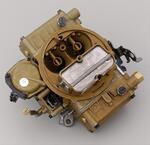
Removed the air cleaner and all four venturis were dripping gas
Sooo.. what to do next - other than buy a Holley
Le Mans Master

Joined: Mar 2008
Posts: 5,948
Likes: 72
From: Oxford MA-----You just lost the game!!!!
Have you ever had this car running well with this carb on it? And, how can it be "out of the box", if it was on the car when you bought it? Most people who use that phrase, as in "It ran great right out of the box." use it because they bought a new carb, took it out of the box, and bolted it onto their car.
I agree that something is going on with the needle and seat, I'm not familiar with Eddy carbs, but doesn't the top come off pretty easily, and you can root around in the guts of it? Double check the float level, make sure the float isn't hanging up on anything, make sure there isn't any crud keeping the needle from seating. Fuel pressure? You're not running an unregulated electric fuel pump, are you? That's about all I can come up with, good luck, let us know how it works out.
Seriously, have you ever actually seen this particular carb running well? And if so, what has changed between then and now?
Keep the shiny side up!
Scott
I agree that something is going on with the needle and seat, I'm not familiar with Eddy carbs, but doesn't the top come off pretty easily, and you can root around in the guts of it? Double check the float level, make sure the float isn't hanging up on anything, make sure there isn't any crud keeping the needle from seating. Fuel pressure? You're not running an unregulated electric fuel pump, are you? That's about all I can come up with, good luck, let us know how it works out.
Seriously, have you ever actually seen this particular carb running well? And if so, what has changed between then and now?
Keep the shiny side up!
Scott
Thread Starter
Melting Slicks
Joined: Sep 2011
Posts: 3,372
Likes: 215
From: Peoria Arizona
Scotty, I'm not sure I can answer that accurately - the car was torn apart right after we got it and rebuilt. It ran before I did that, but I had about a block of drive time on so no comparison to be made.
What I meant by out of the box, was that is was obvious that it had not been apart before. The carb was the only clean part on the motor when we got it and looked as though it was very recently put on.
It seems to have a better idle now - I slowly turned the mixture screws in all the way to a light seat and backed them out while it was running. Adjusting them in and out now is making a clear idle difference which was not happening before - at least to this extent. Rechecked - set timing to 12 initial, reset idle speed and it seems to be better now.
The flooding issue - I'm thinking its a pressure issue. The "manual" for this carb says it requires 6.5 psi max and I'm over that at 8 - 9. I think my original thought of a regulator is what's needed.
Thanks guys,
Adam
Thread Starter
Melting Slicks
Joined: Sep 2011
Posts: 3,372
Likes: 215
From: Peoria Arizona
2 test drives since the last adjustments and no surging - idle speed is staying consistent as well. No flooding or loading up either Will try a longer test drive tomorrow and see what happens.
Motor feels much stronger as well - I moved the vac advance line to the "non-emissions" vac port which made a huge difference for the better.
Thank you for all the advice and pointers guys!
Adam
Will try a longer test drive tomorrow and see what happens.Motor feels much stronger as well - I moved the vac advance line to the "non-emissions" vac port which made a huge difference for the better.
Thank you for all the advice and pointers guys!
Adam



Le Mans Master
Joined: Feb 2012
Posts: 6,644
Likes: 479
From: OK
Well, its seems by setting everything according to the Edelbrock "manual" I have only made it worse. Surging at steady speed is worse and it actually flooded out on me when I turned back onto my street. Removed the air cleaner and all four venturis were dripping gas. Finally got it started again and back home.
Idle is not staying consistent either. Sometimes it comes back to 700 (my setting) sometimes it's 1,000 or 1,100. Seems to start hard(er) when hot etc. Also seems like power is down some, but I'm not sure on that because I haven't really gotten into this motor hard as it only has about 5 miles on it so far.
Sooo.. what to do next - other than buy a Holley
Idle is not staying consistent either. Sometimes it comes back to 700 (my setting) sometimes it's 1,000 or 1,100. Seems to start hard(er) when hot etc.
Also seems like power is down some, but I'm not sure on that because I haven't really gotten into this motor hard as it only has about 5 miles on it so far.Sooo.. what to do next - other than buy a Holley
so...
 i got a 750 double pumpin holley and no more problems....
Le Mans Master
Joined: Mar 2008
Posts: 5,948
Likes: 72
From: Oxford MA-----You just lost the game!!!!
2 test drives since the last adjustments and no surging - idle speed is staying consistent as well. No flooding or loading up either Will try a longer test drive tomorrow and see what happens.
Motor feels much stronger as well - I moved the vac advance line to the "non-emissions" vac port which made a huge difference for the better.
Thank you for all the advice and pointers guys!
Adam
Will try a longer test drive tomorrow and see what happens.Motor feels much stronger as well - I moved the vac advance line to the "non-emissions" vac port which made a huge difference for the better.
Thank you for all the advice and pointers guys!
Adam
Keep the shiny side up!
Scott
Thread Starter
Melting Slicks
Joined: Sep 2011
Posts: 3,372
Likes: 215
From: Peoria Arizona
I'll end up with a Holley again - today was just reinforcement of my feelings about them. They are easy to tune and when they are setup correctly, they work awesome.
OR, I could try to make this original Qjet work - it came with the car - maybe put the stock intake back on as well?
OR, I could try to make this original Qjet work - it came with the car - maybe put the stock intake back on as well?
Le Mans Master
Joined: Feb 2012
Posts: 6,644
Likes: 479
From: OK
The slobber jets are awesome....secondaries like coke can...that's the thing....can you keep your foot out of those secondaries? Sounds like it's gonna suck your hood in.........