




Stalls on Reverse - What's going on?

Thread Starter
Heel & Toe

Joined: Aug 2010
Posts: 20
Likes: 0
 Stalls on Reverse - What's going on?
***PROBLEM SOLVED!!!
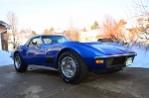
I just got my car back from the body shop. It's looking awesome. It's painted silver off of a 2007 Lexus which is very similar to it's original color. I included a pic for your viewing pleasure. I'm almost done restoring my father's car. Wish he was here to take me for one more ride in it...
Anyhow, I brought it home and have noticed that it's not easy to put the car into reverse (Muncie transmission). It wants to stall every time I release the clutch. It will move but it's difficult to do so. I have to rev higher to get it to move slowly. It sounds and feels like it's not getting enough air to it. I really hope it was nothing the shop did. It was driving fine before I dropped it off. =( Does anyone know what could be causing this?

I just got my car back from the body shop. It's looking awesome. It's painted silver off of a 2007 Lexus which is very similar to it's original color. I included a pic for your viewing pleasure. I'm almost done restoring my father's car. Wish he was here to take me for one more ride in it...
Anyhow, I brought it home and have noticed that it's not easy to put the car into reverse (Muncie transmission). It wants to stall every time I release the clutch. It will move but it's difficult to do so. I have to rev higher to get it to move slowly. It sounds and feels like it's not getting enough air to it. I really hope it was nothing the shop did. It was driving fine before I dropped it off. =( Does anyone know what could be causing this?
Last edited by vetteguy79; Jun 29, 2012 at 08:01 PM.

Team Owner


Joined: Jan 2006
Posts: 37,637
Likes: 3,118
From: Crossville TN
Does the engine operate OK during low range starts? There should be no difference between how it operates in low range or reverse. Your E-brake is not partially engaged, is it?
Car looks great, BTW.
Car looks great, BTW.
Thread Starter
Heel & Toe
Joined: Aug 2010
Posts: 20
Likes: 0
The car operates just as it should but when put the car into reverse, it will die. It will drive around just fine in all of the other gears. I worry that someone at the body shop I just got it from did something to it. My e-brake isn't engaged at all...
Team Owner
Joined: Jan 2006
Posts: 37,637
Likes: 3,118
From: Crossville TN
The only thing that comes to mind is that the shift linkage arms on the side of the transmission are binding up in Reverse and somehow causing two ranges to engage at once (I don't know for sure if that is even possible). If the engine is dying (rather than stalling from some mechanical reason), maybe there is some ignition wire that is shorting out at the tranny (neutral start switch?) when the linkage is moved to reverse. I suppose that the NSS could have been damaged somehow, but painting activities wouldn't put anyone under there.
Thread Starter
Heel & Toe
Joined: Aug 2010
Posts: 20
Likes: 0
Just now the engine died when I put the car into the reverse gear without even releasing the clutch. Usually I can put it into reverse gear but as I release the clutch and give it gas, it wants (and does) to die. Can I visually inspect the NSS for damage?
And you're right, the body shop shouldn't have done anything to have caused damage to this car but there are some younger boys that work there that were very interested in the car. I wish I wrote down the miles when I dropped it off. I did notice the gas level lower when I picked it up.
And you're right, the body shop shouldn't have done anything to have caused damage to this car but there are some younger boys that work there that were very interested in the car. I wish I wrote down the miles when I dropped it off. I did notice the gas level lower when I picked it up.
Last edited by vetteguy79; Jun 29, 2012 at 07:11 PM.
Thread Starter
Heel & Toe
Joined: Aug 2010
Posts: 20
Likes: 0
Thanks for your help. Oddly enough, it ended up being the battery wire coming in contact with my tachometer wire at my coil. Don't ask me why it only affected the car when put into reverse.... I have no clue!!!! The one thing I learned about these cars is that almost always the problem is stupid and easy to fix...
Racer
Joined: Nov 2008
Posts: 326
Likes: 0
Thanks for your help. Oddly enough, it ended up being the battery wire coming in contact with my tachometer wire at my coil. Don't ask me why it only affected the car when put into reverse.... I have no clue!!!! The one thing I learned about these cars is that almost always the problem is stupid and easy to fix...
Corvette Stories
The Best of Corvette for Corvette Enthusiasts

Top 10 Most Expensive Corvettes Ever Sold on Bring A Trailer
Brett Foote
10 Things Every Corvette Owner Needs (2026 Edition)
Michael S. Palmer
8 Most "Only Corvette Owners Understand" Quirks and Problems
Pouria Savadkouei
10 Reasons the C6 Z06 is Still A Performance Benchmark After 20 Years
Joe Kucinski
How Much Horsepower Every Corvette Engine "LOST" in 1972
Joe Kucinski
Top 10 DOs and DON'Ts for Protecting Your Convertible Top!
Michael S. Palmer
Top 10 Most Explosive Corvettes Ever Made: Power-to-Weight Ratio Ranked!
Joe Kucinski
150 hp to 1,250 hp: Every Corvette Generation Compared by the Specs That Matter
Joe Kucinski
8 Coolest Corvette Pace Cars (and Replicas) of All Time
Verdad Gallardo
Thread Starter
Heel & Toe
Joined: Aug 2010
Posts: 20
Likes: 0
Thank you, sir. It was my late father's car. It's been my mission to rebuild it, restore it to its glory and make it the car that my father had in mind. That being said, I've learned a lot about cars now with this project. I only have a few more finishing touches... Next project: getting the headlights to pop up again!
Team Owner
Joined: Jan 2006
Posts: 37,637
Likes: 3,118
From: Crossville TN
The most common problems with the headlight system are 1) worn out shuttle valve seals in the vacuum relay(s) and bad seals in the vacuum actuator can(s). The actuator cans can be rebuilt; there is not an available rebuild kit for the relays.
But, you should first test to see how much vacuum your engine can produce at idle; then see how much vacuum is getting to the center hose (yellow stripe) on those relays. Those two readings should be fairly close to the same number. If there is a large drop in vacuum, you have a big leak somewhere which will not allow the lights to raise.
But, you should first test to see how much vacuum your engine can produce at idle; then see how much vacuum is getting to the center hose (yellow stripe) on those relays. Those two readings should be fairly close to the same number. If there is a large drop in vacuum, you have a big leak somewhere which will not allow the lights to raise.