When you click on links to various merchants on this site and make a purchase, this can result in this site earning a commission. Affiliate programs and affiliations include, but are not limited to, the eBay Partner Network.
Below is what I am working with. What to set it up correctly and looking for input. The compressor ia a 60 gallon, 5 hp. Single stage but the specs say 16 cfm @ 90 psi and 14.6 @ 125. Tank has a 3/4" tapping. Length and size of main line before any separator, rise and than back down to create a trap? I would love to see pictures of what others have done and comments for improvements after living with it.
Thanks in advance,
Peter
I built a attached shed on my garage for the lawn tools.
Put the compressor in there and piped through the wall into the garage so I wouldn't have to listen to it...as much.
Plumbed the entire garage through the ceiling with drops at working height using copper pipe - two days before the sheet rock hit the stud walls - guess you're past that point. Easy to work with - resists rupture and nails.
Drop at the workbench, between the doors for the kids bikes, center ceiling with reel line.
Go to the Garage Journal site for good tips on doing this. Schedule K,L,M depending on your pressures are recommended. I went with 1/2" L throughout I believe - works great - if you can afford bigger/thicker all the better.
Be sure to put a pressure gauge on one of the drop head quick disconnects so you don't have to run round to the compressor to check your pressure. Be sure to use the yellow gas rated Teflon tape on your gauge, disconnect, hose joints - white Teflon tape will leak.
Last edited by Hammerhead Fred; Dec 8, 2014 at 09:28 PM.
I built a attached shed on my garage for the lawn tools.
Put the compressor in there and piped through the wall into the garage so I wouldn't have to listen to it...as much.
Plumbed the entire garage drops using copper pipe.
Easy to work with - resists rupture and nails.
Drop at the workbench, between the doors for the kids bikes, center ceiling with reel line. Go to the Garage Journal site for good tips on doing this. Schedule K,L,M depending on your pressures are recommended. I went with L I believe.
Be sure to put a pressure gauge on one of the drop head quick disconnects so you don't have to run round to the compressor to check your pressure.
Lots of great advice in this response.
If you can put the compressor in another room, do it. It significantly cuts down on noise which is even more apparent if you use it a lot (I do lots of work in front of the blast cabinet).
I used commercially available aluminum pipe, but agree with multiple drops. Copper is easy to work with, but expensive. Don't use PVC tubing... I know some folks do, but it still isn't a good (or safe) choice.
I'd suggest a gauge, regulator, and water trap at every drop... Just makes life easier.
The Garage Journal web site is highly recommended. Lots of great advice and ideas on that site!
I used it in my old house and now in my new house. I have a 60 gallon compressor in my shed which backs up to my garage. I plumbed in in the ground into the garage and run 3 hose connectors in the garage one up front one in the middle and one out at the garage door. Supplies all the air I need where i need it. This flexible line will hold all the psi I need and is flexible enought to run anywhere. It is fairly cheap and easy to run. No special tools needed and you can put the lines any where you want.
One other thing I ran a short run in the shed so I have air pressure in the shed which I have used often.
If you can put the compressor in another room, do it. It significantly cuts down on noise which is even more apparent if you use it a lot (I do lots of work in front of the blast cabinet).
I used commercially available aluminum pipe, but agree with multiple drops. Copper is easy to work with, but expensive. Don't use PVC tubing... I know some folks do, but it still isn't a good (or safe) choice.
I'd suggest a gauge, regulator, and water trap at every drop... Just makes life easier.
The Garage Journal web site is highly recommended. Lots of great advice and ideas on that site!
Regards,
Stan Falenski
I went with the trap at all drops too.
Only put the gauge & regulator on the workbench drop but see now the value in having it everywhere as I grow lazier/older/feeble/less mobile.
I looked at the aluminum pipe but let my drunk plumber friend talk me out of it when he pointed out how easy it would be for him to put a nail through it behind my sheet rock.
Noise it the real killer - even outside it's still loud - but at least my ears no longer ring from it.
Last edited by Hammerhead Fred; Dec 8, 2014 at 09:46 PM.
Thank you all for your feedback, and valid input. I am now looking at the Rapidair Product. It looks as if it will suit my needs and the finish I am trying to achieve. I really wish I did make provisions for a separate area for the compressor after your comments, but I didn't. I have thoughts of framing in a closet in the corner but than I need to allow for air into the closet and after insulating will this approach significantly reduce the db level?
Thank you all for your feedback, and valid input. I am now looking at the Rapidair Product. It looks as if it will suit my needs and the finish I am trying to achieve. I really wish I did make provisions for a separate area for the compressor after your comments, but I didn't. I have thoughts of framing in a closet in the corner but than I need to allow for air into the closet and after insulating will this approach significantly reduce the db level?
Box it in under those steps - it's still going to be very loud.
This is my 1/2" RapidAir setup just after I installed it last year. I have been happy with it so far.
Notice the blue tube coil before the filtering. It should be replaced with a copper pipe for better cooling and water condensation + a way to let the condensed water drop out.
After the compressor: water filtering + particle filtering + pressure regulation + outlet.
A second outlet on the same wall as the first one. The chickens don't mind.
A third outlet on the opposite wall. The blue pipe goes up, across & above the ceiling, and down again.
Then I also built a rolling shelf with its own water/particle filter & pressure regulation that I can plug into any of the 3 outlets as a last defense.
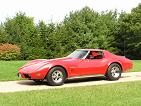
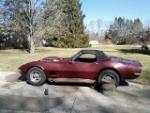
All this to rejuvenate the blue C3 resting behind.
This is my 1/2" RapidAir setup just after I installed it last year. I have been happy with it so far.
Notice the blue tube coil before the filtering. It should be replaced with a copper pipe for better cooling and water condensation + a way to let the condensed water drop out.
After the compressor: water filtering + particle filtering + pressure regulation + outlet.
A second outlet on the same wall as the first one. The chickens don't mind.
A third outlet on the opposite wall. The blue pipe goes up, across & above the ceiling, and down again.
Then I also built a rolling shelf with its own water/particle filter & pressure regulation that I can plug into any of the 3 outlets as a last defense.
All this to rejuvenate the blue C3 resting behind.
Nice setup. Thank you. I am leaning towards the rapid air system. Does that coil fill with water?
I actually don't know. I have never disconnected it after usage to check. I would like to replace it with a long copper pipe angled in such a way that I can let any accumulated water out of it. The trouble is that I could not find fittings that would let me connect the blue pipe to the copper pipe and vice-versa.
Make your water traps as large as possible. There's nothing worse than a trap filling up when your using the air a lot. It's easy to get involved in the project and forget to drain the traps.
I put a drop at all four corners with a QD and a yellow coiled hose attached. All of the QD's have some ferro component and I can secure the ends to a 1" magnet somewhere handy nearby to keep them out of the way. I used copper lines. You can sort of see the compressor in the picture.







 Need input for air Lines