



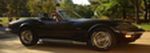


1975 roadster

Thread Starter
Pro

Joined: Aug 2013
Posts: 633
Likes: 36
From: Cincinnati Ohio
 1975 roadster
How would you figure out how many 1975 roadsters with L-82, 4 speed, A/C, 2 tops, power windows, tilt/telescopic, dual horns and FE7 were made??? Is there a way to break it down or close estimate???
Thanks
Thanks

Team Owner


Joined: Jun 2000
Posts: 38,923
Likes: 1,481
From: Southbound
Cruise-In II Veteran
You can't. GM did not keep data on options configurations. About the only thing you can confirm is that 4629 convertibles were assembled, 2407 of those had the optional hardtop. The car you mention would be one of 2407 provided the hardtop is original.

Last edited by Easy Mike; Dec 31, 2014 at 09:58 AM.

Race Director


Joined: Jul 2001
Posts: 15,892
Likes: 42
I've developed a far more accurate method of calculating the answer for these how-many-did-they-build questions. We all know that for bragging rights, we want the answer to be some very low number like '1 of ten' or less. If we use a bit of logic we can also figure out that virtually all Corvettes are actually '1 of 1' due to the low volume built and the wide variety of option available even in the most austere years. We also know that we can't all claim the 1 of 1 status at the same time because nobody will believe us. We already have a nasty reputation for being one of those '________' Corvette people (insert favourite adjective) so all of us claiming some outrageous rarity number will just prove them right.
Here's how it works- think of the day of the month that the two most important people in your life were born. Include yourself if you like as one of them. Almost invariably, the two people will not be born on the same day. Take the two numbers and subtract the smaller from the larger. That number is the '1 of' that you've been seeking.
Ex- one person was born on the 22rd, the other on the 18th. 22-18=4. Your car is 1 of 4.
For the rare case that both people were born on the same day, replace one of them with the number 15 and use the same formula.
If you really don't have two favourite people in your life and don't want to lie, there's an alternate method. Think of how many people have come up to you and told you the same old story like 'my uncle had one with a metal body', 'you should have got an LT-1 big block' 'I'll give you $5K for it right now' etc.
If the number exceeds what you want to hear, divide the total of one dumb comment by the total of a different dumb comment.
See, simple.
Here's how it works- think of the day of the month that the two most important people in your life were born. Include yourself if you like as one of them. Almost invariably, the two people will not be born on the same day. Take the two numbers and subtract the smaller from the larger. That number is the '1 of' that you've been seeking.
Ex- one person was born on the 22rd, the other on the 18th. 22-18=4. Your car is 1 of 4.
For the rare case that both people were born on the same day, replace one of them with the number 15 and use the same formula.
If you really don't have two favourite people in your life and don't want to lie, there's an alternate method. Think of how many people have come up to you and told you the same old story like 'my uncle had one with a metal body', 'you should have got an LT-1 big block' 'I'll give you $5K for it right now' etc.
If the number exceeds what you want to hear, divide the total of one dumb comment by the total of a different dumb comment.
See, simple.

Team Owner


Joined: Aug 2000
Posts: 21,453
Likes: 461
From: Massillon,Ohio USA
2020 C3 of the Year Finalist - Unmodified
Cruise-In VI Veteran
St. Jude Donor '08-'09-'10-'11-'12
Out of 2372 L-82 cars built in 1975, 366 were convertibles, 2006 coupes. When I was doing my '75 L-82 Survey from about 1998 to present(though not near as much), I have about 84 cars in it and saw almost a 50/50 split on automatics vs 4spds. Seems as though most cars did have the A/C & power window options too. One way to get a close theoretical estimate would be to calculate how much each option was as a total % of the total production of 1975, then take that % of 366, the known number built of '75 L-82 convertibles.
Melting Slicks


Joined: May 2006
Posts: 3,438
Likes: 41
From: Raleigh NC
St. Jude Donor '13-'14
Out of 2372 L-82 cars built in 1975, 366 were convertibles, 2006 coupes. When I was doing my '75 L-82 Survey from about 1998 to present(though not near as much), I have about 84 cars in it and saw almost a 50/50 split on automatics vs 4spds. Seems as though most cars did have the A/C & power window options too. One way to get a close theoretical estimate would be to calculate how much each option was as a total % of the total production of 1975, then take that % of 366, the known number built of '75 L-82 convertibles.
Where does that 366 L82 convertibles come from?

Administrator


Joined: Jul 2000
Posts: 53,976
Likes: 6,203
From: About 1100 miles from where I call home.
Any speculative estimation on the distribution of a % of that (and any) combination of options not completely based on actual production data is completely statistically invalid.
Its pretty close to random. You cannot project numbers that result from different people making individual choices. Numbers people quote are purely made up.
Calculating the amount of cars that year with a combination of NINE (9) options/choices is imaginary. If you are trying to be able to say it's rare, just say it's a high option car that was likely relatively rare.
Its pretty close to random. You cannot project numbers that result from different people making individual choices. Numbers people quote are purely made up.
Calculating the amount of cars that year with a combination of NINE (9) options/choices is imaginary. If you are trying to be able to say it's rare, just say it's a high option car that was likely relatively rare.
Corvette Stories
The Best of Corvette for Corvette Enthusiasts

150 hp to 1,250 hp: Every Corvette Generation Compared by the Specs That Matter
Joe Kucinski
8 Coolest Corvette Pace Cars (and Replicas) of All Time
Verdad Gallardo
Top 10 Corvette Engines RANKED by Peak Torque (70+ Years of Muscle!)
Joe Kucinski
Corvette ZR1X Will Be Pacing the Indy 500, And Could Probably Race, Too!
Verdad Gallardo
Top 10 Corvettes Coming to Mecum Indy 2026!
Brett Foote
Top 10 C9 Corvette MUST-HAVES to Fix These C8 Generation Flaws!
Michael S. Palmer
10 Revolutionary 'Corvette Firsts' Most People Don't Know
Joe Kucinski
5 Reasons to Upgrade to an LS6-Powered Corvette; 5 Reasons to Stay LT2
Michael S. Palmer
2027 Corvette vs The World: Every C8 vs Its Closest Competitor
Joe Kucinski
Melting Slicks
Joined: May 2006
Posts: 3,438
Likes: 41
From: Raleigh NC
St. Jude Donor '13-'14
Race Director
Joined: Jul 2001
Posts: 15,892
Likes: 42
Any speculative estimation on the distribution of a % of that (and any) combination of options not completely based on actual production data is completely statistically invalid.
Its pretty close to random. You cannot project numbers that result from different people making individual choices. Numbers people quote are purely made up.
Calculating the amount of cars that year with a combination of NINE (9) options/choices is imaginary. If you are trying to be able to say it's rare, just say it's a high option car that was likely relatively rare.
Its pretty close to random. You cannot project numbers that result from different people making individual choices. Numbers people quote are purely made up.
Calculating the amount of cars that year with a combination of NINE (9) options/choices is imaginary. If you are trying to be able to say it's rare, just say it's a high option car that was likely relatively rare.
Another common flaw in calculating numbers is not taking into account options that a given car does NOT have.
Ex- power brakes and power steering are very common. In just about every year, more than 50% of cars have one or both. This means that cars that do NOT have them are 'more rare'.
My car has deluxe interior, PS, PB, rear defrost but manual windows and no AC. Extra- extra rare I bet.


Team Owner
Joined: Aug 1999
Posts: 30,995
Likes: 98
From: Ontario
There were 4,629 convertibles produced in 1975. Just having one from those remaining to this day is "rare". Don't sweat the small stuff. Those RPO stats that you cite do not exist. Global automobile production in 2014 was ~18M. Does that put the 1975 convertible in perspective?
Melting Slicks
Joined: May 2006
Posts: 3,438
Likes: 41
From: Raleigh NC
St. Jude Donor '13-'14
Absolutely- Another common flaw in calculating numbers is not taking into account options that a given car does NOT have. Ex- power brakes and power steering are very common. In just about every year, more than 50% of cars have one or both. This means that cars that do NOT have them are 'more rare'. My car has deluxe interior, PS, PB, rear defrost but manual windows and no AC. Extra- extra rare I bet.
From a statistics perspective, if you multiply in a percentage for every option, whether high or low, you are accounting for it. So if 97% of cars had power steering, you are accounting for the rarity of the 3% of cars that do not.
Race Director
Joined: Jul 2001
Posts: 15,892
Likes: 42
But that's not how people typically calculate the 'rarity' of their cars. They run down the list of what it does have, not what it doesn't have.
Team Owner
Joined: Aug 1999
Posts: 30,995
Likes: 98
From: Ontario
Melting Slicks
Joined: May 2006
Posts: 3,438
Likes: 41
From: Raleigh NC
St. Jude Donor '13-'14
I see what you are saying. When you perform this worthless calculation, the entire options sheet does need to be considered, but people only look at the actual options they have.
Race Director
Joined: Jul 2001
Posts: 15,892
Likes: 42
Exactly, but I don't think the calculation is completely worthless. Maybe everybody should do it and discover like I did that long before you get to the bottom of what it does have, never mind what it doesn't have, the calc will show that the car is statistically less than 1 of 1.
Melting Slicks
Joined: Jul 2009
Posts: 2,091
Likes: 40
There were 4,629 convertibles produced in 1975. Just having one from those remaining to this day is "rare". Don't sweat the small stuff. Those RPO stats that you cite do not exist. Global automobile production in 2014 was ~18M. Does that put the 1975 convertible in perspective?
How many of those 1975 convertibles even exist anymore ......probably less than half anyway if that.
I never saw but a scant few new back in the day.
Melting Slicks
Joined: May 2006
Posts: 3,438
Likes: 41
From: Raleigh NC
St. Jude Donor '13-'14
Exactly, but I don't think the calculation is completely worthless. Maybe everybody should do it and discover like I did that long before you get to the bottom of what it does have, never mind what it doesn't have, the calc will show that the car is statistically less than 1 of 1.
Race Director
Joined: Jul 2001
Posts: 15,892
Likes: 42
I don't think it is that simple. I think alot of people approach this problem simply by multiplying all the percentages, basically they are using a A∩B∩C∩D.... I think the true statistical way to approach it is to calculate the probability of the combination, and you must consider that repetition in combinations is allowed.
All of this could improve the accuracy of an estimation by indicating 'more rare' or 'less rare' but if the crude and simplistic method I outlined above already indicated a less than 1 of 1 probability on a consistent basis, is there much point?
Melting Slicks
Joined: May 2006
Posts: 3,438
Likes: 41
From: Raleigh NC
St. Jude Donor '13-'14
Yes, correct. It is most probably true that people who ordered power steering also ordered power brakes (and vice versa) and that this group was probably more likely to also order deluxe interior- and on and on. All of this could improve the accuracy of an estimation by indicating 'more rare' or 'less rare' but if the crude and simplistic method I outlined above already indicated a less than 1 of 1 probability on a consistent basis, is there much point?
So what needs to be done is to calculate the combination with repetition. I don't just mean that someone who picks power steering may also pick power brakes. I mean take all the options available for that year and calculate the different number of combinations. Then using the known quantities of each RPO (and standard items) calculate the probability of achieving your specific combination of options (or standard items).