



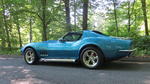




79 paint question

Thread Starter
Pro

Joined: Mar 2015
Posts: 681
Likes: 31
From: Nebraska
 79 paint question
I work at a car dealership, the guy who does our touch-ups and buffing is going to touch-up my car. He has already buffed it and holy crap it looks good.
So...He said that the paint on this car is different, like it did not have a clear-coat. I want to know if he needs anything special or different from what typical newer cars need for touch-up.
Thanks
BTW, having the car photographed tonight by a hobbyist photographer, will post pics when I get them!

So...He said that the paint on this car is different, like it did not have a clear-coat. I want to know if he needs anything special or different from what typical newer cars need for touch-up.
Thanks
BTW, having the car photographed tonight by a hobbyist photographer, will post pics when I get them!
Thread Starter
Pro
Joined: Mar 2015
Posts: 681
Likes: 31
From: Nebraska
For skill I would say "pretty friggin good" level. The touch-up will be mostly rock chips and the like. I just wonder because the car is older and I'm sure paint technology has changed over the years. We are in a dealership and rarely do anything like this to cars more than a couple years old.
Last edited by COOLTED; Sep 21, 2015 at 03:51 PM.

Team Owner


Joined: May 2001
Posts: 87,315
Likes: 1,585
From: Western NY
I work at a car dealership, the guy who does our touch-ups and buffing is going to touch-up my car. He has already buffed it and holy crap it looks good.
So...He said that the paint on this car is different, like it did not have a clear-coat. I want to know if he needs anything special or different from what typical newer cars need for touch-up.
Thanks
BTW, having the car photographed tonight by a hobbyist photographer, will post pics when I get them!
So...He said that the paint on this car is different, like it did not have a clear-coat. I want to know if he needs anything special or different from what typical newer cars need for touch-up.
Thanks
BTW, having the car photographed tonight by a hobbyist photographer, will post pics when I get them!
So the guy buffing the car, didn't realize that a car from the 70s would NOT be clear coated? And when he started to buff it, he didn't notice his buffing pads showed the color of the car on them??

It's probably going to be difficult, somewhat, but the car needs to be touched up with acrylic lacquer, the same as it was painted with.
Thread Starter
Pro
Joined: Mar 2015
Posts: 681
Likes: 31
From: Nebraska
So the guy buffing the car, didn't realize that a car from the 70s would NOT be clear coated? And when he started to buff it, he didn't notice his buffing pads showed the color of the car on them??
It's probably going to be difficult, somewhat, but the car needs to be touched up with acrylic lacquer, the same as it was painted with.
It's probably going to be difficult, somewhat, but the car needs to be touched up with acrylic lacquer, the same as it was painted with.
Acrylic laquer. I'm gonna guess that we probably don't have that at the shop. Good to know, Thanks!

Team Owner
Joined: May 2001
Posts: 87,315
Likes: 1,585
From: Western NY
He didn't know about the no clear-coat, but he did notice the red all over his pad. He's young, 20's, I'd say. Does good work and takes pride in his work. You just don't find that every day anymore.
Acrylic laquer. I'm gonna guess that we probably don't have that at the shop. Good to know, Thanks!
Acrylic laquer. I'm gonna guess that we probably don't have that at the shop. Good to know, Thanks!

Race Director


Joined: Apr 2009
Posts: 19,294
Likes: 2,753
From: Charlotte NC
So much depends on WHAT is on the car currently being 'touched-up'. I understand that it is not clearcoated....but it could have been painted at some time...we do not know if it has. Have to guess on that one. It could have been shot in lacquer or enamel. Don't know.
You are not letting us know if your color is a solid color or a metallic color. That would help. Photo's have not been uploaded when I posted this.
The 'problem' that the guy will have is trying to melt in the spot repair and NOT leave a defined line where the paint he applies ends. SO....this can cause for the entire panel to be coated in clear to lock down his spot repair.
It will depend on how picky you are. Trying to do a spot blend repair on a top surface can show up and be noticeable.....or even if it comes out GREAT.....that line can begin to show up and will require constant polishing to keep it hidden.
DUB
You are not letting us know if your color is a solid color or a metallic color. That would help. Photo's have not been uploaded when I posted this.
The 'problem' that the guy will have is trying to melt in the spot repair and NOT leave a defined line where the paint he applies ends. SO....this can cause for the entire panel to be coated in clear to lock down his spot repair.
It will depend on how picky you are. Trying to do a spot blend repair on a top surface can show up and be noticeable.....or even if it comes out GREAT.....that line can begin to show up and will require constant polishing to keep it hidden.
DUB
Corvette Stories
The Best of Corvette for Corvette Enthusiasts

150 hp to 1,250 hp: Every Corvette Generation Compared by the Specs That Matter
Joe Kucinski
8 Coolest Corvette Pace Cars (and Replicas) of All Time
Verdad Gallardo
Top 10 Corvette Engines RANKED by Peak Torque (70+ Years of Muscle!)
Joe Kucinski
Corvette ZR1X Will Be Pacing the Indy 500, And Could Probably Race, Too!
Verdad Gallardo
Top 10 Corvettes Coming to Mecum Indy 2026!
Brett Foote
Top 10 C9 Corvette MUST-HAVES to Fix These C8 Generation Flaws!
Michael S. Palmer
10 Revolutionary 'Corvette Firsts' Most People Don't Know
Joe Kucinski
5 Reasons to Upgrade to an LS6-Powered Corvette; 5 Reasons to Stay LT2
Michael S. Palmer
2027 Corvette vs The World: Every C8 vs Its Closest Competitor
Joe Kucinski
Thread Starter
Pro
Joined: Mar 2015
Posts: 681
Likes: 31
From: Nebraska
So much depends on WHAT is on the car currently being 'touched-up'. I understand that it is not clearcoated....but it could have been painted at some time...we do not know if it has. Have to guess on that one. It could have been shot in lacquer or enamel. Don't know.
You are not letting us know if your color is a solid color or a metallic color. That would help. Photo's have not been uploaded when I posted this.
The 'problem' that the guy will have is trying to melt in the spot repair and NOT leave a defined line where the paint he applies ends. SO....this can cause for the entire panel to be coated in clear to lock down his spot repair.
It will depend on how picky you are. Trying to do a spot blend repair on a top surface can show up and be noticeable.....or even if it comes out GREAT.....that line can begin to show up and will require constant polishing to keep it hidden.
DUB
You are not letting us know if your color is a solid color or a metallic color. That would help. Photo's have not been uploaded when I posted this.
The 'problem' that the guy will have is trying to melt in the spot repair and NOT leave a defined line where the paint he applies ends. SO....this can cause for the entire panel to be coated in clear to lock down his spot repair.
It will depend on how picky you are. Trying to do a spot blend repair on a top surface can show up and be noticeable.....or even if it comes out GREAT.....that line can begin to show up and will require constant polishing to keep it hidden.
DUB
Are there any good links on how to do this? I can't seem to find any.
As far as picky goes...I could easily get away with leaving the paint as it is. It would be easier to mess this up than make it better.
Thanks for the input guys, I appreciate it.
Race Director
Joined: Apr 2009
Posts: 19,294
Likes: 2,753
From: Charlotte NC
You really need to verify if it is LACQUER or not lacquer. It does make a BIG...HUGE difference.
I can do 'things' with lacquer that I can not do with the current paints of today or catalyzed acrylic enamel.
I do not look for 'links' dealing with paint...due to ..I kinda already know this stuff. It would be like me taking 3rd grade math class again... totally pointless.
You MUST know what is on the car...and like I wrote....doing a spot job can cause for it to look worse than if it is left alone IF a large enough area is not painted. I am not 'saying' that I could not do a good job on it just by spotting it in...BUT...in time...where the paint stopped will begin to show and you would have a ghost line that WOULD NEVER go away. UNLESS it is lacquer....where the lacquer paint can actually melt into the current paint ( if it is lacquer)...due to lacquer is not catalyzed.
DUB
I can do 'things' with lacquer that I can not do with the current paints of today or catalyzed acrylic enamel.
I do not look for 'links' dealing with paint...due to ..I kinda already know this stuff. It would be like me taking 3rd grade math class again... totally pointless.
You MUST know what is on the car...and like I wrote....doing a spot job can cause for it to look worse than if it is left alone IF a large enough area is not painted. I am not 'saying' that I could not do a good job on it just by spotting it in...BUT...in time...where the paint stopped will begin to show and you would have a ghost line that WOULD NEVER go away. UNLESS it is lacquer....where the lacquer paint can actually melt into the current paint ( if it is lacquer)...due to lacquer is not catalyzed.
DUB