





Why do door locks bind?
Thread Starter
Pro


Joined: Jan 2006
Posts: 526
Likes: 1
From: Millington TN
 Why do door locks bind?
My locks have continually froze up on me. Turns out the curved rod from the outer door handle was getting caught on the lock mechanism. When I use the outer door handle the curved rod rotates to where it binds up on the locking mechanism. You'd think there would be a collar that would keep it from rotating too far. How do I get this think adjusted correctly?
Last edited by 'Bochawa72; Nov 28, 2015 at 03:07 PM.

Safety Car


Joined: Oct 2008
Posts: 4,022
Likes: 30
From: Los Angeles CA
My locks have continually froze up on me. Turns out the curved rod from the outer door handle was getting caught on the lock mechanism. When I use the outer door handle the curved rod rotates to where it binds up on the locking mechanism. You'd think there would be a collar that would keep it from rotating too far. How do I get this think adjusted correctly?
the clips twist off or is not there due to bubba
and the sludge on the door lock impedes the "opening" action and twists the rod enough so the door don't open
you have a 4-6 hour job per door ahead of you

Melting Slicks


Joined: Sep 2004
Posts: 3,226
Likes: 667
From: Northeast
Was the door handle changed recently and this clip not attached?
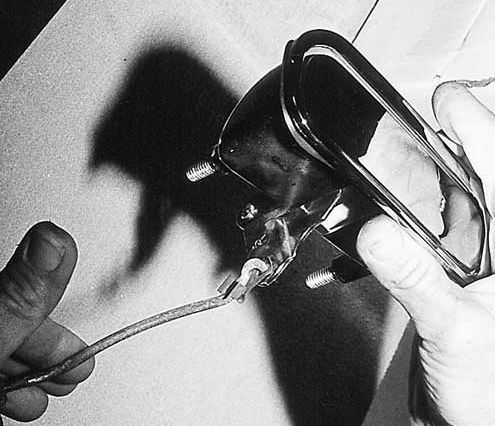
ZIP sells them: http://www.zip-corvette.com/catalog/...lock-rod-clip/
ZIP sells them: http://www.zip-corvette.com/catalog/...lock-rod-clip/

Race Director


Joined: Apr 2009
Posts: 19,294
Likes: 2,754
From: Charlotte NC
Was the door handle changed recently and this clip not attached?
ZIP sells them: http://www.zip-corvette.com/catalog/...lock-rod-clip/
ZIP sells them: http://www.zip-corvette.com/catalog/...lock-rod-clip/
I can only assume that you are working on a Corvette without power door locks.
Also...hopefully your Corvette still has the black plastic water diverter shields that keep water off your latch mechanism.
if you can not get the adjustment correct for your outside door handle rod....PM me and I will give you my shop phone number and I can talk your through it rather easily.....versus me typing it all out.....unless you find some description that helps you out.
DUB

Melting Slicks
Joined: May 2015
Posts: 2,365
Likes: 428
From: Cape Girardeau Missouri
------------------
To the OP:
As far as I know there are no adjustments for the lock mechanism. That said, the C3 door lock mechanism was always an oddball compared to other GMs of the era that while similar required more effort due to the highly unusual cabin lock ****/lever (depending on year) location and push in (inverse compared to pull up) outside latch. Once anything begins to gum up--the door latch mechanism figures prominently--it becomes increasingly difficult to operate and will eventually refuse to operate even when properly assembled. The long rods have enough spring in them that they can flex to the point that you think they are the problem when the real culprit is merely a mechanism in dire need of removal, cleaning and lubrication.
When my low mileage '79 (power locks) was presented to me, the ONLY lock/unlock function that worked fairly well was unlocking via the passenger door key. The power locks would make sounds but they did not either lock or unlock reliably. The driver door key was so stiff that I knew I'd twist off the head if I used any more torque. Removal, cleaning and lubrication was ALL it required to get my door locks functioning perfectly.
Safety Car
Joined: Oct 2008
Posts: 4,022
Likes: 30
From: Los Angeles CA
Not hijacking but do have a question. Are you certain that those black plastic pieces are water diverters installed in both doors? I found one at the bottom of the driver door on my '79 but nothing in the passenger side. I couldn't figure out if it was a water diverter or an anti-tamper feature due to the integrated alarm arming function of the driver door key. By your reply am I correct that new replacements are not available?
------------------
To the OP:
As far as I know there are no adjustments for the lock mechanism. That said, the C3 door lock mechanism was always an oddball compared to other GMs of the era that while similar required more effort due to the highly unusual cabin lock ****/lever (depending on year) location and push in (inverse compared to pull up) outside latch. Once anything begins to gum up--the door latch mechanism figures prominently--it becomes increasingly difficult to operate and will eventually refuse to operate even when properly assembled. The long rods have enough spring in them that they can flex to the point that you think they are the problem when the real culprit is merely a mechanism in dire need of removal, cleaning and lubrication.
When my low mileage '79 (power locks) was presented to me, the ONLY lock/unlock function that worked fairly well was unlocking via the passenger door key. The power locks would make sounds but they did not either lock or unlock reliably. The driver door key was so stiff that I knew I'd twist off the head if I used any more torque. Removal, cleaning and lubrication was ALL it required to get my door locks functioning perfectly.
------------------
To the OP:
As far as I know there are no adjustments for the lock mechanism. That said, the C3 door lock mechanism was always an oddball compared to other GMs of the era that while similar required more effort due to the highly unusual cabin lock ****/lever (depending on year) location and push in (inverse compared to pull up) outside latch. Once anything begins to gum up--the door latch mechanism figures prominently--it becomes increasingly difficult to operate and will eventually refuse to operate even when properly assembled. The long rods have enough spring in them that they can flex to the point that you think they are the problem when the real culprit is merely a mechanism in dire need of removal, cleaning and lubrication.
When my low mileage '79 (power locks) was presented to me, the ONLY lock/unlock function that worked fairly well was unlocking via the passenger door key. The power locks would make sounds but they did not either lock or unlock reliably. The driver door key was so stiff that I knew I'd twist off the head if I used any more torque. Removal, cleaning and lubrication was ALL it required to get my door locks functioning perfectly.
if you remove the linkages and clean and lube those as well as the lock plate, the whole thing "glides effortlessly" sans impediments, once every 30-40 yeas is not much to ask if you are keeping the car of if you need/like to tinker
Melting Slicks
Joined: May 2015
Posts: 2,365
Likes: 428
From: Cape Girardeau Missouri
Did some searching and found that those black plastic shields are supposed to be in both doors. They are part #s 3966773 (left) and 3966774 (right) and while no longer made I found lots of used ones available.
I'm still not certain about the purpose however. Every description I find uses the world "shield", most use "lock shield" and some use "lock tamper shield" or similar. None mention anything about "water".
I'm still not certain about the purpose however. Every description I find uses the world "shield", most use "lock shield" and some use "lock tamper shield" or similar. None mention anything about "water".
Corvette Stories
The Best of Corvette for Corvette Enthusiasts

Top 10 Most Expensive Corvettes Ever Sold on Bring A Trailer
Brett Foote
10 Things Every Corvette Owner Needs (2026 Edition)
Michael S. Palmer
8 Most "Only Corvette Owners Understand" Quirks and Problems
Pouria Savadkouei
10 Reasons the C6 Z06 is Still A Performance Benchmark After 20 Years
Joe Kucinski
How Much Horsepower Every Corvette Engine "LOST" in 1972
Joe Kucinski
Top 10 DOs and DON'Ts for Protecting Your Convertible Top!
Michael S. Palmer
Top 10 Most Explosive Corvettes Ever Made: Power-to-Weight Ratio Ranked!
Joe Kucinski
150 hp to 1,250 hp: Every Corvette Generation Compared by the Specs That Matter
Joe Kucinski
8 Coolest Corvette Pace Cars (and Replicas) of All Time
Verdad Gallardo
Race Director
Joined: Apr 2009
Posts: 19,294
Likes: 2,754
From: Charlotte NC
Did some searching and found that those black plastic shields are supposed to be in both doors. They are part #s 3966773 (left) and 3966774 (right) and while no longer made I found lots of used ones available.
I'm still not certain about the purpose however. Every description I find uses the world "shield", most use "lock shield" and some use "lock tamper shield" or similar. None mention anything about "water".
I'm still not certain about the purpose however. Every description I find uses the world "shield", most use "lock shield" and some use "lock tamper shield" or similar. None mention anything about "water".
GM put them there for a reason and spend the money on them...I would HIGHLY suggest those who do not have them...get them and install them. These shields are not going to break your wallet.
Becasue...in regards to being a "water shield"....Why did GM apply a foam tape at the top edge of these shields where they secure to the door IF it was ONLY for some type of theft protection shield?????? Because they were trying to make sure any water coming from the handle...(which is does)...which is right above the latch mechanism... it does not dry out the latch mechanism by washing of the grease over time...AND....in the winter....if water drips down into the latch mechanism and freezes...you will NOT be able to get into the door. THIS I know for a FACT!
DUB
Race Director
Joined: Apr 2009
Posts: 19,294
Likes: 2,754
From: Charlotte NC
On a 1979...The linkages for you to be able to LOCK/UNLOCK the door from the inside are set. They can NOT be adjusted.
BUT...if you are setting your outside door handle rod....YOU MUST get it set CORRECTLY or you can affect the function of your manually locking or unlocking the door. THIS is a FACT!
AND...if your car has power door locks. Even though lubricating can often times help. What I have come across most times is that even though the power door locks work. When you go to unlock the door from the outside....you almost break your key doing so. And what CAN cause this is a serious binding of the door lock actuator. Because your door key is MOVING it also when you are trying to unlock the door.
To prove it or see if THIS is your problem. Disconnect the 'lock/unlock' rod from your latch mechanism. Then while holding that end...and then grabbing the other end of the rod where your 'lock-unlock' **** threads onto. Move them back and forth like you are trying to lock and unlock the door. IF it is really hard to do that....that can be the problem. You have a bad/binding door lock actuator. Because when the rod is still disconnected OFF the latch mechanism. Use your door key to lock and unlock the door and see how easy it is to do so.
And for what it is worth. IF you do go and replace the door lock actuator....MAKE SURE that the plunger can move effortlessly. I prefer to use the DORMAN actuators. Mainly because the Delco ones can be brand new and bind as bad as what you have. I got tired of going though several boxes before I found two that were free flowing.
DUB
BUT...if you are setting your outside door handle rod....YOU MUST get it set CORRECTLY or you can affect the function of your manually locking or unlocking the door. THIS is a FACT!
AND...if your car has power door locks. Even though lubricating can often times help. What I have come across most times is that even though the power door locks work. When you go to unlock the door from the outside....you almost break your key doing so. And what CAN cause this is a serious binding of the door lock actuator. Because your door key is MOVING it also when you are trying to unlock the door.
To prove it or see if THIS is your problem. Disconnect the 'lock/unlock' rod from your latch mechanism. Then while holding that end...and then grabbing the other end of the rod where your 'lock-unlock' **** threads onto. Move them back and forth like you are trying to lock and unlock the door. IF it is really hard to do that....that can be the problem. You have a bad/binding door lock actuator. Because when the rod is still disconnected OFF the latch mechanism. Use your door key to lock and unlock the door and see how easy it is to do so.
And for what it is worth. IF you do go and replace the door lock actuator....MAKE SURE that the plunger can move effortlessly. I prefer to use the DORMAN actuators. Mainly because the Delco ones can be brand new and bind as bad as what you have. I got tired of going though several boxes before I found two that were free flowing.
DUB
Thread Starter
Pro
Joined: Jan 2006
Posts: 526
Likes: 1
From: Millington TN
Thanks for the tips guys! I will have to get in there but my guess is that I am missing the correct clip. Why else would it continue to rotate? I do have manual locks and do still have my little plastic shields. I do know I can't see that part of the handle to confirm if I have the correct part in there. Will I have to remove all of the door guts to get in there? I did it years ago and it was a huge pain in the rear!