







Side pipe cars

Thread Starter
Intermediate

Joined: Sep 2013
Posts: 46
Likes: 0
 Side pipe cars
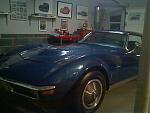
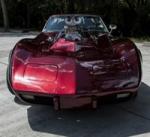
Are 1971 sidepipes cars worth much more then non-side pipe cars I know the sidepipes have a value but overall what does this do to the value of a true side pipe car and how do you determine if it's a sidepipes car or a clone.

Melting Slicks


Joined: Mar 2005
Posts: 2,095
Likes: 299
From: Midlothian VA
They didn't come with sidepipes from the factory.
You could have them dealer installed.
That said, OEM sidepipes are +$3500 (pipes + covers + install).
You can add that to your financial assessment.
Last edited by Hammerhead Fred; Dec 6, 2015 at 07:06 PM.

Melting Slicks
Joined: May 2009
Posts: 3,079
Likes: 315
2024 C3 of the Year Finalist - Unmodified
It is called original factory documentation. Without it...you could very well be paying extra for no added value. In some cases, it probably has hurt the value of otherwise non-modified cars. Only 4,355 cars in '69 came with them, so out of the over 550,000 C3s produced from '68 to '82...it is a very rare option indeed. Judging by the number of cars today with side pipes (both factory and aftermarket) they are even more desirable today. The factory pipes were too loud (cops actually gave out equipment violations for excessive noise) and GM was forced to drop the option mid-year.

Pro


Joined: May 2011
Posts: 722
Likes: 58
From: Karlsruhe (Germany)
You can determine if it was a real sidepipe car at the rear side, where the exhaust normaly comes out. While the panel in the middle can be replaced, the corners of the body can not. So they have to be fiber glassed, and you will see this from the inside of the body.
Corvette Stories
The Best of Corvette for Corvette Enthusiasts

Top 10 Most Expensive Corvettes Ever Sold on Bring A Trailer
Brett Foote
10 Things Every Corvette Owner Needs (2026 Edition)
Michael S. Palmer
8 Most "Only Corvette Owners Understand" Quirks and Problems
Pouria Savadkouei
10 Reasons the C6 Z06 is Still A Performance Benchmark After 20 Years
Joe Kucinski
How Much Horsepower Every Corvette Engine "LOST" in 1972
Joe Kucinski
Top 10 DOs and DON'Ts for Protecting Your Convertible Top!
Michael S. Palmer
Top 10 Most Explosive Corvettes Ever Made: Power-to-Weight Ratio Ranked!
Joe Kucinski
150 hp to 1,250 hp: Every Corvette Generation Compared by the Specs That Matter
Joe Kucinski
8 Coolest Corvette Pace Cars (and Replicas) of All Time
Verdad Gallardo
Melting Slicks
Joined: May 2009
Posts: 3,079
Likes: 315
2024 C3 of the Year Finalist - Unmodified
